
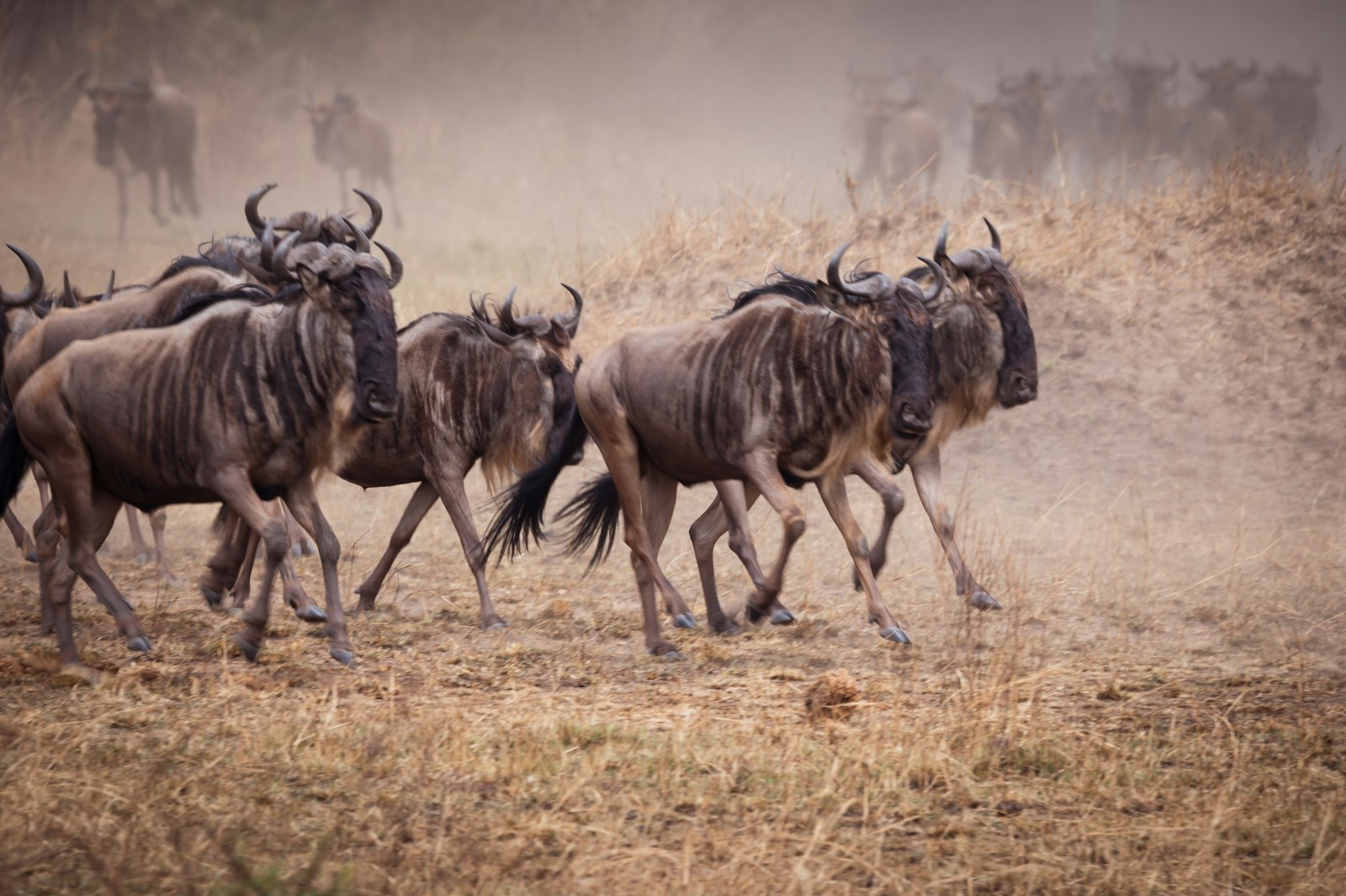
A Serengeti National Park safari is the journey many travellers dream about for years. The name comes from the Maasai word for “endless plains”, and the first time you stand in a vehicle and see grass run to the horizon, with herds scattered across it and a storm cloud building in the distance, you understand why. This is the home of the Great Migration, of lions resting on granite outcrops and of leopards draped over acacia branches, and it is the heart of northern Tanzania’s safari circuit.
This guide explains what to expect on a Serengeti National Park safari, how the park divides into regions, where to stay, when to go and how to reach it. Sense of Adventure is a licensed Nairobi-based operator, and we arrange the Serengeti by road or by light aircraft, on its own or combined with Ngorongoro Crater, Tarangire, Lake Manyara and the Masai Mara in Kenya.
Serengeti National Park at a Glance
The Serengeti lies in northern Tanzania and runs north to the Kenyan border, where it continues as the Masai Mara. It is a UNESCO World Heritage site and one of the most protected wildlife systems on earth. Together with the Ngorongoro Conservation Area, the Maasai Mara and neighbouring reserves, it forms one great ecosystem across which the herds travel in a loop that never truly stops.
The park is large enough that where you stay matters as much as when you go. The central Seronera valley has permanent water and year-round game, the southern plains around Ndutu are the calving grounds, the western corridor follows the Grumeti River, and the far north near the Mara River sees the dramatic crossings. A Serengeti National Park safari works best when your camps are chosen to match the season, and we plan that for you.
Why Choose a Serengeti National Park Safari
- The Great Migration: huge herds of wildebeest and zebra move through the ecosystem all year, following the rains and fresh grass.
- Big cats: lion, leopard and cheetah are all regularly seen, and the open terrain makes tracking them rewarding.
- Space and scale: the plains feel limitless, and in the quieter regions you can drive for long stretches without meeting another vehicle.
- Varied landscapes: open grassland, granite kopjes, river forest, woodland and rolling hills all appear within one park.
- Year-round game: there is no bad month for wildlife, only different regions that shine at different times.
- Easy to combine: a Serengeti National Park safari pairs naturally with the Ngorongoro Crater, Tarangire and a Zanzibar beach finale.
Wildlife on a Serengeti National Park Safari
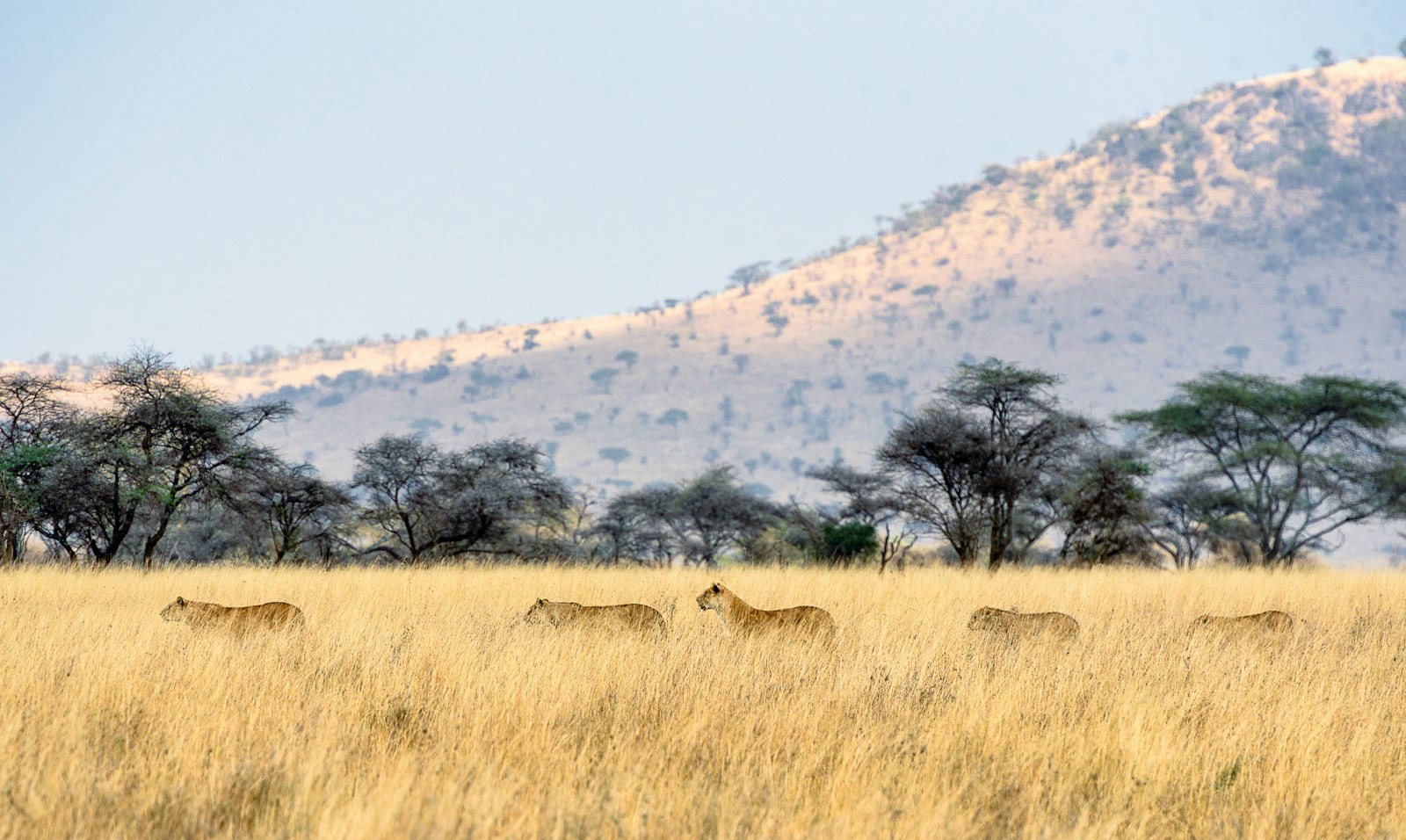
The wildebeest and zebra are the stars, but the supporting cast is remarkable. Lions are common across the plains and the kopjes, and prides are often seen resting in the shade in the heat of the day. Leopards favour the riverine trees of the Seronera valley, where they can be spotted lying along branches. Cheetah hunt on the open grassland, using termite mounds and low rocks as lookouts. Elephant, buffalo, giraffe, hippo, crocodile, hyena, jackal and a wide range of antelope complete the picture, with topi, Thomson’s gazelle, Grant’s gazelle and impala all common.
Birdlife is excellent too. Ostrich stride across the plains, secretary birds hunt on foot, and the woodlands and rivers hold hornbills, lilac-breasted rollers, eagles and many others. Guests who enjoy birds will find that a Serengeti National Park safari offers a long list even without a specialist guide.
Where to Stay in the Serengeti
- Singita Grumeti is a collection of exclusive lodges on a vast private reserve bordering the western Serengeti.
- Four Seasons Safari Lodge Serengeti is a polished lodge built around a waterhole and infinity pool where elephants come to drink.
- Sayari Camp is perfectly placed for the dramatic Mara River crossings in the north.
- Serengeti Serena Safari Lodge has rondavel-style rooms on a ridge with sweeping views over the central plains.
- Serengeti Sopa Lodge offers large suites and a hilltop pool, a comfortable value base in the quieter south-west.
See all of our Tanzania lodges for photos and full descriptions.
Best Time for a Serengeti National Park Safari
The herds are always somewhere in the Serengeti ecosystem, so the best month depends on what you want to see. From about January to March the herds gather on the southern plains around Ndutu for the calving season, when thousands of calves are born and predators are close by. From about April to June, as the long rains fall, the herds move north-west through the central and western regions, and the park is green, quiet and good value. From about July to October the herds reach the northern Serengeti, and the Mara River crossings take place, although exact timing changes each year and no crossing can be promised on a given day.
November and December are the short rains, when the herds begin to return south. The park is green, the light is beautiful and there are fewer vehicles. The central Seronera area offers good game viewing in every month, which makes it a dependable base whenever you travel.
How to Get There
Most guests reach the Serengeti from Arusha, often after a night at the Ngorongoro Crater rim or in Karatu. By road the journey is long, so it is usually spread over a day with game viewing along the way, in a private Land Cruiser with a driver-guide. The alternative is a scheduled light-aircraft flight from Arusha or Kilimanjaro to one of the park’s airstrips, which saves many hours and puts you in the right region of the park for your camp.
If you are travelling from Kenya, we arrange the border crossing, and a Serengeti National Park safari combines well with the Masai Mara for a cross-border migration route. See our Kenya and Tanzania safari packages for ideas, and tell us your entry dates so we can plan transfers.
Things to Do on a Serengeti National Park Safari
- Game drives: morning and afternoon drives are the core of the trip. Your driver-guide follows sightings and reads the landscape, from kopjes where lions rest to river lines where leopards hide.
- Full-day drives: a packed lunch lets you stay out through the middle of the day, which is useful in the northern Serengeti, where distances are large.
- Hot-air balloon flight: at dawn, a balloon drifts over the plains, followed by a bush breakfast. It is one of the most memorable ways to see the park.
- Migration watching: in the north, guests wait on the riverbank for crossings; in the south, they watch calving herds with predators nearby.
- Kopje exploring: granite outcrops such as the Gol and Moru Kopjes are good for lions, rock hyrax, agama lizards and birds.
- Bush walks and cultural visits: some camps and nearby areas offer guided walks or visits with local communities, which we arrange where permitted.
Sample Serengeti National Park Safari Itineraries
4 days / 3 nights: fly-in Serengeti
Fly from Arusha to the central Serengeti, with game drives on the first afternoon and two full days of morning and afternoon drives. Fly back to Arusha on the fourth morning. It is a compact option for guests with limited time.
6 days / 5 nights: Tarangire, Ngorongoro and the Serengeti
Begin in Tarangire for elephants and baobabs, continue to the Ngorongoro Crater for a descent into the caldera, and spend two or three nights in the Serengeti. It is the classic northern Tanzania route, and it shows the variety of the region.
8 days / 7 nights: Serengeti migration safari
Spend three nights in the central Serengeti and three in the north or south, depending on the season, so you follow the herds with the Serengeti National Park safari timed to the month. Add a night at the Ngorongoro rim at the start or end.
10 days / 9 nights: safari and Zanzibar
Combine Tarangire, the Ngorongoro Crater and three Serengeti nights with a flight to Zanzibar for beach time on the Indian Ocean. It is a popular finish after long game-drive days.
Comparing the Serengeti Lodges and Camps
| Lodge | Style | Best for |
|---|---|---|
| Singita Grumeti | Exclusive lodges on a private reserve in the west | Luxury travellers and honeymoons |
| Four Seasons Safari Lodge Serengeti | Polished lodge around a waterhole and pool | Comfort, families and elephant watching |
| Sayari Camp | Tented camp near the Mara River | River crossings, July to October |
| Serengeti Serena Safari Lodge | Rondavel rooms on a central ridge | Central plains and year-round game |
| Serengeti Sopa Lodge | Large suites with a hilltop pool | Value and a quieter south-west |
Conservation and the Serengeti Story
The Serengeti is one of the world’s best-known conservation successes. Its protection began early, and today it is managed by Tanzania National Parks (TANAPA) alongside the neighbouring Ngorongoro Conservation Area and other reserves. Rangers patrol against poaching, researchers study the herds and predators, and tourism helps fund the work. When you take a Serengeti National Park safari, your park fees support that protection, and the camps we use employ staff from nearby communities.
Photography Tips for the Serengeti
The Serengeti is a photographer’s dream, with wide skies, dramatic weather and animals in open view. A mid-range zoom covers most scenes, and a longer lens helps with leopards in trees and distant kills. Early morning and late afternoon bring warm light, while storm clouds over the plains give a dramatic backdrop. Ask your driver-guide to position the vehicle with the sun behind you, switch off the engine for steady shots and keep a bean bag or cushion to rest your lens on the window frame. Pack a cloth for dust and spare batteries for long days.
The Serengeti Compared With Other Parks
Compared with the Ngorongoro Crater, the Serengeti is far larger and more open, so you follow the herds rather than seeing everything in one morning. Compared with Tarangire, it has bigger predator numbers and the migration, while Tarangire is better for elephants and baobabs in the dry season. Compared with Lake Manyara, it offers longer game drives and fewer forest settings. Compared with the Masai Mara in Kenya, it is the same ecosystem, but in Tanzania the plains are broader and the experience is often quieter. Many guests choose both, and we link them in one trip.
What a Serengeti National Park Safari Costs
The main costs are the camps, the park fees, the vehicle and driver-guide, and any flights. Camps range from comfortable mid-range lodges to luxury tented properties, and park fees are set by TANAPA and the Ngorongoro Conservation Area Authority (NCAA) and can change. Flying into the park adds the airfare but saves a long day on the road each way. We quote the whole trip as a single price per person, and we confirm the current fees in your quote so you can compare options clearly.
Packing List for a Serengeti National Park Safari
Pack light, neutral-coloured clothing in layers, because mornings on an open vehicle can be cool and afternoons are warm. Bring a wide-brimmed hat, sunglasses, sun protection, insect repellent, binoculars, a camera with a zoom lens, a power bank and a warm fleece. A light rain jacket is useful in the wetter months, and closed shoes are best for camp paths. Use a soft bag if you are flying, since light aircraft have strict luggage limits.
Who a Serengeti National Park Safari Suits
A Serengeti National Park safari suits first-time visitors who want the classic East African experience, wildlife photographers, couples looking for a special trip, families with older children and returning guests who want to see a different region of the park. It is less suited to travellers with only two or three days, because the distances are large and the park deserves at least three nights.
How Many Nights Do You Need?
Three nights in the Serengeti is a good minimum, and four or five lets you explore two regions or follow the herds. Guests who want to include a balloon flight, a full-day drive and a rest day often add an extra night. If you are also visiting the Ngorongoro Crater and Tarangire, plan a week in total.
Tips for Your Serengeti National Park Safari
- Start game drives early, when animals are active and the light is soft.
- Choose your camp region to match the month you travel.
- Bring binoculars for distant predators and birds.
- Carry sun protection and plenty of water on full-day drives.
- Park fees are set by Tanzania National Parks and the NCAA and can change, and we confirm the current fees in your quote.
How We Plan Your Serengeti National Park Safari
We book your camps, vehicle, driver-guide, park fees and any flights together, so you deal with one team from enquiry to departure. Our safaris run in private 4×4 Land Cruisers with a pop-up roof, reclining seats and charging ports. We tailor each itinerary to your dates, budget and interests.
Serengeti National Park Safari FAQs
When is the best time for a Serengeti National Park safari?
Game viewing is good all year. January to March is best for calving in the south, and July to October for the northern river crossings.
How many nights do I need?
Three nights is a good minimum, and four or five lets you see more of the park.
Can I see the Great Migration in any month?
The herds are in the Serengeti ecosystem all year, but their location changes, so we match your camp to the month.
Is the Serengeti suitable for families?
Yes, with older children in particular. Private vehicles let you set the pace, and we choose camps that welcome children.
Should I fly or drive to the Serengeti?
Flying saves time, while driving lets you see more of northern Tanzania. We can arrange either, or drive one way and fly the other.
Start Planning Your Serengeti National Park Safari
A Serengeti National Park safari gives you the migration, big cats and some of the widest views in Africa. Send us your dates, group size and budget, and we will design the route. Explore our Tanzania national parks guide, see our Tanzania safari holidays, browse the Kenya and Tanzania safari packages or read about the Great Migration safari.