This Great Migration safari follows the wildebeest across both sides of the Kenya and Tanzania border during the European summer. You spend four nights in the Masai Mara, fly across the border to spend three nights in the northern Serengeti near the Mara River, then finish at the Ngorongoro Crater. The route lasts twelve days, and the price starts from USD 4,600 per adult sharing.
Why Choose a Great Migration Safari in Kenya and Tanzania?
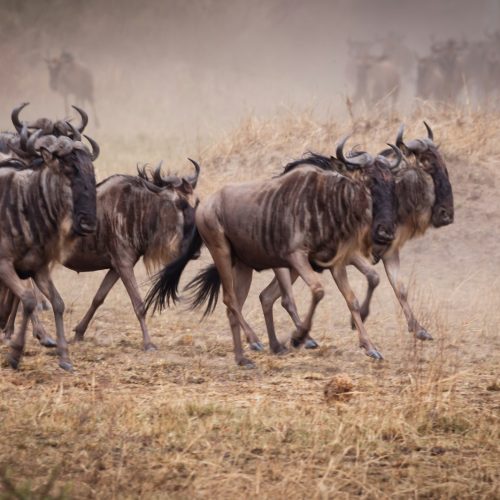
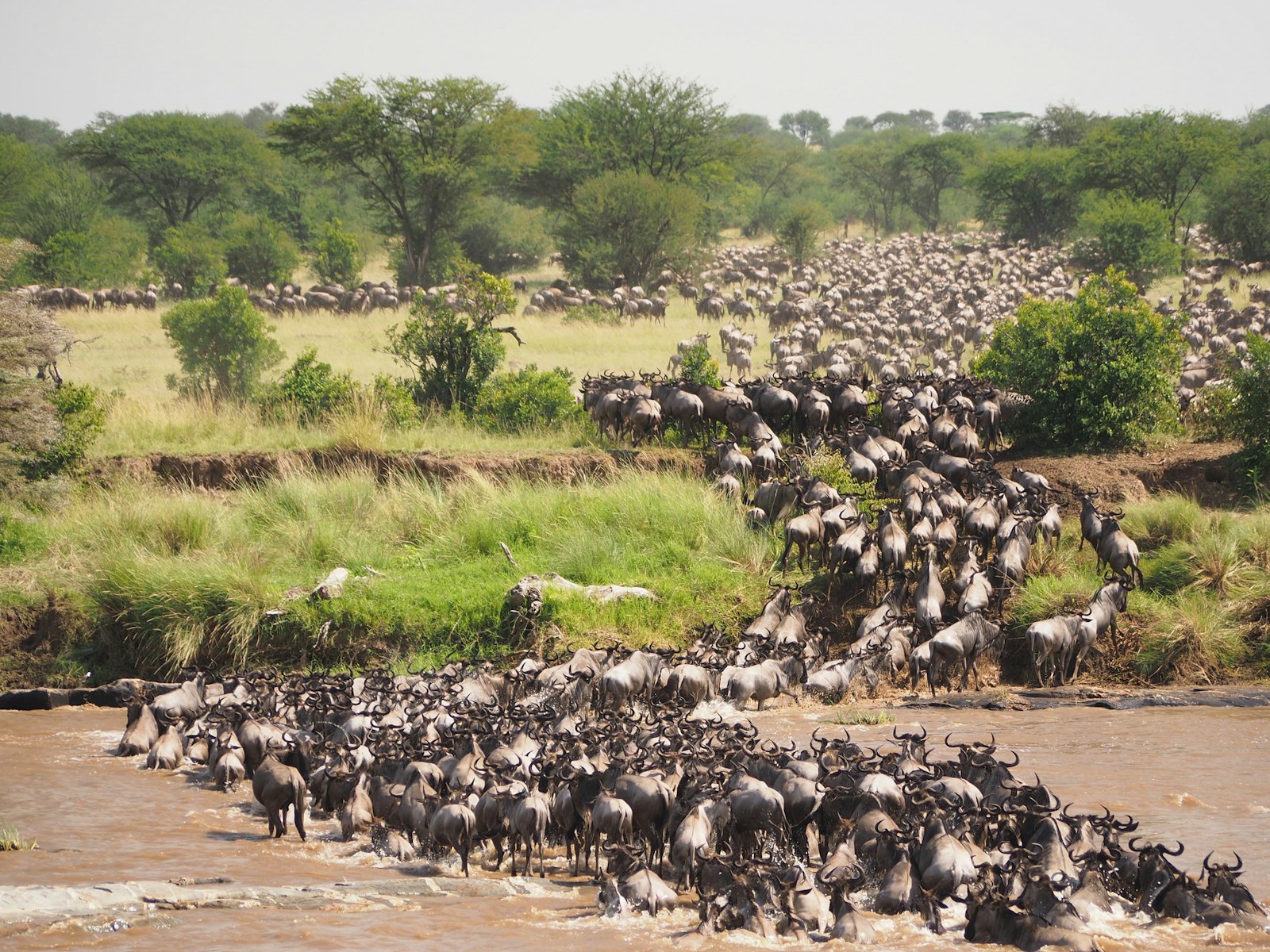
The herds do not recognise borders. Over a year, more than a million wildebeest, along with zebra and gazelle, move in a great circle through the Serengeti and the Masai Mara in search of fresh grass. Between July and October they cross the Mara River again and again, and spending time on both sides of the river gives you the best chance of seeing a crossing.
This Great Migration safari is designed around that movement. You spend four nights in the Masai Mara in Kenya, then three nights in the northern Serengeti near the Mara River in Tanzania. The herds move back and forth between the two sides, so the more time you spend near the river, the better your chances of a crossing.
- Four nights in the Masai Mara: time to follow the herds and wait at the Mara River for crossings.
- Three nights in the northern Serengeti: a seasonal camp near the Mara River, close to Kogatende.
- Both sides of the border: better odds than a trip that covers only Kenya or only Tanzania.
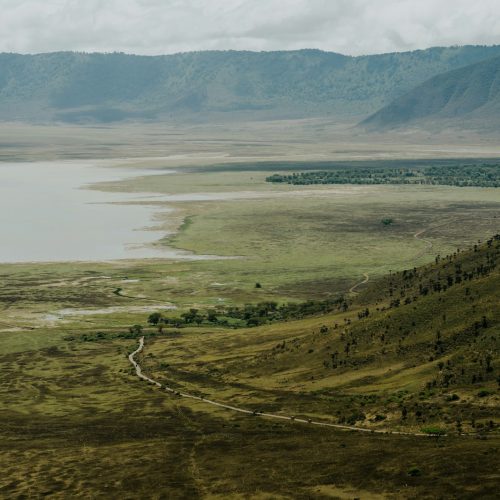
- Ngorongoro Crater: a full-day game drive on the crater floor, with lions, black rhinos and huge herds.
- Timed for European summer holidays: the trip suits groups and families travelling from July to October.
Great Migration Safari Route at a Glance
- Day 1: Arrive in Nairobi
- Day 2: Nairobi to the Masai Mara
- Days 3 to 5: Masai Mara
- Day 6: Fly to the northern Serengeti
- Days 7 to 8: Northern Serengeti
- Day 9: Serengeti to the Ngorongoro highlands
- Day 10: Ngorongoro Crater
- Day 11: Ngorongoro to Arusha
- Day 12: Departure from Kilimanjaro International Airport
The eleven nights are made up of one night in Nairobi, four in the Masai Mara, three in the northern Serengeti, two in the Ngorongoro highlands and one in Arusha.
Day-by-Day Great Migration Safari Itinerary
Days 1 to 5: Nairobi and the Masai Mara
Day 1, arrive in Nairobi. Arrive and transfer to your hotel. Rest after your flight and meet your guide.
Day 2, Nairobi to the Masai Mara. Fly or drive to the Mara and enjoy an afternoon game drive.
Day 3, following the herds. Spend a full day following the herds and waiting at the Mara River for crossings. Patience is the secret on a Great Migration safari, because crossings depend on the herds and can happen at any time or not at all on a given day. Our Masai Mara safari page explains more about the reserve.
Day 4, the Mara. Game drives with an optional balloon flight over the plains at sunrise.
Day 5, a full day in the Mara. A full-day game drive with a picnic lunch lets you stay with the herds and predators without returning to camp.
Days 6 to 8: The northern Serengeti
Day 6, fly to the northern Serengeti. Fly to the northern Serengeti via a border airstrip and transfer to a seasonal camp near the Mara River. Tourist vehicles cannot cross directly between the Mara and the Serengeti, so the flight saves a full day on the road.
Day 7, Kogatende. A full day of game drives around Kogatende looking for river crossings. The northern Serengeti is quieter than the southern plains during the migration months, and the herds often gather near the river.
Day 8, the migration herds and predators. Game drives follow the migration herds and the predators that shadow them, including lions and leopards.
Days 9 to 12: Ngorongoro and the journey home
Day 9, Serengeti to the Ngorongoro highlands. Fly to the Lake Manyara airstrip and transfer to a lodge on the Ngorongoro highlands.
Day 10, Ngorongoro Crater. A full-day game drive on the crater floor, with lions, black rhinos and huge herds.
Day 11, Ngorongoro to Arusha. Drive to Arusha with a stop at a coffee farm, then spend the night in town.
Day 12, departure. Transfer to Kilimanjaro International Airport for your flight home.
How the Great Migration Works
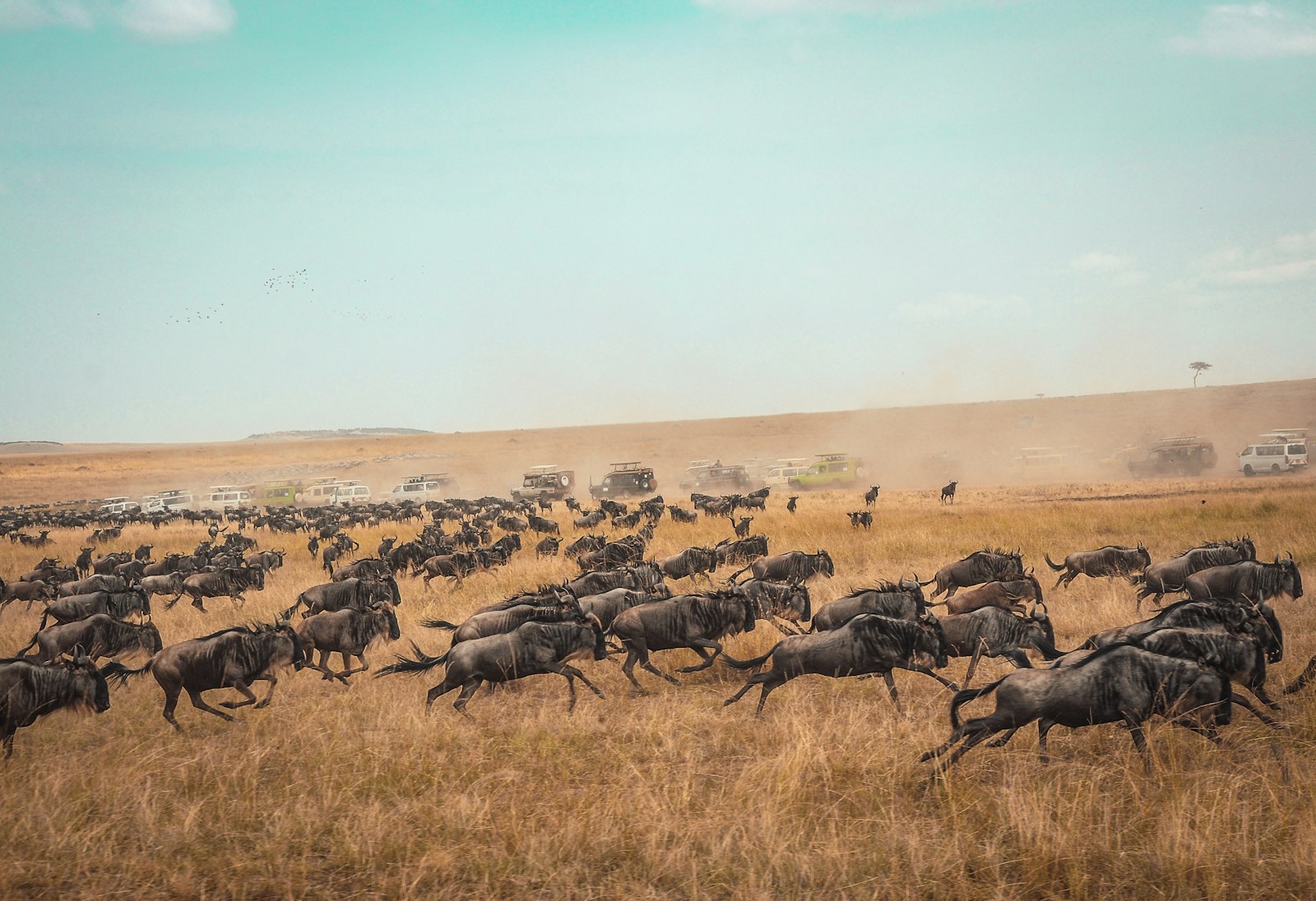
Understanding the migration helps you choose the right dates and manage your expectations. The herds follow the rains and the grass, so their location changes through the year. From July to October they are in the Masai Mara and the northern Serengeti, and the Mara River is the main obstacle on their route.
River crossings are dramatic, but they are not scheduled. The herds gather on the bank, often for hours, and then cross suddenly or turn away. Crossings can happen several times a day or not for days, so we do not guarantee them. What we can do is place you in the right area at the right time and give you enough days on both sides of the river that your odds are as good as they can be.
What else you see on a Great Migration safari
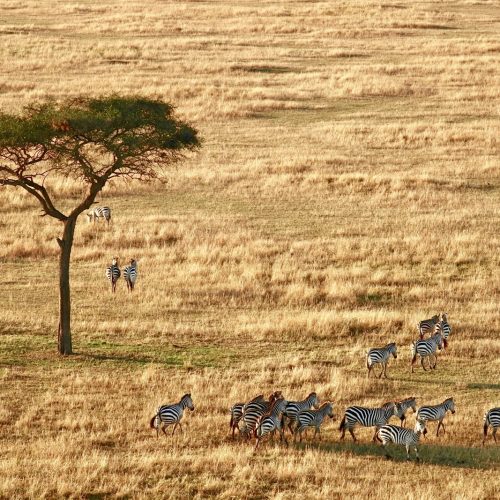
The migration is not just wildebeest. Zebra travel with the herds, and predators follow them. Lions, cheetahs, leopards and hyenas all hunt in the Mara and Serengeti, and crocodiles wait in the river. Even when no crossing happens, the plains are full of animals, and the game drives are rewarding in their own right.
Wildlife on a Great Migration Safari
Each stage of the journey has its own wildlife highlights.
The Masai Mara: herds and big cats
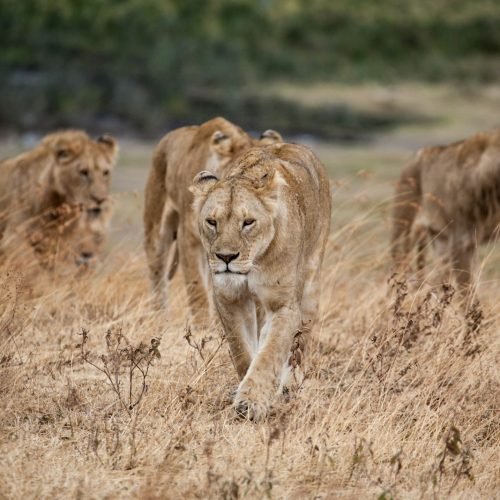
The Mara has Kenya’s best-known concentration of predators. Lions are common, cheetahs hunt on the open plains and leopards rest in riverside trees. During the migration months the plains are dotted with wildebeest and zebra.
The northern Serengeti: crossings and quiet
The northern Serengeti is where the herds spend much of the migration season. The area around Kogatende is wild and quieter than the busiest parts of the Mara, which makes it a good place for river crossings and predators.
Ngorongoro Crater: a world of its own
The crater floor is a natural enclosure for lions, black rhinos, elephants, buffalo and large herds of plains game. A full day on the floor is a very different experience from the open plains and a fitting end to the safari.
Tips for Seeing a River Crossing
A little preparation improves your chances and your enjoyment of a Great Migration safari.
- Be patient: herds can wait on the bank for hours before crossing, so bring a hat, water and something to read while you wait.
- Trust your guide: drivers watch the herds for signs of movement and position the vehicle so that everyone can see.
- Keep quiet and still: noise and sudden movement can make the herds turn away.
- Be ready to shoot: keep your camera on and set before the herd moves, because the action starts quickly.
- Stay flexible: if the herds move to another area, your guide may suggest a change of plan.
- Enjoy the rest: the plains between crossings are full of predators, birds and other wildlife.
Even on a day without a crossing, the Mara and Serengeti reward your time, and spending several nights in each place gives you a real chance to see the herds in action.
Who the Great Migration Safari Suits
This route is designed for travellers who want to focus on the migration and are happy to spend several days waiting and watching.
- Groups of 6 to 16: the trip works well for friends, clubs and family groups, and the price per person falls as the group grows.
- Summer-holiday travellers: the dates match European school and work holidays from July to October.
- Photographers: the herds, river and predators give you more variety than a standard safari.
- Repeat safari guests: if you have already seen the big cats, the migration is a different and dramatic experience.
Accommodation and Pace
You stay in a hotel in Nairobi, seasonal camps near the Mara River and lodges in the Ngorongoro highlands and Arusha, with full board on safari. Seasonal camps are small and move with the migration, which keeps you close to the herds. Browse our Kenya lodges and camps to see the style of accommodation we use in Kenya.
The pace is steady and designed around the herds. You have several nights in each key area, with flights at the border crossing and between the Serengeti and the Ngorongoro highlands to save time. The last two days are travel days that take you from the crater to Arusha and on to Kilimanjaro International Airport.
Best Time for a Great Migration Safari
The best time for a Great Migration safari in Kenya and Tanzania is July to October, when the herds are in the Masai Mara and northern Serengeti. August and September usually bring the most river crossings.
- July: the herds arrive in the northern Serengeti and the Mara, and the first crossings begin.
- August and September: the busiest months, with the most river crossings and the highest demand for camps.
- October: the herds are still in the area, with fewer visitors as the season ends.
- November to June: the herds move south, so the trip is not timed for river crossings.
Seasonal camps are small, so book 9 to 12 months ahead for July and August.
How Much Does a Great Migration Safari Cost?
This Great Migration safari starts from USD 4,600 per adult sharing. The final cost depends on the season, the level of accommodation and your group size. Groups of 6 to 16 work well and the price per person falls as the group grows. For a wider budgeting guide, read how much an African safari costs.
What Is Included and Not Included
- Domestic and cross-border flights as listed
- 11 nights’ accommodation as listed
- Meals as listed, with full board on safari
- Game drives in Kenya and Tanzania
- Park, conservancy and crater fees
- All transfers
Not included: international flights to Nairobi and from Kilimanjaro, the Kenya eTA and Tanzania visa, travel insurance, the optional hot-air balloon flight, tips, drinks and personal expenses.
Photography on a Great Migration Safari
A Great Migration safari offers some of the best wildlife photography in Africa. A lens of 200 to 400 mm suits most wildlife, while a wide lens helps to capture the scale of the herds and the sky. For river crossings, patience and a fast shutter speed matter, because the action is sudden. Early mornings and late afternoons give the best light, and the dust raised by the herds can make dramatic pictures. Bring spare batteries and memory cards, a lens cloth for dust and a beanbag or support for steady shots from the vehicle.
What to Pack for a Great Migration Safari
- Lightweight clothing in neutral colours such as khaki, olive or beige, plus a warm layer for cool mornings and the Ngorongoro highlands.
- A wide-brimmed hat, sunglasses and high-factor sunscreen.
- Binoculars and a camera with a zoom lens.
- Closed, comfortable shoes and a scarf for dusty tracks.
- Insect repellent and any malaria prevention recommended by your doctor.
- A soft-sided bag, because space in the vehicle and on small aircraft is limited.
Safari Etiquette and Responsible Travel
Watching a crossing is an unforgettable privilege, and it works best when everyone behaves with care.
- Stay seated in the vehicle and keep your voice low during sightings.
- Never feed animals or call to them, and keep a respectful distance.
- Take all litter with you, including small items such as wrappers.
- Follow Kenya Wildlife Service park rules and the rules of the Tanzanian parks at every entrance.
- Respect the herds by never pressing for a closer position at the river.
The park, conservancy and crater fees included in the price help pay for rangers, conservation and local communities.
Visas, Health and Safety
You need a Kenya eTA and a Tanzania visa or eVisa for this trip. We send guidance when you book, and you should check the current requirements for your nationality. Malaria is present in parts of Kenya and Tanzania, so speak to your doctor about prevention, and take out travel insurance that covers medical evacuation. Our guides are experienced and check conditions daily. For official information, see Magical Kenya and the Kenya Wildlife Service for park rules and fees.
Great Migration Safari FAQs
When is the best time for a Great Migration safari in Kenya and Tanzania?
July to October, when the herds are in the Masai Mara and northern Serengeti. August and September usually bring the most river crossings.
Are river crossings guaranteed?
No. Crossings depend on the herds and the rains and can happen several times a day or not for days. Spending time on both sides of the river improves your chances.
Why fly between the Masai Mara and the Serengeti?
There is no open tourist border crossing between the two parks, so the quickest route is a short flight via border airstrips. Driving takes a full day via Isebania.
Can a group book this Great Migration safari?
Yes. Groups of 6 to 16 work well. Seasonal camps are small, so book 9 to 12 months ahead for July and August.
Do I need two visas?
Yes. You need a Kenya eTA and a Tanzania visa or eVisa. We send guidance when you book.
Is there a shorter way to see the migration?
Yes. If you have less time, a Kenya-only trip can still show you the herds in the Mara. See our Kenya safari packages or our 9 day Kenya highlights safari, which includes three nights in the Mara.
Book Your Great Migration Safari
Send us your dates and group size by WhatsApp or email, and we will reply with a written, itemised quote and a suggested route. A deposit secures your camps, lodges and flights, and we send final documents and packing advice before you travel. You can also ask about a private Kenya safari if you would like a fully tailored trip.
Overview
This Great Migration safari Kenya and Tanzania trip follows the wildebeest across both sides of the border during the European summer. You spend four nights in the Masai Mara, cross into Tanzania and spend three nights in the northern Serengeti near the Mara River, then finish at the Ngorongoro Crater.
Spending time on both sides of the river gives you the best chance of seeing a crossing, as the herds move back and forth from July to October. Tourist vehicles cannot cross directly between the Mara and the Serengeti, so we cross by air.
Best for: Group / migration. Popular with: Summer-holiday travellers and groups from the UK, Germany, France, Spain, Italy and the Netherlands. Best time: July–October.
Price is from USD 4,600 per adult sharing; the final cost depends on season, accommodation and group size.
Plan your trip
Our guides: Masai Mara to Serengeti, Is the Great Migration Guaranteed? and Why Do Wildebeest Migrate?.
Official information: Tanzania National Parks (TANAPA); Maasai Mara Wildlife Conservancies Association.
Ready to go? Book this trip on WhatsApp and we’ll take it from there.
Highlights
- Four nights in the Masai Mara during the migration
- Three nights in the northern Serengeti
- Mara River crossings on both sides of the border
- Ngorongoro Crater game drive
- Timed for European summer holidays