

A Lake Manyara National Park safari is for travellers who want variety in a compact area. The park lies at the foot of the Great Rift Valley escarpment in northern Tanzania, between a steep green wall and the shallow alkaline lake that gives it its name. In a single morning you can drive through a shady groundwater forest, cross open grassland, stop beside hippo pools and look out over the lake shore, where birds gather in large numbers. The park is also known for its lions, which are often reported resting in the branches of acacia trees.
This guide covers what you will see on a Lake Manyara National Park safari, where to stay, the best time to visit and how to reach the park. Sense of Adventure is a licensed Nairobi-based operator, and we can arrange Lake Manyara as a first stop before Ngorongoro and the Serengeti, as a stand-alone short stay, or as part of a longer northern Tanzania circuit with Tarangire.
Lake Manyara National Park at a Glance
Lake Manyara National Park sits on the main road between Arusha and the Ngorongoro highlands, close to the small town of Mto wa Mbu. That position makes it one of the easiest parks in northern Tanzania to reach, with a drive from Arusha that most travellers complete in a morning. The park is long and narrow, squeezed between the escarpment wall to the west and the lake to the east, so the scenery changes quickly as you move through it.
Much of the lake itself is shallow and alkaline, and its size changes with the rains. The land beside it is fed by springs and streams that run down from the escarpment, which is why the park has a lush groundwater forest of tall fig and mahogany trees that is unusual in this dry part of Tanzania. Beyond the forest, the park opens into acacia woodland, floodplain grassland and the sandy lake shore. Few parks pack so many habitats into so small a space.
Why Choose a Lake Manyara National Park Safari
- Four habitats in one morning: forest, woodland, grassland and lake shore, each with its own birds and animals.
- Tree-climbing lions: lions here have a reputation for resting in the branches, and although sightings are never guaranteed, it is one of the few places in Africa where this is regularly reported.
- Elephants in the forest: the groundwater forest is a good place to watch elephants at close range under tall trees.
- Large baboon troops: baboons and blue monkeys are easy to see and entertaining to watch, especially for children.
- Birdlife: the lake shore and forest hold a wide range of resident and migratory species, with flamingos and pelicans among the highlights when conditions suit them.
- Easy to combine: a Lake Manyara National Park safari fits naturally between Arusha, Tarangire and the Ngorongoro Crater, with little backtracking.
Wildlife on a Lake Manyara National Park Safari
Lake Manyara is home to elephant, buffalo, giraffe, zebra, wildebeest, hippo, impala, warthog, dik-dik and many other animals. Elephants are a particular highlight because the forest gives you close, shaded views, and giraffe browse along the woodland edge. Hippos spend the day in pools and the lake edge, and come out to graze at dusk. Leopards live in the forest but are rarely seen, while lions are the great attraction, and guides know the favourite resting trees.
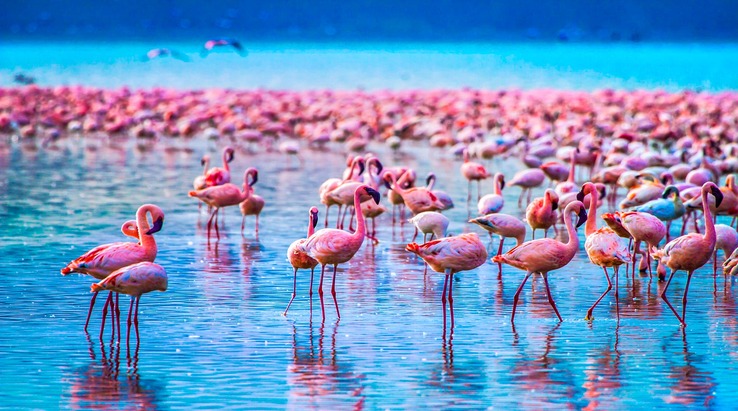
The baboons of Lake Manyara are among the most visible in northern Tanzania. Large troops move through the forest floor and along the roads, and blue monkeys watch from the branches. The lake shore draws a changing cast of birds, from pelicans, storks and ibises to waders and, at the right time, flamingos. The number of flamingos varies with the water level and the season, so we never promise a pink shoreline, but when they are present the sight is unforgettable.
A Lake Manyara National Park safari is not about ticking off a long list of big predators in one drive. It rewards patience, early starts and an interest in the whole landscape, including the trees, the water and the birds. Many guests say it is the park that surprised them most.
Where to Stay at Lake Manyara
- Lake Manyara Tree Lodge is the only lodge inside the park, with stilted treehouse-style suites set deep in mahogany forest.
- Lake Manyara Serena Safari Lodge is perched on the Rift Valley escarpment with panoramic views across the lake.
- Manyara Wildlife Safari Camp offers tented rooms with wide views, a comfortable mid-range base near the park.
See all of our Tanzania lodges for photos and full descriptions.
Best Time for a Lake Manyara National Park Safari
Lake Manyara can be visited all year. The dry months from June to October give the clearest roads, thinner vegetation and the easiest viewing of elephants, giraffe and buffalo, which stay closer to water and the forest. This is also the most popular period in northern Tanzania, so lodges fill earlier.
The wetter months, roughly November to May, turn the park green and quiet. Migratory birds arrive, the lake is often at its fullest and prices at many properties are lower. Rain is usually short and heavy, with bright spells in between, and the long rains in March, April and May are the wettest weeks. Lions are often reported in the trees in the wetter months, but they climb at other times too, so there is no reason to plan a trip around them alone. Mornings are cool at the escarpment and afternoons can be warm on the lake plain.
How to Get There
By road, your private Land Cruiser and driver-guide travel from Arusha along the main highway towards Karatu and Ngorongoro, which takes around two to three hours with a stop. The road is paved for most of the way, so it is an easy first-day drive after arriving at Kilimanjaro Airport. From Tarangire National Park the transfer is shorter, and from Karatu you can reach the park gate in well under an hour.
Light aircraft also serve an airstrip near the park from Arusha and other northern circuit airports, which is useful when you are linking Lake Manyara to the Serengeti on a fly-in itinerary. We arrange both options, and can drive one way and fly the other.
A Lake Manyara National Park safari combines easily with Tanzania’s wider safari circuit, and with a Kenya itinerary through our Kenya and Tanzania safari packages, which let you start in the Masai Mara and finish in northern Tanzania.
Things to Do on a Lake Manyara National Park Safari
- Game drives: morning and afternoon drives through the forest, along the floodplain and to the lake shore. The park’s tracks are well maintained, and your driver-guide will adjust the route to follow sightings.
- Forest elephant viewing: the shaded forest roads let you watch elephants at close range, often with calves in the group.
- Hippo pools: a designated spot lets you step out of the vehicle where permitted and watch hippos from a viewing point, with birds around the water.
- Birdwatching: the lake edge, the forest canopy and the woodland all give different species, and a good guide will point out the ones you might otherwise miss.
- Treetop walkway: a suspended canopy walkway has been built in the forest, giving a different angle on the birds and monkeys. Availability and operating arrangements can change, so we confirm it when we plan your itinerary.
- Cultural visits: in nearby Mto wa Mbu, a lively market town, you can take a guided walk through banana groves and local markets, or visit local craft makers.
- Night drives and guided walks: in some cases these are offered outside the park or in neighbouring areas by suitably licensed operators, and we can advise on what is available for your dates.
Sample Lake Manyara National Park Safari Itineraries
2 days / 1 night: Lake Manyara and Ngorongoro
Drive from Arusha to Lake Manyara for a morning game drive and a picnic lunch, then continue to your lodge on the escarpment or near Karatu. On day two, descend into the Ngorongoro Crater for a full morning of game viewing before returning to Arusha. It is the shortest way to combine two very different parks.
4 days / 3 nights: Tarangire, Lake Manyara and Ngorongoro
Spend the first day in Tarangire with its elephants and baobabs, then move to Lake Manyara for a second night and a morning drive. Finish with a crater descent from your base near Karatu. The route follows the road, so there is little wasted travel.
6 days / 5 nights: the northern circuit
Begin with Tarangire, add a morning at Lake Manyara and a night on the escarpment, then drive to the Ngorongoro Crater and continue to the central Serengeti for two nights. This is a classic first safari in Tanzania, with a strong mix of wildlife and landscape.
8 days / 7 nights: safari and Zanzibar
Take the six-day northern circuit and then fly from Arusha or the Serengeti to Zanzibar for a few nights on the beach. Our safari combinations page has more routes that join bush and beach.
Comparing the Lake Manyara Lodges
| Lodge | Style | Best for |
|---|---|---|
| Lake Manyara Tree Lodge | Stilted treehouse suites inside the park, in mahogany forest | Honeymoons, luxury travellers and forest atmosphere |
| Lake Manyara Serena Safari Lodge | Escarpment lodge with panoramic lake views | Families, comfort and sunset views |
| Manyara Wildlife Safari Camp | Tented rooms with wide views near the park | Value, mid-range budgets and relaxed stays |
Conservation at Lake Manyara
Lake Manyara National Park is managed by the Tanzania National Parks Authority, known as TANAPA, and the wider area has been recognised internationally as a biosphere reserve for its mix of habitats. The groundwater forest depends on springs that rise at the foot of the escarpment, so protecting the water and the land around the park matters as much as protecting the animals. Park fees support rangers, roads and conservation work, and good lodges employ staff from nearby villages and support local schools and health projects. When you travel with a local operator that uses community-linked lodges, more of your money stays in the area.
Photography Tips for Lake Manyara
The forest is shaded and the light is soft, so a fast lens or a camera that copes with high ISO settings will help. Elephants and monkeys under the canopy often sit in dappled light, which can confuse the exposure, so check your settings regularly. A mid-range zoom covers most sightings, and a longer lens helps for birds on the lake shore and lions in the trees. Early morning gives the best light on the lake and the escarpment wall, and late afternoon warms the acacia woodland. Keep a cloth to wipe dust from your lens on the drier roads.
Lake Manyara Compared With Other Tanzania Parks
Compared with the Serengeti, Lake Manyara is much smaller and has fewer big herds, but it is greener and offers close views of elephants and birds that you rarely get on open plains. Compared with Tarangire, it has more forest and a lake shore, while Tarangire is better for large elephant numbers in the dry season and for baobab scenery. Compared with the Ngorongoro Crater, it is quieter and offers a more varied landscape, whereas the crater has a much higher chance of seeing black rhino. Most travellers combine all of these rather than choosing between them.
What a Lake Manyara National Park Safari Costs
The main costs are the lodge, the park fee, the vehicle and driver-guide, fuel and any flights. Lodges range from value camps to luxury treehouse suites, and park fees are set by TANAPA per person per day and can change, so we confirm the current rates in your quote rather than publishing them here. Because Lake Manyara is close to Arusha and often visited for a morning or one night, it can be a cost-effective addition to a longer itinerary. We quote the whole trip as a single price per person, so you can compare options easily.
Packing List for a Lake Manyara National Park Safari
The park is warm for much of the year but cooler on the escarpment, so a Lake Manyara National Park safari calls for light layers in neutral colours, a wide-brimmed hat, sunglasses and good sun protection. Bring a fleece or light jacket for early mornings, a rain jacket in the wetter months, comfortable closed shoes, insect repellent for the evenings and binoculars for birds. A camera with a zoom lens, a power bank and a soft bag are useful, especially if you are flying between parks, since light aircraft have strict luggage limits. A scarf or buff helps on dusty tracks in the dry season.
Who a Lake Manyara National Park Safari Suits
A Lake Manyara National Park safari suits first-time visitors to Tanzania, families with children, birdwatchers, travellers with limited time and anyone who wants an easy first or last stop on the northern circuit. The short drives and varied scenery keep children interested, and the baboons and monkeys are a favourite with younger guests. It is less suited to travellers who want long, open-plains predator viewing, which is better found in the Serengeti, and it is not the best choice for rhino, which are more reliably seen in the Ngorongoro Crater.
How Many Nights Do You Need?
One night is enough to see the main habitats, with a full morning or afternoon on safari. Two nights allow a more relaxed pace, a second drive on a different side of the park and time for a cultural visit in Mto wa Mbu. Guests who love birds or photography often add an extra night, while travellers short of time can visit on a half-day game drive between Arusha and the crater highlands.
Tips for Your Lake Manyara National Park Safari
- Start early, because animals are most active in the cool hours and the forest is quietest.
- Bring binoculars for the birds and for lions resting high in the trees.
- Do not plan around a single sighting, since tree-climbing lions and flamingos cannot be promised.
- Carry sun protection, water and a light layer for the escarpment.
- Park fees are set by Tanzania National Parks and can change, and we confirm the current fees in your quote.
How We Plan Your Lake Manyara National Park Safari
We book your lodge, vehicle, driver-guide, park fees and any flights together, so you deal with one team from enquiry to departure. Our safaris run in private 4×4 Land Cruisers with a pop-up roof, reclining seats and charging ports. We tailor each itinerary to your dates, budget and interests, and we advise on how many nights to spend at each park so that you are not rushing between them.
Lake Manyara National Park Safari FAQs
Is a Lake Manyara National Park safari worth it?
Yes, especially for first-time visitors and travellers with limited time. The park is compact, easy to reach and full of variety, with forest, lake and woodland in one visit.
Can I see tree-climbing lions on a Lake Manyara National Park safari?
It is possible, and the park is known for it, but lions are wild animals and sightings cannot be guaranteed. Your driver-guide will check the favourite resting trees.
How many nights do I need?
One night is enough for a good introduction, and two nights give a slower pace and time to visit nearby Mto wa Mbu.
Are flamingos always at the lake?
No. Flamingo numbers change with the water level and the season, and in some periods there are few or none. Birdlife is always varied, whatever the flamingos are doing.
Can I do a Lake Manyara National Park safari as a day trip?
Yes. A day trip or half-day drive from Arusha works well, though an overnight stay gives you a more relaxed experience and an early start the next day.
Is Lake Manyara suitable for families?
Yes. The short drives, easy sightings and lively monkeys and baboons suit children, and we can recommend lodges that welcome families.
Start Planning Your Lake Manyara National Park Safari
A Lake Manyara National Park safari gives you forest elephants, lake birds, baboons and the chance of lions in the trees, all within easy reach of Arusha. Send us your dates, group size and budget, and we will design the route. Explore all our Tanzania national parks, read our Tanzania safari guide, or browse our Kenya and Tanzania safari packages and safari combinations for ideas.