

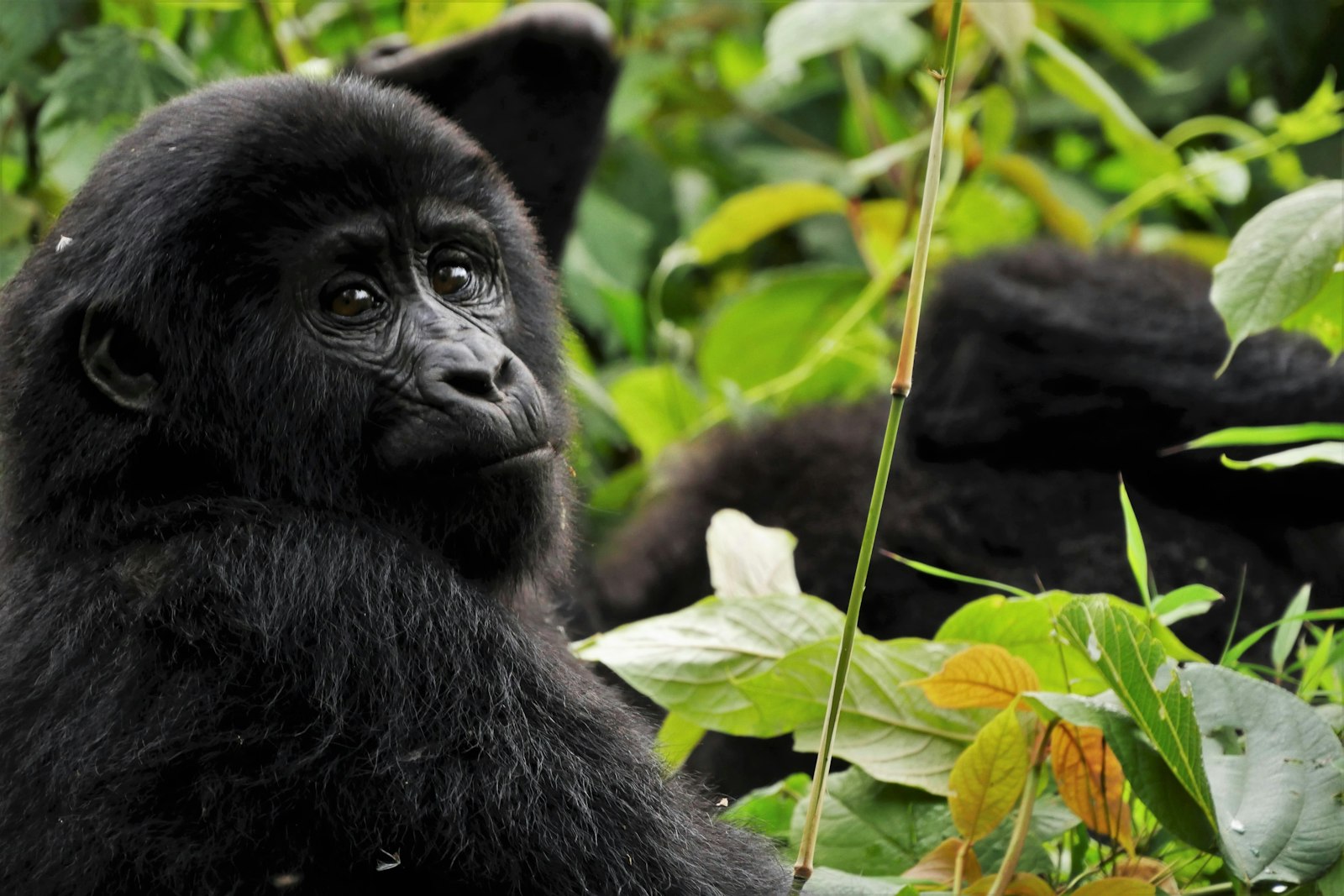
A Bwindi gorilla trekking safari is one of the great wildlife encounters in Africa. Bwindi Impenetrable National Park sits on steep, misty hills in south-western Uganda, and its forest is home to a large share of the world’s remaining mountain gorillas. You walk with an armed ranger and trackers into the trees, find a habituated gorilla family and spend an hour in its company, close enough to hear the animals breathe, feed and play.
This guide explains how a Bwindi gorilla trekking safari works: the four trekking sectors, what the walk is like, where to stay, when to go and how to reach the forest. Sense of Adventure is a licensed Nairobi-based operator, and we arrange the permits, transport and lodges together, alone or combined with Kenya, Rwanda or other Uganda parks.
Bwindi Impenetrable National Park at a Glance
Bwindi is an ancient rainforest on the edge of the Albertine Rift, close to the borders with Rwanda and the Democratic Republic of Congo. It is a UNESCO World Heritage Site, and its name describes it well: the slopes are steep, the undergrowth is thick and the forest is often wrapped in cloud. The park is managed by the Uganda Wildlife Authority, which issues gorilla permits and assigns each visitor to a gorilla family on the morning of the trek.
The forest is divided into four trekking sectors: Buhoma in the north, Ruhija in the east, and Rushaga and Nkuringo in the south. Each has its own gorilla families, lodges and landscape, and the right sector depends on your route, fitness and budget. Bwindi is also rich in other wildlife, including forest birds, butterflies and other primates, so it rewards more than a single day.
Why Choose a Bwindi Gorilla Trekking Safari
- A close encounter: you spend an hour with a habituated gorilla family, watching the silverback, mothers and infants at close range.
- A choice of sectors: four trekking areas give you options for scenery, difficulty and lodge style.
- A conservation story: permit fees fund protection of the gorillas and support communities living around the forest.
- Beautiful scenery: terraced hills, tea and banana gardens and misty forest make the journey part of the experience.
- More than gorillas: birdwatching, community walks and nearby lakes round out a stay of several nights.
- Easy to combine: a Bwindi gorilla trekking safari pairs naturally with Queen Elizabeth National Park, Lake Mburo and Mgahinga.
Wildlife on a Bwindi Gorilla Trekking Safari
The mountain gorilla is the main reason to come, but it is not the only animal in the forest. Bwindi also shelters chimpanzees, several species of monkey including the black-and-white colobus, forest elephants that are rarely seen, and a long list of birds. Bird lovers come for the Albertine Rift endemics, species found only in the mountains of this region, and the forest edge is lively with sunbirds, turacos and hornbills.
A Bwindi gorilla trekking safari is about patience and the quality of one sighting rather than quantity. Gorilla families move through the forest as they feed, so the trek can be short or long, and your trackers adjust the route as the animals move. Many guests say the hour with the gorillas passes in what feels like minutes.
Where to Stay in Bwindi
- Buhoma Lodge has comfortable timber cottages with forest views, close to the Buhoma trailhead and good value.
- Mahogany Springs offers spacious suites above the Munyaga River, a short drive from the trek briefing point.
- Bwindi Lodge is an eco-lodge facing the forest, with bandas that look over a gorilla corridor.
- Sanctuary Gorilla Forest Camp is the only camp inside the forest at Buhoma, a true wilderness stay.
See all of our Uganda lodges for photos and full descriptions.
Best Time for a Bwindi Gorilla Trekking Safari
Gorillas can be trekked all year, but the drier months of June to September and December to February make the trails easier and the hillsides less slippery. March to May and October to November are the main rainy periods. Trekking is still rewarding in the rains, the forest is at its greenest and permits are often easier to secure, but you should expect mud and plan for waterproofs. Bwindi is a rainforest, so a shower can arrive in any month.
Because permits are limited, we advise booking your Bwindi gorilla trekking safari several months ahead for the dry seasons, and earlier still for July, August and the Christmas period.
How to Get to Bwindi
By road, your private Land Cruiser and driver-guide travel from Entebbe or Kampala to Bwindi in a long day, usually with an overnight or a stop along the way. The scenic route via Mbarara and Kabale reaches Rushaga and Nkuringo, while the route through Queen Elizabeth National Park and Ishasha reaches Buhoma. Roads in the hills are winding, and the last stretch to some lodges is slow, so allow plenty of time.
Scheduled and charter flights serve airstrips near the forest, which saves a long day on the road each way. We arrange both options, and often suggest driving one way and flying the other. A Bwindi gorilla trekking safari combines easily with gorilla trekking in Rwanda for guests who want to compare the two countries.
Things to Do on a Bwindi Gorilla Trekking Safari
- Gorilla trekking: the main activity. After a briefing at the trailhead, you walk with a ranger and trackers until you find your assigned family, then spend an hour with them.
- Gorilla habituation experience: in some sectors you can join researchers and trackers while a gorilla family is being accustomed to human visitors, for a longer time with the animals. Availability is set by the Uganda Wildlife Authority.
- Birdwatching: guided walks on forest trails and along the park edge for Albertine Rift endemics and many other species.
- Community walks: visits to villages, a local healer, craft groups and the Batwa, the forest people, give context on life around the park.
- Waterfall and forest walks: gentler walks from the lodges for non-trekkers or a rest day between treks.
- Lake Bunyonyi: a peaceful lake with canoeing and hill views, popular as a stop on the way to or from the southern sectors.
Sample Bwindi Gorilla Trekking Safari Itineraries
3 days / 2 nights: fly-in gorilla trek
Fly from Entebbe to an airstrip near Bwindi, transfer to your lodge, and trek on the second morning. Spend the afternoon resting or walking in the community, and fly back on day three. It is the shortest way to meet the gorillas.
5 days / 4 nights: Bwindi and Lake Mburo by road
Drive from Entebbe to Lake Mburo on day one for a game walk or boat trip, continue to Bwindi for two nights with a trek on the full day between, and return via Kabale and Lake Bunyonyi. It mixes savannah and rainforest.
7 days / 6 nights: Queen Elizabeth and Bwindi
Spend two nights in Queen Elizabeth National Park for a boat cruise and game drives, drive through Ishasha for tree-climbing lions, then spend two nights at Buhoma for gorilla trekking and a rest day, before returning to Entebbe or flying out.
9 days / 8 nights: Uganda highlights
Combine Kibale chimpanzees, Queen Elizabeth, Bwindi gorillas and a stop at Lake Bunyonyi in one loop. It is a full introduction to Uganda’s primates and savannah, with a Bwindi gorilla trekking safari as the finale.
Comparing the Bwindi Lodges
| Lodge | Style | Best for |
|---|---|---|
| Buhoma Lodge | Timber cottages with forest views near the trailhead | Value, first-time trekkers and Buhoma treks |
| Mahogany Springs | Spacious suites above a river | Comfort, couples and families |
| Bwindi Lodge | Eco-lodge bandas facing the forest | Nature lovers and a quiet setting |
| Sanctuary Gorilla Forest Camp | Luxury camp inside the forest | Honeymoons and a special-occasion stay |
Conservation and the Gorilla Story
Mountain gorillas were once close to disappearing, and their recovery is one of the more hopeful stories in African conservation. Protection of the forest, anti-poaching patrols, veterinary care and carefully managed tourism have all played a part. Permit fees are shared between the Uganda Wildlife Authority and the communities around the park, which gives local people a direct reason to protect the forest. When you choose a Bwindi gorilla trekking safari, you help keep that system working, and the lodges we use employ staff from nearby villages.
Photography Tips for Bwindi
The forest is dark and the gorillas move, so light is the main challenge. Bring a camera that handles low light, a lens in the 70-200mm range or a flexible zoom, and spare batteries and memory cards. Flash is not allowed near the gorillas. Switch off the flash, shoot at a higher ISO setting and keep your movements slow. A small rain cover protects your gear on wet days, and a soft cloth wipes lens condensation. Rangers will tell you how close you can be, and the best photographs usually come from patience and calm.
Bwindi Compared With Other Gorilla Destinations
Compared with Mgahinga, Bwindi has many more gorilla families and a wider choice of lodges and sectors, so permits are easier to find. Compared with Volcanoes National Park in Rwanda, Bwindi’s forest is thicker and the hikes can be steeper, but permits are priced differently and the setting is wilder. Many guests also add chimpanzee tracking at Kibale or Kyambura Gorge to see more primates in one trip. Our Uganda national parks guide compares all of these side by side.
What a Bwindi Gorilla Trekking Safari Costs
The main costs are the gorilla permit, the lodge, the vehicle and driver-guide, and any flights. Permits and fees are set by the Uganda Wildlife Authority and confirmed in the quote, so you always see the current rate before you book. Lodges range from comfortable value options to luxury camps, and flying in adds airfare but saves a long day on the road. We quote the whole trip as a single price per person so you can compare options easily.
Packing List for a Bwindi Gorilla Trekking Safari
Pack sturdy, waterproof hiking boots with good grip, long trousers and a long-sleeved shirt to protect against nettles and insects, and a light waterproof jacket. Garden gloves help on steep, muddy sections where you hold branches. Bring a hat, insect repellent, a refillable water bottle and a small daypack. Choose neutral colours rather than bright ones. A walking stick is usually provided at the trailhead, and porters can be hired locally to carry your bag, which also supports community incomes. Keep a dry bag for your camera in case of rain.
Who a Bwindi Gorilla Trekking Safari Suits
A Bwindi gorilla trekking safari suits travellers who are reasonably fit and happy to walk on steep, uneven ground for a few hours. It is a once-in-a-lifetime trip for wildlife lovers, photographers, couples and active families with teenagers, since the Uganda Wildlife Authority sets a minimum age for gorilla trekking. Slower walkers are welcome: trackers set a gentle pace, and porters can help. It is less suited to travellers who cannot manage uneven terrain at altitude, and we can suggest gentler forest experiences for them.
How Many Nights Do You Need?
Two nights is the minimum, giving you an evening to settle, a full trekking day and a morning to leave. Three nights allow a rest day, a second trek or a visit to Lake Bunyonyi, and we recommend them for most guests. Guests who want a gorilla habituation experience or a longer birdwatching programme often add another night. If you are flying in, a short stay is possible, but you will feel the pace.
Tips for Your Bwindi Gorilla Trekking Safari
- Book permits early, because they are limited and dry-season dates sell out.
- Hire a porter, since it makes the climb easier and supports local families.
- Stay at least seven metres from the gorillas, and follow your ranger’s guidance on distance and noise.
- Do not trek if you have a cold or other infection, because gorillas can catch human illnesses.
- Permits and fees are set by the Uganda Wildlife Authority and can change, and we confirm the current rates in your quote.
How We Plan Your Bwindi Gorilla Trekking Safari
We book your permit, lodge, vehicle, driver-guide and any flights together, so you deal with one team from enquiry to departure. Our safaris run in private 4×4 Land Cruisers with a pop-up roof, reclining seats and charging ports. We tailor each itinerary to your dates, fitness, budget and interests.
Bwindi Gorilla Trekking Safari FAQs
How hard is a Bwindi gorilla trekking safari?
Treks last from under an hour to several hours, depending on where the gorillas are. The ground is steep and can be muddy, but trackers set a gentle pace and porters help.
How long do I spend with the gorillas?
One hour with your assigned family once you find them, with the rest of the time spent walking.
Which sector is best?
Buhoma is the most accessible, Rushaga has the most gorilla families, and Ruhija and Nkuringo offer quieter, more scenic treks. We choose based on your route and fitness.
Can children go gorilla trekking?
The Uganda Wildlife Authority sets a minimum age of 15 for gorilla trekking.
How far ahead should I book?
Several months ahead for the dry seasons, and earlier for July, August and December.
Start Planning Your Bwindi Gorilla Trekking Safari
A Bwindi gorilla trekking safari gives you an hour among mountain gorillas, rainforest scenery and a chance to support conservation. Send us your dates, group size and budget, and we will design the route. Explore all our Uganda national parks, read our gorilla trekking guide or see the Uganda safari holidays page for ideas.