An East Africa wildlife calendar is the most practical planning tool that most safari guests never consult in enough detail. Every month in Kenya, Tanzania, Uganda and Rwanda has specific wildlife events — not just “high season” or “low season” — and the guests who book the right destination for their travel month see things that guests in the wrong place at the wrong time entirely miss.
The Great Migration calving in January is not available in August. The Mara river crossings in September are not available in March. Gorilla trekking is possible year-round, but the dry months make it materially better.
This calendar — compiled from Sense of Adventure’s direct field experience across all four countries — gives you the wildlife event and destination combination for every month of the year, plus a quick-reference table, country-by-country notes, the weather pattern behind it all, and how prices change through the seasons.
✅ East Africa Wildlife Calendar Quick Answer
- Calving season: late January–February, southern Serengeti (Tanzania).
- Mara River crossings: July–September, Masai Mara (Kenya), with August and September usually the busiest.
- Gorilla trekking: June–September and December–February, Rwanda and Uganda.
- Best value: April–May and November, with lower rates and fewer vehicles.
- Safari plus beach: October and December–February for Kenya with Zanzibar or Diani.
Your Dates. The Right Destination. We Know Which.
Tell Sense of Adventure your travel months and we’ll identify the best East Africa destination and experience for your specific window. Contact us now.
How East Africa’s Seasons Work
Almost everything in this calendar follows the rain. East Africa sits on the equator, so instead of summer and winter it has wet and dry seasons. Kenya and northern Tanzania usually have two rainy periods: the long rains, roughly from late March to May, and the short rains, roughly from late October or November into early December. The rest of the year is mostly dry.
Dry seasons concentrate animals around rivers and waterholes and thin the vegetation, which makes wildlife easier to find. The rains bring fresh grass, newborn animals, migratory birds and lower prices. Neither is “bad”; they simply offer different experiences. Rwanda and Uganda follow a similar two-wet, two-dry pattern, which is why gorilla trekking is easiest from June to September and December to February.
The Complete East Africa Wildlife Calendar
Top experience: Serengeti Calving Season (Tanzania)
500,000 wildebeest calves born on the Ndutu short-grass plains. Maximum predator activity of the entire year — cheetah, lion, wild dog, hyena all hunting calves simultaneously. Kenya’s parks are dry and excellent with far fewer vehicles than peak season. Zanzibar is perfect. Gorilla trekking possible — some rain.
Top experience: Peak Calving + Amboseli (Kenya/Tanzania)
Calving peaks in early-mid February in the southern Serengeti. Amboseli is at its finest — dry, clear, Kilimanjaro fully visible in the morning, elephants active at the swamp. February is Sense of Adventure’s secret recommendation for guests wanting the best value and least crowded version of an extraordinary East Africa experience.
Top experience: Masai Mara (Kenya) — pre-rains excellent value
Late March is the tail of Kenya’s dry season — good conditions, lower prices than peak season, and the resident wildlife in excellent form. Gorilla trekking in Uganda/Rwanda is wetter — manageable but the forest floor is muddier. Tanzania herds moving north through the Serengeti.
Low season — genuine trade-offs, real savings
Long rains across Kenya and Tanzania. 20–40% accommodation price drops. Fewer vehicles, lush green landscape, active predators. Some camps close for maintenance. Tracks can be muddy. Sense of Adventure recommends for experienced safari travellers specifically seeking value.
Top experience: Gorilla Trekking Uganda/Rwanda + Grumeti crossings
June marks the start of East Africa’s best dry season for gorilla trekking — trails dry, forest less dense, trekking conditions best of the year. The Grumeti River crossings in western Tanzania begin as the migration moves north. Kenya’s parks are in peak dry-season condition.
Top experience: Masai Mara River Crossings — Peak Season
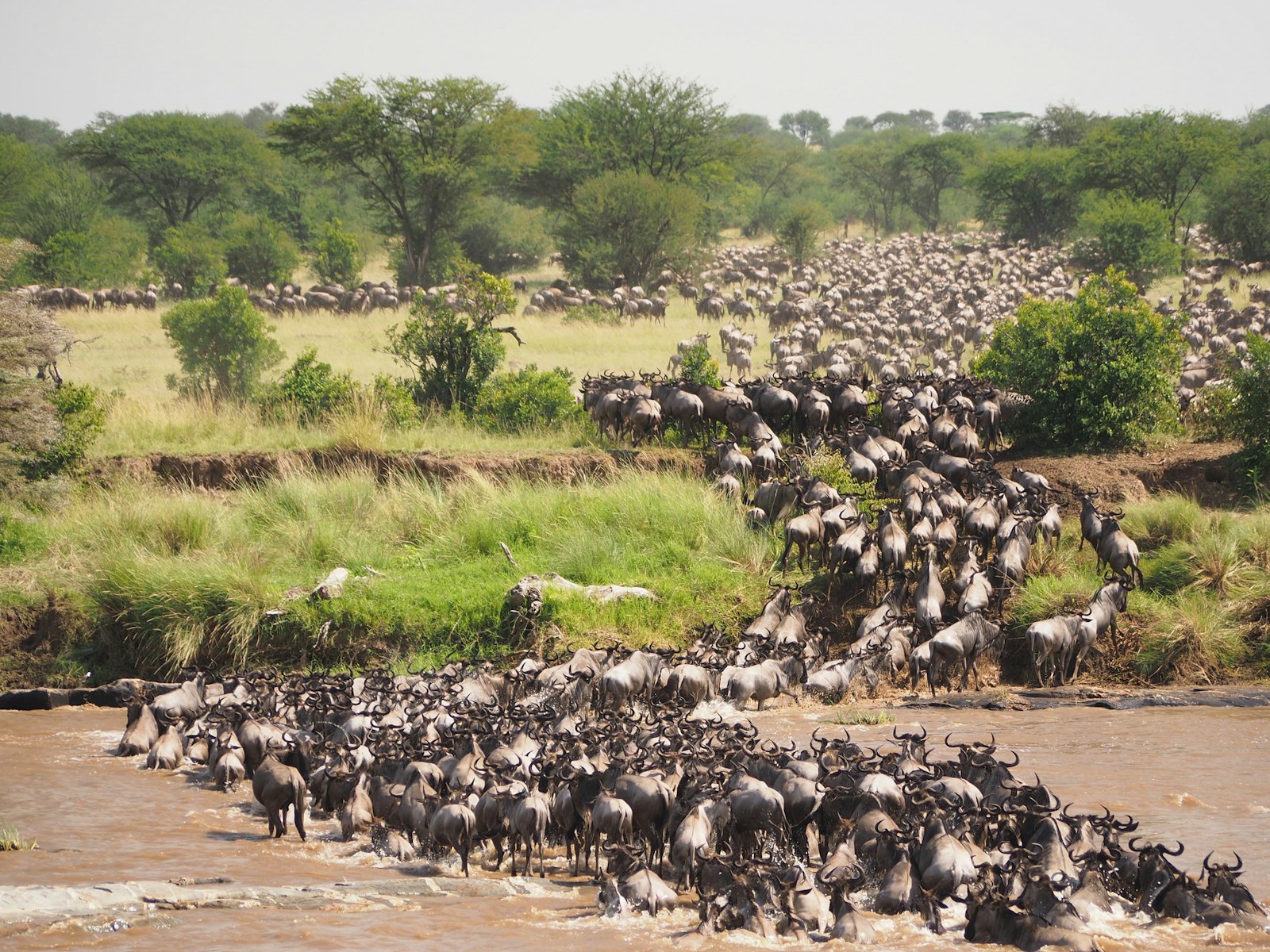
The Great Migration is fully in Kenya. River crossings at maximum frequency — July sees the first big crossings, August peaks with the highest herd density. Gorilla trekking at its most comfortable. All East Africa parks in excellent dry-season condition. Book 4–6 months ahead. The most in-demand period of the year.
Top experience: Masai Mara — Maximum Herd Density
The highest number of wildebeest simultaneously in the Mara ecosystem, the most crossings per week, and still excellent gorilla trekking conditions. The quality of September rivals August for the most consistent river crossing activity. Slightly fewer vehicles than August at some crossing points as peak school holidays end.
Top experience: Kenya + Perfect Zanzibar
The migration begins its southward return. Kenya’s resident wildlife is still excellent. October is one of Zanzibar’s finest months — the strong south-east trade winds of the mid-year have eased, the sea is calm, and the beaches are at their clearest. The October Mara + Zanzibar circuit is one of Sense of Adventure’s most popular combinations.
Short rains — variable but good value
November’s short rains are unpredictable — some years minimal, some years significant. Prices are reduced (15–25% below peak). Most camps remain fully open. Wildlife sightings remain excellent. For flexible guests, November offers the best combination of acceptable conditions and reduced pricing.
Top experience: Kenya + Perfect Zanzibar — Christmas at its best
The short rains usually ease in early December, leaving the rest of the month dry, warm and excellent across Kenya and Tanzania. Zanzibar is at peak beach form. The festive season produces full camps and premium rates (Dec 20–Jan 3) but the wildlife conditions are genuinely outstanding. Book by June–July for Christmas availability.
East Africa Wildlife Calendar at a Glance
Use this quick-reference table to match your travel month with the strongest destination. It summarises the month-by-month detail above.
| Month | Best wildlife highlight | Where |
|---|---|---|
| January | Wildebeest calving and predators | Southern Serengeti |
| February | Peak calving; clear Kilimanjaro views | Ndutu; Amboseli |
| March | Resident wildlife at good value | Masai Mara |
| April–May | Green season, empty parks | Kenya and Tanzania (open camps) |
| June | Gorillas; Grumeti crossings | Rwanda, Uganda; western Serengeti |
| July–August | Mara River crossings | Masai Mara, northern Serengeti |
| September | Maximum herd density | Masai Mara |
| October | Safari plus calm-sea beach | Kenya and Zanzibar |
| November | Value and fresh green grass | Kenya |
| December | Festive safari and beach | Kenya, Tanzania, Zanzibar |
Country-by-Country Highlights
Kenya
Kenya’s headline is the Great Migration in the Masai Mara from roughly July to October, but its other parks are excellent for much of the year. Amboseli shines in the dry months, Samburu’s special northern species are present year-round, and the coast is best outside the long rains. Our guide to the best time to visit Masai Mara goes deeper into Kenya’s flagship reserve. For general travel information, see the official Magical Kenya tourism site.
Tanzania
Tanzania follows the migration through the rest of the year: calving in the southern Serengeti from January to March, the herds moving through the central and western Serengeti from April to July, and the northern Serengeti crossings from July to October. Ngorongoro Crater is good in every month. Park information is available from Tanzania National Parks.
Rwanda and Uganda
Gorilla trekking runs every month, but the drier months are easier underfoot. Rwanda pairs gorillas with golden monkeys and the Big Five in Akagera, while Uganda adds chimpanzees and classic savannah parks. Read our Rwanda gorilla trekking guide for detailed planning advice.
Beyond the Big Mammals: Birds and Marine Life
Birdwatchers should look at the months from November to April, when migrant species from Europe and Asia join East Africa’s resident birds and many species are in breeding colours. The green season is also when the plains fill with nesting activity.
On Kenya’s coast, humpback whales pass offshore from roughly July to October, and whale shark sightings are more likely in the warmer months between about October and March. These marine highlights make a beach extension worth planning around your safari month.

Prices, Crowds and How to Choose Your Month
Prices follow demand. July to October and the Christmas period are the most expensive and busiest, and the best camps sell out months ahead. January to March offers excellent conditions at slightly lower rates. April, May and November bring the biggest savings, often 15–40% below peak, with fewer vehicles at sightings.
To choose, start with your fixed dates, then decide what matters most: a river crossing, newborn animals, gorillas, a beach finish or simply value. Tell us those priorities, and we will match them to the right parks. Popular starting points include a private Kenya safari for flexible game drives, or a short Kenya safari from Nairobi if you only have a few days. Our wider guide to the best time to visit East Africa for safari explores the same choices by destination.
Tell Us Your Month. We’ll Tell You Where to Go.
Every month in East Africa has the right destination and the right experience. Sense of Adventure knows which combination maximises every travel window. Contact us with your dates.
Frequently Asked Questions — East Africa Wildlife Calendar
What is the single best month for East Africa?
There is no single best month — there is a best month for each experience. For river crossings: August–September. For calving season predator action: late January–February. For gorilla trekking: June–September and December–February. For overall conditions, value, and a great first safari: January or February. For Christmas: December. Sense of Adventure gives specific recommendations based on what you want to see.
Is April or May worth visiting East Africa?
Yes — for experienced safari travellers specifically seeking value and empty parks. Wildlife is genuinely excellent; it is the rains and the occasional mud that make these months challenging, not the animals. Budget travellers who understand the trade-offs can experience extraordinary East Africa wildlife at 20–40% lower accommodation rates with significantly fewer vehicles at any sighting. Sense of Adventure books April–May safaris and always advises clearly on current conditions before departure.
When is gorilla trekking best?
June through September is the most reliable period — dry trails, less mud in the forest, and comfortable trekking conditions. December through February is the second-best window. The rains of March–May and October–November make gorilla trekking more physically demanding but do not prevent it. Sense of Adventure advises on the specific month trade-offs for gorilla trekking in both Rwanda and Uganda.
When can I see the Great Migration in Kenya?
The herds usually arrive in the Masai Mara around July and stay until October, with August and September typically bringing the most river crossings. Exact timing depends on rainfall, so crossings are never guaranteed on a given day. Staying three or four nights near the river gives the best chance.
Which month is best for a safari and beach holiday?
October and the dry months from December to February work best. The Masai Mara or Amboseli is in good condition, and Zanzibar and Kenya’s south coast have calm seas and sunshine. Avoid April and May, when the long rains affect both the parks and the coast.
Is November a good month for safari?
November can be very good value. The short rains usually fall as afternoon or evening showers rather than all-day rain, the grass turns green, and camps cut their rates. Some years are wetter than others, so a flexible itinerary with a mix of parks is wise.