Murchison Falls National Park stages one of the most violent, thrilling sights in African nature: the entire Victoria Nile — one of the world’s great rivers — forced through a gap barely seven metres wide, exploding into spray with a roar you feel through your feet before you see it. Uganda’s largest national park spreads across 3,893 km² of savannah, riverine forest and papyrus swamp on both banks of that same river, sheltering elephants, giraffes, lions and some of Africa’s largest hippo and crocodile concentrations.
A launch cruise to the base of the falls, followed by a game drive on the northern bank, is Uganda’s classic single day of safari — and Sense of Adventure builds every Uganda itinerary around getting it right. This guide covers the best activities, when to go, how to get there, costs and practical tips for Murchison Falls National Park.
✅ Murchison Falls National Park Quick Answer
- What it is: Uganda’s largest national park, where the Victoria Nile squeezes through a 7-metre gorge.
- Top activities: a launch cruise to the base of the falls, a hike to the top, northern-bank game drives and delta birding for the shoebill.
- Best time: the drier months, December to February and June to September.
- Getting there: about 5–6 hours by road from Kampala, or a short scheduled flight.
- From: our 4-day Uganda Murchison Falls & Nile Safari starts at USD 1,500 per adult.
Hear the Nile Before You See It
Launch cruise, waterfall hike and game drive — Uganda’s essential day, arranged properly. Ask us to plan it.
How the Nile Gets Squeezed Into a Roar
Upstream, the Victoria Nile runs wide and languid; at Murchison, it hits a narrow fault in the rock and is compressed into a gap variously measured at six to eight metres before plunging a total 43 metres in a series of drops, generating a spray cloud visible long before the sound arrives. The volume forced through that gap is immense, and the falls are often described as among the most powerful on earth for their width.
Below the falls, the river widens again into slower channels thick with hippo pods and Nile crocodiles among the largest in Africa, while the northern savannah supports elephants, giraffes, buffalo and lion prides. The park’s division by the river creates two distinct experiences: a wildlife-dense northern bank and a quieter, more forested southern section that includes Rabongo Forest, home to chimpanzees and other primates.

The 5 Essential Murchison Falls National Park Experiences
The Launch Cruise to the Falls — the Nile’s wildlife highway
A boat cruise from Paraa upriver to the base of the falls is Murchison’s signature activity — hippo pods surfacing constantly, some of Africa’s largest crocodiles hauled out on sandbanks, elephants and buffalo drinking at the water’s edge, all building toward the spray and roar of the falls themselves at the turnaround point.
Hiking to the Top of the Falls — looking straight down the gap
A short trail (or a shuttle plus a walk) leads to viewpoints directly above the narrow chute where the entire Nile forces itself through solid rock — a truly dizzying, thundering sight best combined with the boat cruise for the full before-and-after perspective of the same water.
Northern Bank Game Drives — Uganda’s best savannah wildlife
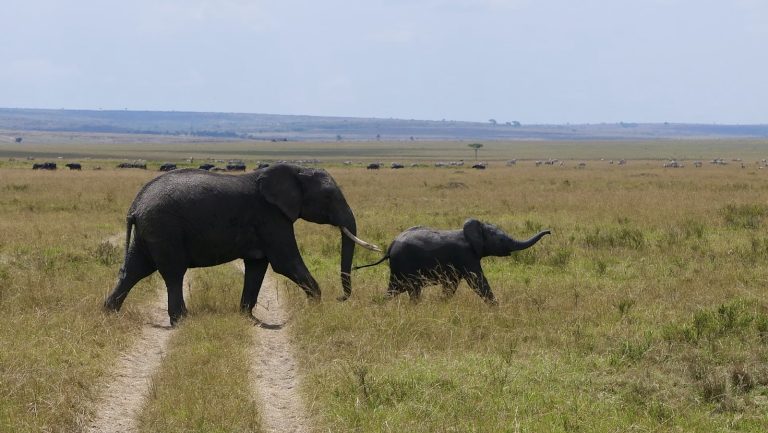
The park’s northern sector holds strong populations of elephant, giraffe (the localised Rothschild’s subspecies), buffalo and lion, and lions are occasionally seen resting in trees. Dawn and dusk drives along the delta and Buligi circuits regularly deliver big-game viewing that is hard to match elsewhere in the country.
Chimpanzee Trekking in Budongo or Rabongo — primates beyond the gorillas
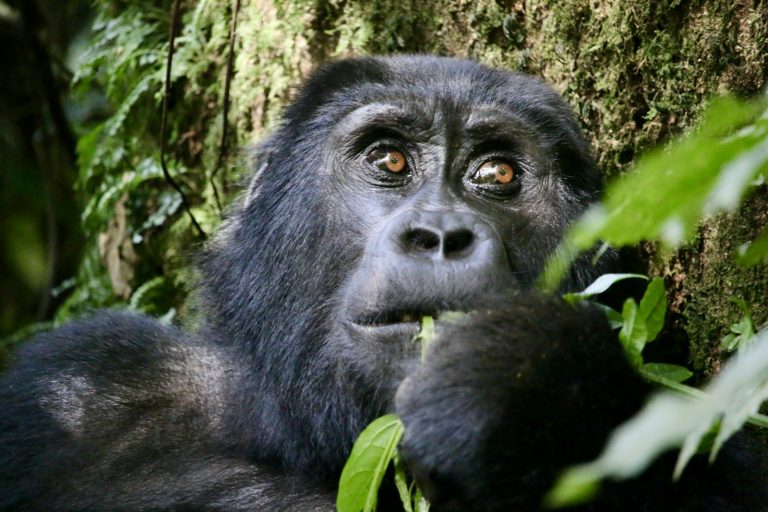
Murchison’s forested edges — particularly Budongo Forest near the park and Rabongo Forest within it — offer chimpanzee trekking as a lower-cost, lower-altitude alternative or complement to Uganda’s famous gorilla trekking, with good habituation and solid sighting rates in Budongo.
Delta Birding by Boat — the shoebill’s best address
The Nile delta where the river meets Lake Albert is prime habitat for the prehistoric-looking shoebill stork, one of Africa’s most sought-after birds, alongside pelicans, herons and fish eagles. A dedicated delta boat trip (separate from the falls cruise) is the specialist birder’s must-do.
Uganda’s Classic Day, Done Properly
Cruise, falls hike and game drive in the right order and light — ask us to build your Murchison Falls itinerary.

Murchison Falls National Park North and South of the Nile
The river splits the park into two very different halves, and most visitors spend time in both. Understanding the layout makes it much easier to plan your days.
The northern bank: big game and the delta
North of the Nile lies open, rolling savannah dotted with borassus palms. This is where the game drives happen. The Buligi area and the tracks towards the Albert Nile delta are the most productive, with elephants, Rothschild’s giraffes, buffalo, Uganda kob, Jackson’s hartebeest and lions. Early mornings are best, when the light is soft and predators are still active.
The southern bank: the falls and the forests
South of the river the land rises into thicker bush and forest. The road to the top of the falls runs here, as does access to Rabongo Forest. Just outside the park, the Kaniyo Pabidi area of Budongo Forest is the main base for chimpanzee trekking.
Paraa: the meeting point
Paraa sits on the river in the middle of Murchison Falls National Park. A vehicle ferry links the two banks here, and the launch cruises to the falls depart from the jetty. Most itineraries pass through Paraa at least twice a day.

Best Time to Visit Murchison Falls National Park
Murchison Falls National Park is open all year, and the falls are impressive in every season. The main difference is how easy the roads are and how concentrated the wildlife is.
| Months | Conditions | What to expect |
|---|---|---|
| December to February | Drier, hot | Good game viewing; short grass and animals near water |
| March to May | Wetter | Green scenery, fewer visitors; some tracks muddy |
| June to September | Drier, pleasant | Popular months; easy driving and strong wildlife |
| October to November | Wetter | Lush, quiet and good for birds; plan for showers |
Rain patterns vary from year to year, so treat this as a guide rather than a promise. Birders often enjoy the wetter months, when migrant species arrive and the countryside is at its greenest.
Wildlife to Look For in Murchison Falls National Park
Murchison Falls National Park has recovered well from the hard years of the 1970s and 1980s, and today it offers some of the best savannah game viewing in Uganda.
- Mammals: elephants, buffalo, Rothschild’s giraffes, lions, leopards, spotted hyenas, Uganda kob, oribi, waterbuck and warthogs.
- River life: large pods of hippos and big Nile crocodiles, best seen from the launch.
- Primates: chimpanzees in the forests, plus olive baboons, black-and-white colobus and patas monkeys.
- Birds: the shoebill in the delta papyrus, Goliath herons, African fish eagles, carmine bee-eaters and Abyssinian ground hornbills on the grassland.
The Rothschild’s giraffe is a highlight. This pale-legged giraffe is one of Africa’s rarer forms, and the northern bank holds a healthy population.
How to Get to Murchison Falls National Park
By road from Kampala or Entebbe
The drive takes about five to six hours from Kampala. Many trips break the journey at the Ziwa Rhino Sanctuary, where you can track white rhinos on foot with a ranger. Rhinos are no longer found in Uganda’s national parks, so this is a valuable addition. Our 4-day safari includes it on the way north.
By air
Scheduled and charter flights from Entebbe reach the airstrips at Pakuba and Bugungu in around an hour. Flying saves most of a day and suits travellers with limited time, or those combining Murchison with Bwindi in the far south-west.
From Kenya
Travellers coming from Nairobi usually fly to Entebbe, which takes just over an hour. It is easy to add a few days in Uganda to a Kenya safari, either before or after the Masai Mara.
Where to Stay in Murchison Falls National Park
Lodges are spread along both banks. North-bank lodges near Paraa put you closest to the game drive circuits and the launch jetty. South-bank lodges on the river are quieter and convenient for the top of the falls and Budongo. There are options from simple bandas and tented camps to comfortable lodges with pools, and we match the choice to your budget and route.
Sample 4-Day Murchison Falls Itinerary
This outline follows our Uganda Murchison Falls & Nile Safari, which can be run privately and adjusted to your dates.
- Day 1: drive north from Entebbe, stopping at Ziwa Rhino Sanctuary to track rhinos, then continue to the park.
- Day 2: morning game drive on the northern bank, then an afternoon launch cruise to the base of the falls.
- Day 3: hike to the top of the falls, with optional birding, a delta boat trip or a community visit.
- Day 4: return to Entebbe for your onward flight.
With more time, add chimpanzee trekking in Budongo or continue south to Kibale, Queen Elizabeth National Park and Bwindi for gorillas.
Murchison Falls National Park Costs and Fees
Our 4-day Uganda Murchison Falls & Nile Safari starts from USD 1,500 per adult, including park entrance fees, a safari vehicle, a professional guide and transfers. Final prices depend on season, lodge choice and group size.
Park entry fees are set by the Uganda Wildlife Authority and are charged per person per visit. The launch cruise, the delta boat trip and chimpanzee trekking are usually paid separately. If you add gorillas in Bwindi, a Uganda gorilla permit costs USD 800 per person.
Practical Tips for Murchison Falls National Park
- Tsetse flies: they are present in parts of the park and are drawn to dark blue and black. Wear light, neutral colours and carry repellent.
- Sun and heat: the northern savannah gets hot by midday; bring a hat, sunscreen and plenty of water.
- Ferry times: the Paraa ferry runs to a timetable, so your guide will plan game drives around it.
- Health: Uganda no longer requires a yellow fever certificate for entry (removed in October 2026), but the vaccine is still recommended and Kenya, Rwanda or your airline may ask for proof when you travel on; malaria precautions are advised. Speak to your doctor before you travel.
- Camera kit: a waterproof cover is useful on the launch cruise, as spray can reach the boat near the falls.
- Travel advice: check the latest GOV.UK travel advice for Uganda before you book.
Murchison Falls National Park Facts
- The gap: the Nile is compressed to roughly 6-8 metres wide at the falls, dropping 43 metres in total.
- Scale: Uganda’s largest national park at 3,893 km², split by the Victoria Nile into northern and southern sectors.
- Wildlife: large elephant, giraffe and buffalo populations plus lions on the northern bank.
- Birding: the Nile delta is one of the most reliable places in Africa to find the shoebill stork.
- Primates: Budongo and Rabongo forests offer chimpanzee trekking as an alternative to gorilla trekking.
- Access: about 5-6 hours by road from Kampala, or a shorter scheduled flight to the park’s airstrips.
Building Murchison Falls Into a Uganda Safari
Murchison anchors our 4-day Murchison Falls & Nile Safari, and pairs well with the Kazinga Channel further south on a longer trip — see our 7-day Uganda safari itinerary. Gorilla trekkers should read the Bwindi gorilla trekking guide to combine primates and the Nile in one trip. If you are starting in Kenya, see how to add Uganda to a private Kenya safari.
The World’s Most Powerful Squeeze of Water
Hippos, crocodiles and a waterfall you feel before you see. Message us to add Murchison Falls to your Uganda trip.
Frequently Asked Questions
What makes Murchison Falls unique?
Murchison Falls forces the entire Victoria Nile — one of the world’s great rivers — through a gap only about 6-8 metres wide, making it one of the most powerful waterfalls on earth for its width. The roar and spray are dramatic even before the falls come into view.
Can you do a boat cruise at Murchison Falls?
Yes — a launch cruise from Paraa to the base of the falls is Murchison’s signature activity, passing large hippo pods, some of Africa’s biggest Nile crocodiles and abundant birdlife before reaching the thunderous spray at the falls themselves.
Is there wildlife to see at Murchison Falls besides the waterfall?
Yes — Murchison Falls National Park’s northern sector holds strong populations of elephant, Rothschild’s giraffe, buffalo and lion, with Uganda kob and hartebeest on the grassland. The Nile delta is also one of the best places in Africa to find the rare shoebill stork.
Can you see chimpanzees near Murchison Falls?
Yes — Budongo Forest near the park and Rabongo Forest within it both offer guided chimpanzee trekking, giving Murchison Falls visitors a primate experience alongside (or instead of) Uganda’s famous mountain gorilla trekking in Bwindi.
How do you get to Murchison Falls National Park?
Murchison Falls is about 5-6 hours by road from Kampala, or reachable by a shorter scheduled flight to one of the park’s airstrips. Many itineraries combine it with Kibale or Queen Elizabeth National Park further south for a fuller Uganda safari circuit.
When is the best time to visit Murchison Falls National Park?
The best time to visit Murchison Falls National Park is during the drier months, from December to February and from June to September. Roads are easier, the grass is shorter and wildlife gathers near the Nile. The falls flow strongly all year, and the wetter months bring green scenery and good birding.
How many days do you need in Murchison Falls National Park?
Two to three nights is ideal. That gives you time for a launch cruise to the falls, a hike to the top, at least two game drives on the northern bank and, if you like, a delta boat trip for the shoebill. Our 4-day safari from Entebbe includes rhino tracking at Ziwa on the way.