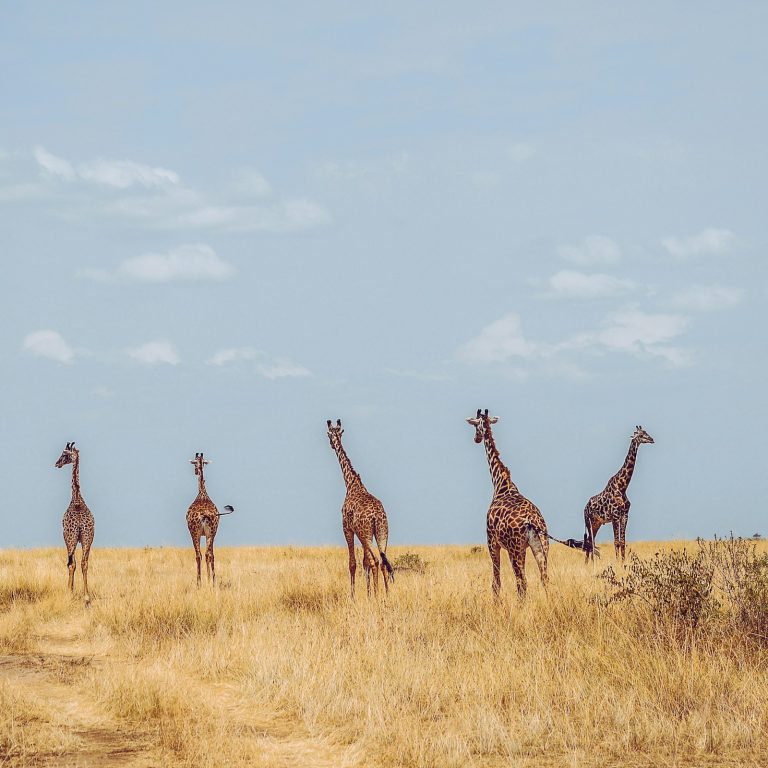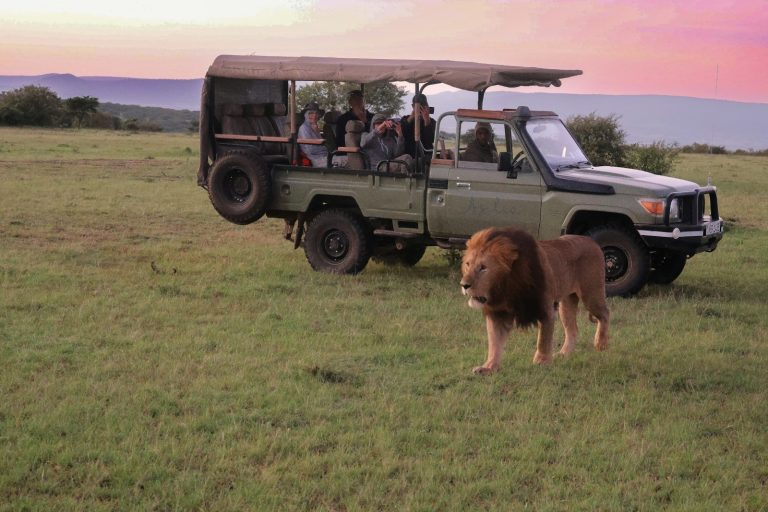
Dawn on the plateau, and the air is cold enough to see your breath. Your vehicle rolls to a stop beside a stand of whistling thorn. Ahead, a line of Grevy’s zebra steps out of the mist, their narrow stripes sharp against the gold grass. A reticulated giraffe lifts its head from an acacia. Then your guide cuts the engine and points: two lionesses are lying on a termite mound, watching the zebra as closely as you are.
Mugie Conservancy is a private wildlife conservancy of roughly 49,000 acres in northern Laikipia, Kenya, where cattle ranching and conservation share the land. It is known for the Mugie Five: reticulated giraffe, Grevy’s zebra, beisa oryx, Jackson’s hartebeest and striped hyena, plus lions, elephants, night drives and kayaking on Mugie Dam.
Sense of Adventure is a Nairobi-based safari company at Mountain Mall on Thika Road, licensed by Kenya’s Tourism Regulatory Authority (TRA1/47/C01/77087). We plan Laikipia safaris throughout the year, and the Mugie Conservancy is where we send travellers who want northern species, cool nights and a working ranch far from the crowds. This guide covers the land, the people, wildlife and honest odds, things to do, fees, access, seasons, rules, where to stay and a sample itinerary. For the wider region, read our Laikipia Plateau safari guide.
Table of Contents

✅ Mugie Conservancy: The Quick Answer
- Where: the far north-west of Laikipia County, on the Rumuruti to Maralal road, bordering Samburu and Baringo counties.
- Best for: the Mugie Five, lions, night drives, walks, kayaking, family stays and a quiet, uncrowded safari.
- Best time: June to September and mid-December to February; the long rains run from March to early June.
- Entry fee: the lodge operator publishes a conservancy fee of US$100 per adult and US$50 per child per night.
- How long to stay: two to three nights, or more as part of a longer Laikipia and Samburu route.
- Getting there: about six hours by road from Nairobi, or a scheduled or charter flight to Mugie airstrip.
🦓 Ready to Tick Off the Mugie Five?
Tell us your dates and who is travelling, and we will plan your northern Laikipia stay, flights or road transfer.
🦒 Plan My Mugie SafariPrefer to talk first? 💬 WhatsApp Us Now or call +254 799 160 081
What Is the Mugie Conservancy?
The Mugie Conservancy is a family-owned ranch in northern Laikipia that runs livestock, farming and tourism side by side, with a large area set aside for wildlife.
Operators describe it as Laikipia’s most north-westerly conservancy and an important wildlife corridor between west Laikipia and the Mount Kenya highlands. Size figures vary between about 46,000 and 50,000 acres, or roughly 20,000 hectares, depending on the source. The name Mugie is said to mean earth in the Maa language.
A working ranch with wildlife
Like many Laikipia properties, the Mugie Conservancy began as a cattle ranch. Today cattle graze in planned areas, while wild animals move freely across the land. Income from tourism, livestock and farming pays for rangers, roads and community work. For you, it means wide open country, very few vehicles and a real sense of how people and wildlife share northern Kenya.
The landscape
The land sits at about 5,500 to 6,000 feet, so days are warm and nights cool. Open grassy plains and acacia savannah run below the Karisia Hills. At the centre lies Mugie Dam, with a small island, where hippos have recently settled. From the higher ground you can look south-east towards Mount Kenya on a clear morning.
The People of Northern Laikipia and the Mugie Conservancy
The Mugie Conservancy shares its borders with Pokot, Samburu and Turkana herding communities, and its future depends on good relations with them.
Northern Laikipia has a hard recent history. In early 2017, during a severe drought, armed herders moved onto several ranches, including Mugie, and wildlife was killed. Reports credit the ranch’s links with its neighbours for helping it come through that period. We found no reports of recent incidents, but we always check the latest situation before you travel.
Cattle, markets and shared grazing
In 2017 the ranch started a livestock-to-market programme with its neighbours. Mugie fattens community cattle on its pasture and sells them, keeping 10% of the sale and a small monthly fee per animal. Herders get better prices and grazing in dry times, and the land is managed with a plan instead of open competition.
Rangers, bloodhounds and community projects
A bloodhound tracking unit has worked on the ranch since 2002, following poachers and helping nearby villages trace stolen livestock. Collared lions are tracked to reduce conflict with herders. The ranch has also supported a local primary school, health and education work, and research on cheetahs and lions. When you pay the conservancy fee, you help keep these teams in the field.
Expert tip from our Nairobi team: ask to watch the bloodhound team in training. It is one of the most memorable hours of any Laikipia safari, and the handlers explain how tracking protects both wildlife and the neighbouring families.
Wildlife in the Mugie Conservancy: The Mugie Five and More
The Mugie Conservancy is best known for northern species you will not find in the Masai Mara, alongside healthy numbers of lions and elephants.
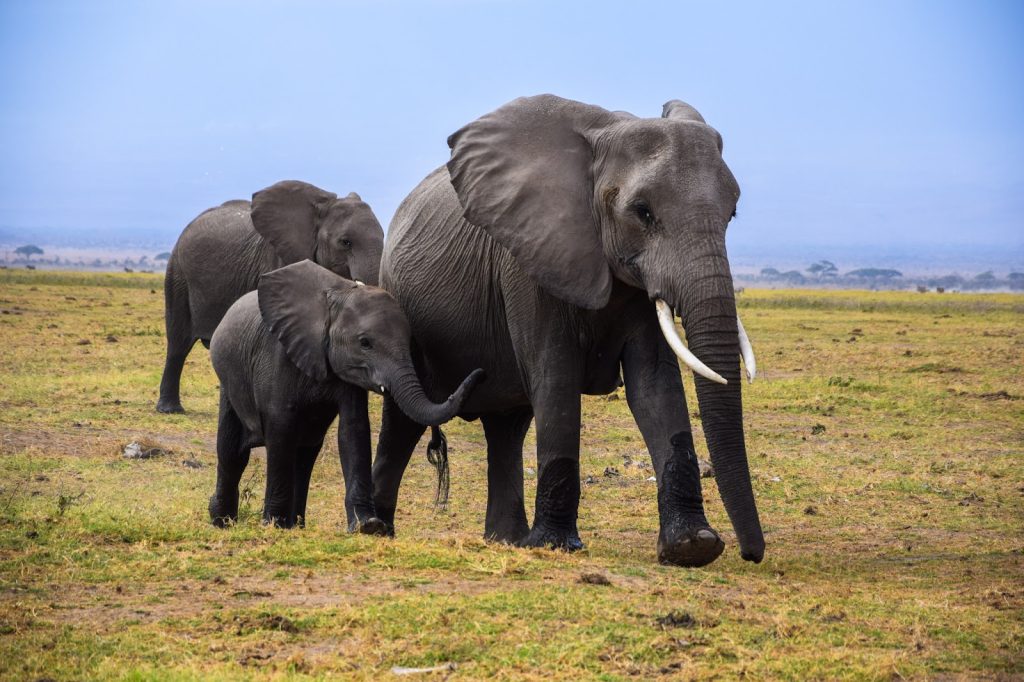
The Mugie Five are the reticulated giraffe, Grevy’s zebra, beisa oryx, Jackson’s hartebeest and striped hyena. Operators report around 56 Grevy’s zebra and about 40 oryx, three resident lion prides plus two dispersal groups, and resident cheetah and leopard. Elephants, buffalo, eland, impala and, now and then, wandering wild dogs complete the picture.
What happened to the rhinos?
The ranch once ran a black rhino sanctuary. It began in 2004 with 20 animals, and 19 calves were born by 2012. Poaching from 2009 killed several animals, and the last rhinos were moved to safer sanctuaries in early 2012. There are no rhinos here now. If rhinos are on your list, add a night at a nearby sanctuary; see our rhino sanctuary lodges guide.
Honest sighting odds in the Mugie Conservancy
| Species | Chance on a 3-night stay | Notes |
|---|---|---|
| Reticulated giraffe | Very high | Seen on most drives |
| Grevy’s zebra | High | Small, well-known herds on the plains |
| Elephant | High | Moves through the ranch; numbers vary by season |
| Beisa oryx | Good | Open, drier grassland |
| Jackson’s hartebeest | Good | A Laikipia speciality |
| Lion | Good | Several prides; tracked by the team, not guaranteed |
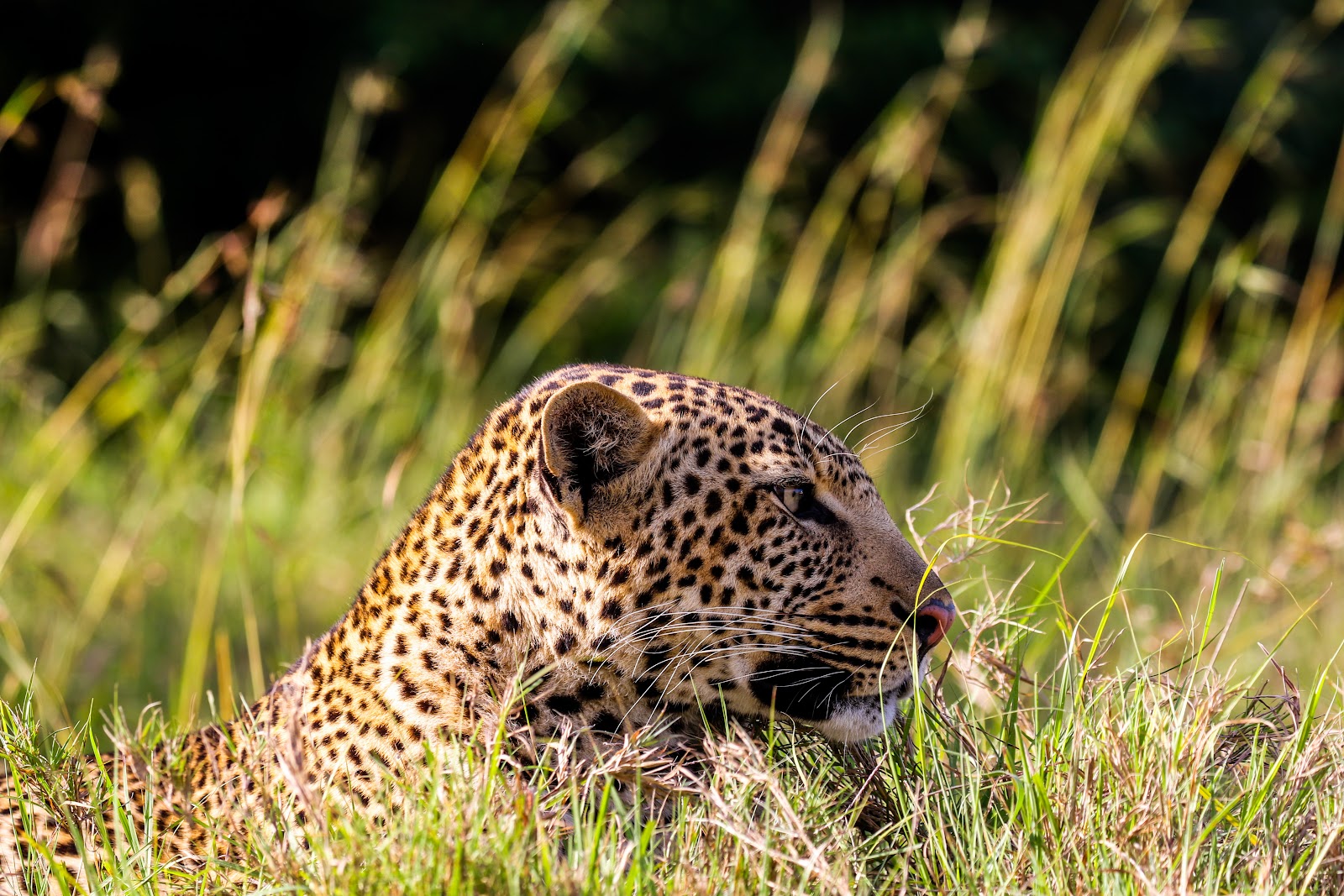
| Leopard | Fair | Best chance on night drives |
| Cheetah | Fair | Wide-ranging; sightings vary |
| Striped hyena | Low to fair | Shy and nocturnal; a real prize |
| Wild dog | Low | Occasional visitors |
These are our honest estimates, not promises. Northern Laikipia rewards patience: the quiet hours between sightings are part of the magic.
Birds
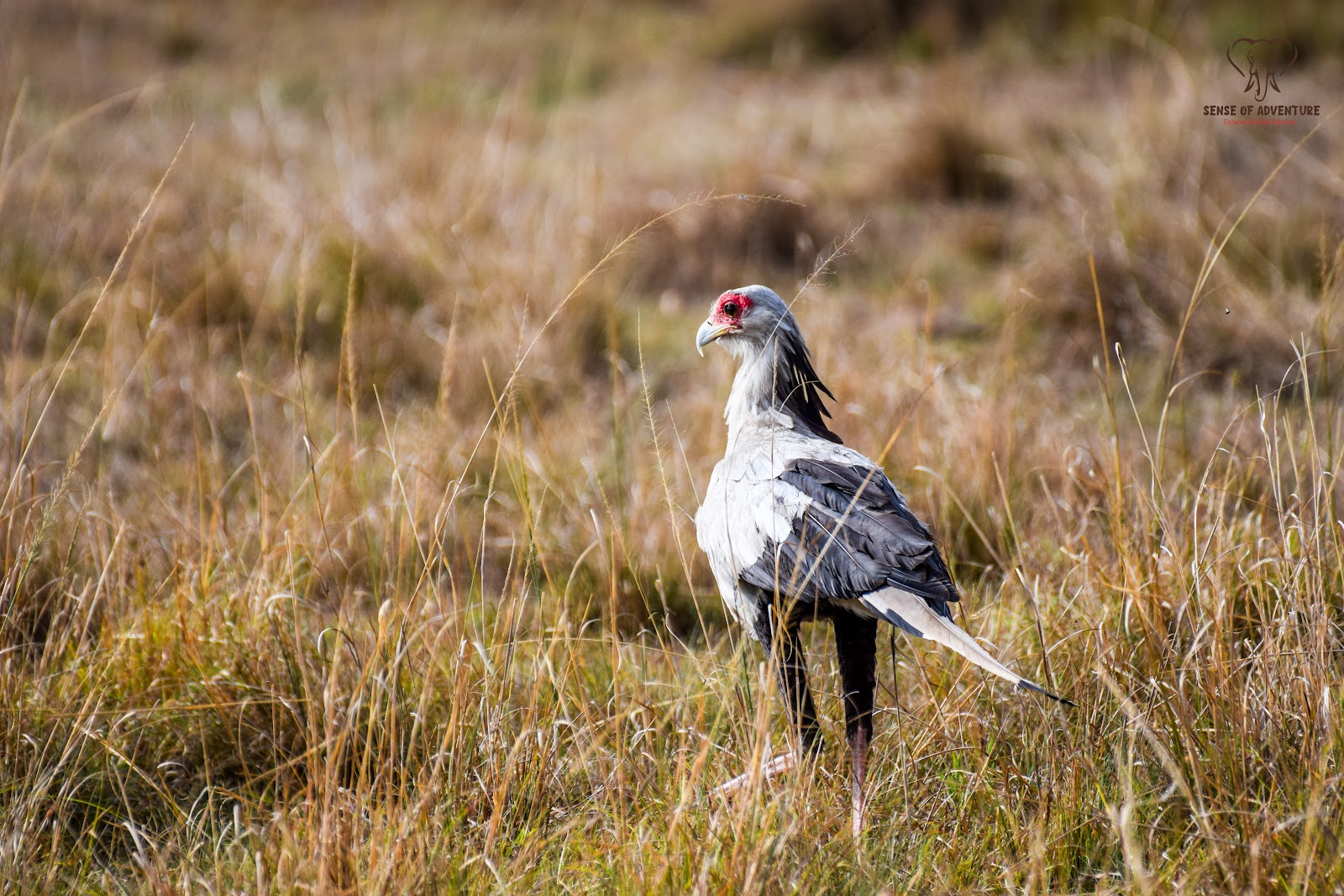
Birding is very good, from secretary birds and bustards on the plains to waterbirds at the dam. The National Museums of Kenya recognise the area as an important breeding site for the grey crowned crane, a striking bird you may see near wetter ground.
Things to Do in the Mugie Conservancy
The Mugie Conservancy is private land, so you can do far more than drive: walks, night drives, paddling and cultural visits are all possible.
Game drives and night drives
Morning and afternoon drives cover the plains, the hills and the dam. After dark, a night drive with a spotlight gives you the best chance of leopard, striped hyena, genets and other small night creatures. Night drives are not allowed in Kenya’s national parks, so they are a big reason to choose a conservancy.
Kayaking and canoeing on Mugie Dam
Paddling on Mugie Dam is listed by Magical Kenya as one of the country’s Signature Experiences. You glide past waterbirds, with giraffes on the shore and the Karisia Hills behind. Your guide will choose a safe stretch and time, away from hippos.
Walks, e-bikes and golf
Guided walks show you tracks, birds and plants up close. Mugie House also offers e-bikes and a small golf course, billed as Kenya’s most northerly. Ekorian’s camp lists fishing for tilapia and catfish and camel rides, a hit with children.
Meeting the neighbours
Visits to Pokot or Samburu families can be arranged through the lodges. Go with respect and curiosity, ask before taking photographs, and let your guide explain local customs.
🚣 Kayak, Night Drive or Bloodhound Morning?
Tell us what your group loves most, and we will shape your Mugie days around it, with honest tips for families and keen photographers.
🧭 Shape My Mugie DaysGetting to the Mugie Conservancy
You can reach the Mugie Conservancy by road from Nairobi or Nanyuki, or by light aircraft to the ranch airstrip.
By road
The Mugie Conservancy lies on the road between Rumuruti and Maralal. The lodge operator gives the drive as about six hours from Nairobi and three hours from Nanyuki. A 4×4 is needed on the final stretch, especially after rain. Many guests combine the drive with Ol Pejeta or Lake Nakuru on the way; see our Kenya safari from Nairobi guide.
By air
Mugie airstrip is about 15 to 20 minutes from Mugie House. Governors’ Aviation runs daily scheduled flights from Wilson Airport to Laikipia airstrips, and Airkenya and Safarilink fly to Loisaba, about 90 minutes away by road. Charters land at the ranch strip. Pack soft bags within the limits in our safari luggage weight limits guide.
| Route | Typical time | Notes |
|---|---|---|
| Nairobi to Mugie by road | About 6 hours | 4×4 for the final section |
| Nanyuki to Mugie by road | About 3 hours | Good if you start at Ol Pejeta or Mount Kenya |
| Scheduled flight to a Laikipia strip | Check timings when booking | Flights may stop at other strips first |
| Flight to Loisaba, then road | Plus about 90 minutes | Airkenya and Safarilink |
| Mugie to Samburu | Several hours by road | Ask us for the best route in season |
Mugie Conservancy Fees 2026
The Mugie Conservancy charges a nightly conservancy fee, which the lodge operator lists at US$100 per adult and US$50 per child.
This figure comes from the Mugie House fact sheet dated late 2025, the most recent published source we found. Fees can change, so we confirm them in your written quote. There is no Kenya Wildlife Service park fee here, as the conservancy is private land. If your trip also includes national parks, see Kenya national parks entrance fees 2026.
| Fee | Adult | Child | Notes |
|---|---|---|---|
| Conservancy fee (per night) | US$100 | US$50 | As published by the lodge operator, late 2025 |
| KWS park fee | Not applicable | Not applicable | Private conservancy |
| Activities | Often included | Often included | Check what your lodge includes |
| Flights and transfers | Varies | Varies | Quoted with your trip |
📅 Get a Free, No-Obligation Safari Quote
Send us your dates and group size, and we will reply with a written Mugie plan with the conservancy fee, flights or road transfers and lodge costs set out clearly.
✉ Send Us Your Dates on WhatsAppBest Time to Visit the Mugie Conservancy
The best time to visit the Mugie Conservancy is June to September and mid-December to February, when it is dry and game is easy to find.
In the dry season, days are around 26°C and nights can drop to about 10°C. The long rains fall from March to early June, and the short rains in October and November. The green months bring lush grass, newborn animals and fine birding, but some tracks become slippery. See our Kenya weather by month guide for more.
| Months | Conditions | What to expect |
|---|---|---|
| January to February | Dry and warm | Excellent game; clear skies |
| March to May | Long rains | Green, quiet, fewer visitors |
| Early June | Rains ending | Fresh grass; game starts to gather |
| June to September | Dry, cool nights | Peak season; best walking weather |
| October to November | Short rains | Green flush; migrant birds arrive |
| December | Drying out | Good game; busy over the holidays |
Expert tip from our Nairobi team: pack a proper warm layer. Laikipia mornings and night drives are colder than most visitors expect, and a fleece and hat make the difference between shivering and enjoying the spotlight.
Rules and Safety in the Mugie Conservancy
The Mugie Conservancy is a working ranch with wild animals, so you follow your guide’s lead and the lodge’s rules.
- Guided activities: walks, night drives and paddling are led by trained guides.
- Respect livestock and herders: cattle are part of the landscape; give them space and ask before taking photos.
- Keep your distance: never approach or feed wildlife.
- Drones: do not fly a drone without Kenyan permits and the ranch’s permission.
- Health: take your doctor’s advice on malaria and use repellent in the evenings.
- Travel advice: check the latest UK Foreign Office advice for Kenya; at the time of writing its regional warnings do not include Laikipia.
What to pack for northern Laikipia
- Neutral clothes in layers, from T-shirts to a warm fleece.
- A warm hat and jacket for early drives and night drives.
- Comfortable walking shoes.
- Sun hat, sunglasses and sunscreen.
- Binoculars, a camera with a zoom lens and a head torch.
- A soft bag if you fly in.
See our full what to pack for an African safari list.
Where to Stay in the Mugie Conservancy
There are two main places to stay in the Mugie Conservancy: Mugie House and Ekorian’s Mugie Camp.
- Mugie House: run by Governors’, on an olive-wooded hill with views towards Mount Kenya. It sleeps 16 in cottages, plus a honeymoon suite and a family cottage, and has a hide at the waterhole.
- Ekorian’s Mugie Camp: a small, owner-run camp of six tents, founded in 2012, with a relaxed, family feel, fishing and camel rides. We confirm its 2026 opening dates when we quote.
To compare Mugie with other stays on the plateau, read our Laikipia luxury lodges guide, and for families see family friendly luxury lodges in Kenya.
🏡 Mugie House or Ekorian’s Camp?
Tell us your budget and who is coming, and we will help you choose the right Mugie base, with family cottages and flight times checked.
🛏 Choose My Mugie LodgeCombining the Mugie Conservancy With Nearby Parks
The Mugie Conservancy fits neatly into a northern Kenya route that links Laikipia, Samburu and the Mount Kenya region.
- Samburu: the Samburu Special Five along the Ewaso Nyiro; read our Samburu National Reserve guide.
- Ol Pejeta: rhinos and chimpanzees near Nanyuki; see our Ol Pejeta Conservancy guide.
- Loisaba: star beds and big views; read our Loisaba Conservancy guide.
- Borana and Lewa: rhino country on the plateau; see our Borana Conservancy guide.
- Westgate and Kalama: Samburu community land to the north; read our Westgate Conservancy guide.
Sample 3-Day Mugie Conservancy Itinerary
This plan shows a relaxed three-day Mugie Conservancy safari by air from Nairobi.
- Day 1, fly to Laikipia: morning flight from Wilson, lunch at your lodge, an afternoon drive to find giraffe and Grevy’s zebra, then sundowners on the hill.
- Day 2, the conservancy in depth: early walk, a morning with the bloodhound team, an afternoon paddle on Mugie Dam and a night drive for leopard and striped hyena.
- Day 3, onward or home: dawn drive for lions, then fly back to Nairobi or drive on to Samburu or Ol Pejeta.
Our Laikipia and Loisaba Conservancy Luxury Safari (5 Days) and Northern Kenya Cultural Safari (5 Days) can be adapted to include Mugie. Message us for a quote, or ask for a private Kenya safari or luxury Kenya safari built around it.
How many days do you need in the Mugie Conservancy?
Two to three nights in the Mugie Conservancy is ideal. Two nights covers drives, a walk and a night drive. A third night adds the dam, the bloodhounds and more time with the Mugie Five. For a longer plan, read how many days you need on a Kenya safari.
Mugie Conservancy FAQs
Where is Mugie Conservancy?
Mugie lies in the far north-west of Laikipia County, Kenya, on the road between Rumuruti and Maralal. It borders Samburu and Baringo counties and forms a wildlife corridor between west Laikipia and the Mount Kenya highlands, about six hours by road from Nairobi.
How big is Mugie Conservancy?
Published figures range from about 46,000 to 50,000 acres, or roughly 20,000 hectares. The ranch combines cattle, farming and tourism, with a large area managed mainly for wildlife. There are no fences inside, so animals move freely across the land and into neighbouring areas.
What are the Mugie Five?
The Mugie Five are the reticulated giraffe, Grevy’s zebra, beisa oryx, Jackson’s hartebeest and striped hyena. These northern species are hard to see in southern Kenya. Operators report around 56 Grevy’s zebra and 40 oryx on the ranch, alongside lions, elephants, cheetahs and leopards.
Are there rhinos at Mugie Conservancy?
No. Mugie ran a black rhino sanctuary from 2004, starting with 20 animals, and 19 calves were born. After poaching from 2009, the remaining rhinos were moved to safer sanctuaries in early 2012. To see rhinos, combine Mugie with Ol Pejeta, Lewa, Borana or Solio.
How much is the Mugie Conservancy fee?
The lodge operator’s late 2025 fact sheet lists a conservancy fee of US$100 per adult and US$50 per child per night. It is separate from Kenya Wildlife Service fees, which do not apply on this private land. Fees can change, so we confirm them in your quote.
How do you get to Mugie from Nairobi?
Drive about six hours via Rumuruti, with a 4×4 for the last stretch. Or fly from Wilson Airport: Governors’ Aviation serves Laikipia strips daily, and Airkenya and Safarilink fly to Loisaba, about 90 minutes by road. Charters land at Mugie airstrip.
Where can I stay in Mugie Conservancy?
The main options are Mugie House, run by Governors’, which sleeps 16 in cottages with a honeymoon suite, family cottage and waterhole hide, and Ekorian’s Mugie Camp, a small six-tent camp. We confirm availability and opening dates for both when we prepare your quote.
What is the best time to visit Mugie?
June to September and mid-December to February are best, when it is dry and wildlife is easy to see. Dry-season days are around 26°C with nights near 10°C. The long rains fall from March to early June and the short rains in October and November.
🏕 Plan Your Mugie Conservancy Safari With Sense of Adventure
Kenya-based experts. Real local knowledge. Transparent pricing.
We plan Laikipia and northern Kenya safaris from Nairobi, and we know how to fit Mugie’s night drives, walks and Mugie Five into a smooth route. Tell us your dates and we will arrange your lodge, flights or road transfers and every activity.
💬 Start My Laikipia Journey✉ Email Our Laikipia TeamCall or WhatsApp: +254 799 160 081 · Email: info@senseofadventure.co.ke
💬 WhatsApp Us — Start Planning Today
Related Safari Guides
- › Laikipia Plateau Safari Guide
- › Laikipia Safari 2027 Planning Guide
- › Loisaba Conservancy Guide
- › Il Ngwesi Conservancy Guide
- › Complete List of Kenya National Parks and Reserves
Official travel & park resource: Kenya Wildlife Service ↗ · Regional body: Laikipia Forum ↗ · Conservancies association: Kenya Wildlife Conservancies Association ↗