
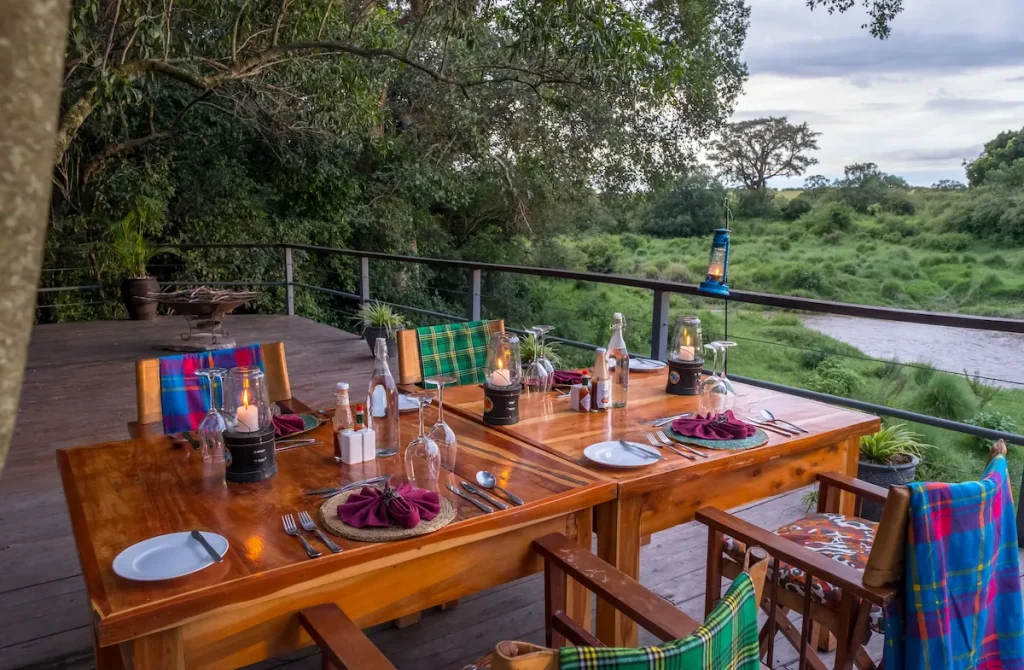
Food on safari surprises most first-time travelers, because the mental image of instant noodles around a campfire is nothing like what actually lands on the table at a Kenyan safari lodge or tented camp. Full three-course dinners, fresh-baked bread, and bush breakfasts served on white linen tablecloths overlooking a waterhole are the norm, not the exception. You sit down to grilled tilapia or a slow-roasted lamb shank while a fire crackles nearby. You sip fresh Kenyan coffee as the sun rises over the plains before a game drive. Sense of Adventure books camps that take dietary requests seriously, because a great meal is part of what makes a long safari day feel effortless.
Have Dietary Needs? Tell Us Before You Fly
Vegetarian, vegan, halal, gluten-free or allergies — message us and every camp on your itinerary will be briefed in advance.
What Food on Safari Actually Looks Like
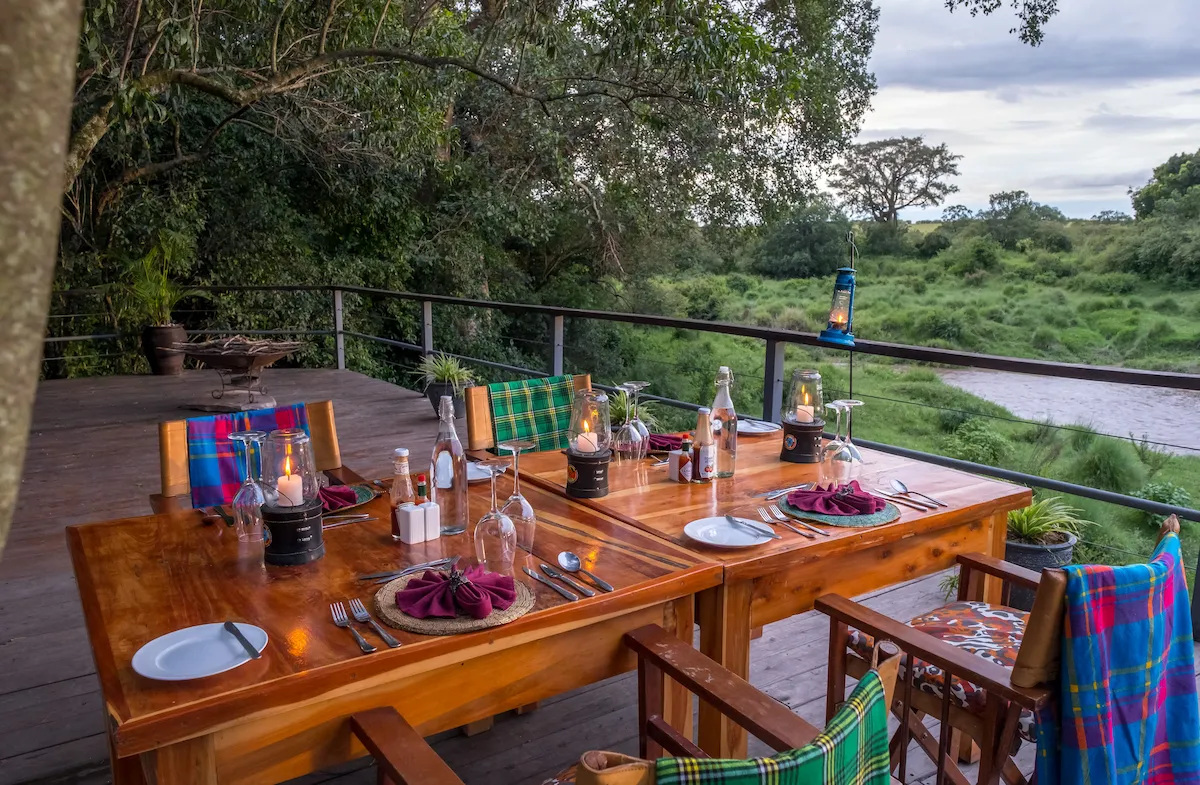
Most Kenyan safari camps run a full board plan covering three meals daily plus tea, coffee and a mid-morning or sundowner snack, cooked fresh on-site even in remote tented camps using gas stoves and charcoal ovens. Breakfast is typically a hot cooked spread with fresh fruit, dinners run to two or three courses with a meat, fish and vegetarian option every night, and many camps rotate at least one outdoor meal, a bush breakfast after a dawn game drive or a candlelit dinner under the stars, into a multi-night stay.
I am coeliac and genuinely worried I would be eating plain rice for eight days straight. Every single camp had gluten-free bread waiting for me, no fuss, no awkward questions at the table. It was honestly better handled than most restaurants back home.
— Sense of Adventure guest, Masai Mara safari
5 Things to Know About Eating on Safari
Full board is standard, not an upgrade
Nearly every Kenyan lodge and tented camp includes full board (breakfast, lunch, dinner, tea and coffee) in the nightly rate, since there is rarely anywhere else nearby to eat. Drinks at dinner, both alcoholic and premium bottled, are usually the only extra charged separately.
Vegetarian and vegan requests are routine
Kenya’s own cuisine leans heavily on beans, lentils, vegetables and ugali, so vegetarian and vegan travelers are well catered for at every camp Sense of Adventure books, no special sourcing required. Flag it at booking and every property on the itinerary will have a plant-based option ready each meal.
Halal, kosher and allergies need advance notice
Halal and allergy-specific meals (nut, shellfish, dairy) are handled well but need roughly 48 hours’ notice so remote camps can plan supply runs, since some ingredients are trucked or flown in from Nairobi. Kosher is rarer and best flagged at the very start of booking.
Drinking water and drinks are usually included
Filtered or bottled drinking water is provided free at nearly every camp and refilled in your room daily; tap water is not safe to drink untreated. House wine, local beer and soft drinks are often included at mid-range and luxury camps, with premium imported spirits charged as an extra.
Bush meals are a genuine highlight, not a gimmick
Bush breakfasts (a full spread set up in the field after a dawn game drive) and sundowners (drinks and snacks watching the sunset from a scenic viewpoint) are typically included once or twice per multi-day itinerary. They are logistically simple for camps to run and consistently rank among guests’ favourite moments.
Book a Safari With Your Diet Sorted From Day One
We brief every camp on your requirements before you land, so meals are never an afterthought.
Quick Facts: Eating on a Kenya Safari
- Meal count: nearly all camps run full board, all 3 daily meals included in the nightly rate.
- Notice period: flag allergies and halal/kosher needs at least 48 hours ahead for remote camps to prep.
- Vegetarian coverage: 100% of Sense of Adventure’s camps offer a vegetarian option every meal, no advance request needed.
- Bush meals: expect roughly 2 out-of-camp dining experiences on a typical multi-day itinerary.
- Water: filtered/bottled drinking water is free and refilled daily — never drink untreated tap water.
- Extras: premium imported spirits and specialty coffee are usually the only add-on charges at dinner.
Where Great Food Fits Into Your Wider Safari
Dining quality tends to track accommodation tier, so travelers prioritising food alongside game viewing often lean toward our luxury safari packages, where multi-course dinners and dedicated chefs are the norm. Honeymooners frequently request a private candlelit bush dinner, a detail we build into our honeymoon safari itineraries. If a full itinerary with meals, transport and permits already sorted is what you are after, browse our complete safari packages to see exactly what is included at each camp.
Ready to Plan a Safari That Fits Your Diet Too?
Tell us your requirements and travel dates, and we will match you with camps that handle them well.
Frequently Asked Questions
What food is served on a Kenya safari?
Food on a Kenya safari typically means full board dining with a hot cooked breakfast, a light lunch, and a two-to-three-course dinner with meat, fish and vegetarian choices every night, plus occasional bush breakfasts and sundowners served outdoors during game drives.
Can I get vegetarian or vegan meals on safari?
Yes, vegetarian and vegan meals are easy to arrange on safari because Kenyan cuisine already leans on beans, lentils and vegetables; simply mention your preference when booking and every camp on your itinerary will have a plant-based option ready at each meal without extra charge.
Is the drinking water safe on safari?
Tap water is not safe to drink untreated on safari, but every reputable camp provides free filtered or bottled drinking water refilled daily in your room, so staying hydrated safely requires no extra planning or cost on your part.
How do I request a special diet or food allergy on safari?
Request a special diet or food allergy accommodation on safari by telling your tour operator at booking, ideally at least 48 hours before arrival so remote camps have time to source specific ingredients like gluten-free bread or halal meat via their supply runs from Nairobi.
Do safari camps serve alcohol?
Most mid-range and luxury safari camps serve alcohol, with house wine, local beer and spirits often included in the nightly rate and premium imported brands available for an extra charge, while some budget camps operate a cash bar instead.