
Electricity and Wi-Fi on safari rarely work the way first-time travelers expect, since remote camps generate their own power and internet rather than tapping a national grid the way a city hotel does. Kenya runs on Type G plugs at 240V, but many bush camps switch to solar or generator power on a schedule rather than around the clock. You plug your camera battery in after dinner, generator humming softly in the background, phone signal bars flickering between one and none. You send a quick message home over a satellite Wi-Fi router in the mess tent before it cuts out at 10pm. Sense of Adventure flags exactly what to expect at each camp, so nobody arrives assuming five-star city connectivity in the middle of the Mara.
Need to Stay Reachable on Safari?
Tell us and we will prioritise camps with the strongest power and Wi-Fi reliability on your route.
What Power & Internet Actually Look Like at Safari Camps
Lodges near towns like Naivasha, Nairobi and Amboseli’s gate area typically run 24-hour grid or generator power with reliable Wi-Fi in common areas, while remote tented camps deep inside the Mara or Laikipia conservancies often rely on solar panels and battery banks, sometimes supplemented by a generator running 6-10 hours a day around meal and charging times. Kenya’s plug standard is Type G, the same three-pin square plug used in the UK, at 240V and 50Hz, so US and EU travelers need an adapter regardless of which camp tier they book.
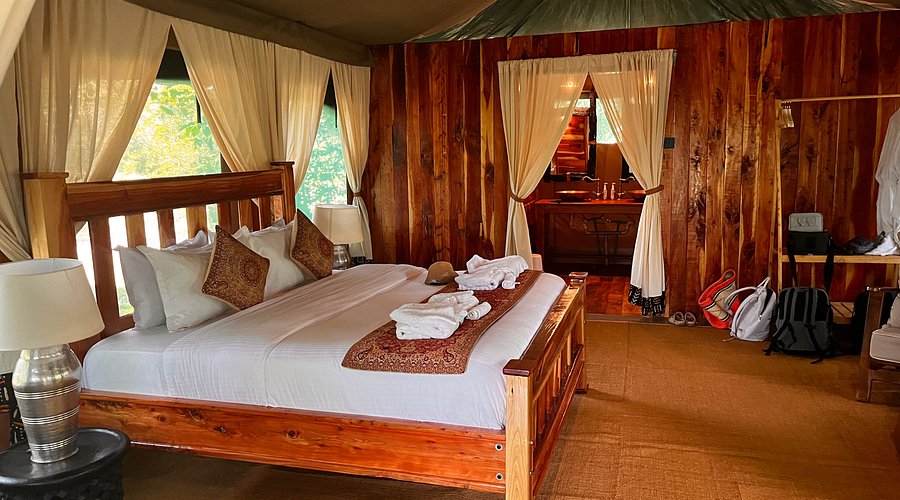
I packed a power bank thinking I would never need it, and it turned out to be the single most useful thing in my bag. Two nights our tent’s solar charging cut out earlier than expected, and having a backup meant my camera never went dead mid-migration.
— Sense of Adventure guest, Masai Mara migration safari
5 Things to Know About Power & Connectivity on Safari
Bring a Type G adapter, non-negotiable
Kenya, Uganda, Tanzania and Rwanda all use the same Type G (UK-style three-pin) socket at 240V, so US and most European travelers need a universal adapter. Bring one in your carry-on rather than checked luggage, since it is the first thing you will want after a long flight.
A power bank is the single most useful backup item
Solar and generator power at remote camps can run on a schedule rather than continuously, so a fully charged power bank protects your phone and camera through any gap. Charge it every night power is available, treating it as a standing habit rather than an emergency-only tool.
Wi-Fi exists at most camps, but treat it as best-effort
Most mid-range and luxury camps now offer satellite or mobile-data-based Wi-Fi in the mess tent or lounge, enough for messaging and light browsing, though speeds vary and coverage rarely reaches individual guest tents. Streaming video or video calls are unreliable at best in remote locations.
Mobile signal follows towns, not parks
Kenyan mobile networks (Safaricom has the widest rural coverage) reach most towns and park gate areas well, but signal drops to zero across large stretches of the Mara, Amboseli and Tsavo’s interior. A local SIM is worth buying at the airport for the moments signal does return.
Charging outlets are often centralized, not per-tent
Budget and some mid-range camps route charging through a central hub near reception rather than individual tents, so batteries need to be dropped off and collected rather than plugged in bedside overnight. Confirm this detail if you specifically need overnight in-room charging for medical equipment.
We Will Flag Power & Wi-Fi at Every Camp on Your Route
No surprises — message us your connectivity needs and we will match camps accordingly.
Quick Facts: Power & Wi-Fi on a Kenya Safari
- Plug type: Type G, three-pin UK-style, 240V, standard across Kenya, Uganda, Tanzania and Rwanda.
- Remote camp power: often solar/generator-based, running roughly 6-10 hours a day rather than 24/7.
- Wi-Fi coverage: common in mess tents/lounges at most camps, rarely reliable inside individual guest tents.
- Mobile signal: zero across large stretches of the Mara, Amboseli and Tsavo’s deep interior.
- Backup essential: pack one fully charged power bank per traveler as standard kit, not an extra.
- Local SIM: worth buying at the airport for Safaricom’s wide rural coverage between camps.
Planning Connectivity Into Your Wider Itinerary
Connectivity needs are worth mentioning when booking any itinerary, particularly if you are combining multiple camps; our luxury safari packages generally offer the most reliable Wi-Fi and 24-hour power, while our Kenya safari checklist covers the wider packing list including adapters and power banks. If you are staying connected for work, flag it early so we route you toward camps with confirmed satellite Wi-Fi rather than solar-only setups.
Plan a Safari That Matches Your Connectivity Needs
Working remotely, or just want to know what to pack? Message us and we will help you plan.
Frequently Asked Questions
What plug type does Kenya use for electricity?
Kenya uses Type G plugs, the same three-pin square plug as the UK, running on 240V at 50Hz, so travelers from the US, EU and most of Asia need a universal travel adapter, which is worth packing in carry-on luggage rather than a checked bag.
Is there Wi-Fi at safari camps?
Most mid-range and luxury safari camps offer Wi-Fi, usually satellite or mobile-data based, in common areas like the mess tent or lounge, sufficient for messaging and light browsing, though speeds vary and coverage rarely extends reliably into individual guest tents.
Can I charge my phone and camera in my tent?
Charging in your own tent is common at mid-range and luxury camps with in-room outlets, but some budget and remote camps route charging through a central hub near reception instead, so confirm this detail when booking if in-tent overnight charging matters to you.
Is there mobile phone signal on safari?
Mobile signal reaches most towns and park gate areas reasonably well in Kenya, particularly on the Safaricom network, but drops to zero across large stretches of the Masai Mara, Amboseli and Tsavo’s deeper interior, so do not rely on it for real-time communication during game drives.
Should I bring a power bank on safari?
Yes, bringing at least one fully charged power bank on safari is strongly recommended, since remote camps often run solar or generator power on a limited daily schedule rather than continuously, and a backup protects your phone and camera batteries through any gap.