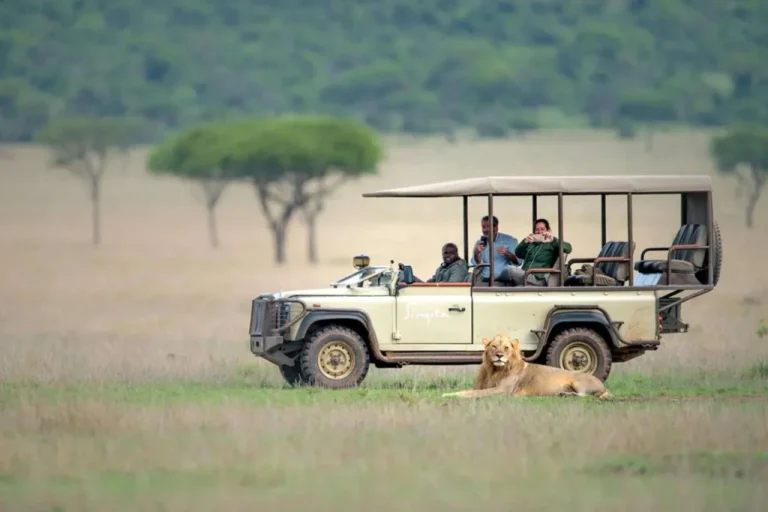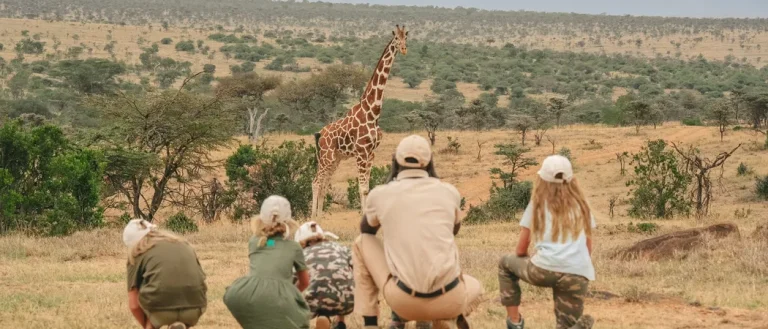


Walking bush safari safety comes down almost entirely to one factor: who is leading you, since an armed, professionally trained guide reading wind direction, animal spoor and body language is what actually keeps a walking safari safe, not luck. It sounds inherently riskier than a vehicle game drive, and in an uncontrolled sense it is, but licensed walking guides in Kenya undergo rigorous, specific certification precisely because the margin for error on foot is real. You walk single file behind your guide, voice dropped to a whisper, wind checked before every approach. You learn to read a fresh lion track in sand, your guide explaining exactly why you are circling wide around it rather than closer. Sense of Adventure only books walking safaris through certified guides and pre-scouted, appropriate terrain.
Curious About a Walking Safari?
Message us and we will match you with a certified guide and appropriate terrain.
What Actually Keeps a Walking Safari Safe
Certified walking guides in Kenya complete specific training beyond standard driving-guide qualifications, covering animal behaviour, tracking, firearm handling and emergency protocol, and they carry a rifle as a genuine last resort, not a first response. Routes are scouted in advance to avoid known predator territory at that time of day, groups stay small (usually under 8), and the entire walk moves at a deliberately slow, quiet pace that prioritises awareness over covering ground.
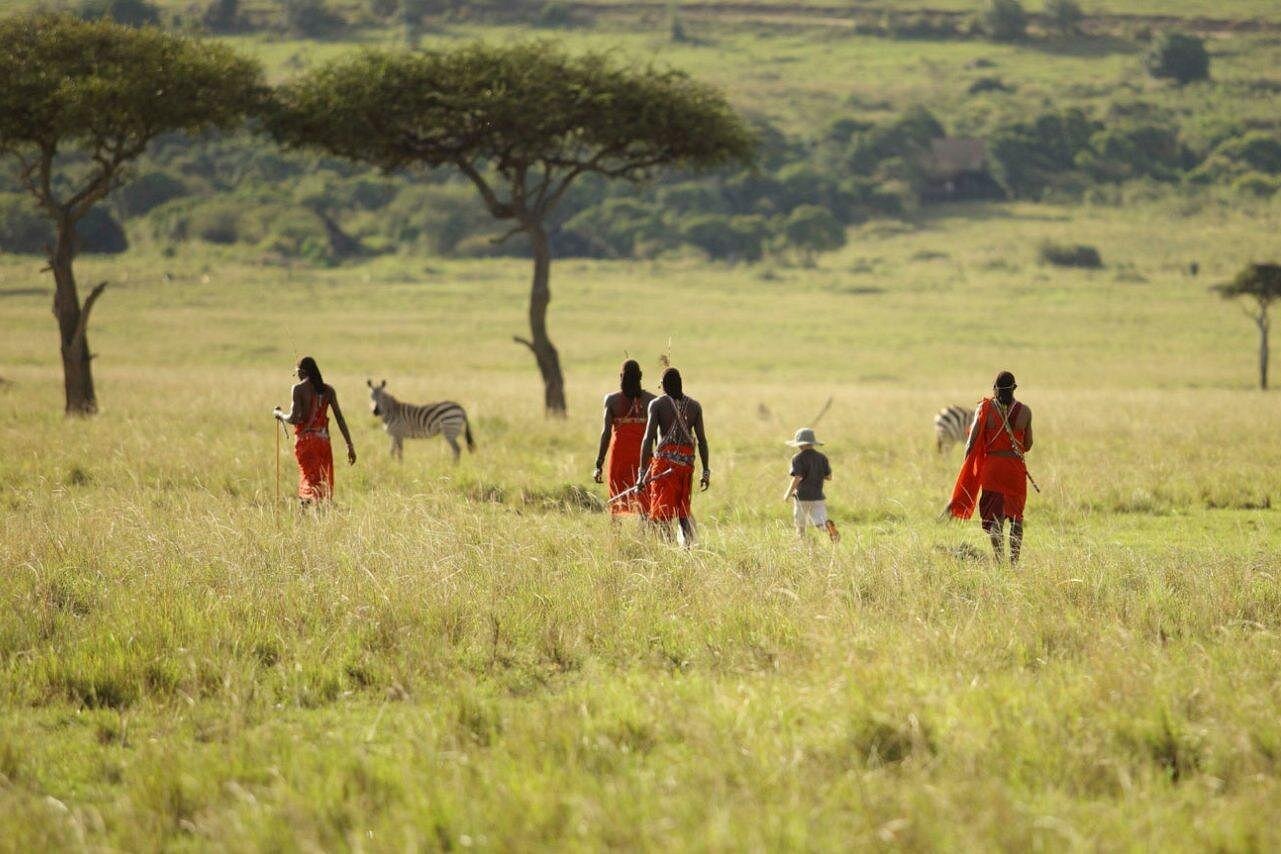
I was genuinely nervous the whole drive to the start point, imagining every worst case. Then our guide spent ten minutes calmly explaining wind direction, hand signals and exactly what to do if we encountered something, and by the time we set off I trusted the process completely. It ended up being the most memorable two hours of the whole trip.
— Sense of Adventure guest, Laikipia walking safari
5 Rules That Keep Walking Safaris Safe
Only walk with a certified armed guide, never independently
Walking unaccompanied outside camp boundaries is never part of a legitimate safari and is genuinely dangerous. Certified guides hold specific walking-safari qualifications on top of standard guiding, covering firearm proficiency, tracking and animal behaviour assessment.
Stay in single file, follow instructions immediately and without debate
Your guide’s hand signals for stop, crouch or retreat are not suggestions; walking safari incidents, when they happen, almost always trace back to a guest breaking formation or hesitating rather than the guide’s judgement failing.
Wind direction dictates the entire route, not scenery
Guides constantly check wind direction because most dangerous animals rely heavily on scent; approaching or being approached downwind is the single biggest variable guides manage throughout, adjusting the walking path continuously rather than sticking to a fixed trail.
Buffalo, elephant and hippo are treated with more caution than big cats
Counterintuitively, guides often treat buffalo, elephant and hippo encounters with greater caution on foot than lion or leopard, since these species cause more walking-safari incidents statistically, largely through surprise close-range encounters rather than active predation.
Not every park allows walking safaris, and that’s deliberate
Walking is restricted or banned in high-density predator areas like the Masai Mara’s core reserve, and permitted mainly in private conservancies (Laikipia, parts of the Mara conservancies) where guide density and terrain are managed specifically for it.
Book a Walking Safari With a Certified Guide
We only work with guides holding proper walking-safari certification, in appropriate conservancy terrain.
Quick Facts: Walking Safari Safety
- Guide requirement: a certified, armed guide leads every walking safari, no exceptions.
- Group size: typically kept under 8 guests for control and awareness.
- Minimum age: usually 12+, since sustained quiet focus is required throughout.
- Highest-caution species: buffalo, elephant and hippo, treated more carefully than big cats.
- Where it’s allowed: mainly private conservancies (Laikipia, Mara conservancies), not the core reserve.
- Duration: typically 2-3 hours, at a deliberately slow, observational pace.
Where Walking Safaris Fit In
Walking is one of several safari formats worth understanding before you book, alongside fly-in and photographic styles, covered fully in our types of safari in Africa guide. Private conservancies in Laikipia offer some of the best-regulated walking terrain, and our Masai Mara Reserve vs conservancies guide explains exactly where activities like walking are and aren’t permitted.
Ready to Add a Walking Safari to Your Trip?
Message us and we will confirm exactly where and how it fits your itinerary safely.
Frequently Asked Questions
Is walking bush safari safe in Kenya?
Yes, a walking bush safari is safe in Kenya when led by a certified, armed guide who manages wind direction, group formation and terrain choice; incidents are rare and almost always trace back to guests breaking formation rather than guide error.
What animals are most dangerous on a walking safari?
Buffalo, elephant and hippo are generally treated with more caution on a walking safari than lion or leopard, since these species statistically cause more walking-safari incidents, usually through surprise close-range encounters rather than active hunting behaviour.
Can I go on a walking safari without a guide?
No, walking outside camp boundaries without a certified armed guide is never part of a legitimate safari and is genuinely dangerous; every reputable operator requires a professionally trained guide to lead every walking session.
Where can I do a walking safari in Kenya?
Walking safaris in Kenya are mainly available in private conservancies like Laikipia and parts of the Mara conservancies, since walking is restricted or banned in the Masai Mara’s core reserve due to higher predator density.
What is the minimum age for a walking safari?
Most operators set a minimum age of around 12 for a standard walking safari, since the activity requires sustained quiet focus and the ability to follow a guide’s instructions immediately without hesitation.