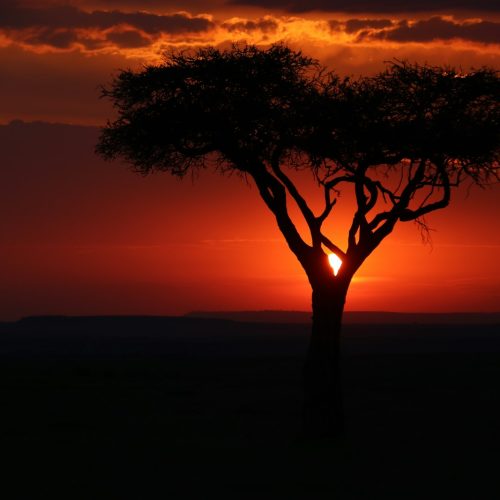
A Great Migration photographic safari is timed, staffed and equipped for one purpose: to be at the Mara River with a camera ready when thousands of wildebeest plunge down the bank. This five-day trip flies you into the Masai Mara in the migration season, from July to October, with a specialist photographic guide, a vehicle set up for photographers and early starts that put you in the right place at the right time. The price starts from USD 2,400 per person, and the sections below explain the route, the crossing days, the camera technique and the practical details.

Why Choose a Great Migration Photographic Safari?
The Great Migration is the largest overland movement of wildlife on earth. More than a million wildebeest, along with many zebra and gazelle, follow the rains in a huge circle between the Serengeti in Tanzania and the Masai Mara in Kenya. Between July and October the herds are in the Mara, and the Mara River crossings are the most dramatic scenes of the year.
Anyone can watch a crossing from a vehicle, but a Great Migration photographic safari is designed to get you the picture as well. Here are the things that set it apart.
- Timing: the trip is planned for the July to October window, when the herds are in the Mara.
- A specialist guide: your guide understands where the herds gather, how they behave at the river and where to place the vehicle for light and angle.
- Photographer-friendly vehicles: each guest has a window position and beanbag supports for long lenses.
- Early starts: you are at the river before the herds, which helps you secure a good position.
- Flexible, photography-led drives: the plan follows the animals and the light, not a fixed timetable.
- Big cats and golden light: the same trip includes lions, cheetahs and leopards, and dawn and dusk shoots on the plains.
Crossings cannot be promised, because the herds decide when to cross. A five-day plan with a full day at the river gives you a strong chance, and the rest of the schedule makes sure the trip is rewarding even when the animals are patient.
Great Migration Photographic Safari Route at a Glance
The whole Great Migration photographic safari takes place in the Masai Mara. You fly in on day one, spend three full days photographing and fly out on day five, which saves hours on the road.
- Day 1: Fly to the Masai Mara for an afternoon photographic game drive
- Day 2: A full day positioned at the Mara River for migration crossings
- Day 3: Tracking and photographing lions, cheetahs and leopards in great light
- Day 4: Dawn and dusk shoots for the best light on the plains
- Day 5: A final morning shoot, then fly back to Nairobi
Day-by-Day Great Migration Photographic Safari Itinerary
Days 1 and 2: Arrival and the Mara River
Day 1, fly to the Mara. You fly from Nairobi into the Masai Mara and have an afternoon photographic drive. This is a chance to meet your guide, to settle into the vehicle and to look at the herds spread across the plains. At this stage the aim is to read the movements: where the wildebeest are gathering, which crossing points are active and how the light is falling. Your guide will talk through the plan for tomorrow. To understand the wider reserve, see our guide to a Masai Mara safari.
Day 2, a full day at the Mara River. Today is the focus of the whole trip. You leave early and spend the day at a position chosen by your guide, watching for the signs that a crossing is about to begin. Herds gather on the bank, move back and forth, test the water and sometimes turn away. When they decide, a few animals lead and hundreds follow within seconds. Crocodiles wait in the river, and the crossing is a mix of speed, noise, dust and spray. The action can be over in minutes. Preparation, patience and a ready camera decide your results.
Days 3 to 5: Cats, Golden Hours and Departure
Day 3, big cats. Where there are wildebeest, there are predators. Today you track and photograph lions, cheetahs and leopards in good light. Lions rest near the herds, cheetahs scan from termite mounds and leopards wait in the riverside trees. Your guide uses the early morning and late afternoon to find active cats, and you can work at a slower pace than on the river.
Day 4, golden hours. This day is planned around the best light on the plains. You are out at dawn, when the grass glows and the herds walk through low mist, and you return in the late afternoon for long shadows and warm colour. In the middle of the day you rest, back up your images and review them with your guide. If the herds have been cautious at the river, this day can also be used for another attempt at a crossing.
Day 5, final morning and departure. You enjoy a last early shoot, then fly back to Nairobi for your onward journey. If you want to extend your stay, you can add more days in Kenya with our Nairobi day tours or another park.
How to Photograph a Migration River Crossing
A crossing is one of the hardest moments to photograph, because everything happens fast and unpredictably. These principles help.
Before the Crossing
Arrive early and be patient. Herds can stand at the bank for hours, and some days they do not cross at all. Choose a position where the light falls on the animals rather than behind them, and where the vehicle has a clear line to the water. Keep your engine off and your camera ready.
During the Crossing
Use a shutter speed of 1/1000 second or faster to freeze the action, with continuous autofocus and burst mode. Pick one animal and follow it rather than trying to capture the whole herd. Spray and dust add drama but also make focus harder, so keep your frame wide enough to allow for movement.
After the Crossing
Do not pack away too quickly. Stragglers, calves that have lost their mothers and animals climbing the far bank often give the most emotional pictures. Check your images at the next break and ask your guide to point out the settings that worked.
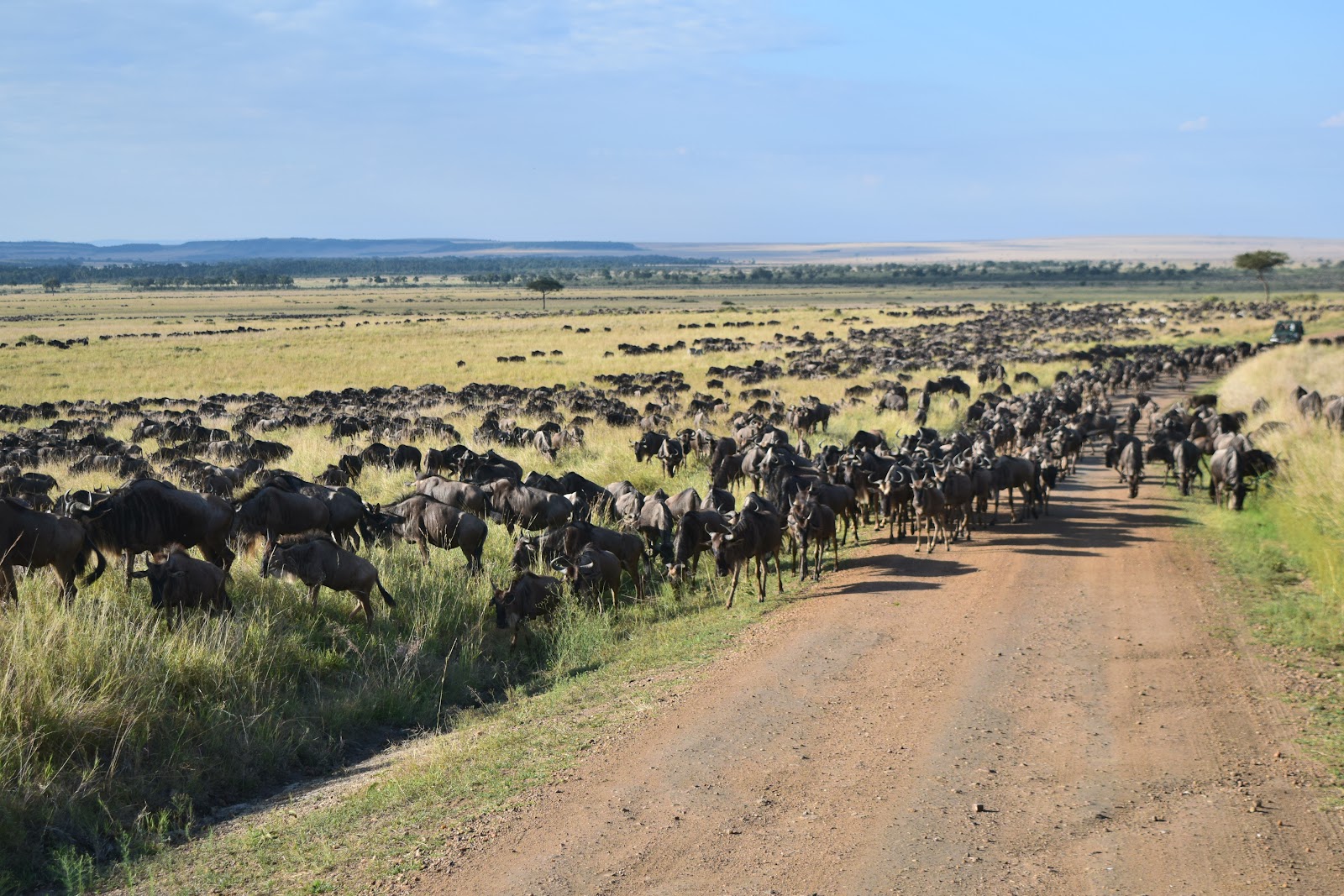
Photography Tips for a Great Migration Photographic Safari
You do not need a professional kit, but the right choices help.
- Lens: a 100-400 mm or 200-600 mm zoom covers most situations. A wide lens is valuable for herds and landscapes.
- Support: beanbags on the window frame are steadier than a tripod in a vehicle, and they are provided on photographic vehicles.
- Settings: aperture priority or manual, 1/1000 second or faster for action and continuous autofocus.
- Memory: bring plenty of cards, because burst mode fills them quickly.
- Dust and spray: pack a lens cloth, a blower and a rain cover.
- Patience: the best pictures often come after hours of waiting, so bring water, snacks and a good attitude.
Every guest on a Great Migration photographic safari should remember that the animals come first. Your guide will keep vehicles at a respectful distance, will never block the path of the herds and will move away if animals appear stressed. The best images come from calm, natural behaviour.
Big Cats and Golden-Hour Light in the Mara
The migration is only part of the picture. The Masai Mara has one of the highest numbers of predators in Africa, and during the migration they are at their most active.
Lions hunt the herds, often at dawn and dusk, and prides are easy to find on the open plains. Cheetahs use the high ground to scan for gazelle, and leopards stay in the riverine trees. The combination of moving herds, hunting cats and low light makes the Mara a rich place for a photographer.
The golden hours deserve a day of their own. Soft light, long shadows and warm colour transform ordinary scenes. A line of wildebeest walking across a ridge, a lion silhouetted against a pink sky or a cheetah standing on a termite mound at sunrise can all become memorable images. For a trip that focuses entirely on the cats, see our big cats photographic safari.
Accommodation and Pace on This Safari
The Great Migration photographic safari includes four nights in the Masai Mara. Because the plan is built around the animals and the light, days begin early and include a rest in the middle of the day. Mornings are for river positions and big cats, afternoons are for the golden hour and evenings are for dinner and a review of your images.
We confirm the exact camps and room types in your written quote, and we choose accommodation that suits photographers, with early breakfasts, charging points and a good position for the river. You can see the style of stay we use on our page of Kenya lodges and camps.
There is no long driving between parks, and the main physical demand is the early start and the time in the vehicle. This Great Migration photographic safari suits most ages and fitness levels, provided you are comfortable with long days of sitting and waiting.
Best Time for a Great Migration Photographic Safari
The Great Migration follows the rains, so the timing is the most important decision. The animals are on the move all year, but the herds are in the Mara only for part of it.
- January to March: the herds are in the southern Serengeti, with calving in February. This is the time for a Tanzania trip, not a Kenyan one.
- April and May: the herds start moving north through the central Serengeti.
- June: the herds approach the northern Serengeti and the first groups may reach the Mara.
- July to October: the herds are in the Masai Mara, and the river crossings take place. This is the window for this trip and the busiest, most expensive time of year.
- November and December: the herds move back south into Tanzania as the short rains begin.
Within the July to October window, crossings are most frequent in August and September, but the exact timing changes from year to year. Book early, because the best camps fill many months ahead. For more ideas on timing, see our Kenya safari from Nairobi guide.
How Much Does a Great Migration Photographic Safari Cost?
This Great Migration photographic safari starts from USD 2,400 per person. The final price depends on the season, the accommodation and the number of travellers. Migration months are the highest-priced of the year, so the exact figure for your dates will be in your quote. Larger groups share the vehicle and guide, so the cost per person can be lower. For a broader guide to budgeting, read how much an African safari costs.
What Is Included and Not Included
Included:
- Park entrance fees
- A luxury safari vehicle
- A professional guide
- Airport and hotel transfers
- Bottled drinking water
- A morning game drive
Not included:
- International flights
- Kenya visa fees
- Travel insurance
- Tips and gratuities
- Meals unless specified
- Personal expenses
The itinerary flies you into and out of the Mara. Please ask us to confirm exactly which flights and meals are covered in your written quote.
What to Pack for a Great Migration Photographic Safari
- Neutral clothes in khaki, olive or beige, plus a warm layer for cold early mornings.
- A wide-brimmed hat, sunglasses and high-factor sunscreen.
- A zoom lens, a wide lens, spare batteries, many memory cards and a beanbag if you have one.
- A rain cover or plastic bag for your camera, as showers are possible even in the dry season.
- A blower brush and microfibre cloths for dust.
- Binoculars, a notebook and a laptop or drive for backing up.
- Insect repellent and any medication your doctor recommends.
- A soft-sided bag, because light aircraft have strict luggage limits.
Keep your camera gear in your hand luggage and your batteries charged each night. A Great Migration photographic safari involves long waits followed by sudden action, so you want to be ready at all times.
Visas, Health and Safety
Most visitors need an electronic travel authorisation for Kenya before they arrive, so apply online ahead of your trip and check the current rules for your nationality. Malaria is present in much of Kenya, so speak to your doctor about prevention. A yellow fever certificate is only needed if you arrive from a country where the disease is present. Take out travel insurance that covers medical care and evacuation. Our guides check conditions daily and keep a safe distance from every animal, especially near the river, where crocodiles and hippos are present. For official information, see Magical Kenya and the Kenya Wildlife Service.
Great Migration Photographic Safari FAQs
Who is this Great Migration photographic safari for?
It suits keen photographers and wildlife lovers who want to see the migration and are comfortable with early starts and patient waiting. You do not need a professional camera, because your guide helps with positioning and settings.
Will I see a river crossing?
No one can promise a crossing, because the herds decide. The trip is timed for the migration season and includes a full day at the river, which gives you a strong chance. If the herds do not cross, the cats, the plains and the light still make the trip rewarding.
When is the best month for a Great Migration photographic safari?
August and September are generally the most reliable months for crossings, but the herds are in the Mara from July to October. Book early for these months, because they are the busiest of the year.
Can I combine this trip with another park?
Yes. Many photographers add Amboseli for elephants, and you can see how that would look on our Amboseli elephant photographic safari page. We can also design a longer trip for you.
Is it suitable for children?
It can be, if they are patient and enjoy long drives. Because crossing days involve a lot of waiting, we suggest it for older children and teenagers who are interested in wildlife or photography.
Book Your Great Migration Photographic Safari
Send us your dates, your group size and your camera equipment, and we will reply with a written, itemised quote and a suggested plan. Because the best camps for the migration fill early, we recommend booking well ahead. A deposit secures your camps and flights, and we send final documents and packing advice before you travel. You can compare more routes on our Kenya safari packages page, or ask us for a private Kenya safari built around your own dates.
Overview
This five-day photographic safari is timed and guided for the Great Migration in the Masai Mara (July–October). With a specialist guide, photographer-friendly vehicles, beanbag supports and early starts, you’ll capture dramatic Mara River crossings, big cats and golden-light plains.
Price is from USD per person; final cost depends on season, accommodation and group size.
Ready to go? Book this safari instantly on WhatsApp — we’ll take it from there.
Highlights
- Great Migration river crossings
- Photographer-friendly vehicles and beanbags
- Specialist photographic guiding
- Big cats and golden-hour light
- Flexible, photography-led game drives