A Nairobi shopping tour takes the stress out of buying Kenyan crafts. With a local guide who knows fair prices and good quality, you visit the Maasai Market, a rotating open-air market where traders sell beadwork, kiondo baskets, soapstone carvings, kikoys and paintings, then drive south to Kitengela Glass, an artists’ workshop known for recycled glass, mosaics and sculptures beside a gorge near Nairobi National Park. The price starts from USD 90 per adult sharing and includes a private vehicle and a shopping guide.
Why Join a Nairobi Shopping Tour?
Souvenir shopping can be fun, but it can also be tiring if you do not know the market, the prices or the quality. A guided trip solves all three problems in half a day.
- Fair prices: your guide explains what things should cost and helps you bargain politely.
- Better quality: the guide checks stitching, finish and materials, so you take home pieces that last.
- Two very different places: a busy open-air market in the morning and a quiet artists’ workshop in the afternoon.
- Easy logistics: private transport means you can load your purchases in the vehicle instead of carrying them.
- Flexible timing: the trip works for last-day gift shopping and for travellers with a few hours before a late flight.
What You Will Find on the Nairobi Shopping Tour
Kenya has a rich craft tradition, and the tour is designed to show you the best of it in one trip.
Beadwork and jewellery
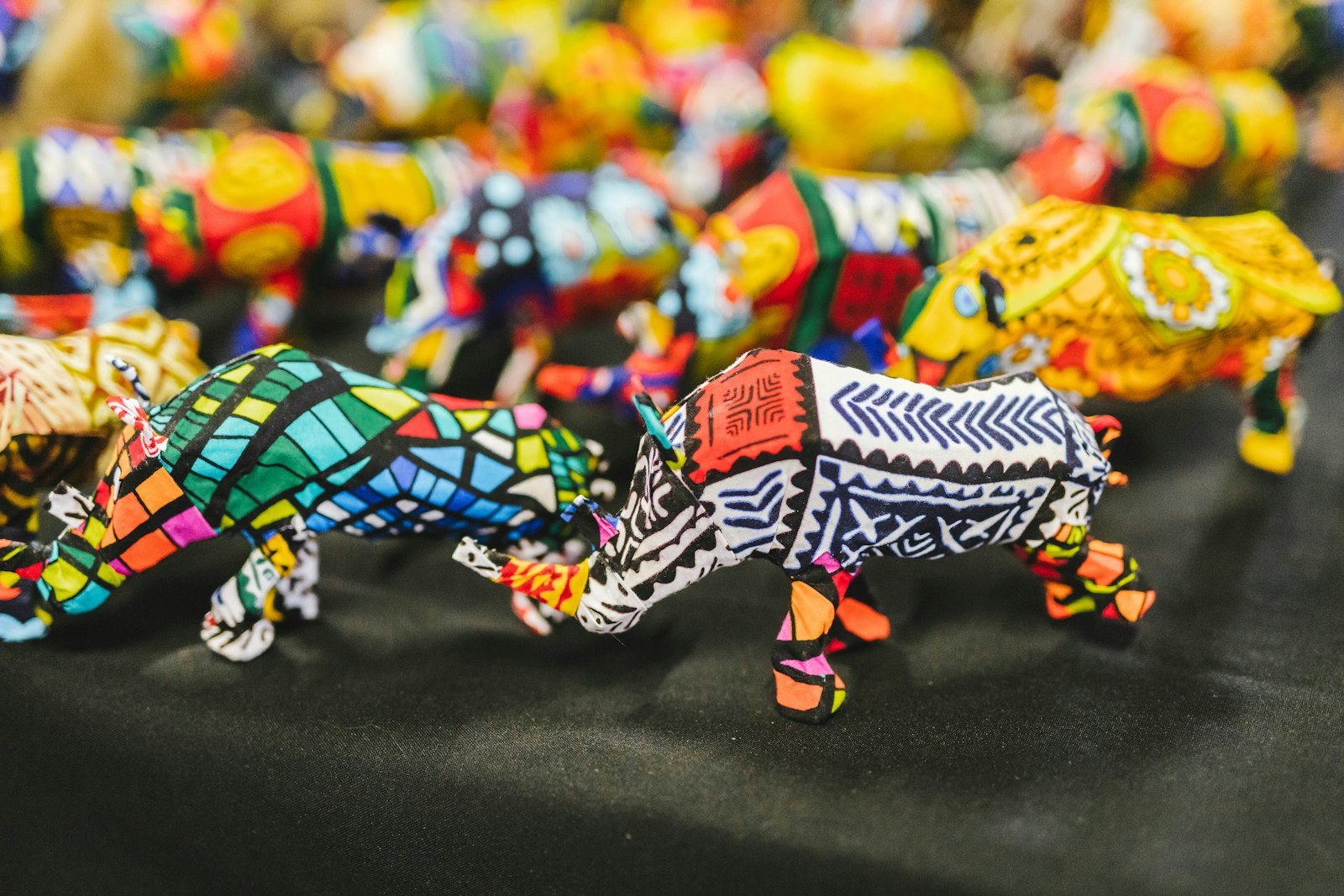
Beaded necklaces, bracelets, belts and sandals are the signature purchase from the Maasai Market. The patterns and colours carry meaning in Maasai culture, and your guide can explain what the designs represent. Many pieces are made by women’s groups, so your money supports family incomes.
Baskets, carvings and fabrics
- Kiondo baskets woven from sisal with leather straps, popular as shopping bags.
- Soapstone bowls, animals and chess sets from the Kisii region.
- Wood carvings of animals and masks, a speciality of Akamba carvers.
- Kikoys, kangas and shukas, colourful cotton wraps that are light to pack.
- Paintings by local artists, which roll up easily for your suitcase.
Recycled glass art
At Kitengela Glass you see how old bottles are melted down and shaped into plates, glasses, beads and sculptures. You can watch glassblowers at work, wander through the colourful studios and gallery, and choose pieces made on site.
The Maasai Market: How It Works
The Maasai Market moves between locations in Nairobi on different days of the week, so it is not one fixed place. We check where it is held on your date and take you to the right spot. If you want the largest selection, ask us about a weekend date, when markets are usually busiest.
Bargaining is expected here, but it should stay friendly. Start by asking the price, compare similar items at a few stalls, and offer a little less than you are prepared to pay. Buying several items from one trader usually earns a better overall price. Your guide steps in when needed, which keeps the atmosphere relaxed.
Nairobi Shopping Tour Itinerary
The tour runs in three parts. We agree the exact timing with you when you book.
Morning: the Maasai Market
Your guide collects you from your hotel or venue and drives to the day’s Maasai Market location. You browse, compare and bargain with help choosing and negotiating.
Midday: lunch on the way south
You stop for lunch at a café on the way south. Lunch is a chance to rest, look through your purchases and ask the guide about anything you have seen.
Afternoon: Kitengela Glass and return
You visit the Kitengela Glass workshops and shop, then return to your hotel or to JKIA. Because Kitengela Glass is on the way to the airport, the tour works well before an evening flight.

Understanding Maasai Beadwork
Beads are more than decoration. Colours are commonly said to carry meaning in Maasai culture: red for bravery, blue for the sky and water, green for the land, white for peace, and orange and yellow for hospitality. Designs vary by maker and region, so ask your guide to explain the pieces you like. Knowing the story makes a necklace or bracelet a far better gift.
Kitengela Glass: Art from Recycled Bottles
Kitengela Glass is an artists’ workshop set beside a gorge near Nairobi National Park. The studios turn discarded glass into colourful objects, from tableware to mosaics and quirky sculptures. The setting is calm after the bustle of the market, and the gallery gives you time to look properly and talk to the makers.
Glass is fragile, so ask the studio to pack each piece. If you buy several items, keep them together in your hand luggage or in the middle of your suitcase.
How to Spot Quality on a Nairobi Shopping Tour
- Beadwork: check that stitching is even, thread is strong and colours are consistent.
- Baskets: look for tight weaving, firm handles and straps that are stitched, not glued.
- Soapstone: the surface should feel smooth and cool, with no cracks.
- Wood carvings: choose pieces with clean edges and an even finish, and avoid anything with visible splits.
- Fabrics: hold them to the light to check the weave and the colour fastness.
Nairobi Shopping Tour: What Things Cost
Prices depend on size, materials and the maker, so there is no fixed list. Simple beaded bracelets and key rings are among the cheapest items. Larger beaded pieces, quality baskets and carvings cost more, and glass is priced by the studio. Your guide gives you a realistic range before you start, so you can set a budget and recognise a fair deal.
Most market traders prefer cash in Kenyan shillings or M-Pesa. Kitengela Glass usually accepts cards. Carry small notes, because traders often struggle to change large ones.
Shopping Ethically in Kenya
Buying directly from makers keeps more money in local communities. Your guide favours traders and workshops that make their own products, and encourages fair prices rather than the lowest possible price. Avoid anything made from ivory, shells or protected wildlife products. These are illegal to export, and your guide will steer you away from them.
Packing and Shipping Your Purchases
Beadwork, fabrics and baskets pack easily. Glass, soapstone and carvings need care, so ask the seller to wrap them in paper and bubble wrap, then pack them in the middle of your suitcase, surrounded by soft clothes. Kitengela Glass and some larger craft shops can arrange shipping for big items, and your guide can explain the options.
If you are continuing on a light-aircraft safari, remember that soft-bag weight limits are strict. Consider leaving purchases at your Nairobi hotel until the end of the trip.
Who Is the Nairobi Shopping Tour For?
- Conference delegates who need gifts for family and colleagues and have only an afternoon.
- Travellers in transit who want to spend a layover well and finish at the airport.
- Families, because children enjoy the colours and the glassblowing.
- Budget travellers, who benefit most from a guide who knows fair prices.
- Visiting officials and partners, for whom we can arrange a quieter visit to craft studios.
Nairobi Shopping Tour Price and What Is Included
The Nairobi shopping tour is priced from USD 90 per adult sharing. The final cost depends on the season, the group size and any extras. For wider budgeting advice, read how much an African safari costs. Your purchases are paid for separately.
Included
- Private transport with a guide
- Hotel or venue pick-up and drop-off
- Shopping guide
- Bottled drinking water
Not included
- Tips and gratuities
- Drinks and personal expenses
- Optional activities not listed as included
Best Time for a Nairobi Shopping Tour
The tour runs all year. Because the Maasai Market rotates, the day of the week matters more than the season. Weekends are usually the biggest. Nairobi’s long rains fall from about April to June and short rains come around November, so bring a light rain jacket if you travel then, since the market is in the open air.
What to Wear and Bring
- Comfortable shoes and casual clothes.
- Kenyan shillings in small notes, plus a card for the studios.
- A foldable bag for small purchases.
- A zipped pouch for your phone and wallet.
- A hat and sunscreen for the open-air market.
Tips for Your Nairobi Shopping Tour
- Decide your budget before you arrive, and tell your guide what you want to buy.
- Walk the market once before buying. Prices and quality vary from stall to stall.
- Smile, greet traders in Swahili and keep bargaining light-hearted.
- Never feel pressured. It is always fine to say thank you and move on.
- Keep your valuables zipped away in a crowded market and carry only the cash you need.
Combine Your Nairobi Shopping Tour
Shopping pairs well with food. Join our Nairobi food tour on another afternoon, or start with the Nairobi city tour to see the capital’s landmarks. Because Kitengela Glass is beside Nairobi National Park, you can also add a morning game drive on a Nairobi National Park safari. See all our Nairobi day tours, and for official tourism information visit Magical Kenya.
Nairobi Shopping Tour FAQs
Where is the Maasai Market held?
The Maasai Market moves between locations in Nairobi on different days of the week. We take you to the right place for your date.
Do I need to bargain at the Maasai Market?
Yes, bargaining is expected. Your guide helps you understand fair prices without causing offence.
Can I pay by card?
Most market traders prefer cash in Kenyan shillings or M-Pesa. Kitengela Glass usually accepts cards.
Can I ship large items home?
Kitengela Glass and some larger craft shops can arrange shipping. Ask your guide for options.
Can I do the Nairobi shopping tour before my flight?
Yes. Kitengela Glass is on the way to JKIA, so we can drop you at the airport afterwards. Tell us your departure time when you book.
What if the Maasai Market is not running?
The market rotates, so we always check the location on the day. Tell us your date and we will confirm what is open before you travel.
How long is the Nairobi shopping tour?
It is a half-day trip. We agree start and finish times with you when you book, based on your hotel location, the day’s market and your flight or meeting schedule.
Is the Nairobi shopping tour suitable for children?
Yes. Children enjoy the colours of the market and watching glass being made. Keep them close in the crowd and remind them that Kitengela Glass has fragile items on display.
Book Your Nairobi Shopping Tour
Send us a WhatsApp message on +254 799 160 081 with your preferred date, the number of people, your pick-up point and any special requirements. We reply with a clear quote and timings, usually the same day, and once you confirm we send your driver’s details. If you would like to build a longer trip around the capital, compare our Kenya safari packages and tell us what you would like to see.
Overview
Our Nairobi shopping tour helps you take home the best of Kenyan craftsmanship without the stress. Your guide takes you to the Maasai Market, a rotating open-air market where traders sell beadwork, kiondo baskets, soapstone carvings, kikoys and paintings, and helps you bargain for fair prices.
In the afternoon, we drive south to Kitengela Glass, an artists’ workshop known for recycled glass, mosaics and quirky sculptures set beside a gorge near Nairobi National Park. It is ideal for last-day gift shopping, conference delegates and travellers with a few hours before a late flight.
Best for: Half-day shopping & crafts. Popular with: Conference delegates, visiting officials, families and last-day shoppers. Best time: Year-round.
Price is from USD 90 per adult sharing; the final cost depends on season, accommodation and group size.
Ready to go? Book this trip on WhatsApp and we’ll take it from there.
Highlights
- Maasai Market beadwork, baskets and carvings
- Guide who knows fair prices
- Recycled glass art at Kitengela Glass
- Watch glassblowers at work
- Perfect before a late flight