

Planning a safari with toddlers: Africa is far more welcoming to very young children than most parents expect, and Kenya in particular has private vehicles, family tents and short, easy game drives that make a trip with a baby or toddler genuinely enjoyable.
The most common question we receive from parents of very young children is: “Is it too early to take our child on safari?” And our honest answer, after years of designing family safari itineraries, is: it depends entirely on how you plan it. A thoughtlessly designed safari with a toddler is exhausting and potentially unsafe. A carefully designed safari with a toddler — the right camps, the right itinerary structure, the right destinations — can be a genuinely wonderful experience for the whole family, including the two-year-old who will not remember it consciously but will sit, wide-eyed and utterly transfixed, watching a baby elephant splash in an Amboseli swamp.
If you are weighing up a safari with toddlers, Africa has many options, but Kenya is our first choice. This guide covers everything parents need to know about safari with babies and toddlers (under 5), from safety to camp selection, from health requirements to the specific Kenya destinations that work best for very young children.
✅ Safari With Toddlers, Africa: The Quick Answer
- Is it possible? Yes. For a safari with toddlers, Africa’s easiest country to start with is Kenya, where private vehicles and family-friendly camps work well from about age one, and even younger with care.
- Best destinations: Amboseli, Lake Naivasha, Nairobi’s baby elephants and giraffes, and the Masai Mara conservancies for children aged two and up.
- The golden rule: book a private game drive vehicle so you control the pace, the stops and the nap times.
- Ideal length: five to eight days, with no more than one long transfer and two nights or more in each camp.
- Health: see a travel doctor six to eight weeks before you go about malaria, vaccinations and sun protection for young children.
- Insurance: travel insurance with medical evacuation cover is essential for every family member.
🌎 Ready to Start Planning?
Our Kenya safari experts are on WhatsApp right now — ask us anything about dates, destinations, or costs.
💬 WhatsApp Us Now or call +254 799 160 081
What Age Is Safe for a Kenya Safari?
There is no universal minimum age for a Kenya safari — it depends on the specific camp and the style of safari planned. Here is the practical reality:
- Some camps have a minimum age of 6 or 8: This typically applies to camps that run shared game drive vehicles — for safety reasons, very young children who cannot follow instructions reliably are not permitted on shared vehicles. Always check minimum age requirements before booking any camp for a family with children under 8.
- Private vehicle camps have no effective age minimum: If you book a private game drive vehicle (your own vehicle, your own guide, your schedule), the camp’s minimum age restriction no longer applies in most cases. The guide can stop when the baby needs feeding, turn back when the toddler is overwhelmed, and adjust the pace entirely to your family’s needs. This is the key to successful toddler safari.
- Some camps actively welcome babies and toddlers: A number of Kenya’s family-specialist camps have been designed with very young children in mind — cots, baby bathtubs, child menus, babysitters trained in child care, and guides with genuine experience entertaining and educating young children. These are the camps we look for when a family with very young children comes to us for planning advice.
On any safari with toddlers, Africa’s camps set their own policies, and rules on walking safaris, balloon flights and night drives are stricter than rules on game drives. For a full breakdown by activity, read our guide to the safari minimum age for children.
Planning a safari with toddlers: Africa camp checklist
Before you book any camp for a safari with toddlers, Africa or anywhere else, ask these questions. A good family camp will answer them quickly and honestly, and the answers will tell you far more than the brochure photos.
- Do you accept children under five, and is there a minimum age for game drives or for the main area?
- Do you have family tents or connecting rooms, so parents and children can sleep close together?
- Is the camp fenced or unfenced, and do staff escort guests to their tents after dark?
- Can you provide a cot, a high chair and a baby bath, and can the kitchen prepare simple food at odd times?
- Is there a pool, and is it fenced or covered?
- Do you offer babysitting or a children’s programme while parents go on a longer drive?

Health Considerations for Babies and Toddlers
Malaria: On a safari with toddlers, Africa’s malaria risk is the most significant health consideration for parents. Standard antimalarial medications (atovaquone-proguanil, doxycycline) are not recommended for children under a certain weight or age. Consult a travel medicine specialist at least 6–8 weeks before travel — they will advise on child-appropriate prophylaxis options and bite prevention strategies. Some families choose higher-altitude Kenya destinations with lower malaria risk for very young children, such as Lake Naivasha (around 1,884m) and Lake Nakuru, though no area of Kenya should be treated as completely risk-free. Our Kenya safari malaria guide explains the risk by region.
Vaccinations: Yellow fever is required for Kenya entry from endemic countries. Consult your travel doctor about the appropriate timing and whether your infant’s vaccination schedule requires adjustment before travel. Routine vaccinations should be up to date before travel.
Sun protection: Kenya’s equatorial sun is intense. For babies under 6 months, sunscreen is not usually recommended — cover with clothing and shade. For toddlers, high-SPF (SPF 50+) children’s sunscreen applied frequently and UV-protective clothing (long sleeves, hat) are essential. With the pop-up roof open, game drive vehicles give little shade overhead.
Health facilities: Kenya’s national park areas have limited medical facilities — emergencies require evacuation to Nairobi. Comprehensive travel insurance with medical evacuation cover is non-negotiable for families with young children. AMREF Flying Doctors covers the Masai Mara and other major park areas with evacuation capability, and our safaris include AMREF emergency evacuation cover. Check the latest health and entry advice on the UK government’s Kenya travel advice page.
📅 Get a Free Custom Itinerary
Tell us your travel dates and we will send you a fully personalised safari proposal — no obligation, no pressure.
Safari With Toddlers, Africa’s Best Destinations: Our Kenya Picks
When parents ask us where to begin a safari with toddlers, Africa’s choices can feel overwhelming. These are the Kenyan parks we recommend most often for children under five, because drives are short and wildlife is easy to see.
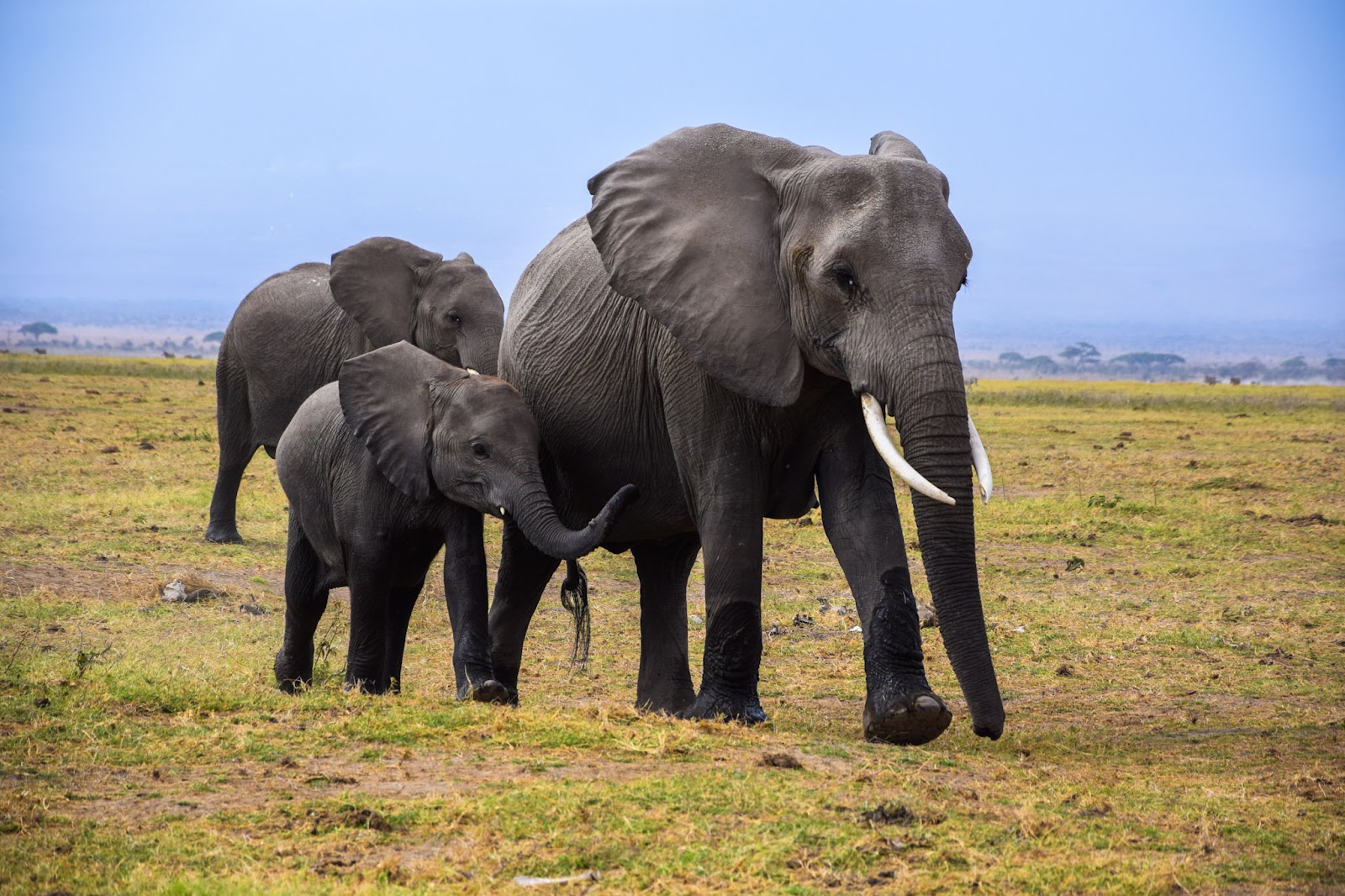
Amboseli National Park — Our Top Pick for Very Young Children: Amboseli’s open landscape means wildlife is immediately and consistently visible — no searching required, no long periods of waiting. Large elephant herds come to the swamp daily in predictable patterns, meaning you can plan a morning drive around the baby’s feeding schedule and still see extraordinary wildlife. The park’s compactness means drives are short and can be adjusted to the child’s attention span. The Kilimanjaro backdrop requires no explanation to a toddler — it is simply beautiful.
Lake Naivasha — Gentle, Lower-Risk Family Option: For parents who want to reduce malaria risk, Lake Naivasha sits at around 1,884m, where the risk is lower than in the hot lowland parks. The boat trip (hippos, fish eagles, pelicans) is genuinely engaging for toddlers. Crescent Island’s predator-free walking (giraffe and zebra up close without a vehicle) is extraordinary for children who want to walk. The calm, gentle pace of Naivasha suits young families very well.
Masai Mara — With Private Vehicle, for Children 2+: With a private game drive vehicle (essential with toddlers), the Masai Mara’s extraordinary wildlife — particularly the large, relaxed lion prides and the wildebeest migration’s dramatic scale — is accessible even with very young children. The conservancy camps with strict vehicle limits mean drives are quieter and less overwhelming than the busy main reserve. Camps with pools give toddlers midday energy release. Compare our Masai Mara safari packages to see road and fly-in options.
Nairobi: the easiest first day of a safari with toddlers in Africa
Nairobi is a brilliant soft start to a safari with toddlers. Africa’s busiest safari hub needs no long transfer on arrival day. The baby elephants at the David Sheldrick Wildlife Trust nursery and the giraffes at the Giraffe Centre are close together, take only a morning, and need no long drive. Read our Nairobi elephant orphanage and Giraffe Centre guide, or book the Nairobi City & Wildlife Day Tour for your arrival day.
Sample Itineraries for a Safari With Toddlers in Kenya
When we plan a safari with toddlers, Africa’s long distances are the main challenge, so the best itineraries are short on driving and long on time in each place. These Sense of Adventure trips already follow that pattern, and we can run each one privately and slow it down further for babies and toddlers.
- Lake Naivasha Family Safari – Hell’s Gate & Lake Nakuru (4 Days): a gentle first safari with hippo boat rides and short drives.
- Kenya Family Safari – Nairobi, Lake Naivasha & Masai Mara (5 Days): baby elephants and giraffes in Nairobi, hippos at Naivasha and big cats in the Mara.
- Family Safari & Beach – Tsavo, Amboseli & Diani (8 Days): elephants beneath Kilimanjaro, then four nights on the beach.
- Multigenerational Family Fly-in Safari – Laikipia & Masai Mara (7 Days): short flights instead of long drives, ideal with grandparents and little ones.
For a fully tailor-made route, see our private Kenya safari packages, which all use your own 4×4 and driver-guide.
How to Plan Each Day on Safari With Babies and Toddlers
Rhythm is the secret to a happy safari with toddlers. Africa’s wildlife is most active early and late in the day, which fits surprisingly well with a small child’s routine if you plan around naps rather than fighting them.
A typical toddler-friendly safari day
- Early morning: a short game drive of two to three hours after breakfast, when animals are active and the air is cool.
- Late morning: back at camp for a snack, the pool or the play area.
- Midday: lunch and a long nap in the shade of the tent, while parents rest or read.
- Late afternoon: a second short drive, ending at camp before dark for an early supper.
- Evening: bath, bedtime story and an early night, with a babysitter if you want a quiet dinner.
Keep each drive short and end it before your child is tired, not after. Two short, happy drives are worth far more than one long, tearful one, and a good guide will happily turn back early.
Car seats and getting around
Safari vehicles do not always have fittings for child seats, so tell us early if you are bringing your own seat or need one. Long road transfers are the hardest part of any trip with a toddler, so we usually break them with stops or replace them with a short scheduled flight from Nairobi’s Wilson Airport.
Light aircraft have a soft-bag luggage limit of about 15 kg per person, so check the allowance for infants and pack nappies and baby food in a separate soft bag.
What to Pack for a Safari With Toddlers
When packing for a safari with toddlers, Africa-bound parents often bring too many clothes and too little medicine. Camps offer laundry, but pharmacies are far away, so prioritise the health kit.
- Clothing: light long sleeves and trousers in neutral colours, a warm fleece for cold early mornings, a wide-brimmed sun hat and a light rain jacket.
- Health kit: children’s paracetamol or ibuprofen, oral rehydration salts, plasters, a thermometer, child-safe insect repellent and any prescribed medicine.
- Feeding: formula and favourite snacks from home, a refillable bottle and a sippy cup that seals, as roads are bumpy.
- Nappies and wipes: bring enough for the whole trip, as supplies in the parks are limited and expensive.
- Comfort items: a favourite toy, a blanket and a familiar bedtime book help a child settle in a new tent.
- Entertainment: small binoculars, an animal picture book and a few stickers for quiet stretches on drives.
Practical Tips for Safari with Babies and Toddlers
- Book a private vehicle: Non-negotiable with children under 5. It transforms the entire experience.
- Choose camps with pools: Essential for midday energy release for toddlers aged 2–5.
- Pack familiar food: Most good camps accommodate special dietary requests but having a few familiar snacks and meals from home prevents meltdowns at mealtimes in unfamiliar environments.
- Bring a baby carrier: For camp walks and bush environments where a pram/stroller is impractical.
- Baby monitor: Check that your specific camp has wifi or that a baby monitor with range adequate for the tent size will work before relying on it.
- Game drive binoculars: Even a basic pair sized for small hands dramatically increases toddler engagement with distant wildlife.
- Field guide: A simple illustrated field guide of African animals gives toddlers a reference and a game (“find the elephant in the book!”) during quiet stretches.
Safety on a Safari With Toddlers: Africa Camp Rules
Kenya’s safari camps are well run, and serious incidents involving children are very rare. Most safety rules are simple common sense, and your guide will explain them on arrival.
- Never let a toddler wander alone in an unfenced camp, even for a moment. Wild animals can and do walk through.
- Always use the staff escort to and from your tent after dark.
- Keep arms, heads and toys inside the vehicle, and stay seated when the vehicle moves.
- Keep children quiet and calm near big animals such as elephants and buffalo.
- Watch the pool closely; many camp pools are not fenced.
How Much Does a Family Safari With Toddlers Cost?
The cost of a safari with toddlers, Africa-wide, depends mainly on the parks, the camps, the season and whether you travel by road or air. Many camps give large discounts for young children, and infants often stay free when they share their parents’ tent, but policies differ from camp to camp, so we check each one for you.
As a guide to our published prices, our Masai Mara packages start from USD 590 per person for a 4-day camping safari and USD 650 for a 3-day road safari. A private vehicle costs more than a shared one, but with toddlers it is the single best-value upgrade you can make. Park entry fees for children are lower than adult fees; check current fees with KWS or the park authority, or ask us for a full family quote.
See what is included in a Kenya safari to compare quotes fairly.
Best Time for a Safari With Toddlers in Kenya
For a safari with toddlers, Africa’s dry seasons are the easiest. In Kenya, roughly late June to October and January to February are the best times to travel with young children. Roads are better, animals gather near water and there are fewer mosquitoes. July to October brings the Great Migration to the Masai Mara, but it is also the busiest and most expensive period.
The long rains of April and May and the short rains of November bring green scenery and lower prices, but also mud and more insects. If you travel then, choose camps with good indoor spaces and keep drives flexible.
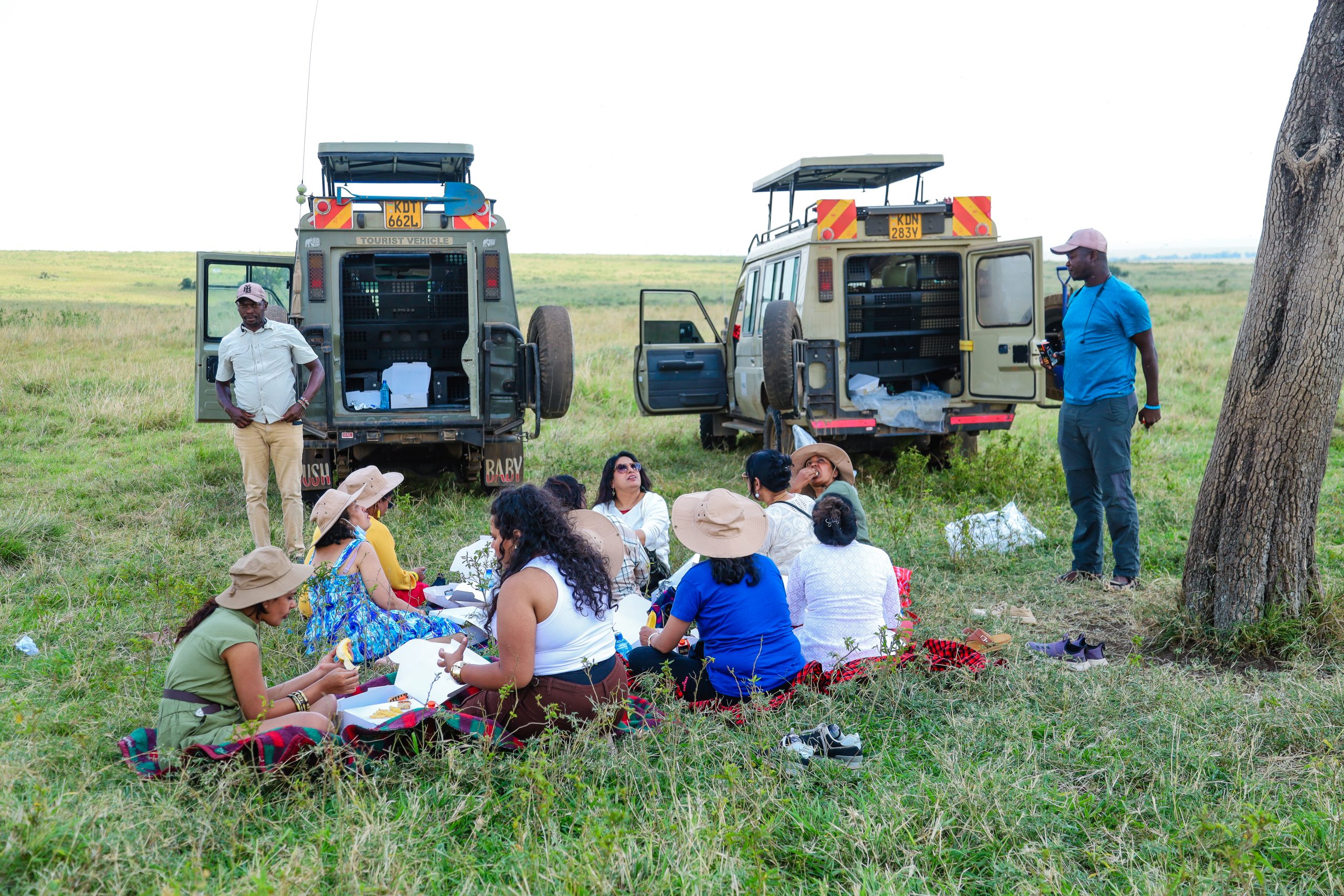
Safari With Babies and Toddlers: Frequently Asked Questions
Can you take a baby on safari in Kenya?
Yes. Many families travel with babies under one year old. Choose a private vehicle, a camp that accepts infants and short drives that fit around feeds and naps. Speak to a travel doctor about malaria and sun protection first, and make sure your insurance includes medical evacuation cover for the baby too.
What is the best age for a first safari with toddlers in Africa?
There is no perfect age, but many parents find that from about two years old a child can enjoy spotting animals and joining in. Babies under one travel easily because they sleep a lot. Ages one to two can be the trickiest, as toddlers want to move, so keep drives very short.
Do toddlers get bored on game drives?
They can, which is why drives should be short. Most toddlers stay happy for one to three hours, especially with snacks, binoculars and an animal book. A private vehicle lets you return to camp whenever your child has had enough, without spoiling the day for other guests.
Is a safari with toddlers safe?
Yes, a safari with toddlers is safe when you follow camp rules. Never leave young children alone in an unfenced camp, use staff escorts at night and keep everyone inside the vehicle on game drives. Choose family-friendly camps with experienced guides, and carry travel insurance with evacuation cover, as the parks are far from major hospitals.
Do we need a visa or eTA for a baby?
Yes. Every traveller to Kenya, including infants, needs their own passport and electronic travel authorisation unless exempt. Apply on the official eTA Kenya website well before you fly, and check the rules for your nationality, as they can change.
For our broader family safari guide with age-by-age recommendations for older children, see our Kenya safari for families guide. For budget family safari options, see our budget safari Kenya guide. Our team loves planning family safaris — including for the very youngest travellers — so talk to us about making this work beautifully for your family. Ready to plan your own safari with toddlers? Africa is waiting, and so are we. For more inspiration, visit Magical Kenya, the official tourism board website.
🏑 Book Your Safari With Sense of Adventure
Kenya-based experts. Real local knowledge. Transparent pricing. We have been doing this for years — let us show you why our guests keep coming back.
💬 WhatsApp Us — Plan Your Safari Today
Call or WhatsApp: +254 799 160 081