
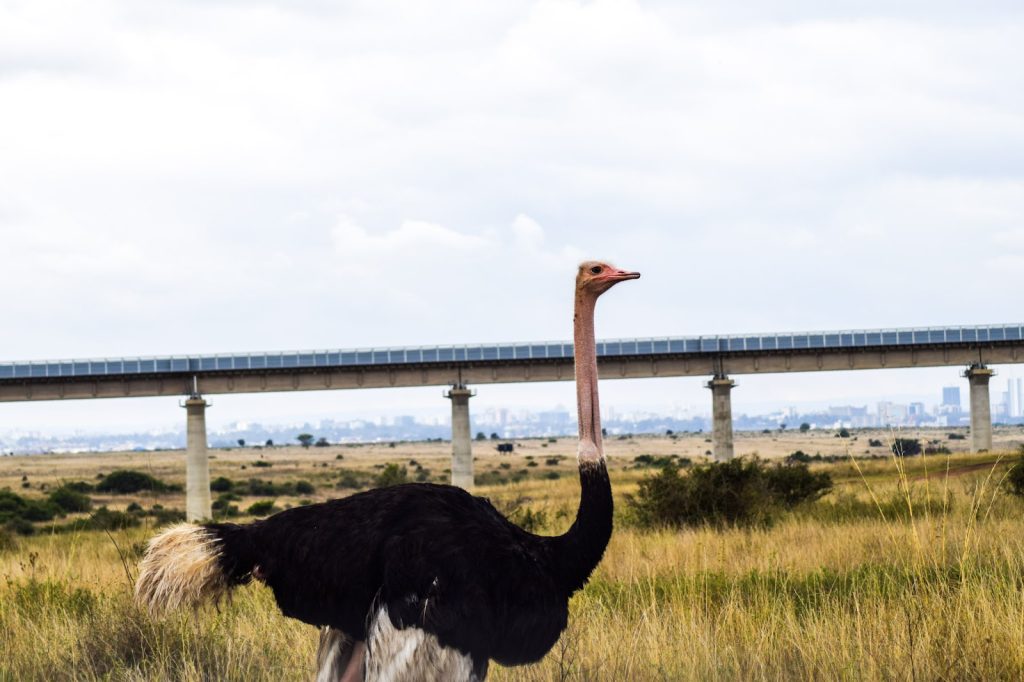
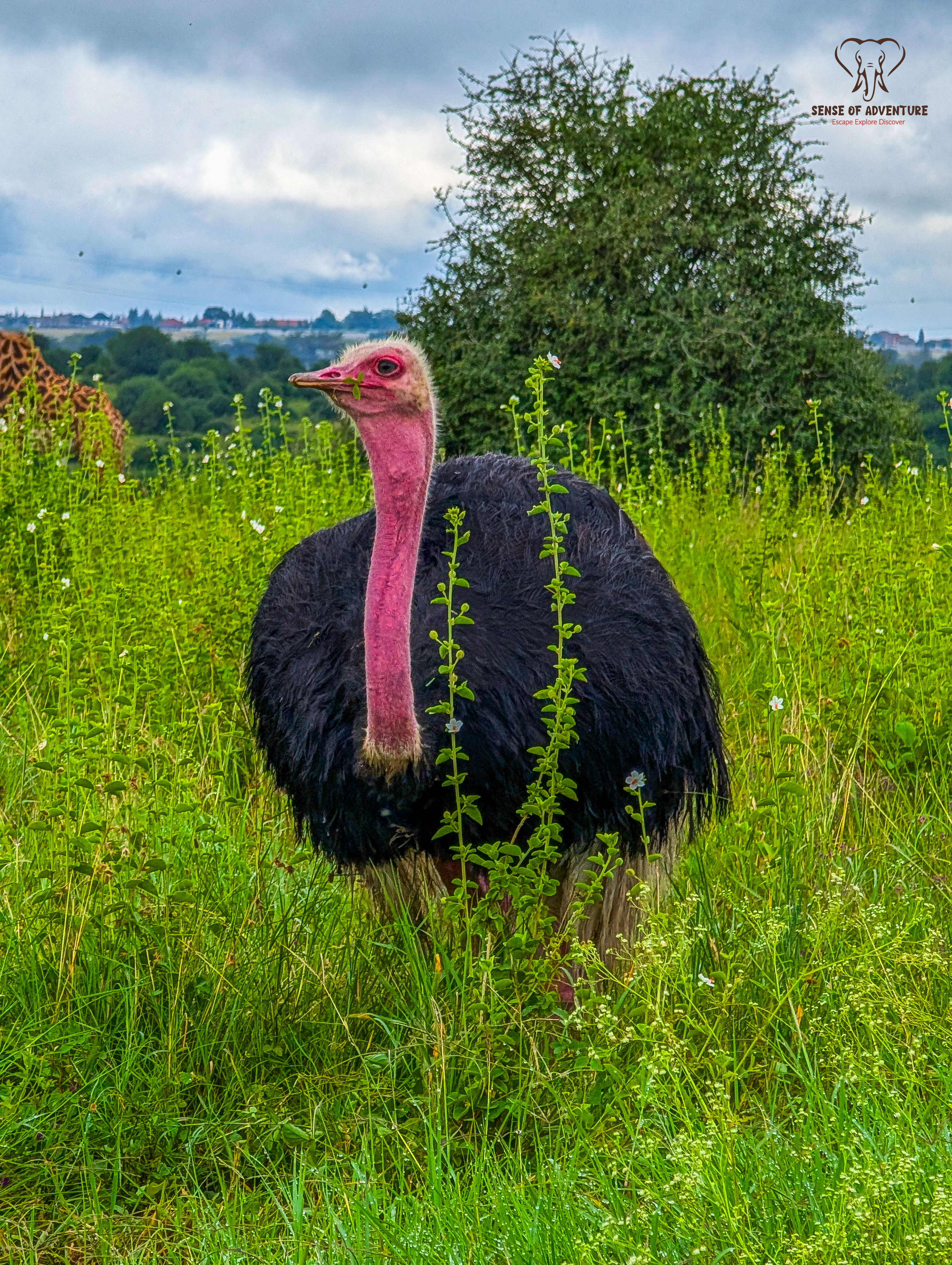
Do ostriches bury their heads in the sand is a myth so old it predates almost every other piece of animal folklore still repeated today, tracing back nearly two thousand years to the Roman naturalist Pliny the Elder, who wrote that ostriches believed their whole body was hidden once their head and neck vanished into a bush. It never happened, and it still does not. What actually happens is far more interesting: ostriches dig shallow nests and turn their eggs by beak several times a day, creating the visual illusion from a distance, while a genuinely startled bird flops flat to the ground rather than burying anything at all. Sense of Adventure guests regularly spot ostriches doing exactly this on game drives across Amboseli, Samburu and Nairobi National Park, and the real behaviour is far more impressive than the myth ever gave it credit for.
See the Real Ostrich Behaviour in Person
Message us to plan a safari through Kenya ostrich territory in Amboseli, Samburu or Nairobi National Park.
Where the Myth Actually Came From
Pliny the Elder, writing around AD 77, described ostriches thrusting their head and neck into a bush and imagining their entire body was concealed as a result, a claim naturalists repeated uncritically for centuries afterward without anyone verifying it against real bird behaviour. Three genuine behaviours likely fed the confusion: ostriches dig shallow ground nests and dip their heads to turn eggs with their beak multiple times daily, a startled bird flattens itself against the ground to blend into the terrain rather than fleeing, and the bird disproportionately small head atop a long neck simply makes any downward motion look, from a distance, like the head has vanished entirely.
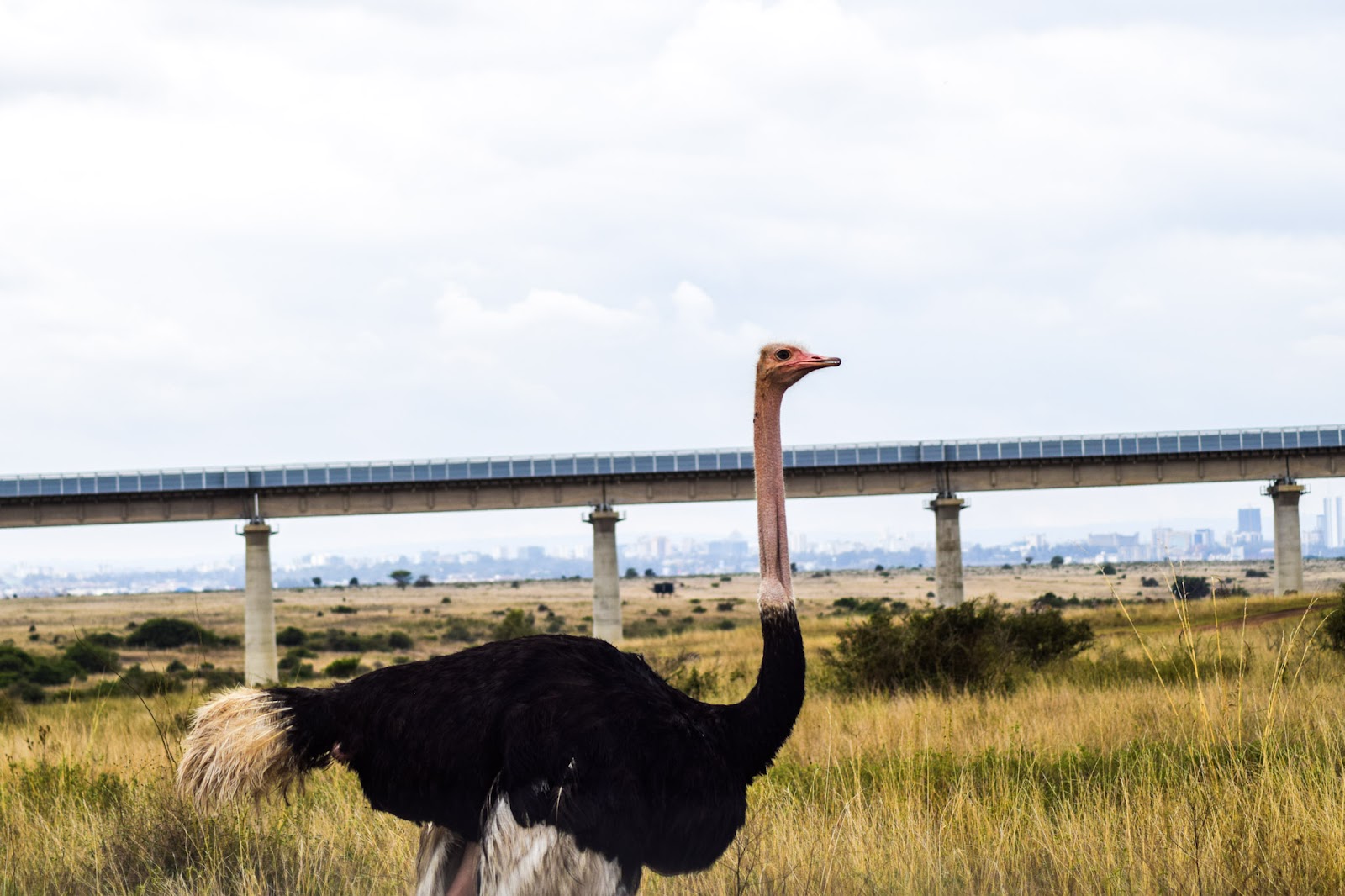
My kids had grown up believing the head-in-sand thing was simply true, and watching an ostrich actually flatten itself against the ground and go completely still instead was somehow more impressive than the myth ever was. Our guide explained the real behaviour right as it happened, which made it stick far better than any book ever could.
— Sense of Adventure guest, Amboseli family safari
7 Real Facts About Ostriches
1. Egg-Turning, Not Head-Burying
An ostrich lowers its head into a shallow ground nest several times a day specifically to turn its eggs with its beak, the real behaviour behind the ancient myth.
2. Flattening, Not Hiding
When genuinely threatened and unable to flee, an ostrich flops flat against the ground, using its low profile and colouring to blend into the terrain rather than concealing its head anywhere.
3. The Fastest Bird on Land
Ostriches can sprint at speeds up to 70 km/h, making running away, not hiding, their actual first line of defence against nearly any predator.
4. A Kick That Can Kill a Lion
An ostrich powerful legs and clawed feet deliver a kick strong enough to seriously injure or even kill a large predator, making it far from the defenceless bird the myth implies.
5. The Somali Ostrich, a Kenya Specialty
Northern Kenya’s Samburu region hosts the distinctive blue-necked Somali ostrich, one of the region’s Special Five species found nowhere near as reliably further south.
6. The World Largest Living Bird
Ostriches are the largest living bird species by both height and weight, laying eggs that are similarly record-setting in size among all birds on Earth.
7. Easy to See Without a Big-Ticket Park
Ostriches turn up reliably in Nairobi National Park, Amboseli and even on Crescent Island near Naivasha, making them one of the easiest safari birds to actually encounter.
Spot the Somali Ostrich in Samburu
Our Samburu itineraries cover the Special Five, including the striking blue-necked Somali ostrich.
Why This Myth Persisted for So Long
Part of the reason the head-in-sand story survived nearly two thousand years is that nobody had much incentive to correct it; it made for a vivid metaphor long before it was ever an animal fact people cared about verifying, and it entered everyday language as shorthand for denial or avoidance well before wildlife documentaries existed to set the record straight. The behaviours that actually inspired it, egg-turning and flattening, are genuinely harder to observe closely than a dramatic myth is to repeat, which is likely why the false version outlived the accurate one for so long. Modern safari guiding is one of the few places where the real behaviour gets demonstrated in real time rather than just described in a book.
The Ostrich Myth: Quick Reference
- The myth: ostriches bury their heads in sand when scared.
- Origin: the Roman naturalist Pliny the Elder, around AD 77.
- What really happens: egg-turning at the nest, or flattening flat to the ground when threatened.
- Real defence strategy: running, up to 70 km/h, or a lethal kick.
- Kenya specialty: the blue-necked Somali ostrich in Samburu.
- Easiest place to see one: Nairobi National Park.
Spotting Ostriches on Your Kenya Safari
Ostriches turn up across a wide range of Kenya landscapes, but the Somali ostrich specifically is a genuine Samburu specialty. Our Samburu Special Five guide covers this and four other species found reliably only in Kenya’s arid north.
See the Real Bird, Not the Myth
Message us today and we will plan a Kenya safari that finds ostriches doing what they actually do.
Frequently Asked Questions
Do ostriches really bury their heads in the sand?
No, this is a myth dating back nearly two thousand years to the Roman naturalist Pliny the Elder. Ostriches lower their heads to turn eggs at the nest or flatten themselves against the ground when threatened, but they never bury their heads.
Where did the ostrich head-in-sand myth come from?
The myth originated with Pliny the Elder around AD 77, who wrote that ostriches believed their whole body was hidden once their head and neck vanished into a bush, a claim later naturalists repeated without verifying it.
How fast can an ostrich run?
Ostriches can sprint up to 70 km/h, making them the fastest bird on land, and running is their primary real defence strategy rather than any form of hiding.
Are ostriches dangerous?
Yes, an ostrich kick from its powerful legs and clawed feet can seriously injure or even kill a large predator, making it a far more formidable animal than the passive myth suggests.
Where can I see ostriches in Kenya?
Ostriches are commonly seen in Nairobi National Park, Amboseli and around Lake Naivasha, while the distinctive blue-necked Somali ostrich is a specialty of Samburu National Reserve in northern Kenya.