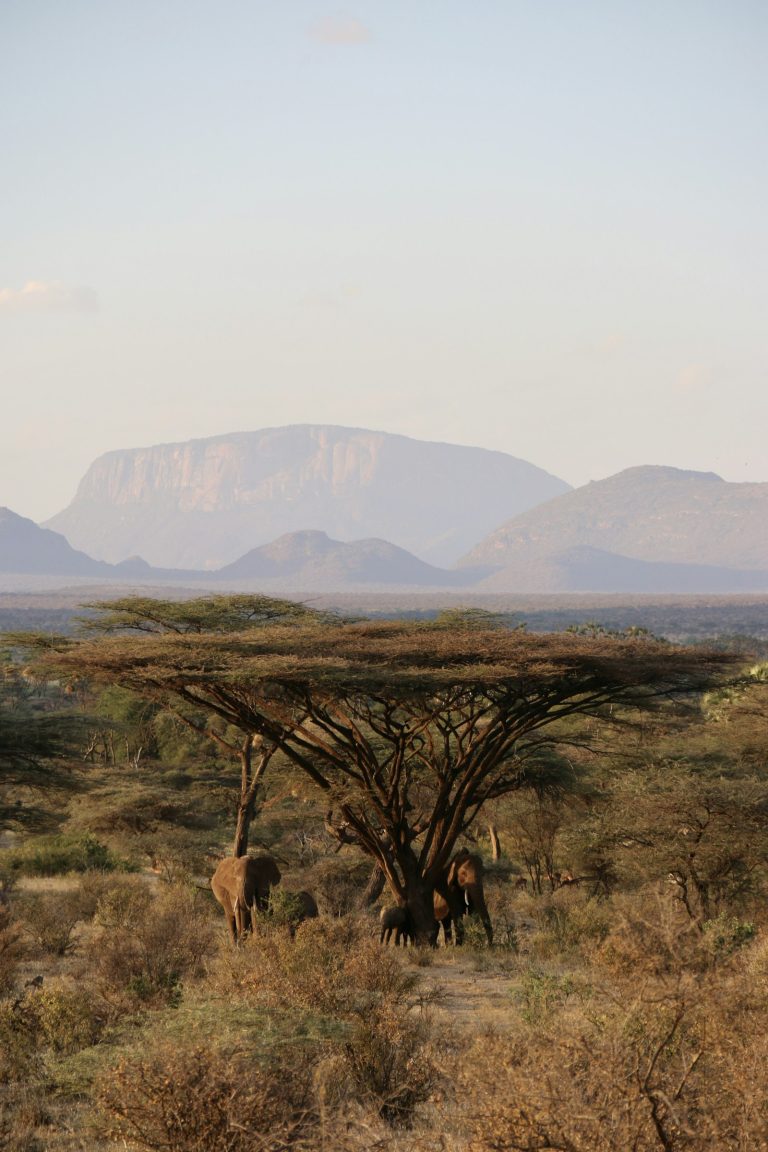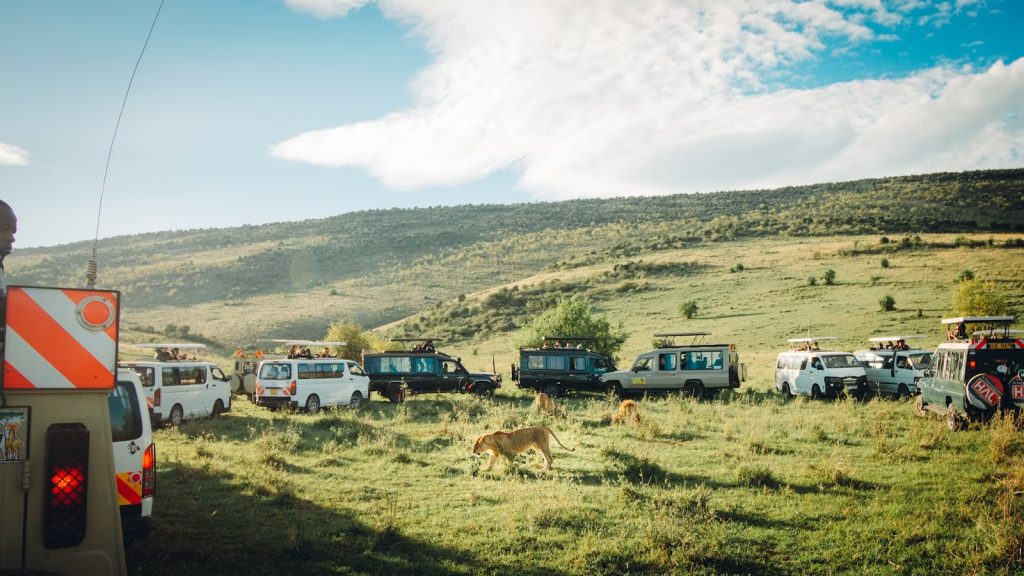
An accessible Kenya safari is genuinely possible with the right planning. Specialised vehicles, step-free rooms and experienced guides all exist, but nearly everything depends on how early you share your specific needs. A safari built around mobility requirements differs from a standard booking mainly in the planning timeline, not in what you can finally see and do.
Whether you use a wheelchair, walk with a stick, travel with medical equipment or simply tire more quickly than you used to, the same rule applies: specific details, shared early, turn into the right vehicle, the right room and the right pace. This guide explains how Sense of Adventure plans an accessible Kenya safari, what to ask every camp, and which parks suit limited mobility best.
✅ Accessible Kenya Safari: Quick Answer
- Is it possible? Yes, with planning. Adapted vehicles, ground-level rooms and trained guides exist, but in limited numbers.
- Book early: 6 to 9 months ahead, especially for July to October travel.
- Travel by road: road transfers usually suit limited mobility better than light aircraft.
- Easiest parks: Nairobi National Park, Lake Nakuru and Amboseli combine shorter drives with flatter terrain.
- Ask every camp: door widths, shower type, path surfaces and distance from room to dining area.
- Best season: the dry months, June to October and January to February.
Tell us how you move, and we will check which camps and vehicles truly fit before you commit.
Share My Mobility NeedsWhat Accessible Safari Planning Actually Involves
The single biggest factor in a successful accessible Kenya safari is lead time. Wheelchair-accessible suites are limited, especially in peak season (July to October), so booking six to nine months ahead is strongly recommended. Clear, specific communication matters just as much.
Telling your operator your degree of mobility, the type of wheelchair or mobility aid you use, and any equipment needs like a roll-in shower or commode lets them arrange the right vehicle, room and support staff in advance, rather than improvising on arrival. It also lets us rule out camps early, before you fall in love with a place that cannot meet your needs.
Planning usually runs in three stages. First, we gather your details in a short conversation or a written list. Second, we shortlist parks and camps and put your questions to each property directly. Third, we confirm the vehicle set-up, the transfer plan and the daily pace in writing, so you can check every point before paying a deposit.
What to Plan For on an Accessible Kenya Safari
These six points cover most of what shapes an accessible Kenya safari. Work through them with your operator and you will avoid nearly all of the common surprises.
Book Early, Especially in Peak Season: 6-9 months ahead is the realistic window
Accessible suites and specially equipped vehicles are limited in number, and peak season (July-October) books them out fastest. Early booking secures the right camps rather than whatever is left.
Communicate Specifics, Not Generalities: your operator can only plan for what you tell them
Share your degree of mobility, wheelchair type, and any equipment needs (roll-in shower, commode, an interconnecting room for a helper) clearly and early. There is no need to be shy about the details.
Choose Road Transfers Over Light Aircraft: small planes rarely suit limited mobility
Light aircraft between camps are seldom well suited to travellers with limited mobility; a road-based itinerary is generally the more practical and comfortable choice.
Ask About the Vehicle Itself: ramps, anchoring, seating
Specialised safari vehicles can include access ramps, secure anchoring systems and adjustable seating, often with preferential seating up front next to the driver-guide. Confirm this is arranged before you travel.
Check Camp Terrain, Not Just the Room: pathways matter as much as the suite
Ask about the terrain and surface of walkways between your room and communal areas, and what toilet facilities are like out on game drives, since these details vary a lot from camp to camp.
Travel in the Dry Season if Possible: June to October
Rain and mud can meaningfully affect how easy it is to move around camp and between vehicles and buildings, making the dry season the more predictable window.
Who an accessible Kenya safari can work for
An accessible Kenya safari is not only about wheelchairs. The same planning helps a wide range of travellers, and each group needs slightly different checks.
- Manual or power wheelchair users: door widths, roll-in showers, ramps or level paths, and whether a power chair can be charged overnight.
- Limited walking or balance: short, even paths, grab rails, a room close to the dining area and a low vehicle step.
- Older travellers: a gentler pace, fewer long drives and rest afternoons; see our guide to safari in your 70s and 80s.
- Medical equipment users: reliable power for CPAP machines or other devices, fridge space for medication and a backup plan.
- Hearing or sight loss: a guide briefed in advance on how best to describe sightings and communicate on drives.
Best Parks for an Accessible Kenya Safari
The most comfortable parks for limited mobility combine shorter road journeys, flatter terrain and a choice of solid-built lodges. Drive times below are approximate from Nairobi and vary with traffic and road works.
| Park | Approx. road time from Nairobi | Why it can suit limited mobility |
|---|---|---|
| Nairobi National Park | Under an hour | Short half-day drives, back at your hotel by lunchtime |
| Lake Nakuru | About 3 to 4 hours | Compact park, good roads in the dry season, rhinos often close to the track |
| Amboseli | About 4 to 5 hours | Flat, open plains and elephants visible from the vehicle |
| Ol Pejeta | About 3 to 4 hours | Conservancy with a mix of lodges and varied game drives |
| Masai Mara | About 5 to 6 hours | The best wildlife, but long, bumpy roads; break the drive overnight |
Many travellers begin an accessible Kenya safari in Nairobi National Park, which is a gentle test of how a game drive feels before committing to longer journeys. If the Masai Mara is a must, we usually add an overnight stop on the way, often at Lake Naivasha, to split the journey. Our Nairobi National Park safari and Amboseli National Park guide explain both parks in more detail.
Choosing Accessible Accommodation
Rooms are where an accessible Kenya safari succeeds or struggles. Two camps that look similar online can be very different in practice: one may have a level concrete path and a roll-in shower, the other a sandy track, a step into the tent and a raised shower tray.
As a general pattern, permanent lodges with solid buildings tend to offer more step-free options than classic tented camps. However, some tented camps have built ground-level tents on solid platforms, so it is always worth asking rather than ruling them out. Our tented camp vs lodge guide explains the wider differences.
Questions to ask every camp
- What is the narrowest door width between the entrance and the bed, bathroom and veranda?
- Is the shower a roll-in shower, a step-in tray or a bath? Are there grab rails and a shower seat?
- How far is the room from the dining area, and what is the path surface: concrete, wooden deck, gravel or sand?
- Are there any steps, and can a ramp be fitted? Is the path lit at night?
- How many hours a day is power available in the room, and can a power chair or CPAP machine be charged?
- Can staff provide a commode, extra pillows or a raised toilet seat on request?
We send these questions to each property and keep the written answers on file, so nothing depends on memory. If a camp cannot answer clearly, we treat that as a warning sign and look elsewhere.
Not Sure Which Camp Truly Fits Your Needs?
Send us your door-width, shower and power needs. We check every camp in writing before recommending it, so you only see rooms that genuinely work for you.
Safari Vehicles and Getting In and Out
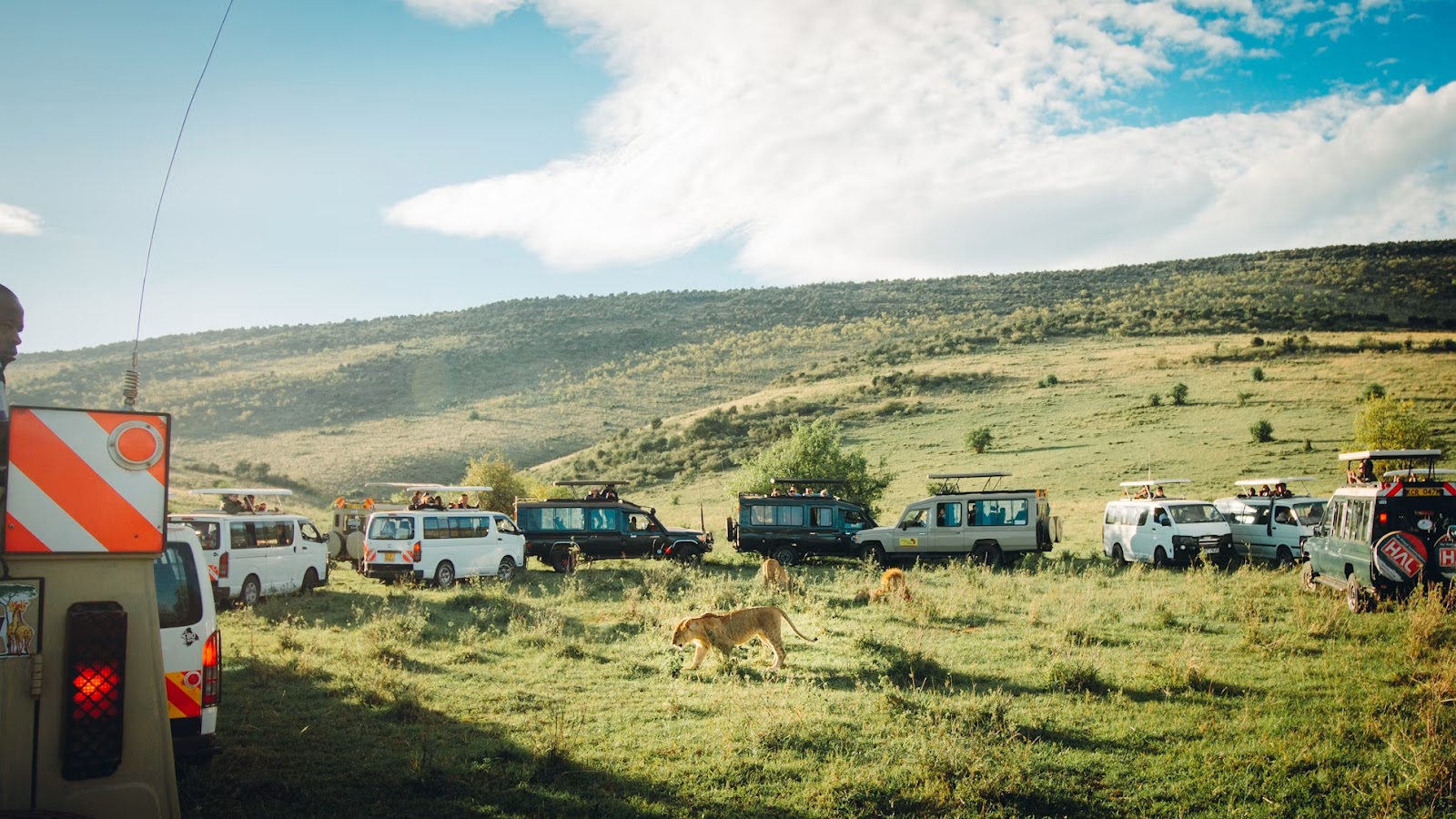
Most Kenya game drives use 4×4 Land Cruisers with pop-up roofs. They are excellent for viewing but have a high step, so getting in and out is often the hardest moment of the day. For an accessible Kenya safari, the vehicle needs as much thought as the room.
Some operators run adapted vehicles with ramps or lifts and secure wheelchair anchoring, but they are few, which is another reason to book early. Where no adapted vehicle is available, a standard vehicle can still work for many travellers who can manage a short transfer, with a portable step, a front seat and an experienced guide to help. Our guide to safari vehicles in Kenya explains the main types.
Tips for easier transfers
- Ask for the front passenger seat, which usually has the lowest step and the most legroom.
- Request a private vehicle so you can set the pace and take breaks when you need them.
- Bring a folding wheelchair that fits the vehicle; your guide will store it securely during drives.
- Agree on a transfer method with your guide on day one, and stick to it.
- Bring a cushion: off-road tracks are bumpy, and extra padding helps on longer drives.
Flights, Airports and Road Transfers
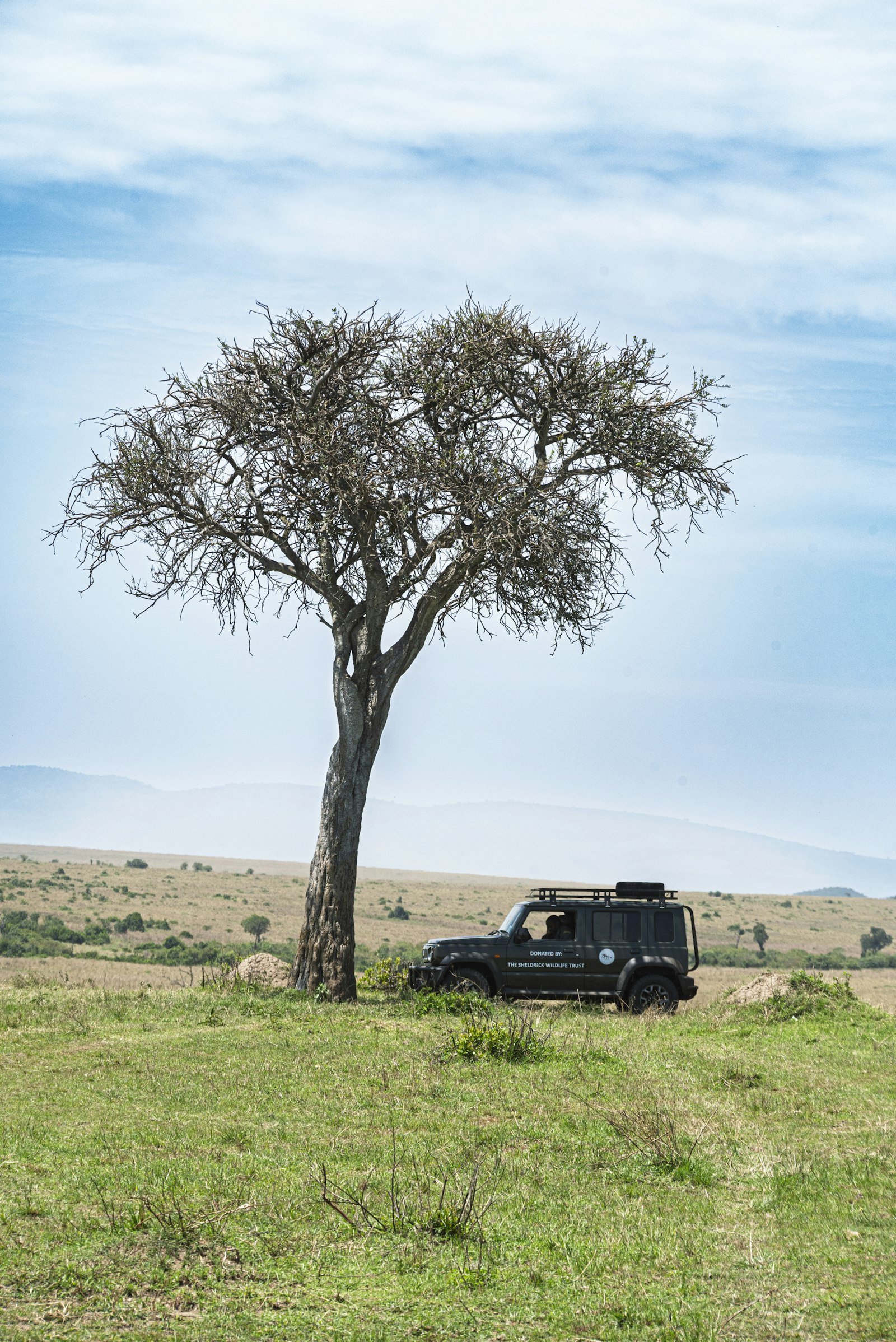
An accessible Kenya safari begins long before the first game drive. Ask your airline for special assistance when you book your international flight; most airlines ask for at least 48 hours’ notice, and earlier is better. Tell them your wheelchair type, battery details for a power chair, and whether you need an aisle chair to reach your seat.
On arrival at Jomo Kenyatta International Airport in Nairobi, airline assistance staff usually meet you at the aircraft. Our driver-guide then meets you outside arrivals with the vehicle. For the rest of the trip, we plan road transfers with regular stops, and we avoid scheduling more than one long drive in a row.
Light aircraft flights to the parks are fast, but the planes are small, steps are steep and luggage limits are tight, so they rarely suit limited mobility. If a flight is the only practical option for one leg, we check boarding arrangements with the airline in advance.
Bathroom stops on game drives
This is the question many travellers feel awkward asking, but it matters. Parks have toilets at gates and some picnic sites, though few are accessible, and bush stops are common on game drives. We plan drive lengths around comfortable breaks, often returning to camp between morning and afternoon drives.
Health, Insurance and Medical Support
Bring enough medication for the whole trip plus a few extra days, packed in your hand luggage with a copy of each prescription. Pack spare parts for your wheelchair, such as an inner tube or puncture kit, and chargers with a plug adapter: Kenya uses the UK-style three-pin socket.
Comprehensive travel insurance that covers your condition and your equipment is essential for any accessible Kenya safari. Read our Kenya travel insurance guide and our page on AMREF Flying Doctors evacuation cover. For the latest official health and entry information, check the GOV.UK travel advice for Kenya or your own government’s advice, and speak to your doctor about vaccinations well before you travel.
Best Time for an Accessible Kenya Safari
Kenya has two main dry seasons: June to October and, more briefly, January to February. These are the easiest months for an accessible Kenya safari, because tracks are firmer, paths in camp are drier, and wildlife gathers near water, so you need less driving to find it.
The long rains, roughly March to May, and the short rains in November and December bring mud that can make paths and vehicle transfers harder. Many travellers still enjoy these months, which are quieter and greener, but build in more flexibility. July to October is also the busiest time, especially in the Masai Mara during the migration, so accessible rooms go first.
Accessible Rooms Book Out First
The few step-free rooms in popular camps are often the first to go in peak season. Send your travel window and we will check which are still open for your dates.
Check My Accessible DatesA Sample Route at a Gentle Pace
Here is how a relaxed, road-based accessible Kenya safari might look over about a week. Every detail can change to match your needs.
- Day 1: arrive in Nairobi with airline assistance, transfer to a hotel and rest.
- Day 2: a short morning game drive in Nairobi National Park, back for lunch and a quiet afternoon.
- Days 3 to 4: drive to Lake Nakuru for two nights, with short drives along the lakeshore.
- Day 5: a short drive to Lake Naivasha to break the journey.
- Days 6 to 7: continue to the Masai Mara for game drives with a midday rest at camp.
- Day 8: return to Nairobi by road with regular stops.
For a ready-made itinerary built at a slower pace, see our Kenya safari for over 60s, which we can adapt once we know your requirements.
Accessible Safari Planning at a Glance
- Lead time: book accessible accommodation 6-9 months ahead, especially for July-October travel.
- Vehicles: specialised safari vehicles can include ramps, secure anchoring and adjustable seating, often with front-seat priority.
- Transfers: road transfers are generally recommended over light aircraft, which rarely suit limited mobility.
- Camps: some Kenya lodges are specifically set up with ground-level rooms, wide doorways, roll-in showers and step-free pathways.
- Guides: many Kenyan safari guides are trained to assist travellers with mobility needs, alongside porters and lodge staff.
- Best season: the dry season (June-October) avoids rain and mud that can affect terrain around camp.
Plan an Accessible Kenya Safari With Us
Every one of our Kenya safari packages can be adapted once we know your specific needs. Message us early, and see our booking guide for what the full planning process looks like from enquiry to departure.
A private Kenya safari is usually the best base for an accessible Kenya safari, because the vehicle, guide and timings are yours alone. You can also start with a shorter Kenya safari from Nairobi, or browse our Masai Mara safari packages. For a camp-by-camp checklist written for wheelchair users, read our wheelchair accessible safari guide, and for park rules and gate details, visit the Kenya Wildlife Service.
Every Detail Confirmed Before You Fly
Tell us how you travel, and our Nairobi team will build a safari around your vehicle, room and pace needs, with every answer from every camp in writing.
Frequently Asked Questions
Can you go on safari in Kenya in a wheelchair?
Yes, with enough advance planning. Specialised vehicles, accessible camps and trained guides all exist in Kenya, though accessible accommodation is limited and should be booked 6 to 9 months ahead. Most wildlife viewing happens from the vehicle, so wheelchair users can enjoy full game drives once the transfer in and out is planned.
Should I fly or drive between parks on an accessible safari?
Road transfers are generally recommended. Light aircraft between camps are small, with steep steps and tight luggage limits, so they are seldom well suited to travellers with limited mobility. We break long road journeys with overnight stops and regular rest breaks, so no single day is too tiring.
What should I tell my safari operator about my mobility needs?
Be specific: your degree of mobility, the type of wheelchair or aid you use, its width and weight, and any equipment needs such as a roll-in shower, commode, power for a CPAP machine or an interconnecting room for a helper. The more detail you share early, the better the match.
What time of year is best for an accessible Kenya safari?
The dry seasons, June to October and January to February, are generally best, because rain and mud can affect tracks, vehicle transfers and pathways around camp. July to October is also peak season, so book accessible rooms 6 to 9 months ahead if you plan to travel then.
Do safari vehicles in Kenya accommodate wheelchairs?
Some do. Specialised vehicles can include access ramps, secure anchoring systems and adjustable seating, often with front-seat placement next to the driver-guide, but they are limited in number. Many travellers who can manage a short transfer use a standard Land Cruiser with a portable step and a folding wheelchair stored on board.
Which Kenya park is easiest for limited mobility?
Nairobi National Park is the easiest start, because it is under an hour from the city and drives can be kept short. Lake Nakuru and Amboseli also suit limited mobility well, with flatter terrain and shorter road journeys than the Masai Mara, which is best reached with an overnight stop on the way.
Is an accessible Kenya safari more expensive?
It can cost a little more, mainly because a private vehicle, slower pace and extra nights to break long drives add to the total. Accessible rooms themselves are not always priced higher. We quote each trip in writing with every inclusion listed, so you can compare options clearly before booking.