The biggest snake in Africa is the African rock python, a non-venomous constrictor. Most adults measure about 3 to 3.5 metres, unusually large ones pass 4.8 metres, and reliable reports exceed 6 metres. A large python filmed at Solio Ranch in Kenya went viral, but claims that it measured 7.5 metres were never officially confirmed.
Sense of Adventure is a TRA-licensed private safari company based at Mountain Mall on Thika Road, Nairobi. Our guides love reptiles as much as rhinos, and we take guests to Solio and the Laikipia conservancies every month. This guide sorts fact from rumour about Africa’s biggest snake, explains where you might see one in Kenya, and shows you how to plan a visit to Solio’s famous rhino sanctuary.
Africa’s biggest snake: the quick answer
- Species: the African rock python, split by scientists into Central and Southern African rock pythons.
- Typical adult size: about 3 to 3.5 metres; exceptional snakes exceed 6 metres.
- Danger: non-venomous; attacks on people are very rare.
- The Solio story: a large python was filmed there, but no official measurement was published.
- Seeing one: sightings on safari are a rare bonus, usually near water or rocks.
Curious about Solio’s rhinos and Laikipia’s wilder side? Send your dates and we will plan a private visit with a guide who knows the reptiles too.
Plan my Solio visitWhat Is the Biggest Snake in Africa?
The African rock python is the biggest snake in Africa by both length and weight.
Scientists now recognise two closely related species. The Central African rock python, Python sebae, ranges across central and western Africa east to Ethiopia and Somalia. The Southern African rock python, Python natalensis, lives further south and east. Both occur in East Africa, and on safari they are usually just called rock pythons.
Rock pythons are heavy-bodied, with brown, olive and tan blotches that hide them in grass and among rocks. They are ambush hunters that wait near water or game trails, then seize prey and kill it by constriction. They are among the biggest snake species on Earth, alongside anacondas and the reticulated python.
The Solio Ranch Python: What We Actually Know
A very large python filmed at Solio Ranch was widely shared online, but its often-quoted 7.5-metre length has not been confirmed by any official measurement.
Footage of a huge python moving through grass at Solio circulated on social media in early 2025, and many websites repeated a length of 7.5 metres. We have found no statement from Solio, the Kenya Wildlife Service or a scientific body confirming that figure. Judging length from video is notoriously unreliable, because a snake’s coils, the camera angle and the lack of scale all mislead the eye.
What the story does show is that big pythons live quietly in Kenya’s conservancies, often unseen for years. The honest headline is less dramatic but more interesting: a healthy, well-protected landscape can support large predators of every kind, including Africa’s biggest snake.
Why Snake Lengths Get Exaggerated
- Estimates, not measurements: few wild snakes are ever stretched out and measured.
- Skins stretch: a dried skin can be much longer than the living snake.
- Perspective: a snake close to the camera looks far bigger than it is.
- Repetition: once a number appears online, it is copied without checking.
How Big Does Africa’s Biggest Snake Get?
Most African rock pythons are 3 to 3.5 metres long, and only exceptional individuals pass 6 metres.
| Measure | African rock python | Notes |
|---|---|---|
| Typical adult length | About 3 to 3.5 m | Females are usually larger than males |
| Unusually large | Over 4.8 m | Rare in the wild |
| Exceptional | Over 6 m | Some older reports are considered reliable |
| Weight | Often 55 to 65 kg in big adults | Exceptional snakes may exceed 90 kg |
| Venom | None | Kills by constriction |
| Conservation | Listed under CITES Appendix II | International trade is regulated |
International trade in rock pythons and their skins is controlled under CITES Appendix II, and their status is assessed on the IUCN Red List. Habitat loss and persecution are the main threats.
What Africa’s Biggest Snake Eats
Africa’s biggest snake takes whatever it can overpower: hares, hyraxes, monkeys, birds, monitor lizards, fish, small antelope and even young crocodiles. Large snakes can swallow an impala-sized meal, then rest for weeks while they digest. This is why you sometimes find a python coiled and motionless beside a game trail, its body visibly swollen.
How Rock Pythons Breed
Female rock pythons lay a clutch of eggs, often several dozen, usually in a burrow, termite mound or hollow. Unusually for snakes, the mother coils around her eggs and stays with them through incubation, and some females remain with the hatchlings for a short time afterwards. Young pythons are well under a metre long when they hatch and face many predators, from monitor lizards to birds of prey. Only a few survive to grow into the giants that give Africa’s biggest snake its reputation.
Want a guide who loves the small stuff?
Tell us if reptiles, birds or tracking interest you. We will match you with a guide and a conservancy where walks and slower drives give you the best chance of surprises.
The Biggest Snake Species in the World Compared
The African rock python is Africa’s biggest snake, but the world records belong to snakes from Asia and South America.
| Snake | Where it lives | Known for |
|---|---|---|
| Reticulated python | South-east Asia | The world’s longest snake |
| Green anaconda | South America | The world’s heaviest snake |
| Burmese python | South and South-east Asia | Very heavy-bodied |
| African rock pythons | Sub-Saharan Africa | Africa’s biggest snake |
| Indian python | South Asia | Close relative of the Burmese python |
In Africa, no other snake comes close in bulk. Long venomous species such as the black mamba can be impressive, but they are far slimmer and lighter. Our snakes of Kenya safari guide introduces the species you are most likely to hear about.
Where You Might See a Python in Kenya
Pythons live across much of Kenya’s savanna, but sightings are rare and almost always a lucky bonus.
Look for Africa’s biggest snake near rivers, swamps, rocky outcrops and thick bush, where pythons hunt and hide. They are recorded in places such as the Masai Mara, Tsavo, Samburu, Laikipia and even Nairobi National Park. Many sightings happen when a guide spots a snake basking on a warm morning or digesting a meal beside a track. Walking safaris and slower drives improve your chances.
Tips for Spotting the Biggest Snake on Safari
Pythons are masters of camouflage, so scanning slowly pays off. Look along the edges of rivers and swamps, on sun-warmed rocks in the early morning and at the base of thick bushes beside game trails. A sudden gathering of alarmed birds or monkeys can also give a hidden snake away. Tell your guide that you are keen on reptiles at the start of the trip; good guides will slow down in likely spots and share any recent sightings from other drivers.
If you do find one, enjoy the moment from the vehicle. A resting python may stay put for hours, giving everyone time for photographs, while an active one will usually slide quietly into cover within minutes.
A Guaranteed Close Look in Nairobi
If you want to see Africa’s biggest snake up close and safely, the snake park at the Nairobi National Museum, run by the National Museums of Kenya, keeps live snakes, including pythons. It pairs well with a city day. See our Nairobi museum tour.

Are Pythons Dangerous on Safari?
Africa’s biggest snake poses very little risk to safari travellers, because it avoids people and attacks on humans are extremely rare.
Like all pythons, Africa’s biggest snake is non-venomous. A large snake can bite and constrict if cornered, so the rule is simple: watch from a distance and let it move away. Venomous snakes are a more common concern in Kenya, though bites on safari are still unusual. Camps keep paths clear, and guides know what to look for.
- Wear closed shoes on walks and after dark.
- Use a torch when walking between tent and main area at night.
- Never try to handle, follow or photograph a snake at close range.
- Shake out boots and bags left on the ground.
- Tell staff if you see a snake near your tent; they will deal with it safely.
Expert tip from our Nairobi team
If you spot a snake on a game drive, ask your guide to stop the vehicle and switch off the engine rather than drive closer. Snakes feel vibration, and a quiet, still vehicle gives you a much longer and more natural sighting. Binoculars help you see markings without disturbing it.
Our honest guide to the most dangerous animals in Africa puts snakes in context alongside hippos, buffalo and mosquitoes. Check health advice before you go on the UK government’s Kenya travel advice pages.
Solio Ranch: Kenya’s Pioneering Rhino Sanctuary
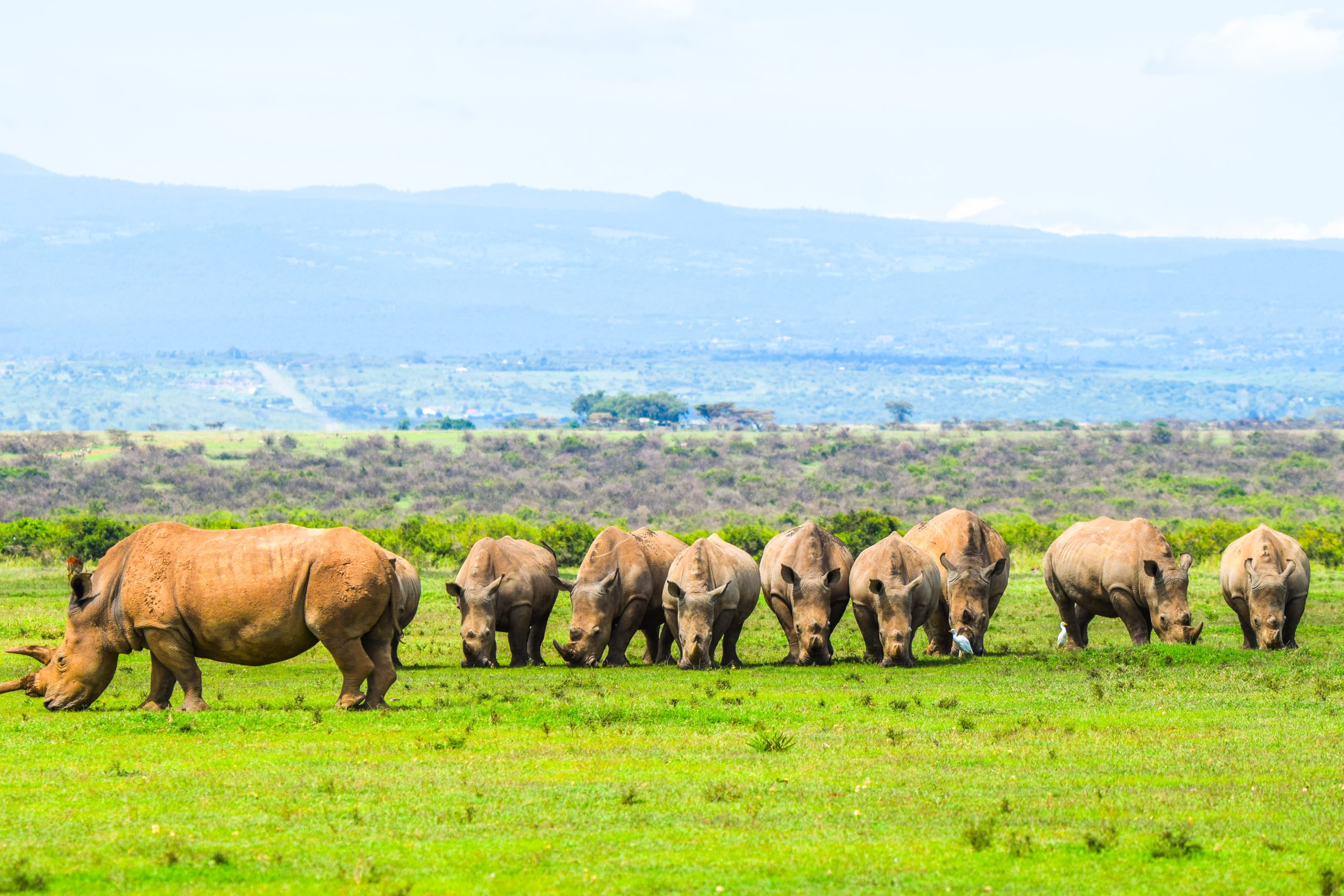
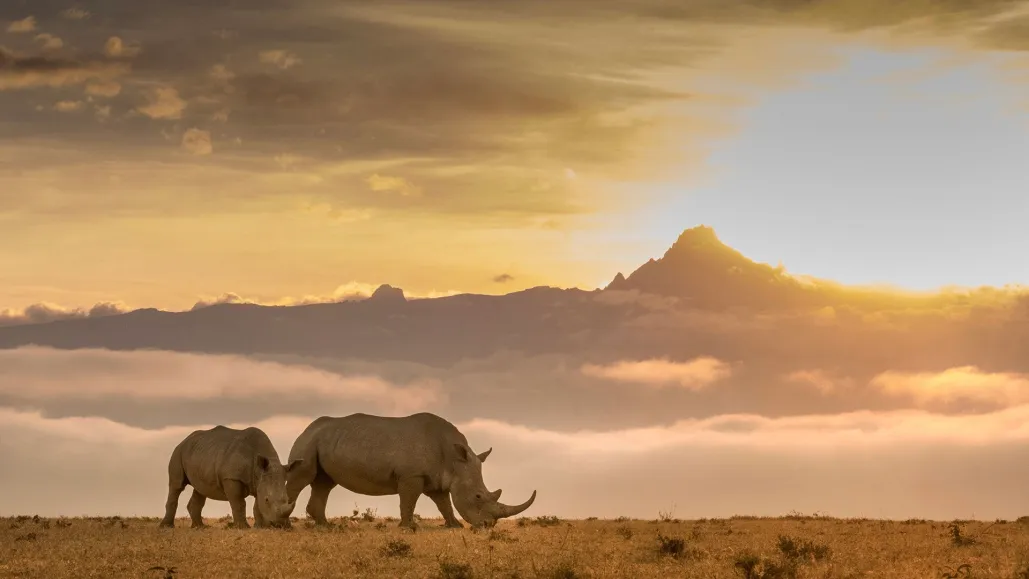
Solio Ranch is best known not for its biggest snake but for its rhinos, protected here since 1970.
Solio is a privately owned reserve on the plains north of Nyeri, with the Aberdares on one side and Mount Kenya on the horizon. Its sanctuary, started in 1970, is often described as Kenya’s first private rhino sanctuary. Rhinos bred here have helped restock parks and conservancies such as Lake Nakuru, Ol Pejeta and Lewa, making Solio one of the great success stories of rhino conservation.
Today you can expect excellent sightings of black and white rhinos in open country, often with calves, along with buffalo, giraffe, zebra, antelope and good birdlife. Our best national parks for rhinos guide compares Solio with Kenya’s other rhino strongholds, and our black rhino vs white rhino guide helps you tell them apart.
Planning a Visit to Solio and Laikipia
Solio sits about three hours’ drive north of Nairobi, so it works as a long day trip or, better, a night at Solio Lodge.
| Option | Best for | Combine with |
|---|---|---|
| Day trip from Nairobi | Short stays focused on rhinos | Lunch in Nyeri or Nanyuki |
| One or two nights at Solio Lodge | Couples and photographers | The Aberdares and Ol Pejeta |
| Laikipia circuit, four to six nights | Wildlife lovers and walkers | Ol Pejeta, Lewa, Loisaba |
| Grand northern route | Longer trips | Samburu and the Masai Mara |
The drier months, from late December to March and June to October, are best for open-country game drives, though Solio’s rhinos are seen year-round. Read about Solio Lodge, our Laikipia safari guide and the bookable 10-day luxury safari with Samburu, Solio, Nakuru and the Masai Mara. Park and conservancy costs are in our Kenya national parks entrance fees 2026 guide.
Hold a night at Solio
Solio Lodge has few rooms and books early in peak months. Send your dates and we will check availability and send a written quote for Solio and nearby Laikipia.
We build these routes as a private Kenya safari or luxury Kenya safari, often finishing with our Masai Mara safari packages. For wider trip ideas, Magical Kenya is the official tourism site.
Biggest Snake in Africa FAQs
What is the biggest snake in Africa?
The African rock python is Africa’s biggest snake. Scientists recognise Central and Southern African rock pythons as two closely related species. Most adults are about 3 to 3.5 metres long, unusually large snakes exceed 4.8 metres, and a few reliable reports exceed 6 metres. Big adults often weigh 55 to 65 kilograms.
Was a 7.5-metre python really found at Solio Ranch?
A large python filmed at Solio Ranch was widely shared online in early 2025, and many sites repeated a length of 7.5 metres. We have found no official measurement from Solio, the Kenya Wildlife Service or scientists confirming it. Lengths judged from video are often overestimated, so treat that figure as unverified.
Are African rock pythons dangerous to people?
They are non-venomous and avoid people, so attacks are extremely rare. A large python can bite and constrict if cornered or handled, which is why you should always watch from a distance. On safari, guides and camp staff know how to keep you and the snake safe.
Where can I see a python in Kenya?
Wild pythons live in many parks, including the Masai Mara, Tsavo, Samburu, Laikipia and Nairobi National Park, usually near water, rocks or thick bush. Sightings are rare and depend on luck. For a guaranteed close look, visit the snake park at the Nairobi National Museum.
What is the biggest snake in the world?
The reticulated python of South-east Asia is the world’s longest snake, and the green anaconda of South America is the heaviest. The African rock python ranks among the world’s largest snake species and is by far the biggest in Africa, much bulkier than long venomous snakes such as the black mamba.
Is Solio Ranch worth visiting?
Yes, especially for rhinos. Solio’s sanctuary has protected rhinos since 1970 and has helped restock parks across Kenya. Black and white rhinos are seen in open country, often with calves, against views of Mount Kenya. It works as a day trip from Nairobi or a night at Solio Lodge.
Can an African rock python eat a person?
It is extremely rare. A very large python can overpower big prey, and a handful of fatal attacks on people have been reported over many decades, but pythons generally avoid humans. For safari travellers the risk is tiny, especially if you keep your distance and never try to handle or corner a snake.
When are rock pythons most active?
Rock pythons are mainly active from dusk into the night, when they hunt along water and game trails. In the cool early morning they often bask in the sun to warm up, which is when guides most often spot them. After a large meal, a python may stay hidden and still for weeks.
Can I buy python skin souvenirs in Kenya?
Please do not. Kenyan law protects wild animals, and international trade in rock python skins is regulated under CITES, so many products are illegal to export or import. Buying them can also encourage poaching. Choose local crafts made from sustainable materials instead, such as beadwork, soapstone or wooden carvings.
Rhinos, reptiles and real local knowledge
From Solio’s rhinos to the surprises a good guide finds in the grass, we plan private safaris that go beyond the headlines. Sense of Adventure is a TRA-licensed safari company in Nairobi.
Kenya-based experts. Real local knowledge. Transparent pricing.