
Fun facts about Kenya tend to circle back to safari eventually, but the country’s real story runs well beyond the Big Five. Kenya recognises two official languages, Kiswahili and English, yet more than 68 languages are actively spoken across the country, a linguistic diversity most visitors never fully register during a week-long safari. Wangari Maathai, a Kenyan environmental and political activist, became the first African woman to win the Nobel Peace Prize in 2004, while the country simultaneously produces many of the world’s best long-distance runners and ranks among the top five global exporters of cut flowers. Sense of Adventure guides weave these details into every itinerary, since Kenya identity is genuinely bigger than its wildlife alone.
Experience the Full Kenya Story
Message us to plan a Kenya trip that goes beyond safari into culture, history and daily life.
7 Fun Facts About Kenya
1. Home to Africa First Female Nobel Peace Laureate
Wangari Maathai won the 2004 Nobel Peace Prize for her work on sustainable development, democracy and peace through the Green Belt Movement.
2. More Than 68 Languages, Not Just Two
Beyond the official Kiswahili and English, over 68 distinct languages are actively spoken across Kenya different ethnic communities.
3. A Global Leader in Distance Running
Kenya consistently produces some of the world’s best long-distance runners, with the Rift Valley highlands widely credited as a key training environment.
4. Coffee Exports, Rarely Consumed at Home
Coffee is one of Kenya’s most valuable exports, yet relatively few Kenyans drink it themselves, since most quality beans are sold internationally.
5. A Top Five Global Flower Exporter
Kenya ranks among the world’s five largest exporters of cut flowers, mainly roses and carnations grown in the highlands around Lake Naivasha.
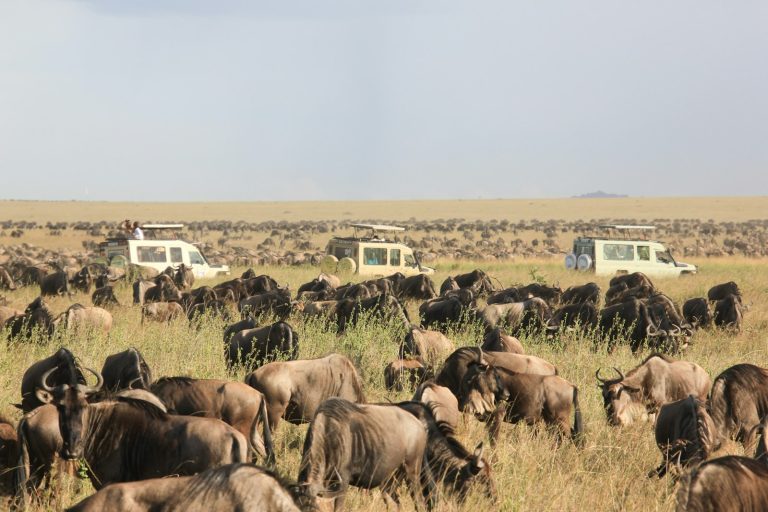
6. Home to the Big Five and the Great Migration
Kenya hosts the East African lion, leopard, black rhinoceros, African elephant and Cape buffalo, alongside the year-round Great Migration cycle.
7. The Migration Technically Never Starts or Ends
Because the Great Migration runs as a continuous, year-round cycle between Kenya and Tanzania, it has no true starting or ending point on the calendar.
See Kenya Culture and Wildlife Together
Our itineraries combine safari with the cultural details that make Kenya genuinely unique.
Fun Facts About Kenya: Quick Reference
- Official languages: Kiswahili and English, plus 68+ others spoken.
- Nobel laureate: Wangari Maathai, 2004 Peace Prize.
- Global exports: top-five cut flower exporter, major coffee producer.
- Athletics: globally dominant in long-distance running.
- Wildlife: home to the Big Five and the Great Migration.
- Migration timing: a continuous, year-round cycle with no fixed start or end.
Frequently Asked Questions
How many languages are spoken in Kenya?
Kenya has two official languages, Kiswahili and English, but more than 68 additional languages are actively spoken across its many ethnic communities.
Who was Wangari Maathai?
Wangari Maathai was a Kenyan environmental, social and political activist who became the first African woman to win the Nobel Peace Prize in 2004 for her contribution to sustainable development, democracy and peace.
Why is Kenya famous for long-distance running?
Kenya produces many of the world’s top long-distance runners, with the high-altitude Rift Valley region widely credited as contributing to this athletic success.
What are Kenya’s biggest exports?
Coffee is one of Kenya’s most valuable exports, and the country also ranks among the world’s top five exporters of cut flowers, mainly roses and carnations.
Does the Great Migration have a specific start date?
No, the Great Migration operates as a continuous, year-round cycle across the Mara-Serengeti ecosystem, meaning it technically has no fixed starting or ending point.