
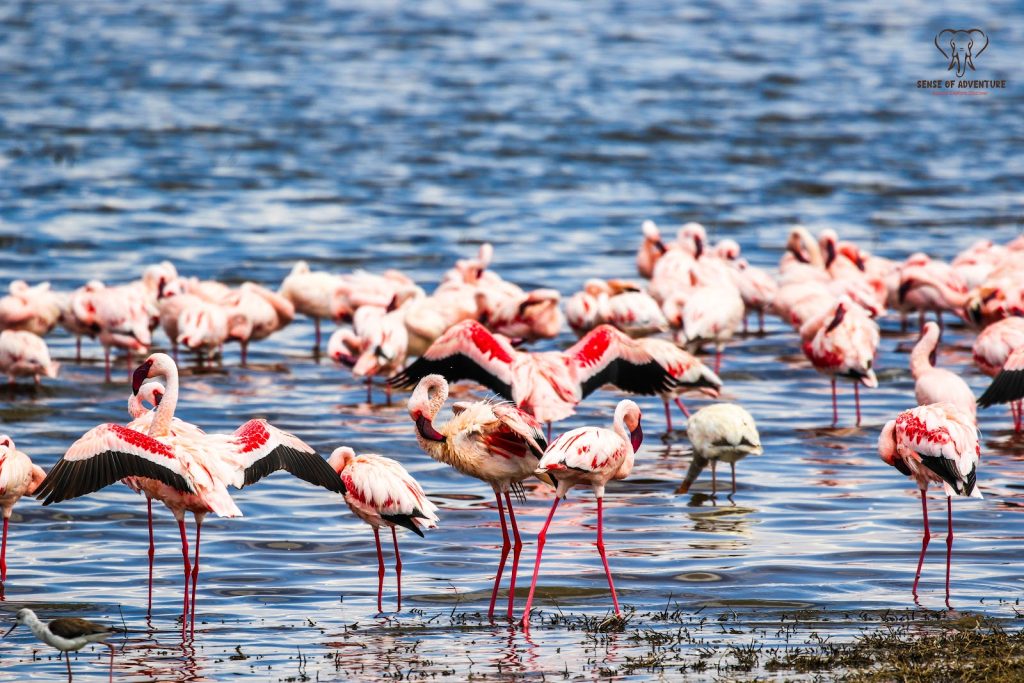
Lake Elementaita is the quiet third member of a UNESCO World Heritage trio that most visitors only know two-thirds of: alongside Lake Nakuru and Lake Bogoria, it forms the Kenya Lake System, inscribed by UNESCO in 2011, and it holds a title neither of its more famous neighbours can claim outright, the single most important foraging site anywhere for the lesser flamingo. Up to 4 million lesser flamingos move between the three interconnected soda lakes across the year, and Elementaita alone regularly hosts flamingo counts exceeding 200,000 birds alongside a major breeding colony of great white pelicans. Sense of Adventure treats Elementaita as the natural extension for guests who have already done Nakuru and want the fuller Rift Valley lakes picture.
Complete the Rift Valley Lakes Trio
Message us to add Lake Elementaita to your Nakuru or Naivasha itinerary.
The UNESCO Lake Nobody Talks About
Lake Nakuru gets the visitor numbers and Lake Bogoria gets the hot springs, but Lake Elementaita, a shallow soda lake roughly 120 kilometres northwest of Nairobi, holds the single most important foraging role in the entire three-lake system for the lesser flamingo, the species responsible for the pink shoreline spectacle everyone actually travels to see. The alkaline water supports dense growth of spirulina platensis, the specific green algae lesser flamingos filter-feed on, which is precisely why the birds move so freely between all three lakes depending on which one currently offers the richest bloom. Designated an Important Bird Area in 1999, Elementaita has recorded over 450 bird species, supporting a birdwatching case at least as strong as its more famous neighbours.
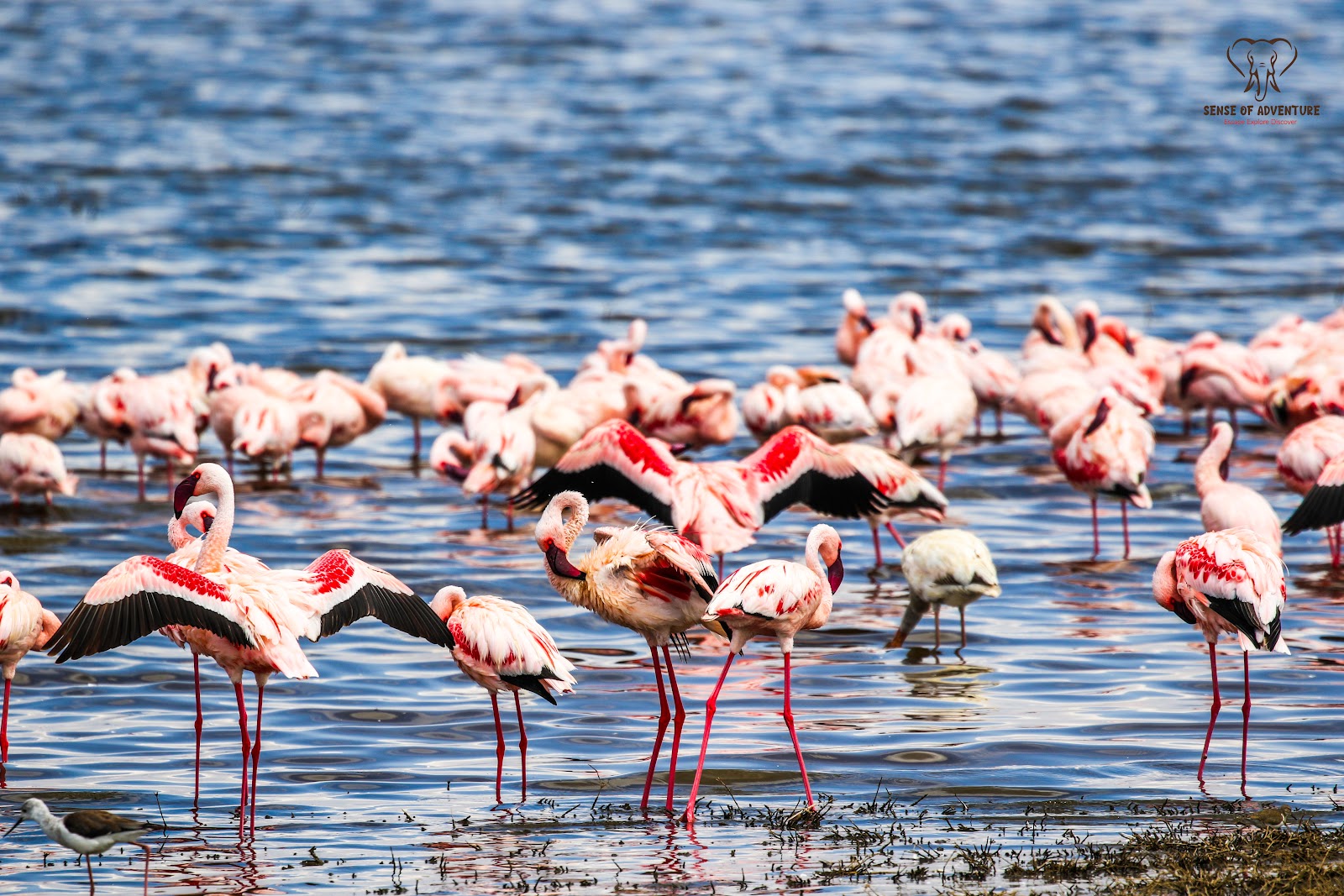
We had already seen Nakuru pink shoreline on a previous trip and almost skipped Elementaita, assuming it would just be a repeat. Learning it was actually the most important flamingo foraging site of the whole three-lake system, not just an overflow spot, made us stop underestimating it completely.
— Sense of Adventure guest, Rift Valley lakes circuit
6 Facts About Lake Elementaita
1. The Single Most Important Lesser Flamingo Site
Elementaita is recognised as the single most important foraging site anywhere for the lesser flamingo, a distinction neither Nakuru nor Bogoria can claim outright.
2. Part of a 2011 UNESCO World Heritage Listing
Alongside Lake Nakuru and Lake Bogoria, Elementaita forms the Kenya Lake System, inscribed as a UNESCO World Heritage Site covering over 32,000 hectares.
3. A Major Great White Pelican Breeding Ground
Beyond flamingos, Elementaita serves as a significant nesting and breeding site for great white pelicans, adding another large, striking species to any visit.
4. Flamingos Move Between All Three Lakes
Up to 4 million lesser flamingos shift between Nakuru, Bogoria and Elementaita depending on which lake currently has the richest algae bloom, so numbers genuinely vary week to week.
5. Over 450 Recorded Bird Species
Designated an Important Bird Area in 1999, Elementaita’s bird count rivals or exceeds both of its more visited neighbouring lakes.
6. The Same Algae Behind the Pink Colour
Elementaita’s alkaline water supports dense growth of spirulina platensis, the specific algae responsible for the pink pigment in every flamingo across the region.
See All Three Rift Valley Lakes
Our Lake Nakuru Day Safari can be extended to include Elementaita and Bogoria.
Lake Elementaita: Quick Reference
- UNESCO status: part of the Kenya Lake System, inscribed 2011.
- Signature distinction: most important lesser flamingo foraging site anywhere.
- Also known for: a major great white pelican breeding colony.
- Birdlife: over 450 recorded species.
- Distance from Nairobi: approximately 120km northwest.
- Best paired with: Lake Nakuru and Lake Bogoria as one Rift Valley circuit.
Completing Your Rift Valley Lakes Trip
Elementaita makes the most sense as part of a fuller lakes circuit. Our Flamingos in Lake Nakuru guide and Lake Bogoria Guide cover its two better-known neighbours in detail.
The Third Lake Most Visitors Miss
Message us today and we will build Elementaita into your Rift Valley lakes itinerary.
Frequently Asked Questions
What makes Lake Elementaita significant?
Lake Elementaita is the single most important foraging site anywhere for the lesser flamingo and forms part of the UNESCO-listed Kenya Lake System alongside Lake Nakuru and Lake Bogoria.
Are there flamingos at Lake Elementaita?
Yes, Lake Elementaita regularly hosts flamingo counts exceeding 200,000 birds, and up to 4 million lesser flamingos move between it and the neighbouring Nakuru and Bogoria lakes throughout the year.
Is Lake Elementaita part of a national park?
Lake Elementaita is managed as a wildlife sanctuary rather than a fully gazetted national park, and it forms part of the UNESCO World Heritage-listed Kenya Lake System.
How far is Lake Elementaita from Nairobi?
Lake Elementaita is approximately 120 kilometres northwest of Nairobi, making it an easy addition to a Lake Nakuru or Rift Valley lakes day trip.
What other wildlife can I see at Lake Elementaita?
Beyond flamingos, Lake Elementaita hosts a major great white pelican breeding colony and supports over 450 recorded bird species, making it a strong birdwatching destination in its own right.