Hippos in Kenya are among the most dangerous large animals in Africa — and the most wrongly underestimated. The enormous round shape, the comic yawning, the wallowing in brown river water — all of it suggests docility. The reality is an animal that can weigh well over 1,500 kg, can run at around 30 km/h over short distances, carries lower canine tusks that can exceed 50 cm, is fiercely territorial, and is widely reported to cause more human deaths each year than any other large African mammal.
Understanding this is part of what makes a close hippo encounter so electrically alive: you are genuinely in the presence of something that demands complete respect. Kenya holds some of the finest hippo viewing on the continent — from the rivers of the Masai Mara to Lake Naivasha’s papyrus shoreline to Mzima Springs’ underwater observatory — and Sense of Adventure positions guests at each location with the specific combination of proximity and safety that makes the experience extraordinary.
✅ Hippos in Kenya Quick Answer
- Best by boat: Lake Naivasha, 1.5–2 hours from Nairobi, with hundreds of hippos in its papyrus shallows.
- Best for drama: the Mara River in the Masai Mara, where large pods share the water with crocodiles and the migration herds.
- Most unusual: Mzima Springs in Tsavo West, where an underwater viewing chamber sometimes gives glimpses of hippos below the surface.
- Season: hippos stay near permanent water all year, so you can see them in every month.
- Safety rule: never stand between a hippo and the water, and never walk near water after dark.
Hippos at Arm’s Length. Safely.
Sense of Adventure knows exactly where and how to get you close to Kenya’s hippo pods — by boat, from a waterhole hide, or through Mzima’s underwater window. Contact us to plan.

Kenya’s Best Hippo Viewing Locations
Lake Naivasha — 600 Hippos From a Boat
Lake Naivasha holds an estimated 600 or more hippos — one of Kenya’s densest populations — and a boat safari lets you watch pods surfacing in the papyrus channels from a safe distance. An early-morning boat ride, when hippos are returning from their night-time grazing and moving back into the water through the shallows, produces some of the most relaxed hippo encounters anywhere in Kenya. The animals are used to the boats, and the boatmen know the pod territories intimately.
Mara River — Hippos at the Migration Crossing
The Mara River holds large hippo pods that are permanent residents — the same families in the same pools year after year. During the Great Migration crossing season (roughly July–October), hippos share the river with tens of thousands of wildebeest and the Nile crocodiles that hunt them. The hippos’ own role in the crossing drama is mostly passive — they hold their territory and the wildebeest give them a wide berth — but watching a pod react as a crossing begins, the territorial bulls grunting and moving to the edge of their pool, is part of the spectacle most visitors miss.
Mzima Springs — Hippos Underwater
Tsavo West’s Mzima Springs is one of the most unusual hippo viewing experiences in Kenya. The crystal-clear spring pools, filtered through volcanic rock, support resident hippos, and a glass-sided underwater observation chamber is built into the pool. With luck you may see hippos moving underwater — their improbable bulk suspended in the water, moving with surprising grace — along with crocodiles and shoals of fish. It is a perspective on a familiar animal that permanently reorders your understanding of it. Our Tsavo West guide covers the full Mzima Springs experience.
Hippo Pool — Masai Mara’s Famous Gathering
The hippo pools on the Mara River are among the Masai Mara’s most consistently visited locations — wide, dark stretches of water where dozens of hippos pile up in territorial proximity, grunting, opening their enormous mouths (a threat display, not a yawn), and periodically erupting into brief violent disputes that churn the water white. The social dynamics of a large hippo pool — the positioning of bulls, the clustering of cows with calves, the alert posture when a strange male approaches — reward patient watching and are genuinely complex.
Nocturnal Hippo Grazing — Camp Perimeter Encounters
Hippos are mainly nocturnal grazers — they spend the daylight hours in water to stay cool and emerge at dusk to graze, sometimes walking several kilometres in a single night. Camps located near permanent water at Lake Naivasha and the Mara River regularly have hippos grazing on the lawn at night. The sound — a deep, resonant grunt that carries remarkably far and feels like it comes from inside the chest — is one of the definitive sounds of the African night. Sense of Adventure selects Naivasha accommodation specifically for lakeside positioning and nocturnal hippo access.
More Places to See Hippos in Kenya
The big three above are the classics, but hippos live in almost every Kenyan park with permanent water. These extra sites fit easily into common safari routes.
Amboseli’s swamps
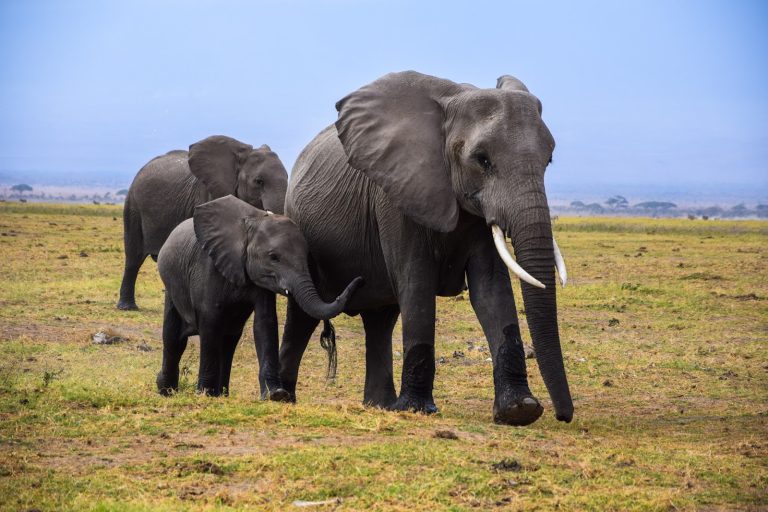
Fed by underground water from Kilimanjaro, Amboseli’s swamps stay green all year. Hippos wallow in the deeper channels, often with elephants wading nearby, and the open ground makes them easy to spot from the vehicle.
Tsavo East and the Galana River
The Galana River runs through Tsavo East, and its pools near Lugard Falls and Crocodile Point hold hippos and very large crocodiles. Our Tsavo East & West Safari (3 Days), from USD 600 per person, combines the Galana with Mzima Springs.
Lake Baringo
This freshwater lake in the northern Rift Valley has a healthy hippo population, and hippos often graze around lakeside lodges at night. A boat trip at Baringo is also one of Kenya’s best birding outings.
Nairobi National Park and Lake Victoria
Close to the capital, the Hippo Pools on the Athi River in Nairobi National Park offer a short walk with an armed ranger. In western Kenya, Hippo Point near Kisumu on Lake Victoria is a popular spot for sunset boat trips.

Understanding Hippo Ecology — Why They Are the Way They Are
The hippopotamus is one of the most ecologically important animals in the African freshwater system — a “keystone species” whose grazing and dung create conditions that feed entire aquatic food chains. A single adult can eat around 35–40 kg of grass in a night and deposits much of that nutrient load in the rivers and lakes where it rests, fertilising the algae and plankton that feed the fish.
The hippo paths between water and grazing areas — tramped flat over decades — become corridors for other wildlife and drainage channels that shape the landscape. Sense of Adventure’s guides explain this ecological role as part of every hippo encounter briefing, giving guests a framework that turns a fascinating animal sighting into a genuine understanding of how African river systems work.
Fascinating facts about hippos in Kenya
- Natural sunscreen: hippos secrete a reddish oily fluid, sometimes called “blood sweat”, that protects their skin from sun and infection.
- Underwater mothers: calves are often born in water and can suckle underwater, surfacing to breathe.
- Breath-holding: adults usually surface every few minutes, even while asleep, without waking.
- Social groups: pods are commonly 10–30 animals, led by a dominant bull that defends a stretch of water.
- Territory marking: bulls spin their short tails while defecating to scatter dung, a smelly but effective way of marking their stretch of river.
- Long lives: hippos can live for around 40 years in the wild, so a dominant bull may hold the same pool for many seasons.
- Conservation status: the common hippo is listed as Vulnerable by the IUCN, mainly due to habitat loss and hunting for meat and ivory.
Hippos, Crocodiles and People
Visitors often expect hippos and crocodiles to be enemies, but in practice they share the same rivers with an uneasy truce. Adult hippos are far too big for crocodiles to tackle, and a mother hippo will drive crocodiles away from her calf. Crocodiles may take a very young or sick calf, and both animals scavenge from the carcasses left by the migration crossings on the Mara River.
Living alongside hippos is harder for people. Around Lake Naivasha and other lakes, hippos leave the water at night to graze on farmland, lawns and roadsides, and most serious incidents happen when people meet them in the dark or between the animal and the water. Fishermen and farmers carry most of this risk. Choosing responsible lodges and guides, and following local rules, helps keep both people and hippos safe. Our Lake Naivasha safari guide explains how the boats and lodges there manage this.
Hippo Safety — The Critical Rules
⚠ Hippo Safety — What Sense of Adventure Tells Every Guest
Never stand between a hippo and water. A hippo on land is heading for water. If you are in the way, it will not stop.
Never approach a hippo on foot at night. Hippos graze silently and move fast. A torch is essential if walking near water after dark.
Boat safety at Lake Naivasha. The guides maintain safe distances and never position the boat between a hippo pod and their exit route. Always wear your life jacket. Guide judgement is absolute.
Camp protocols. If you hear hippos outside your tent, stay inside unless escorted by a ranger. This is not excessive caution — it is the behaviour that keeps guests safe.
Best Time to See Hippos in Kenya
Hippos depend on permanent water, so they are present all year. The season changes how you see them rather than whether you see them.
- Dry seasons (January–February and June–October): water levels drop, so hippos crowd into fewer, deeper pools. This is when the Mara hippo pools are busiest and when the migration crossings add extra drama from roughly July.
- Rainy seasons (March–May and November–December): rivers rise and pods spread out, but boat trips on Lake Naivasha are unaffected. Plan boat rides for mornings, as storms usually build in the afternoon.
- Time of day: early morning and late afternoon are best, when hippos are moving between water and grazing grounds.
Hippo Safaris: Costs and Packages
You do not need a special trip to see hippos in Kenya; most of our safaris include at least one excellent hippo site. Park fees change from time to time, so check current rates with us or Kenya Wildlife Service. Good-value options include:
- Crescent Island & Hell’s Gate Day Trip on the shores of Lake Naivasha — from USD 160 per person.
- Lake Naivasha Family Safari (4 Days) — from USD 780 per person.
- Tsavo East & West Safari (3 Days), including Mzima Springs — from USD 600 per person.
- Masai Mara safari packages for the Mara River hippo pools.
For a tailored route that links Naivasha, the Mara and Tsavo, ask about a private Kenya safari.
Photographing Hippos in Kenya
Hippos are easy to find but surprisingly hard to photograph well, because they spend most of the day with only eyes and ears above water. Be patient and wait for the moment a bull opens its mouth or a pod surfaces together. A lens of 200–400 mm is ideal from the boat or vehicle. Shoot early or late for warm light and to avoid harsh reflections on the water, and use a fast shutter speed to freeze spray during disputes.
Before you travel
Most visitors need a Kenya eTA from the official eTA Kenya portal. For destination inspiration see Magical Kenya, and UK travellers should read the latest GOV.UK travel advice for Kenya.
2,000 kg of Pure Presence. You Will Not Forget It.
Book your Kenya hippo experience with Sense of Adventure — Lake Naivasha boat safaris, Mara River drives, and the extraordinary underwater window at Mzima Springs.
Frequently Asked Questions — Hippos in Kenya
Why are hippos considered the most dangerous animal in Africa?
Hippos are widely reported to kill more people each year than lions, leopards or buffalo — largely because they are not perceived as dangerous and because they share water with people. Their aggression is territorial rather than predatory: a hippo does not want to eat you, it wants you away from its pool or out of its path to water. Speed, size and closeness to human activity make them so dangerous.
What is the best place to see hippos in Kenya?
For volume and intimacy: Lake Naivasha by boat (600+ hippos). For drama: the Mara River hippo pools, with territorial displays near the migration crossing points. For uniqueness: Mzima Springs in Tsavo West, with its underwater viewing chamber. Sense of Adventure can incorporate all three into a Kenya circuit — contact us to plan.
Can hippos run faster than humans?
Yes — hippos can reach around 30 km/h over short distances, which is faster than most people can sprint. They are not endurance runners and tire quickly, but over the 10–20 metres between a hippo on land and a perceived threat, the speed advantage is decisive. This is why Sense of Adventure’s guides always position vehicles and boats with a safe exit route.
Do hippos swim or walk underwater?
Hippos do not really swim. Instead, they walk and bounce along the river or lake bed, using their weight to stay down and pushing off the bottom with their feet to move or surface. Their bodies are too dense to float easily. At Mzima Springs, where the water is exceptionally clear, this slow-motion bounding can sometimes be seen from the underwater chamber.
Is it safe to see hippos in Kenya on a boat?
Yes, when you go with a licensed operator. On Lake Naivasha, boatmen keep a respectful distance, never block a hippo’s route to deep water and provide life jackets, which you should always wear. Stay seated, follow the boatman’s instructions and avoid sudden noise. Incidents are very rare when these simple rules are followed.
Where can I see hippos near Nairobi?
The closest option is the Hippo Pools on the Athi River in Nairobi National Park, reached on a short guided walk with a ranger. For many more hippos, Lake Naivasha is about 1.5–2 hours from Nairobi and makes an easy day trip, combining a boat ride with a Crescent Island walk or cycling in Hell’s Gate.
What do hippos eat?
Hippos are herbivores and graze mainly on short grass at night. An adult can eat around 35–40 kg of grass in a single night, often walking several kilometres from the water to feed. During the day they rest in water to stay cool. They do not eat fish, despite spending so much time in rivers and lakes.