
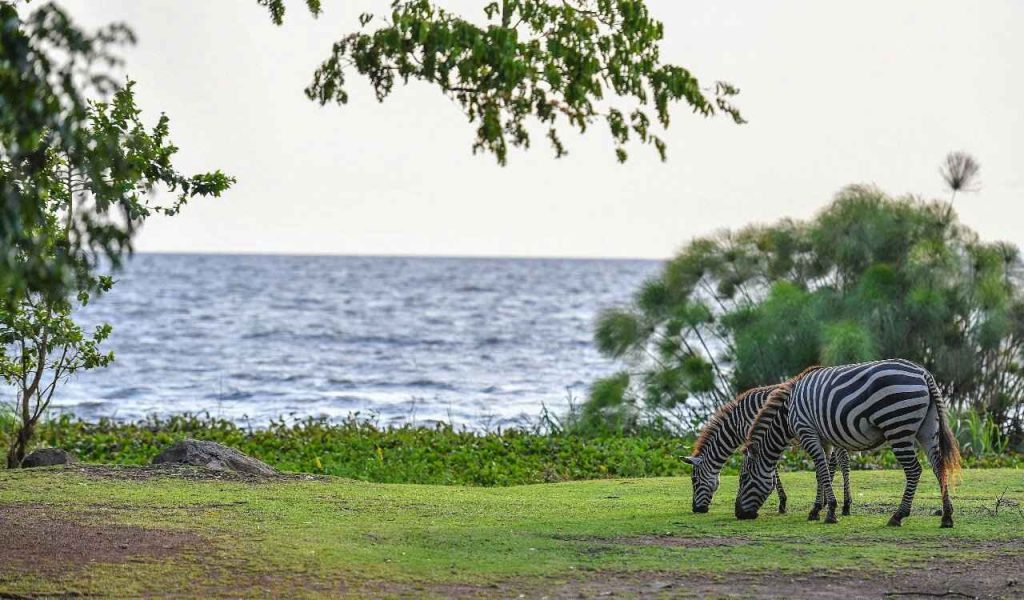
South Island National Park is the largest of Lake Turkana’s three volcanic islands, a raw fissure-formed landscape roughly 12 km by 5 km, almost entirely covered by recent lava flows from volcanoes that still emit sulfurous smoke and steam. This is Africa’s “Jade Sea” at its most elemental: an active volcanic island in the middle of the continent’s largest desert lake, its crater lakes forming a breeding ground for part of the world’s largest Nile crocodile population. Picture a landscape so young geologically that some of its lava fields still smoke gently, migrant birds arriving each March by the thousand, and barely another visitor in sight. Sense of Adventure arranges South Island as a genuine expedition destination for travellers who want Kenya at its rawest.
Kenya’s Rawest Volcanic Landscape
An active volcanic island in Africa’s largest desert lake — message us to talk through what a visit involves.
The Largest of Lake Turkana’s Volcanic Islands
South Island is a fissure-formed volcanic island roughly 12 km by 5 km, the largest of Lake Turkana’s three major islands and almost entirely covered by recent lava flows. Its active volcanoes emit sulfurous smoke and steam, and their crater lakes — Crocodile, Flamingo and Tilapia — provide breeding grounds for part of the world’s largest Nile crocodile population, an estimated 12,000-strong group across the lake. The island became part of the UNESCO-listed Lake Turkana World Heritage Site alongside its neighbouring islands. Access is typically by boat from lakeside settlements such as Loiyangalani, and visits are timed around the lake’s notoriously strong, sudden winds rather than a fixed daily schedule.
Seeing actual steam rising from a crater on an island in the middle of this vast, jade-green lake is one of those moments that genuinely resets your sense of scale. Our guide told us some of the lava flows here are barely a few centuries old — this landscape is still, in a real sense, being made.
— Sense of Adventure guest, Lake Turkana expedition
The 6 Things That Make South Island Worth the Journey
The Largest of Turkana’s Three Islands — a genuinely vast volcanic landscape
At 12 km by 5 km, South Island is the largest volcanic island in Lake Turkana, its surface almost completely covered by recent lava flows from a fissure-formed eruption history.
Active Volcanoes, Still Smoking — genuinely young geology
The island’s volcanoes remain active, emitting sulfurous smoke and steam — a rare chance to see genuinely young, still-forming volcanic landscape rather than long-extinct geology.
Crater Lakes Breeding Crocodiles — part of the world’s largest Nile crocodile population
Crocodile, Flamingo and Tilapia crater lakes on the island provide breeding grounds for part of Lake Turkana’s roughly 12,000-strong Nile crocodile population, breeding mainly between April and May.
Over 84 Water Bird Species — including migrants arriving each spring
South Island supports more than 84 recorded water bird species, including 34 species of European migrants that arrive between March and May — a strong birding destination alongside its geology and crocodiles.
Part of a UNESCO World Heritage Site — the Lake Turkana National Parks designation
South Island forms part of the Lake Turkana National Parks UNESCO World Heritage Site, recognised alongside Central Island and Sibiloi for its geological and ecological significance.
Genuinely Remote Expedition Travel — planned, not spontaneous
Like the rest of the Lake Turkana circuit, reaching South Island requires real logistical planning — this is arranged as a custom itinerary rather than a fixed package, so message us to talk through realistic timing.
The Jade Sea Setting — why Lake Turkana looks the way it does
Lake Turkana’s nickname, the Jade Sea, comes from algae blooms that tint the water a striking blue-green against the surrounding desert — a backdrop that makes South Island’s dark volcanic rock and steam vents feel even more dramatic by contrast.
Africa’s Jade Sea, At Its Most Elemental
Message us to plan a Lake Turkana expedition that includes South Island’s volcanic landscape.
South Island National Park Facts
- Size: roughly 12 km by 5 km — the largest of Lake Turkana’s three volcanic islands.
- Geology: fissure-formed, almost entirely covered by recent lava flows; volcanoes remain active.
- Crater lakes: Crocodile, Flamingo and Tilapia lakes provide crocodile breeding grounds.
- Crocodile population: part of Lake Turkana’s estimated 12,000-strong Nile crocodile population.
- Birdlife: over 84 recorded water bird species, including migrants arriving March-May.
- UNESCO status: part of the Lake Turkana National Parks World Heritage Site.
Combining South Island With the Wider Turkana Circuit
South Island is often visited alongside Central Island National Park and Sibiloi National Park for a complete Lake Turkana expedition. Message us on WhatsApp and we’ll plan a realistic custom itinerary around the logistics involved.
A Volcanic Island Still Being Formed
Steaming craters, breeding crocodiles, barely another visitor. Message us to plan your Lake Turkana trip.
Frequently Asked Questions
What is South Island National Park known for?
South Island National Park is known for being Lake Turkana’s largest volcanic island, with active volcanoes still emitting steam and sulfurous smoke, and crater lakes that form breeding grounds for part of the world’s largest Nile crocodile population.
How big is South Island in Lake Turkana?
South Island measures roughly 12 km by 5 km, making it the largest of Lake Turkana’s three major volcanic islands, almost entirely covered by recent lava flows.
Are the volcanoes on South Island still active?
Yes — South Island’s volcanoes remain active, emitting sulfurous smoke and steam, making it one of the few places in Kenya to see genuinely young, still-forming volcanic landscape rather than long-extinct geology.
What birds can you see at South Island National Park?
South Island supports over 84 recorded water bird species, including 34 species of European migrants that arrive between March and May, alongside large resident water bird populations.
Is South Island National Park part of a UNESCO site?
Yes — South Island forms part of the Lake Turkana National Parks UNESCO World Heritage Site, recognised alongside Central Island and Sibiloi for its volcanic geology and globally significant wildlife.