
Tarangire National Park Tanzania is where, in the dry months of June through October, something extraordinary happens. From hundreds of kilometres in every direction, elephants converge on a single river — drawn by the only permanent water source in a landscape that has become bone-dry. The Tarangire River, threading through a park of ancient baobab trees and golden grass, becomes the gathering point for one of Africa’s greatest elephant congregations: thousands of animals in family herds, solitary bulls, teenagers in boisterous all-male groups, calves stumbling after their mothers — all drawn to the same water by the same ancient instinct.
Tarangire National Park is Tanzania’s elephant park — and one of East Africa’s most spectacular and underrated safari destinations. Located in the Manyara Region of northern Tanzania, Tarangire is a natural addition to any Tanzania safari circuit and, in the dry season, arguably rivals even the Serengeti for sheer wildlife drama.
✅ Tarangire Quick Answer
- Where: Manyara Region, northern Tanzania, roughly 120 km (2–2.5 hours by road) south-west of Arusha.
- Famous for: huge dry-season elephant herds, ancient baobab trees and more than 550 bird species.
- Best time: June to October, when wildlife crowds along the Tarangire River.
- How long: a day trip from Arusha works; one or two nights is far better.
- Pairs well with: Lake Manyara, Ngorongoro Crater and the Serengeti.
🌎 Ready to Start Planning?
Our Kenya safari experts are on WhatsApp right now — ask us anything about dates, destinations, or costs.
💬 WhatsApp Us Now or call +254 799 160 081Tarangire National Park Tanzania at a Glance
Tarangire National Park Tanzania was gazetted as a national park in 1970 and covers roughly 2,850 square kilometres, making it one of the larger parks on Tanzania’s northern safari circuit. It is managed by Tanzania National Parks (TANAPA), and the official park information, fees and regulations are published on the Tanzania National Parks website.
The park takes its name from the Tarangire River, which runs north through its length before draining towards Lake Burunge. It sits at the heart of the wider Tarangire–Manyara ecosystem, a much larger area of open plains, farmland and community land. Many of the animals that crowd into the park in the dry season spend the rainy months spread across this wider landscape, moving out towards the Simanjiro plains and back again each year.
For travellers, the most practical facts are simple. Tarangire is close to Arusha, it is good for wildlife all year, it is outstanding from June to October, and it tends to be far less crowded than the Serengeti or Ngorongoro Crater. That combination makes it one of the best-value stops on any northern Tanzania itinerary.
The Elephant Congregation: Tarangire’s Defining Event
During the long dry season (June–October), the Tarangire ecosystem undergoes a transformation. The miombo woodland and savannah grasslands outside the park dry out completely, and the wildlife that dispersed during the rains converges on the Tarangire River — the only permanent water for over 100 kilometres in any direction. What happens as a result is one of Africa’s most spectacular annual wildlife events: elephant numbers within the park swell from a few hundred to several thousand individuals.
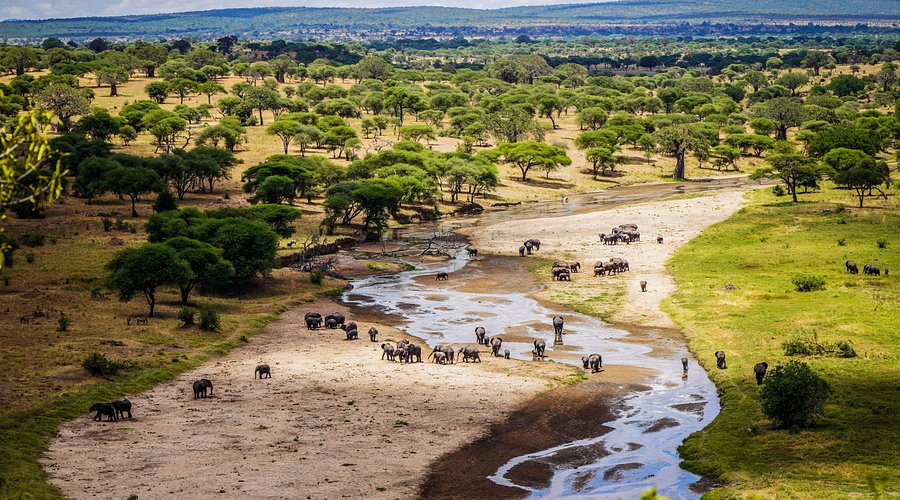
Watching this congregation — from a game drive vehicle on the river banks or from a fly camp overlooking a river bend — is an overwhelming experience. The river attracts not just elephants but every large mammal in the ecosystem: buffalo in herds of hundreds, zebra, wildebeest, impala, eland, and hartebeest. And where prey concentrates, predators follow: lion, leopard, and cheetah are all excellent during these months, drawn by the extraordinary abundance.
The elephant densities here can exceed even those of Amboseli during peak dry season, and the combination of ancient baobab trees — some of them over 1,000 years old — as a backdrop makes for photography that is genuinely unique in East Africa.
How to Watch Elephants Responsibly
Elephants in Tarangire are generally relaxed around vehicles, but good guides still give them space. Expect your driver to switch off the engine, keep a calm distance and never block a herd’s path to the river. Mothers with small calves can be protective, so watch for warning signs such as spread ears, head-shaking or a mock charge. Stay seated, keep your voice low and let the herd decide how close it wants to come.
The Baobab Landscape: Tanzania’s Ancient Trees
Tarangire’s landscape is defined by its baobabs — enormous, bottle-shaped trees that dominate the park’s central and southern zones. The great baobabs of Tarangire are among the most ancient living organisms in Tanzania: some individual trees are estimated at 1,000–2,000 years old, their massive trunks measuring up to 25 metres in circumference. Elephants feed on the baobab’s bark and fibrous interior, and the older trees bear the scars of generations of elephant attention — some hollowed and carved into extraordinary forms by centuries of tusks.
Photographically, the baobab landscape is extraordinary. At sunrise and sunset, the great trees are silhouetted against Tanzania’s pink and amber skies. An elephant moving through a grove of baobabs in golden light is one of East Africa’s great photography subjects — and one that is uniquely achievable in Tarangire.
📅 Get a Free Custom Itinerary
Tell us your travel dates and we will send you a fully personalised safari proposal — no obligation, no pressure.
✉ Send Us Your Dates on WhatsAppWildlife in Tarangire Beyond Elephants
While elephants define Tarangire’s reputation, the park’s wildlife is genuinely diverse. Lions are resident year-round, with particularly good dry-season sightings as prides concentrate near water. Leopard favour the riverine fig and acacia trees along the Tarangire River — though they are more elusive than in the Serengeti’s Seronera Valley. Cheetah hunt on the open plains. African wild dog are occasionally encountered in the southern sectors of the park.
Tarangire is also extraordinary for specialist species that other Tanzania parks provide in smaller numbers: the striking oryx, gerenuk (more common in Kenya’s north but present here), the rare ashy starling (endemic to the Tarangire-Manyara region), and the ground-hornbill — one of Africa’s most dramatic and strange birds, walking in pairs through the long grass with an ancient, unhurried gravity.
Birdwatching in Tarangire
With over 550 bird species recorded, Tarangire is one of Tanzania’s premier birdwatching destinations. The yellow-collared lovebird (endemic to the area), lilac-breasted roller, rufous-tailed weaver, and extraordinary raptor diversity make Tarangire a must-visit on any Tanzania birding itinerary.
The wet season, roughly November to April, is the best time for birders, as migrant species arrive from Europe and Asia and many residents are in breeding plumage. The swamps attract storks, herons and other water birds, while the open woodland is good for hornbills, barbets and starlings. Bring binoculars for every person in your group — sharing one pair means missing sightings.
Smaller Creatures Worth Looking For
Ask your guide to slow down around the termite mounds, where dwarf mongooses often live in busy family groups. Tarangire is also known for pythons, which are occasionally seen resting in trees, and for its large numbers of tsetse flies in the woodland — more on those below. Giraffe, warthog, waterbuck, dik-dik and banded mongoose are common sightings on most drives.
Where to Game Drive: Key Areas of the Park
Most visitors enter through the main gate in the north and spend their time along the river, but Tarangire rewards a little planning. Each area has a different feel, and a full day lets you combine several of them.
The Tarangire River Circuit
The northern section along the river is the busiest and most rewarding area in the dry season. Viewpoints on the higher banks look down on elephants digging for water in the sandy riverbed, and the big herds of buffalo and zebra drink here through the day. It is the obvious first stop on a day trip from Arusha.
Silale Swamp
Further south, Silale Swamp stays green long after the plains have dried. It draws elephants, buffalo and a wide range of water birds, and lions hunt along its edges. It is worth the extra driving time if you are staying at least one night in or near the park.
Southern Tarangire
The southern part of the park is remote and sees very few vehicles. Wildlife can be shyer, but the sense of wilderness is strong and you may have sightings entirely to yourself. Reaching it usually means staying at a camp in the south or committing to a long full-day drive.
Getting to Tarangire and When to Visit
Tarangire is approximately 120 kilometres south of Arusha — roughly 2–2.5 hours by road. It can also be accessed by charter flight from Arusha or Kilimanjaro International Airport to the park’s airstrips. Tarangire is almost always visited as part of the northern Tanzania circuit — typically combined with the Serengeti and Ngorongoro Crater, and often with Lake Manyara National Park as a fourth destination.
Travelling from Kenya
Many of our guests start in Nairobi. The usual overland route crosses the border at Namanga and continues to Arusha, a drive of around five to six hours depending on traffic and border queues. From Arusha it is a further two hours or so to the park gate. Alternatively, regional flights connect Nairobi with Kilimanjaro International Airport, which is about an hour from Arusha.
Best Time to Visit Tarangire
Best time to visit: June–October for the elephant congregation and dry-season wildlife concentration — Tarangire’s peak. November–May is quieter; wildlife disperses across the broader ecosystem following the rains. The park remains open year-round and has its own attractions in the wet season — newborn animals, lush green landscapes, and dramatically reduced visitor numbers — but the dry season elephant spectacle is genuinely unmissable for those whose dates allow it.
- June–October: peak game viewing, cool mornings, dusty afternoons and the largest elephant herds.
- November–December: short rains, greener scenery and the arrival of migrant birds.
- January–February: a drier spell between rains, with many young animals.
- March–May: long rains; some tracks can be muddy and some camps close, but prices and crowds are lowest.
For the full Tanzania safari context, see our Tanzania safari guide. For the Kenya-Tanzania comparison, our Kenya vs Tanzania guide helps you decide how to structure your East Africa itinerary. Talk to our team about incorporating Tarangire into your Tanzania safari plan.
How Long to Spend in Tarangire
A day trip from Arusha is perfectly possible and gives you five or six hours of game viewing along the river. Our Tarangire National Park day safari from Arusha is built for travellers who are short on time or finishing a Kilimanjaro climb.
If you can, stay at least one night. Early mornings and late afternoons are when predators are most active and the light is best for photography, and you avoid spending half your day in the vehicle on the road. Two nights let you explore Silale Swamp and the quieter south as well as the river.
Tarangire Safari Packages with Sense of Adventure
A visit to Tarangire National Park Tanzania works best as part of a wider northern circuit. These packages already include it or can be adapted to add it:
- 8 Day Tanzania Safari – Serengeti, Ngorongoro, Tarangire and Lake Manyara
- 5 Days Best of Tanzania Safari
- 7 Days Classic Tanzania Safari
- Lake Manyara National Park Day Safari from Arusha
- Great Migration Safari – Masai Mara and Serengeti (12 Days)
Prices depend on the season, group size and the standard of lodge or camp you choose, so check current rates with us on WhatsApp and we will quote for your exact dates.
Where to Stay in and Around Tarangire
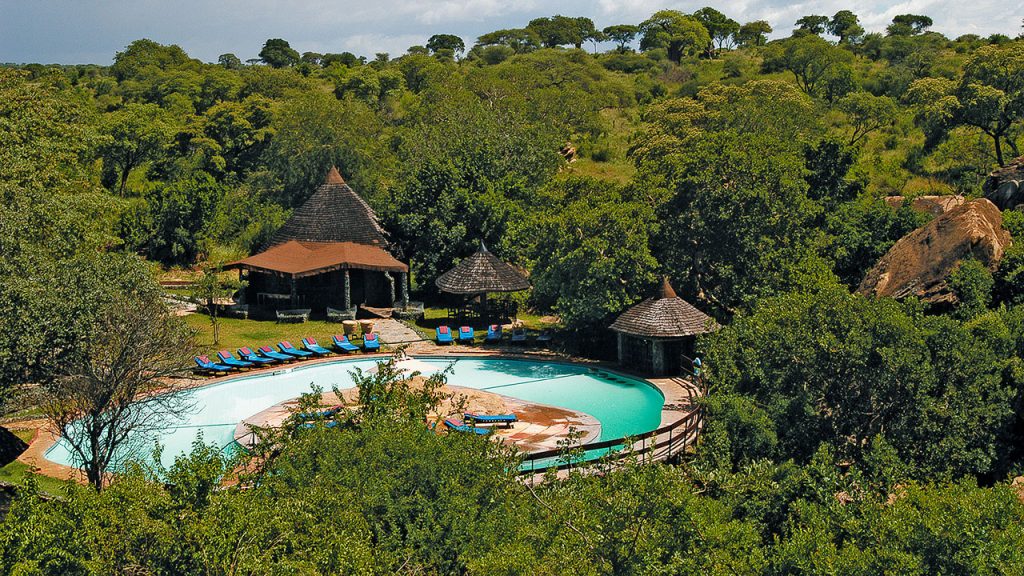
Accommodation in and around Tarangire National Park Tanzania falls into three broad groups. Lodges and tented camps inside the park put you closest to the wildlife and let you start game drives at dawn. Camps on the park boundary and in neighbouring community areas are often quieter and may offer guided walks or night drives, which are restricted inside the park itself. Simpler lodges and campsites near the main gate and in the town of Mto wa Mbu suit travellers on tighter budgets.
Whichever you choose, ask whether the price includes full board, park fees and drinks, and whether game drives are shared or private. We will match the accommodation to your budget and the experience you want.
Park Fees and Entry Rules
Tarangire National Park Tanzania charges a conservation fee per person for each 24-hour period, plus vehicle and, where relevant, concession or camping fees. TANAPA reviews its fees from time to time, so always check the latest figures on the official TANAPA site or ask us; our package prices state clearly what is included. Payment at the gate is made electronically, and your safari operator normally handles it for you.
Standard park rules apply: stay on designated tracks, do not leave your vehicle except at permitted picnic sites and viewpoints, never feed animals, and be out of the park or at your accommodation by the closing time given at the gate.
Health, Safety and Tsetse Flies
Tarangire is a malaria area, so speak to your doctor or a travel clinic about antimalarial tablets before you travel and use repellent from dusk onwards. The World Health Organization’s malaria guidance is a useful starting point. If you are arriving from Kenya or another country with a yellow fever risk, carry your yellow fever certificate.
Tsetse flies are common in Tarangire’s woodland, especially in the hotter months. Their bite is painful but, for visitors, is mostly just an irritation. They are attracted to dark blue and black, so wear light, neutral colours and long sleeves. Before you travel, read the current UK foreign travel advice for Tanzania for entry and safety updates.
What to Pack for Tarangire
Packing for Tarangire National Park Tanzania is mostly about dust, sun and insects. Soft bags are easier to fit into safari vehicles and light aircraft than hard suitcases.
- Light, neutral-coloured clothing (khaki, beige, olive) — avoid dark blue and black because of tsetse flies.
- A warm fleece or jacket for early morning drives in June to August.
- A wide-brimmed hat, sunglasses and high-factor sunscreen.
- Insect repellent containing DEET or picaridin.
- Binoculars and a camera with a zoom lens of 200 mm or more.
- A scarf or buff to keep dust out of your face in the dry season.
- Your passport, visa documents and yellow fever certificate.
Photography Tips for Tarangire
The best light falls in the first two hours after sunrise and the last two hours before sunset. Ask your guide to position the vehicle so the sun is behind you for portraits, or in front of you for baobab silhouettes. A beanbag resting on the window frame steadies long lenses better than a tripod in a vehicle.
Dust is the biggest enemy in the dry season. Change lenses inside the vehicle with the windows closed, carry a blower and microfibre cloth, and keep spare batteries charged — not every camp has power in the rooms.
Combining Tarangire with a Kenya Safari
Because Tarangire is only a few hours from the Namanga border, it pairs naturally with a Kenya safari. A popular route runs from Nairobi to Amboseli for elephants beneath Kilimanjaro, then crosses into Tanzania for Tarangire, Ngorongoro and the Serengeti. Another option is to finish in the Masai Mara and Serengeti on our 10-day classic safari and add Tarangire on the way.
Tarangire National Park FAQs
Is Tarangire National Park Tanzania worth visiting?
Yes. Tarangire National Park Tanzania offers some of East Africa’s largest elephant herds, ancient baobabs and excellent birdlife, with far fewer vehicles than the Serengeti or Ngorongoro. It is close to Arusha, so it fits easily at the start or end of a northern circuit, and it is outstanding value from June to October.
Can you see the Big Five in Tarangire?
You can see elephant, buffalo, lion and leopard in Tarangire, though leopard sightings are less reliable than in the Serengeti. Rhino are not normally seen here, so if the Big Five matter to you, add Ngorongoro Crater to your itinerary, where black rhino live on the crater floor.
Is a day trip to Tarangire enough?
A day trip from Arusha gives you a good taste of the river area and almost certainly plenty of elephants. However, you spend four to five hours on the road and miss the best early morning and evening light. One or two nights in or near the park gives a far richer experience.
What is the best month to visit Tarangire?
August and September are often considered the best months, when the dry season is at its height and the largest numbers of elephants and other animals gather along the Tarangire River. June, July and October are also excellent. Birders may prefer November to April, when migrant species arrive.
How far is Tarangire from Nairobi?
By road, Tarangire is roughly seven to eight hours from Nairobi, crossing the border at Namanga and passing through Arusha. Most travellers break the journey with a night in Arusha. Flying from Nairobi to Kilimanjaro International Airport and driving on from there is a faster alternative.
Are there tsetse flies in Tarangire?
Yes, tsetse flies are common in parts of Tarangire’s woodland, especially in hot weather. Their bites are painful but rarely more than a nuisance for visitors. Wear light, neutral colours rather than dark blue or black, use repellent and keep windows closed when driving through dense woodland.
🏑 Book Your Safari With Sense of Adventure
Kenya-based experts. Real local knowledge. Transparent pricing. We have been doing this for years — let us show you why our guests keep coming back.
💬 WhatsApp Us — Plan Your Safari TodayCall or WhatsApp: +254 799 160 081