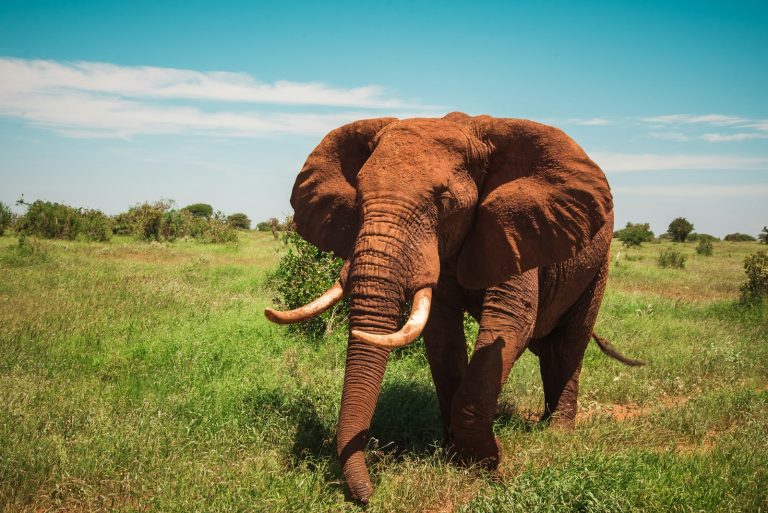
The road out of Voi gate is a strip of red earth running straight into the heat haze. Your guide slows, then stops. Ahead, a line of elephants crosses the track, one after another, their backs the same rust colour as the ground. A calf trots to keep up. Nobody speaks. The only sounds are the tick of the cooling engine, a hornbill somewhere in the commiphora, and the soft thud of feet on dust. You look around. There is not another vehicle anywhere.
Tsavo East National Park is Kenya’s largest protected area at 13,747 km², lying between the Nairobi–Mombasa highway and the coast. It is famous for red-dusted elephant herds, the Galana River, Lugard Falls, Mudanda Rock, Aruba Dam and the long Yatta Plateau. Non-resident adults pay USD 80 per day, and the park is open all year.
Sense of Adventure is a Nairobi-based safari company licensed by Kenya’s Tourism Regulatory Authority (TRA1/47/C01/77087), and Tsavo East National Park is one of the parks we visit most, from both Nairobi and the coast. This guide covers its landscape and history, the people who protect it, 2026 fees, gates and routes, the best months, honest wildlife odds, the main attractions, rules, how long to stay and a sample itinerary.
✅ Tsavo East National Park: The Quick Answer
- Where: South-east Kenya, east of the Nairobi–Mombasa highway, with Voi town on its south-western edge.
- Best for: Huge elephant herds, wide-open red landscapes, few vehicles and an easy safari from Mombasa, Diani or Watamu.
- Best time: June to October and January to February, when it is dry and animals gather at water.
- Entry fee: Non-resident adults USD 80, children USD 40; East African citizens KES 1,000 per day.
- How long to stay: One night from the coast, two nights for a full visit, three to four with Tsavo West.
- Getting there: Roughly 2–3 hours by road from Mombasa or 5–6 hours from Nairobi, or by SGR train to Voi.
🌍 Planning a Safari to Tsavo East National Park?
Tell us where you are starting, Nairobi or the coast, and we will plan the easiest route into Tsavo East. 💬 WhatsApp Us Now or call +254 799 160 081
What Is Tsavo East National Park?
Tsavo East National Park is the flatter, drier and more open half of the great Tsavo wilderness, separated from Tsavo West by the Nairobi–Mombasa road and railway.
Kenya Wildlife Service lists Tsavo East National Park at 13,747 km², the largest protected area in the country. Together with Tsavo West and the ranches around them, it forms one of the biggest wildlife landscapes in East Africa. The south of the park, below the Galana River, holds most of the roads, camps and visitors. The vast north is wild, little visited and open only to well-prepared trips. See the KWS Tsavo East park page for official details.
A short history of Tsavo East National Park
The two Tsavo parks were gazetted in 1948. David Sheldrick was the founding warden of Tsavo East, and he and his wife Daphne went on to pioneer the hand-raising of orphaned elephants. Their legacy continues today through the Sheldrick Wildlife Trust, which runs reintegration units in the park where rescued elephants are slowly returned to wild herds.
Tsavo was hit hard by ivory and rhino poaching in the 1970s and 1980s. Its recovery since then, with elephants once again roaming in large family groups, is one of Kenya’s quiet conservation stories.
Top Tsavo East Attractions
The best-known Tsavo East attractions are the Galana River, Lugard Falls, Mudanda Rock, Aruba Dam and the Yatta Plateau, all within reach of the southern circuits.
Galana River and Lugard Falls
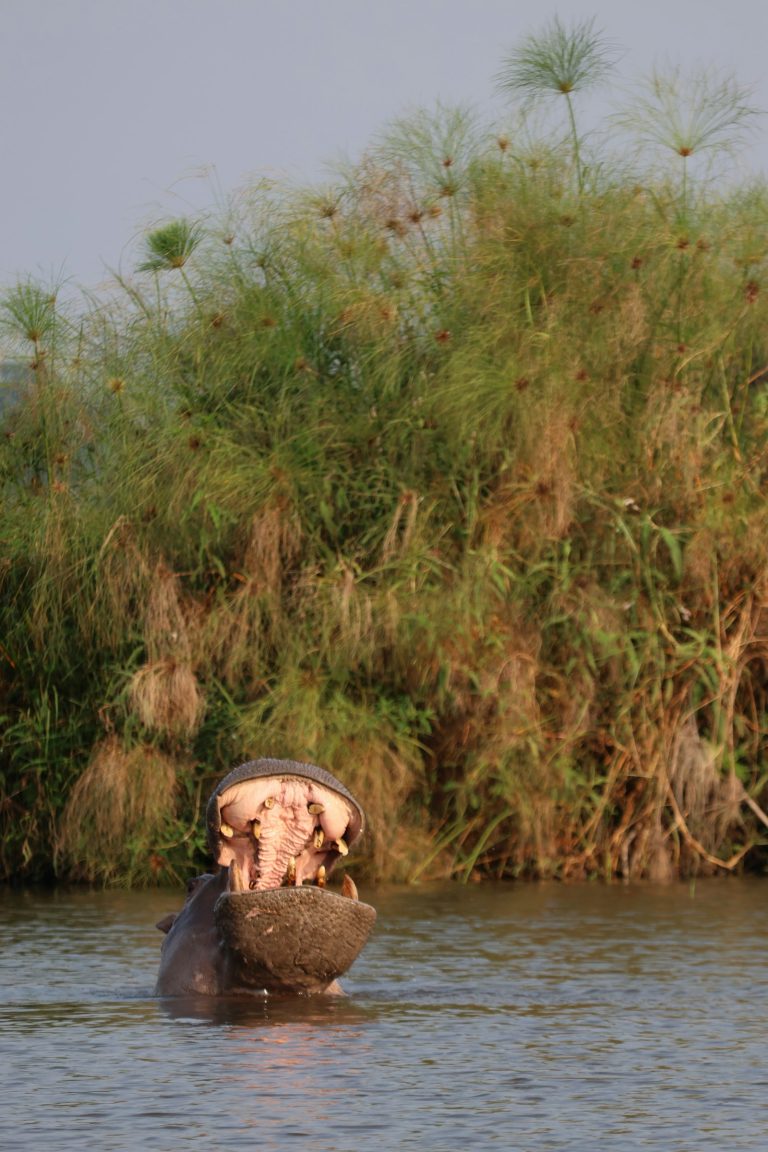
The Galana River is the park’s green lifeline, lined with doum palms and busy with hippos, crocodiles and elephants coming to drink and bathe. At Lugard Falls, named after the colonial administrator Frederick Lugard, the river does not drop as one waterfall. Instead it rushes through a maze of polished rock channels and rapids. You can leave the vehicle here and walk on the rocks, then look down into pools at Crocodile Point downstream.
Mudanda Rock and Aruba Dam
Mudanda Rock is a whale-backed outcrop more than 1.5 km long that collects rainwater in a natural dam at its foot. In the dry season it draws elephants, and you can climb to a viewpoint and watch them below. Aruba Dam, on the seasonal Voi River, holds water for much of the year and attracts herds of elephants, buffalo and plains game, with lions often nearby.
The Yatta Plateau
Running along the park’s western side, the Yatta Plateau is an ancient lava flow that KWS describes as about 300 km long, one of the longest in the world. It forms a low, flat-topped wall on the horizon and is especially beautiful in late afternoon light.
Expert tip from our Nairobi team: Plan your Lugard Falls and Mudanda Rock stops for the morning, when the light is soft and the rocks are cooler underfoot. In the heat of the afternoon, a waterhole like Aruba is the better place to sit and wait.
The People of Tsavo: Communities, Rangers and Conservation Partners
Tsavo East National Park is protected by KWS rangers and partners, and bordered by Kamba, Taita, Orma and other communities who live alongside its wildlife.
Around Tsavo East National Park, Taita families farm the hills and ranches around Voi, Kamba communities live to the west along the Yatta and the highway, and pastoralist groups graze the drier lands to the north and east. Living beside a park full of elephants and lions brings jobs in lodges and tourism, but also real costs, from damaged crops to lost livestock. Community ranches and sanctuaries between Tsavo East and the Taita Hills give local landowners a share in wildlife income.
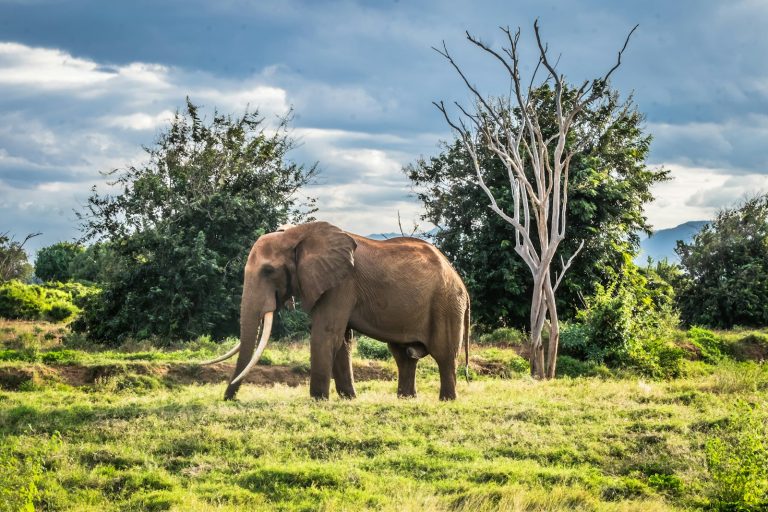
Inside the park, KWS rangers patrol a huge area on foot, by vehicle and by air. Partners such as the Sheldrick Wildlife Trust and the Tsavo Trust support anti-poaching, aerial surveillance and the protection of Tsavo’s rare big tuskers. Your park fee is paid directly to KWS and helps fund this work across the Tsavo Conservation Area.
Tsavo East National Park Entry Fees for 2026
In 2026, a non-resident adult pays USD 80 per day to enter Tsavo East National Park, which KWS classes as a Wilderness Park together with Tsavo West.
These rates come from the KWS conservation fee schedule in force since October 2025. Payment is cashless through eCitizen, by M-Pesa or card. Fees are charged per person per day, and Tsavo East and Tsavo West are ticketed separately.
| Visitor category | Adult (per day) | Child (per day) |
|---|---|---|
| Non-resident | USD 80 | USD 40 |
| African citizen (non-EAC) | USD 40 | USD 20 |
| Kenya resident | KES 1,350 | KES 675 |
| East African citizen | KES 1,000 | KES 500 |
| Safari vehicle under 6 seats | KES 600 | per vehicle per day |
| Safari vehicle 6–12 seats | KES 1,500 | per vehicle per day |
Our Tsavo National Park entrance fees guide explains crossing between the two parks, and our overview of Kenya national park entrance fees for 2026 covers every other park. Every quote we send already includes all fees.
How to Get to Tsavo East National Park
Most visitors reach Tsavo East National Park by road from Mombasa or Nairobi, entering at Voi, Bachuma, Manyani or Sala gate, with the SGR train as a relaxing alternative.
By road from the coast or Nairobi
From Mombasa or Diani, the drive to Bachuma or Voi gate usually takes about 2 to 3 hours along the main highway, which makes Tsavo East the easiest big park from the beach. From Watamu or Malindi, the road west to Sala gate is the natural entry. From Nairobi, allow around 5 to 6 hours to Voi, or enter at Manyani gate. Your guide will choose the gate that best fits your lodge in Tsavo East National Park.
By SGR train or air
The Madaraka Express (SGR) stops at Voi, a short drive from the gate, so you can travel by train and meet your guide at the station. Read our guide to Nairobi to Mombasa by train, flight or road. KWS lists several airstrips in the park, including Voi, Aruba, Satao and Ithumba, used mainly by charter flights.
Best Time to Visit Tsavo East National Park
The best time to visit Tsavo East National Park is the dry season from June to October, with January and February also very good, although the park is open all year.
Tsavo East is warm and dry for much of the year. The long rains usually fall from late March to May and the short rains in November and December. In the dry months, the grass is short, the bush thins out and elephants gather at the Galana, Aruba and Mudanda, which makes game viewing much easier.
| Month | Weather | Game viewing | Notes |
|---|---|---|---|
| January–February | Hot, mostly dry | Good; animals near water | Green after the short rains |
| March–May | Long rains | Fair; thicker bush | Quietest months and best value |
| June–August | Cooler and dry | Very good | Popular with families and coast visitors |
| September–October | Hot, very dry | Excellent at rivers and dams | Dusty, with strong red colours |
| November–December | Short rains | Fair to good | Landscape turns green; migrant birds arrive |
If you are adding a beach holiday, our guide to combining a safari with a beach holiday helps with timing.
📅 Get a Free, No-Obligation Safari Quote
Send us your dates and where you are staying, and we will build a Tsavo East plan with fees, vehicle and lodge included. ✉ Send Us Your Dates on WhatsApp
Wildlife in Tsavo East National Park: Honest Sighting Odds
Tsavo East National Park is best for elephants and wide-open game viewing; the big cats are here, but sightings are less frequent than in the Masai Mara.

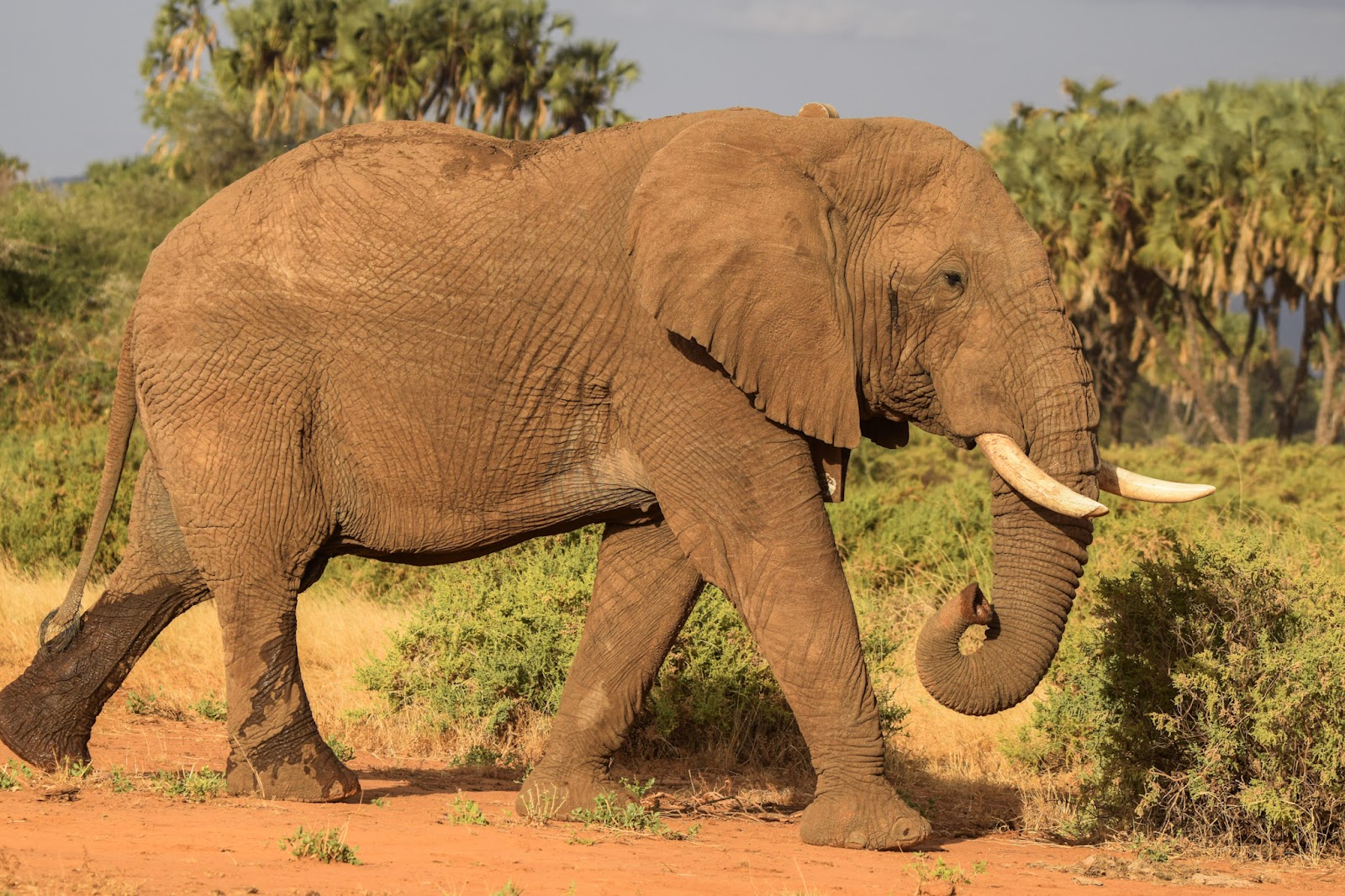
- Elephant: almost certain, often in large, red-dusted family groups.
- Buffalo, zebra, giraffe, impala and waterbuck: very likely.
- Hippo and crocodile: very likely along the Galana River.
- Lion: fair to good; Tsavo lions often have short or sparse manes.
- Cheetah: fair on the open plains.
- Leopard: low to fair, sometimes near Mudanda Rock and the river.
- Dry-country specialists: gerenuk, lesser kudu, fringe-eared oryx and dik-dik reward patient guides.
- Black rhino and hirola: both occur in the park, but sightings are rare.
KWS records around 500 bird species in Tsavo East National Park, from ostriches and kori bustards to hornbills, golden-breasted starlings and vulturine guineafowl. For your odds of the full Big Five across Kenya, read will you see the Big Five in Kenya?
Things to Do in Tsavo East National Park
The main things to do in Tsavo East National Park are game drives, short walks at Lugard Falls and Mudanda Rock, birdwatching and sundowners on the plains.
- Game drives: morning and late-afternoon drives along the Galana, Aruba and the Voi river circuits.
- Short walks: on the rocks at Lugard Falls and up to the Mudanda Rock viewpoint.
- Birdwatching: dry-country birds and raptors all year, with migrants from November to April.
- Camping: at the KWS Ndololo public campsite or a reserved special campsite.
- Bush meals and sundowners: arranged by some camps on the river or the plains.
Want to compare the two parks before you choose? Read our new Tsavo West National Park guide and our Tsavo vs Meru comparison.
Tsavo East National Park Rules and Safety
In Tsavo East National Park, stay in the vehicle except at marked sites, keep to the roads, respect gate times and follow your guide’s advice around elephants.
- Stay on the roads: off-road driving is not permitted in KWS parks.
- Get out only at designated sites such as Lugard Falls, Mudanda Rock, picnic sites and campsites.
- No night drives: be at your lodge or out of the park by dusk.
- Give elephants space: never block their path, and never feed any animal.
- No drones without authorisation: see our guide to drone rules in Kenya’s national parks.
- Carry water and sun protection: distances are long and it is often hot.
The park is safe for visitors on a guided safari. Check the latest UK government travel advice for Kenya before you go, and make sure your insurance covers medical evacuation.
Expert tip from our Nairobi team: If you are coming from the coast for just one night, stay at a camp near Voi or the Galana. You will spend your time watching elephants, not driving between distant corners of a very large park.
How Many Days Do You Need in Tsavo East?
Two nights in Tsavo East National Park is ideal for a full visit, and one night works well as a short safari from the coast.
A day trip to Tsavo East National Park from Mombasa or Diani gives you a long game drive near Voi, but much of it is spent on the road. One night adds an evening and a dawn drive. Two nights lets you reach Lugard Falls, Mudanda Rock and Aruba without rushing. Three or four nights combines Tsavo East with Tsavo West or Amboseli. Our guide to how many days you need in Tsavo covers both parks.
Where to Stay in Tsavo East and What to Pack
Accommodation in Tsavo East National Park ranges from classic lodges and tented camps to simple KWS campsites, with no KWS self-catering bandas.
Lodges and camps listed by KWS include Voi Safari Lodge, Ashnil Aruba Lodge, Ndololo Tented Camp, Satao Camp, Galdessa Camp, Patterson’s Safari Camp and Epiya Chapeyu. Voi Safari Lodge looks over a busy waterhole, and the camps along the Galana suit travellers who want to fall asleep to river sounds. Choosing between styles? Read our tented camp vs lodge guide.
What to pack for Tsavo East National Park
- Light, neutral clothing, a wide-brimmed hat and strong sunscreen
- A light scarf or buff for the red dust on open roads
- Comfortable closed shoes for the rocks at Lugard Falls
- Binoculars for birds and distant herds
- Insect repellent and any malaria medication your doctor advises
- A reusable water bottle; single-use plastic bags are banned in Kenya
Our full Kenya safari packing list covers the rest.
Combining Tsavo East With Other Parks and the Beach
Tsavo East National Park combines naturally with Tsavo West, the Taita Hills, Amboseli and Kenya’s beaches.
A classic route runs from Nairobi through Amboseli and Tsavo West, then on to Tsavo East and the coast. From the beach, the Taita Hills and Lumo area adds a different landscape close to Voi; see our guide to the Taita Hills and Salt Lick. Then relax at the coast on our Diani Beach getaway, or browse all our Tsavo safari options.
Sample 2-Day Tsavo East National Park Itinerary
This short safari from Mombasa or Diani is the most popular way to see Tsavo East National Park, and it extends easily to three days.
- Day 1, coast to Tsavo East: early pick-up from your hotel, enter at Bachuma or Voi gate, game drive to camp for lunch, then an afternoon drive to Aruba Dam with sundowners.
- Day 2, river and rocks: dawn drive along the Galana to Lugard Falls and Crocodile Point, a stop at Mudanda Rock, then lunch and the drive back to the coast.
- Optional Day 3, add Tsavo West: cross the highway for Mzima Springs and the Shetani lava before returning to the beach or continuing to Amboseli.
Book it as our 2-day Tsavo and Taita Hills safari from Mombasa, our Tsavo East day safari from Mombasa and Diani, our 3-day Tsavo East and West safari or our Tsavo and Amboseli safari from Mombasa. Prices depend on season, lodge and group size, so message us for a quote.

Tsavo East National Park FAQs
How much is the Tsavo East entry fee in 2026?
Since October 2025, KWS charges non-resident adults USD 80 and children USD 40 per day for Tsavo East. East African citizens pay KES 1,000 per adult and Kenya residents KES 1,350. Fees are paid cashless through eCitizen, and Tsavo East and Tsavo West are charged separately.
What is Tsavo East National Park famous for?
Tsavo East is famous for its huge herds of red-dusted elephants and for being Kenya’s largest protected area. Its main attractions are the Galana River, Lugard Falls, Mudanda Rock, Aruba Dam and the Yatta Plateau, one of the longest lava flows in the world.
Can you do a Tsavo East day trip from Mombasa?
Yes. Bachuma and Voi gates are roughly 2 to 3 hours from Mombasa by road, so a day trip is possible, with a long game drive around Voi and Aruba. Staying one night is more relaxed and adds an evening drive and the best early-morning light.
What is the difference between Tsavo East and Tsavo West?
The parks are separated by the Nairobi to Mombasa road and railway. Tsavo East is flatter and more open, known for elephants, the Galana River and Lugard Falls. Tsavo West is hillier and volcanic, with Mzima Springs, the Shetani lava and a rhino sanctuary. Each charges its own fee.
Are there lions in Tsavo East?
Yes. Lions live throughout Tsavo East, and many males have short or sparse manes, a well-known Tsavo trait. Sightings are less frequent than in the Masai Mara because the park is huge and the bush can be thick, but dry-season drives near water give you a fair chance.
What is the best time to visit Tsavo East?
The best months are June to October and January to February, when it is dry and animals gather at the Galana, Aruba Dam and Mudanda Rock. The park is open all year, and the rainy months of April, May and November bring green scenery and lower rates.
How many days do you need in Tsavo East?
Two nights is ideal for a full visit, with time for Lugard Falls, Mudanda Rock and Aruba Dam. One night suits a short safari from the coast. Plan three or four nights if you want to combine Tsavo East with Tsavo West or Amboseli.
🏕 Plan Your Tsavo East Safari With Sense of Adventure
Kenya-based experts. Real local knowledge. Transparent pricing. Tell us your dates and where you are staying, and we will plan your Tsavo East National Park days around the elephants, the river and the best light. 💬 WhatsApp Us — Start Planning Today
Call or WhatsApp: +254 799 160 081 · Email: reservations@senseofadventure.co.ke
Related Safari Guides
- › Tsavo West National Park: The Complete Guide
- › Tsavo vs Meru: Two Underrated Big Five Parks
- › Will You See the Big Five in Kenya?
- › Taita Hills and Salt Lick: Tsavo Gateway
- › Complete List of Kenya National Parks and Reserves
Official travel & park resource: Kenya Wildlife Service ↗ · Tsavo East park page: KWS Tsavo East ↗ · Magical Kenya ↗