
This Zanzibar travel guide gives you everything you need to plan the island well: Stone Town’s history, the best beaches by coast, snorkelling at Mnemba Atoll, spice tours, the best months to go, how to get there from a Kenya or Tanzania safari, and what a trip really costs.
The word Zanzibar carries a weight of romance that few place names can match. An Indian Ocean island of white coral sand, warm turquoise water, ancient stone architecture, the scent of cloves and cardamom drifting through labyrinthine alleyways, and the sound of the call to prayer echoing across rooftops at dawn — Zanzibar is one of the world’s great travel destinations and the near-perfect complement to an East Africa safari.
Just 35 kilometres off the Tanzanian coast, Zanzibar (officially Unguja Island, the main island of the Zanzibar Archipelago) is less than an hour’s flight from Dar es Salaam and can be reached in under two hours from the Serengeti. The combination of wildlife intensity on the mainland followed by complete beach relaxation on Zanzibar’s shores is one of travel’s great formulas — and one that Sense of Adventure builds into Tanzania and Kenya-Tanzania combination itineraries with great regularity. We wrote this Zanzibar travel guide from that experience of planning island stays for our safari guests.
✅ Zanzibar Travel Guide: The Quick Answer
- Where: Unguja Island, 35 kilometres off the Tanzanian coast. Zanzibar is part of Tanzania, so Tanzania’s entry rules apply.
- Best time: June to October and December to February for dry, sunny beach weather. The long rains usually fall from about March to May.
- How long: 4 to 6 nights is ideal: 1 or 2 nights in Stone Town, then 3 or 4 nights on the beach.
- Top things to do: Stone Town walking tour, Forodhani night market, a spice farm tour, snorkelling at Mnemba Atoll and a sunset dhow cruise.
- Getting there: Short flights from Nairobi, Arusha and Dar es Salaam, or a fast ferry from Dar es Salaam.
- Cost: Our Zanzibar Beach & Stone Town (5 Days) package starts from USD 1,200 per adult sharing.
Stone Town: A UNESCO World Heritage City
Stone Town — Zanzibar’s historic capital and a UNESCO World Heritage Site — is one of the Indian Ocean’s most atmospheric and historically layered urban environments. The old city, built primarily from coral limestone by Omani Arab sultans and Indian merchants during the 18th and 19th centuries, is a dense labyrinth of narrow alleyways, ornate mosques, carved wooden doorways, and multi-storey merchant houses that reflect the convergence of African, Arab, Persian, Indian, and European influences on this extraordinary trading hub.
The most iconic element of Stone Town’s architecture is its carved wooden doorways — over 500 historic examples remain, each carved with different patterns representing the owner’s religion, trade, and status. Indian-style doors typically feature a projecting frame with a chain motif at the threshold. Arab-style doors are more austere but have elaborate brass studs and Koranic inscriptions. Walking Stone Town with a knowledgeable guide who can decode these architectural stories gives the city a depth that casual exploration alone cannot reach.
Key Stone Town experiences:
- The Old Fort (Ngome Kongwe): Built by Omani Arabs in the late 17th century on the site of a Portuguese chapel. Now houses cultural exhibitions and an evening dhow concert series.
- The House of Wonders (Beit el-Ajaib): The largest building in Zanzibar and one of the most significant historical buildings in East Africa — the first building in East Africa to have electricity and an elevator. Currently under restoration.
- The Slave Market Memorial: An emotionally powerful memorial on the site of Zanzibar’s former slave market — the largest slave market in East Africa, shut down by the British in 1873. The memorial’s underground chambers, where enslaved people were held, are deeply affecting.
- Forodhani Gardens Night Market: Every evening, the seafront park in front of the Old Fort fills with vendors grilling Zanzibar pizza, fresh seafood, sugar cane juice, and Urojo (Zanzibar mix soup). One of East Africa’s great street food experiences.
How Long to Spend in Stone Town: Zanzibar Travel Guide Tip
Our standard Zanzibar travel guide advice is one or two nights in Stone Town before heading to the beach. One night gives you an afternoon walk, a sunset on the waterfront and dinner at Forodhani. Two nights lets you add a guided heritage walk in the cool morning, the Slave Market Memorial and a spice tour without rushing. For a deeper look at the old town’s markets, history and architecture, read our full Stone Town Zanzibar guide.
The Beaches of Zanzibar
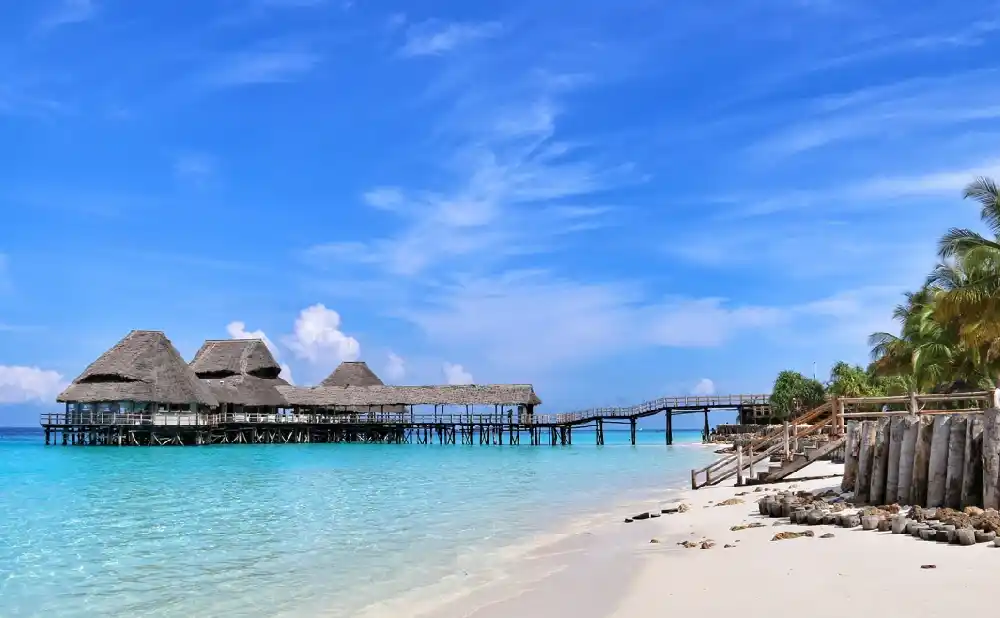
For most readers of this Zanzibar travel guide, the beach is the main event. Zanzibar’s beaches are genuinely world-class — consistently appearing on lists of Africa’s best and competing with the finest the Indian Ocean has to offer. The island’s beaches differ in character by location:
Nungwi (north): The most developed beach area, with the widest range of accommodation and watersports. Nungwi is sheltered from the tidal extremes that affect the east coast and has calm water throughout the day — making it the best for swimming at any tide. Lively bar and restaurant scene; sunset dhow cruises from the beach are outstanding.
Kendwa (northwest): Adjacent to Nungwi but quieter, with slightly less development and a beautiful, long beach. Full moon parties at Kendwa Rocks are a Zanzibar institution.
Paje and Jambiani (southeast): The east coast’s long, reef-protected beaches with the Indian Ocean’s clearest water. The tidal variation here is significant — at low tide, the water retreats hundreds of metres across the shallow reef flat — but the kite surfing conditions (driven by consistent southeast trade winds) are among the best in the Indian Ocean. Quieter and more laid-back than the north coast.
Matemwe (northeast): A long, beautiful beach facing the Mnemba Atoll — one of East Africa’s premier snorkelling and diving sites, with extraordinary coral gardens, sea turtles, dolphins, and reef fish. Several boutique lodges here have made this the island’s most upmarket beach area.
Which Zanzibar Beach Suits You?
Every Zanzibar travel guide should be honest about tides. If swimming at any time of day matters most, choose Nungwi or Kendwa in the north. If you love long walks, kitesurfing and a quieter village feel, choose Paje or Jambiani and plan swims around high tide. Couples who want a calm, upmarket base close to Mnemba usually prefer Matemwe. Families with young children tend to do best in the north, where the water stays deep enough to swim and play all day.
Marine Life: Snorkelling and Diving
Our Zanzibar travel guide would be incomplete without the reef. The waters surrounding Zanzibar are among the Indian Ocean’s richest marine environments. Mnemba Atoll — a small, privately owned atoll 3 kilometres off the northeast coast — is the premier dive and snorkel site: pristine coral gardens, sea turtles, spinner dolphins (encountered daily on the boat trip out), and a remarkable diversity of reef fish. The atoll is accessible only on day trips from the main island.

Humpback whale season (July–September) brings these extraordinary animals past Zanzibar’s northern tip, and whale watching excursions from Nungwi are increasingly popular. Whale sharks — the ocean’s largest fish, completely harmless filter feeders — are occasionally encountered in Zanzibar’s waters year-round.
A key Zanzibar travel guide rule for the water: choose a boat operator that keeps a respectful distance from dolphins and turtles, does not let guests chase or touch wildlife, and asks you not to stand on coral. Reef-safe sun cream and a rash vest protect both you and the reef. If you are not a confident swimmer, ask for a life jacket and a guide in the water with you.
Spice Tours: Zanzibar’s Fragrant Heritage
Zanzibar was once the world’s largest producer of cloves — a colonial-era monopoly that shaped the island’s economy and landscape for over a century. Spice tours through the island’s farming villages — where cloves, nutmeg, vanilla, cinnamon, cardamom, pepper, and dozens of other spices grow — are one of Zanzibar’s most distinctive cultural experiences. A good spice tour guide blindfolds visitors, hands them a leaf or bark sample, and asks them to identify it by smell alone — a sensory exercise that is both educational and genuinely fun.
No Zanzibar travel guide is complete without a spice tour, and the tour fits neatly into the transfer day between Stone Town and the beach. Most tours last a few hours, finish with fresh tropical fruit and spiced tea, and give you the chance to buy spices directly from the farmers who grow them.
Best Time to Visit: Zanzibar Travel Guide by Season
The simple answer from this Zanzibar travel guide is that the island is warm all year, but the weather for a beach holiday is best in the two dry seasons. June to October is sunny, breezy and slightly cooler, which makes it ideal after a Masai Mara or Serengeti safari during the Great Migration. December to February is hotter and more humid, with calm seas that suit snorkelling and diving.
The long rains usually fall from about March to May. Heavy showers, higher humidity and rougher seas are common, and some beach hotels close or offer lower rates. The short rains in November tend to bring brief showers rather than full days of rain, so November can be good value. Christmas, New Year and July to August are the busiest periods, so book early if you plan to travel then.
One more Zanzibar travel guide tip on timing: check the dates of Ramadan when you plan. Zanzibar is a mainly Muslim island and many local restaurants in Stone Town close during daylight hours in the holy month. Hotels and beach resorts still serve food as normal, and Ramadan evenings in Stone Town can be lively and atmospheric.
How to Get to Zanzibar
Getting there is easier than most first-time readers of a Zanzibar travel guide expect. Zanzibar’s main gateway is Abeid Amani Karume International Airport, a short drive from Stone Town. There are direct regional flights from Nairobi, Arusha, Kilimanjaro and Dar es Salaam, plus a growing number of international flights via the Middle East and Europe. From Dar es Salaam you can also take a fast ferry to Stone Town harbour, which takes around two hours.
Transfers from the airport to the beaches take roughly one hour to Nungwi and Kendwa in the north, and a similar time to Paje on the east coast. Roads are fine but slow through villages, and Zanzibar drives on the left. Most travellers use pre-arranged private transfers, which we include in our Zanzibar packages, as recommended throughout this Zanzibar travel guide.
Entry, Visas and Health: Zanzibar Travel Guide Essentials
Zanzibar is part of Tanzania, so you will need a Tanzania visa if your nationality requires one. Many nationalities can apply for an eVisa online before travelling; check the official Tanzania Immigration eVisa site for your passport. Zanzibar also requires foreign visitors to buy its own inbound travel insurance, so check the current rules before you fly.
If you arrive from Kenya or another country with yellow fever risk, you may be asked to show a yellow fever certificate. Malaria is present on Zanzibar, so speak to a travel clinic about prevention. For safety and entry updates, the UK Foreign Office travel advice for Tanzania is a reliable, regularly updated source for travellers of any nationality.
Combining Zanzibar With a Safari
This part of the Zanzibar travel guide is where Sense of Adventure helps most. The classic East Africa formula: safari first, beach after. Zanzibar works as a post-safari destination from both Kenya and Tanzania. From the Masai Mara, fly to Nairobi and connect to Zanzibar (2.5 hours total, including connection). From the Serengeti, fly directly to Zanzibar (under 1 hour). From Mombasa on the Kenyan coast, a short flight or ferry (for the adventurous) connects to Zanzibar.
For honeymooners, Zanzibar after a Kenya or Tanzania safari is the definitive romantic itinerary — see our Kenya honeymoon safari guide for more on structuring this combination. For families, the calm north coast beaches and the Stone Town cultural experience work beautifully for children of all ages. Talk to our team about the right Zanzibar timing, beach location, and accommodation for your group.
If you are planning both countries, our guide to the Kenya and Tanzania safari explains routes, border crossings and timing, and our article on combining a safari with a beach holiday covers the flight logistics step by step. For the Tanzanian side, our Serengeti National Park guide shows where the herds are each month.
Sample Itineraries Using This Zanzibar Travel Guide
- Island only, 5 days: 1 night in Stone Town, a spice tour, then 3 nights on the beach. This is our Zanzibar Beach & Stone Town package.
- Honeymoon, 10 days: big cats in the Masai Mara, then Zanzibar’s turquoise sea and Stone Town on our Kenya & Zanzibar Honeymoon.
- Family, 14 days: the Masai Mara, Serengeti and Ngorongoro Crater, then five nights on Zanzibar with our Kenya, Tanzania & Zanzibar Family Holiday.
What a Zanzibar Trip Costs
Every Zanzibar travel guide gets asked about money first. Costs depend mainly on the season, your choice of hotel and how many paid excursions you add. As a guide from our own packages, the 5-day Zanzibar Beach & Stone Town trip starts from USD 1,200 per adult sharing and includes airport and hotel transfers, one night in Stone Town, three nights at a beach hotel, a guided Stone Town walking tour and a spice farm tour.
Our 10-day Kenya & Zanzibar Honeymoon is listed from USD 3,650, and the 14-day Kenya, Tanzania & Zanzibar Family Holiday from USD 4,300. International and regional flights, visas, travel insurance, tips and optional activities such as a dhow cruise or Mnemba snorkelling are extra. This Zanzibar travel guide recommends budgeting for those extras separately, and checking current rates with us, because hotel prices rise sharply over Christmas and in July and August.
What to Pack for Zanzibar
Use this Zanzibar travel guide packing list as a starting point, and keep your bag light if you are flying in from a safari.
- Light, breathable cotton or linen clothes, plus a long skirt or trousers and a cover-up for shoulders in Stone Town and villages.
- Reef shoes or water shoes for the east coast reef flats at low tide.
- Reef-safe sun cream, a hat, sunglasses and a rash vest for snorkelling.
- Insect repellent and any malaria prevention advised by your doctor.
- A soft bag if you are flying in from a safari, as light aircraft often have a 15 kg luggage limit. Our Kenya safari packing list explains how to pack for bush and beach in one bag.
- Some US dollars in small, newer notes, plus a bank card. The local currency is the Tanzanian shilling.
Zanzibar Travel Guide: 7 Mistakes to Avoid
These are the problems we see most often, so this Zanzibar travel guide lists them to help you avoid them.
- Ignoring the tides. Booking an east coast hotel and expecting to swim all day often disappoints. Check the tide pattern or choose the north coast.
- Skipping Stone Town. Going straight to the beach misses the island’s history, food and culture. One night is enough to feel it.
- Dressing for the beach in town. Swimwear belongs on the beach. Cover shoulders and knees in Stone Town and in villages.
- Buying tours from beach touts. Unlicensed boat trips may not carry life jackets or follow wildlife rules. Book through your hotel or a trusted operator.
- Forgetting entry paperwork. Arrange your Tanzania visa, Zanzibar insurance and, if needed, a yellow fever certificate before you fly.
- Cramming too much in. Zanzibar rewards slow days. Plan one main excursion per day at most.
- Booking peak dates late. Christmas, New Year and July to August fill early, especially for good beach hotels.
Zanzibar Travel Guide FAQs
Here are short, direct answers to the questions travellers ask us most while reading a Zanzibar travel guide.
How many days do I need in Zanzibar?
Four to six nights is ideal for most travellers. Our Zanzibar travel guide suggests one or two nights in Stone Town for the history, food and night market, then three or four nights on the beach. If you are arriving straight from a safari, a longer beach stay helps you rest properly before the flight home, and leaves time for one ocean trip.
Is Zanzibar safe for tourists?
Zanzibar is generally a safe and welcoming destination for tourists. Use normal travel sense: avoid walking alone on empty beaches or Stone Town alleys late at night, keep valuables in your hotel safe, and use licensed taxis and tour operators. Check the latest official travel advice before you go, as conditions can change.
Do I need a visa for Zanzibar?
Zanzibar is part of Tanzania, so Tanzania’s visa rules apply. Many nationalities need a visa and can apply for an eVisa online before travelling. Zanzibar also requires visitors to hold its own inbound travel insurance. Rules change, so always check the official Tanzania immigration website for your passport before you book flights.
Which is the best beach in Zanzibar?
It depends on what you want. Nungwi and Kendwa in the north are best for swimming at any tide and for sunsets. Paje and Jambiani on the southeast coast are ideal for kitesurfing and a quiet, relaxed feel. Matemwe in the northeast is closest to Mnemba Atoll and suits couples. Our Zanzibar travel guide beach section compares them.
Can I combine Zanzibar with a Kenya safari?
Yes, and it is one of the most popular combinations in East Africa. After a Masai Mara safari, fly to Nairobi and connect to Zanzibar in about two and a half hours, including the connection. Our Kenya & Zanzibar Honeymoon combines both, and we can add Zanzibar to almost any Kenya or Tanzania safari.
What should I wear in Stone Town?
Dress modestly in Stone Town and in villages, as Zanzibar is a mainly Muslim island. Cover your shoulders and knees, with light trousers, long skirts or loose dresses and a scarf or shirt over vest tops. Swimwear is fine on the beach and at hotel pools, but not in town, shops or markets.
💬 WhatsApp Us — Plan Your Safari Today
Call or WhatsApp: +254 799 160 081