
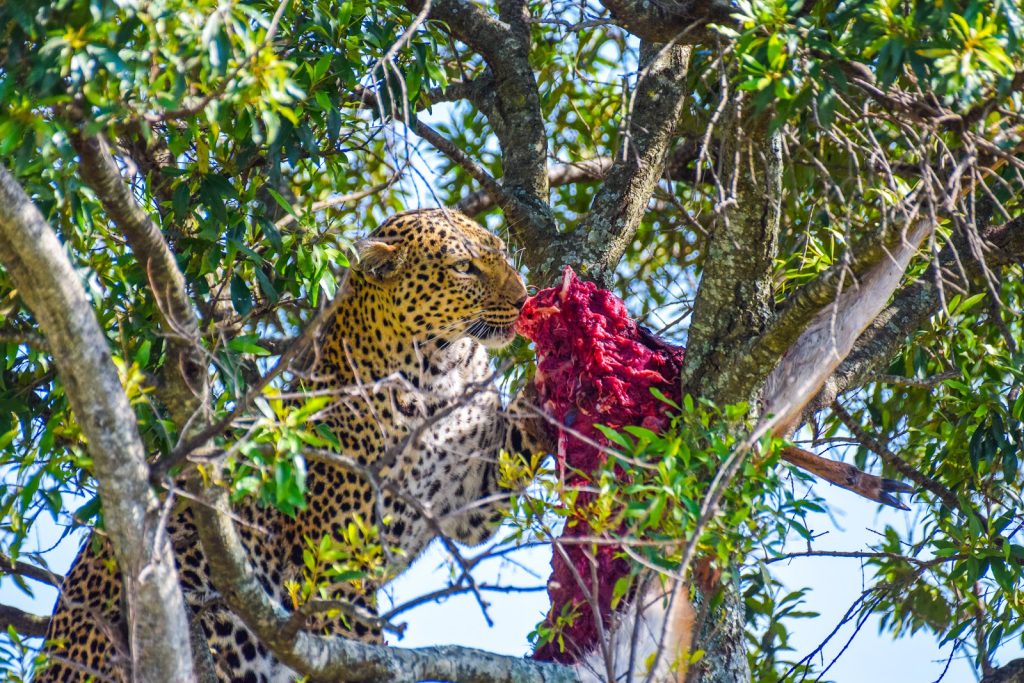
Masai Mara leopard sightings are the trophy every safari-goer chases — and the one that demands real guiding skill. Africa’s most secretive big cat drapes itself along fig-tree branches above the Talek and Mara rivers, invisible until a tail flicks. Then the radio crackles, your guide swings the vehicle around, and suddenly there she is: rosettes in dappled light, a kill wedged in the fork beside her. The Mara’s leopards are surprisingly habituated to vehicles, which makes this one of the best reserves anywhere to actually watch — not just glimpse — a leopard. Sense of Adventure guides know the resident territories tree by tree.
Find the Mara’s Most Secretive Cat
Leopard sightings are about territory knowledge. Our guides track the same resident leopards all season — come search with the locals.
Where Masai Mara Leopards Live and Hunt
Leopards hold territories along the Mara’s wooded waterways — the Talek, Ntiakitiak and Mara rivers and the seasonal luggas that feed them. A male’s territory can span 30-40 km² and overlap several females’. They hunt mostly between dusk and dawn, taking anything from francolins to topi, then hoist carcasses up to twice their own body weight high into trees to keep them from lions and hyenas. That tree-larder habit is your best sighting clue: guides scan branches for hanging tails and stashed kills long before they scan the ground.
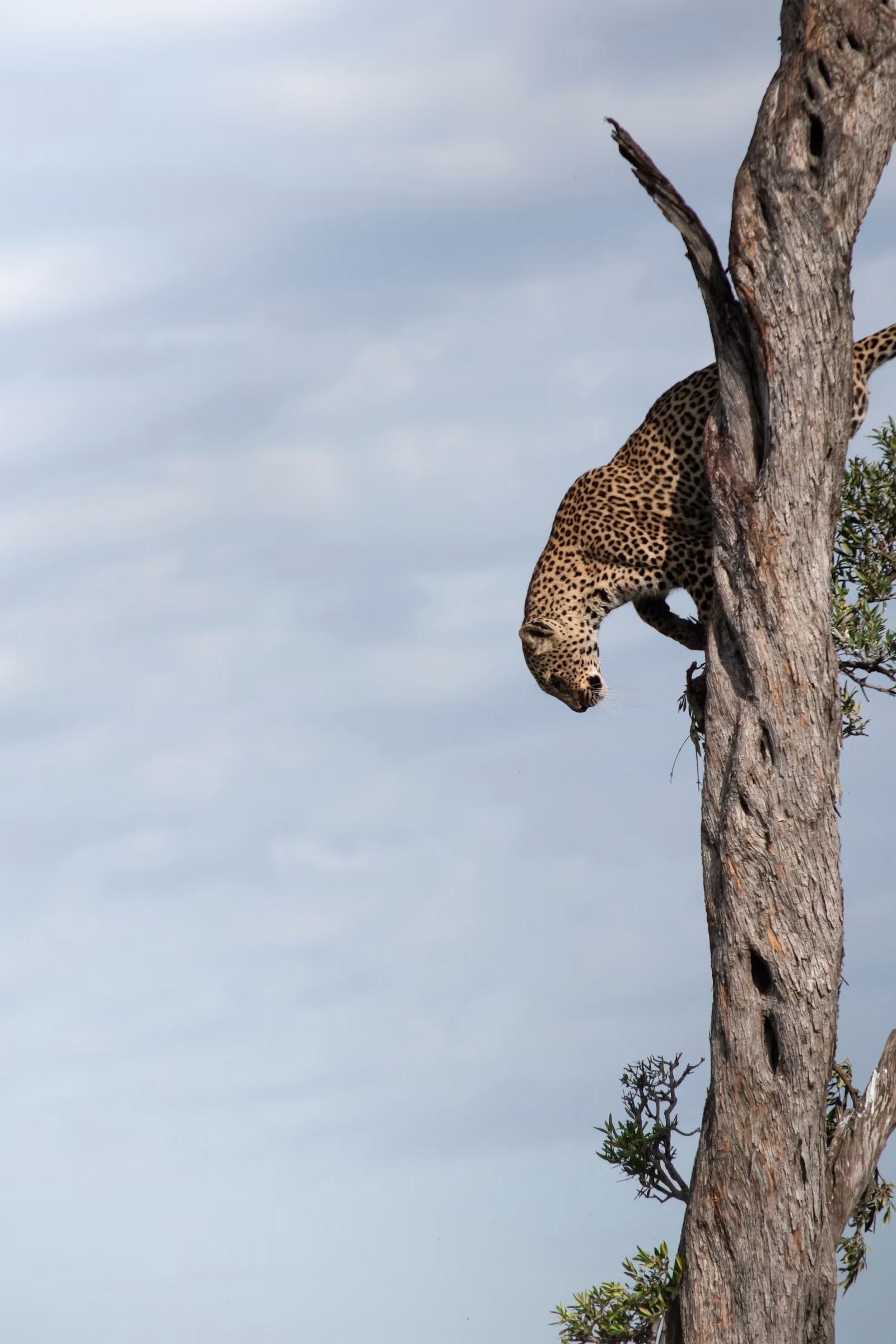
Our guide spotted a leg of impala hanging in a sausage tree from what felt like a kilometre away. We waited twenty minutes and the leopardess climbed up in golden light. Whole vehicle went silent — best moment of the whole trip.
— Sense of Adventure guest, 6-day Mara safari
The 5 Essential Leopard Experiences in the Masai Mara
The Tree Kill — the Mara’s signature leopard sighting
A leopard can haul a carcass heavier than itself twelve metres up a tree — an astonishing feat of strength you will only truly grasp in person. Finding a stashed kill almost guarantees a return visit from its owner, so patient vehicles are rewarded. Our guides keep a mental map of active larder trees along the Talek and Mara rivers and check them on every drive.
Riverine Forest Patrols — searching the leopard highways
Dawn drives along the riverine forest edges are classic leopard time, when cats finish the night’s hunting and head for daybed branches. Rosettes against grey bark are nearly invisible, which is why an experienced spotter matters more here than anywhere else in the reserve. Guests are always stunned by what our eagle-eyed guides pick out at range.
A Mother With Cubs — rare, unforgettable, worth the patience
Leopardesses den in rocky kopjes and thick croton stands, moving cubs regularly to dodge lions and hyenas. When a relaxed female brings cubs into the open, it becomes the sighting of any safari season. These moments cannot be scheduled — but time in the right territory stacks the odds, and that is exactly how we plan leopard-focused days.
Night-Edge Encounters — dusk drives in the conservancies
In the private conservancies bordering the reserve, licensed sundowner and dusk drives catch leopards as they wake and start to move. Watching a leopard slide from its branch and melt into the grass at last light is pure theatre. Ask us about conservancy add-on nights — they transform your leopard chances.
The Portrait in Golden Light — photography done properly
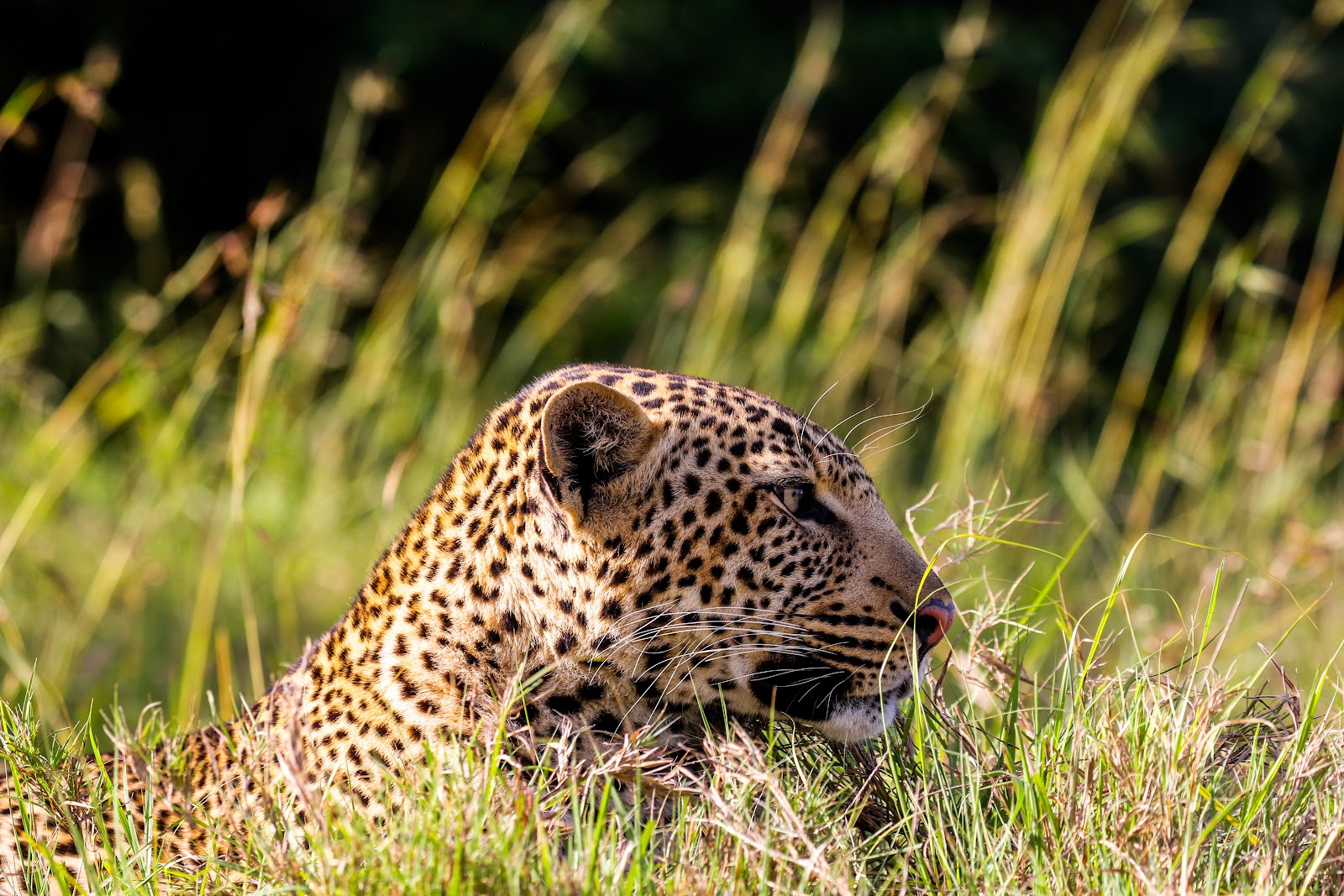
A leopard lying along a horizontal branch, eyes half closed, in 6:30 am side-light — that is the photograph. We position early, cut the engine and let the sighting come to us. Long sightings with relaxed cats are the difference between a record shot and a wall print, and they come from respectful fieldcraft.
Book a Leopard-Focused Game Plan
Tell us leopard is your priority and we’ll build the drives around river territories, larder trees and first light.
Masai Mara Leopard Facts Worth Knowing
- Strength: leopards hoist kills up to twice their body weight as high as 12 metres into trees — insurance against the Mara’s lions and hyenas.
- Diet: over 60 recorded prey species, from beetles and birds to full-grown topi — the broadest menu of any African big cat.
- Territory: males patrol 30-40 km² along the rivers; females hold smaller ranges within them.
- Best search zones: the Talek river line, the Mara river forest and the seasonal luggas between them.
- Spot vs rosette: leopards wear open rosettes; cheetahs wear solid spots — an easy ID check at distance.
- Timing: first hour after dawn and last hour before dark deliver the majority of quality leopard sightings.
Building Leopards Into a Bigger Mara Safari
Leopards headline any big-cat itinerary. Pair the river territories with open-plain predators on our Big Cats Photographic Safari, or cover all three big cats plus the migration on a 3-day Masai Mara package. Read our Masai Mara cheetah safari guide and the Mara lions guide to complete the set.
Your Leopard Is Lying on a Branch Right Now
Somewhere along the Talek a tail is flicking. Message us and we’ll go find it together.
Frequently Asked Questions
Are there leopards in the Masai Mara?
Yes — the Masai Mara holds a healthy resident leopard population concentrated along its wooded rivers and seasonal streams. Because Mara leopards are unusually relaxed around vehicles, the reserve is considered one of the best places in Africa to watch leopard behaviour rather than just glimpse one.
Where is the best place to see a leopard in the Masai Mara?
The best Masai Mara leopard areas are the riverine forests along the Talek and Mara rivers and the brushy luggas between them. Leopards stash kills in large fig and sausage trees there, so guides scan branches for hanging carcasses — the most reliable clue to a nearby leopard.
What time of day are leopards most active in the Masai Mara?
Masai Mara leopards hunt mainly at night and are most visible in the first hour after sunrise and the last hour before dark, when they move between daybeds and hunting grounds. Midday sightings happen too — usually a leopard flat along a shady branch.
Why do Masai Mara leopards put their kills in trees?
Masai Mara leopards hoist kills into trees to protect them from lions and spotted hyenas, both of which steal carcasses on the ground. A leopard can carry prey up to twice its own weight vertically up a trunk, then feed on the stored kill for several days.
How do I improve my chances of seeing a leopard on a Mara safari?
To maximise Masai Mara leopard sightings, stay at least three nights, drive the river territories at first light, and use a guide who knows the resident cats’ territories and larder trees. Adding a bordering conservancy with dusk drives raises your odds further.