
A Kenya birding safari 2027 is one of the richest wildlife trips you can plan. The Kenya Wildlife Service says the country has over 1,000 bird species and 70 Important Bird Areas, most of them inside national parks and reserves, so a single trip can take you from flamingo lakes to rainforest canopy to open savannah and coastal forest.
This guide from Sense of Adventure, a licensed Kenyan tour operator in Nairobi, sets out the main regions for a Kenya birding safari 2027, the best months, how the migrant season works, how to choose a guide and what our birding trips cost. It sticks to facts we can verify, and where conditions change from year to year we say so. If you want to combine birds with the big cats, read it alongside our Masai Mara safari 2027 planning guide.
✅ Kenya Birding Safari 2027 Quick Answer
- Four regions: the Rift Valley lakes, Kakamega Forest, the savannah parks such as the Masai Mara and Amboseli, and the coast at Arabuko-Sokoke and Mida Creek.
- Migrant season: northern migrants join the resident birds during the northern winter months, so your dates matter if migrants are on your wish list.
- Our birding trip: the 8-day Kenya Birding Tour through the Rift Valley lakes, Kakamega and the Masai Mara is from USD 2,050 per person.
- Guides: a guide who knows bird calls matters more than a long checklist, and we match one to your list.
- Honest caution: flamingo numbers at the Rift Valley lakes change with lake levels and food supply, so we never promise flamingo masses.
Planning a birding trip for 2027?
Tell us the birds you most want to see and the months you can travel, and we will shape a route around them.
Kenya Birding Safari 2027: Why Kenya Suits Birders
Kenya packs very different habitats into a short distance. Salt and soda lakes sit on the floor of the Rift Valley, the country’s only tropical rainforest stands in the west, open grassland covers the Mara and Amboseli, and a belt of coastal forest and tidal creeks runs along the Indian Ocean. Each habitat holds birds you will not see in the next one, which is why a Kenya birding safari 2027 is best planned as a route rather than a single stop.
You do not need to be an expert to enjoy it. Every game drive is also a bird drive, and our private 4×4 Land Cruisers have pop-up roofs, so you can stand and scan the sky and the acacias. If you are new to the hobby, start with our guides to the migratory birds of Kenya and to the raptors of Kenya, which are a good introduction to what you may see.
| Region | Habitat | Why birders go |
|---|---|---|
| Rift Valley lakes | Soda lakes, fresh water and acacia woodland | Waterbirds, flamingos when conditions allow, and raptors |
| Kakamega Forest | Kenya’s only tropical rainforest | Forest birds you cannot find on the savannah |
| Masai Mara, Amboseli, Tsavo | Open savannah, wetlands and riverine woodland | Large raptors, ground birds and wetland species |
| Coast | Coastal dry forest, mangroves and tidal creeks | Forest specialities and migrant waders |
The Rift Valley Lakes
The lakes are the classic first stop on a Kenya birding safari 2027. Lake Nakuru, Lake Elementaita, Lake Naivasha and Lake Bogoria each offer a different mix of water, shore and woodland. Our guide to Lake Nakuru birds beyond the flamingos shows how much else lives there, and our Lake Elementaita guide and Lake Naivasha boat safari guide cover two more lakes. A boat on Naivasha puts you at eye level with the shore birds, which is a very different view from a vehicle.
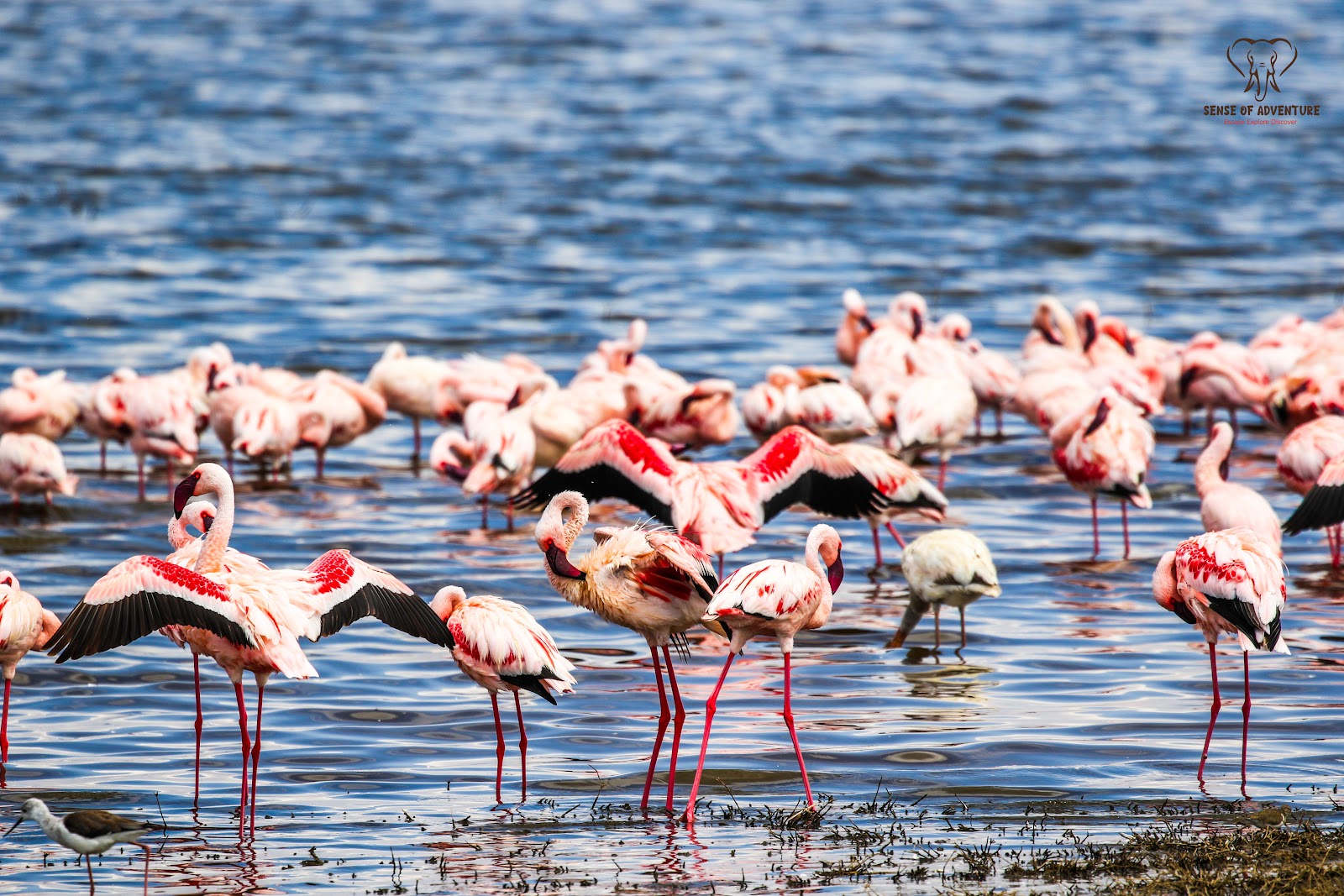
A word of honesty about flamingos. Their numbers at the Rift Valley soda lakes rise and fall with water levels and food supply, and the flocks move from one lake to another, so a shore that is pink one year can be quiet the next. Nobody can promise where the flocks will be on your dates. We therefore treat flamingos as a bonus, check recent reports before we plan, and build your itinerary around the many resident and migrant waterbirds that live on the lakes all year.
If you only have one day, our Lake Nakuru day safari is from USD 180 per person and gives a taste of the lake. For a longer route that adds forest and savannah, see the Kenya Birding Tour in the trips section below.
Kakamega Forest and Western Kenya
Kakamega is the other half of a Kenya birding safari 2027. It is Kenya’s only tropical rainforest, and its birds are forest species that you will not meet on the plains. Walking quietly on forest trails at dawn, with a guide who can pick out calls from the canopy, is a completely different experience from a game drive. Read our Kakamega Forest National Reserve guide for the trails, the habitat and what to bring.
A stop at Mwea National Reserve in central Kenya can also suit a birding route, and our guide covers the Hinde’s babbler, a bird of the Mwea area. Because forest walking depends on early starts and patience, plan at least two nights at Kakamega rather than a single stop.
Which regions fit your bird list?
Share the species you hope to see and we will tell you honestly which regions give you the best chance.
Masai Mara, Amboseli and Tsavo: Savannah Birds and Raptors
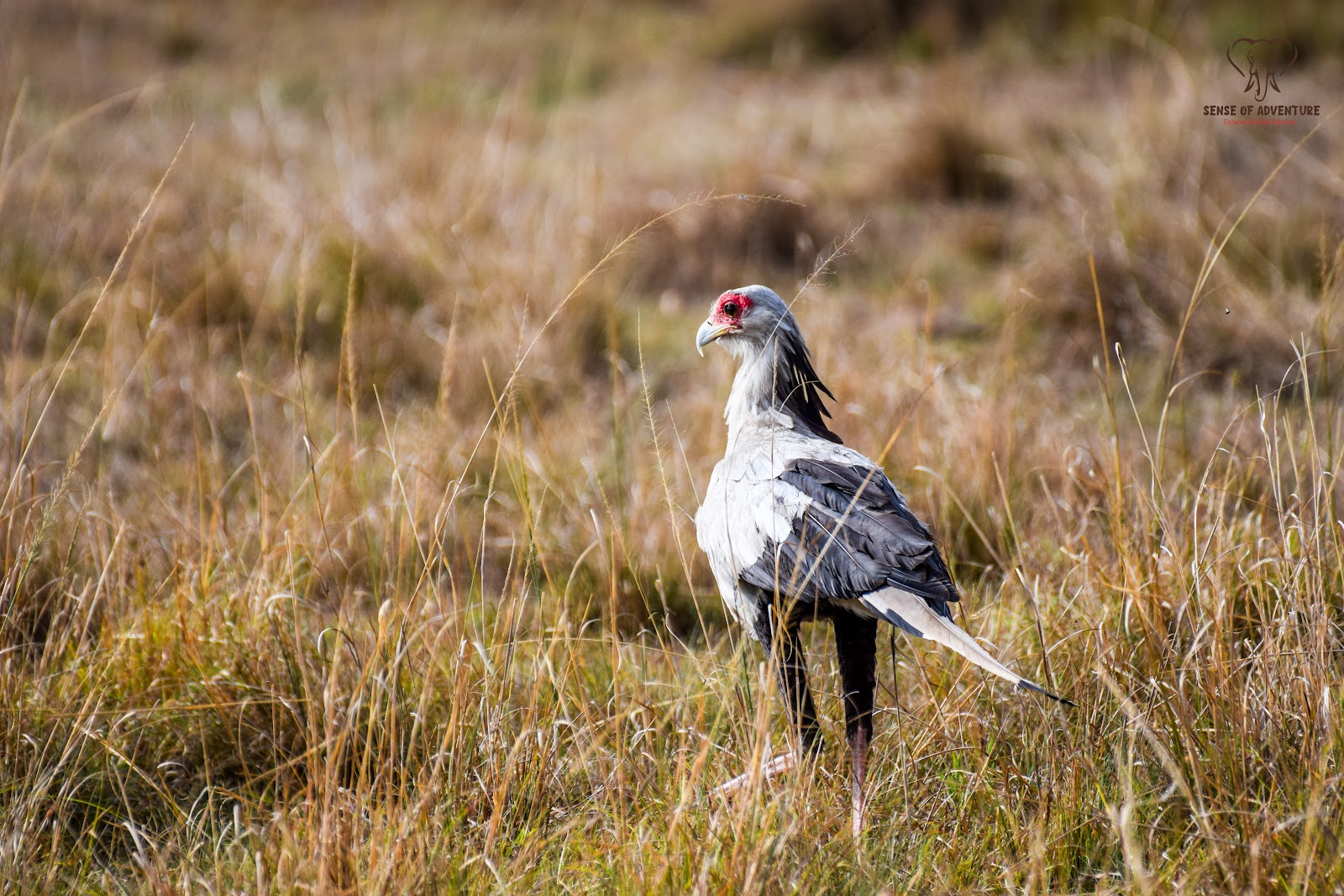
The big parks are not only for lions. The Masai Mara, Amboseli and Tsavo hold large raptors, ground birds and wetland species, and the sky is often as busy as the plains. Our guides to the birds of the Masai Mara, the birds and wetlands of Amboseli and the birds of Tsavo list the groups to look for in each park, and the birds of Nairobi National Park is a useful first or last morning, close to the airport.
Birders should know the Mara fee structure, because it affects a multi-day plan. Masai Mara reserve fees for non-resident adults are USD 100 a day from January to June and USD 200 a day from July to December. Children aged 9 to 17 pay USD 50, children aged 8 and under are free, and payment is cashless. We confirm the 2027 rate in your quote. Our Masai Mara National Reserve guide explains the reserve in detail.

The Coast: Arabuko-Sokoke and Mida Creek
The coast offers something the inland parks cannot. Arabuko-Sokoke Forest is a rare patch of coastal forest, and birders go there for forest specialities that are hard to find elsewhere on a Kenya itinerary. You can read more about it on Magical Kenya, the official tourism site, and your guide will tell you what is being seen on the day.
Nearby Mida Creek is a tidal inlet where mangroves and mudflats attract shoreline birds, and your guide can time a visit to the tide. For a coast add-on, our Watamu and Malindi Marine Escape is a 4-day trip from USD 700, and the Gede Ruins and Mida Creek day trip adds a medieval Swahili town hidden in the forest. Our Watamu Marine Park guide covers the reef side of the same coast.
Best Months for a Kenya Birding Safari 2027
Birds are in Kenya all year, so the right month depends on what you want. The big shift is the migrant season. Many birds that breed in the northern hemisphere spend the northern winter in Kenya, joining the resident birds. That means the northern winter months add migrants, while the rest of the year is a quieter, resident-bird trip. Your guide can tell you which migrants are being seen on your dates.
| Months | Birding notes | Planning notes |
|---|---|---|
| January to March | Migrants still present; mostly dry weather | Lower Mara fee until June, and good value outside school holidays |
| April and May | The long rains; fewer migrants and lush green habitat | Lowest rates, lush landscapes and some camps closed |
| June to August | Resident birds and raptors on open savannah | Peak season in the Mara, with the higher fee from July |
| September to October | Migrants begin to arrive as the northern winter approaches | Dry season continues in the parks |
| November and December | Migrants present; short rains | Quieter camps in November, and festive demand in December |
Our Kenya weather by month guide shows all twelve months. Early mornings are the best time for birds in every season, so your driver-guide will start before sunrise, with a late-morning break and a second drive in the cool of the afternoon.
A Day on a Kenya Birding Safari 2027
Most birding days follow the same rhythm. You leave camp at first light with coffee and a packed breakfast, because the first two hours are when birds call and feed most actively. Your guide stops often, switches off the engine and listens before looking. By mid-morning the heat builds and activity drops, so you return for brunch and a rest, or a short walk around the lodge gardens, which are often surprisingly productive.
The afternoon drive starts once the heat eases and runs until the park closes at dusk. In Kakamega the pattern changes: you walk forest trails in the early morning and late afternoon with a local guide. Many birders end the day by going through their list with the guide over dinner, which is the best moment to check tricky identifications.
Choosing a Birding Guide
The guide matters more than the vehicle on a Kenya birding safari 2027. A guide who can identify birds by call finds far more than one who relies on sight, and knows which patch of forest or shoreline is productive that week. When you ask us for a birding itinerary, tell us your experience level and the birds you most want to see, and we match a driver-guide to your interests.
Our guide to what makes a good safari guide explains the Bronze, Silver and Gold guide levels and what to ask. Keep your party small: a private vehicle lets you stop for as long as you like, which a shared vehicle cannot do. See our comparison of private versus group safaris for the trade-offs.
Birding With Non-Birders in the Group
Many couples and families include one keen birder and others who mainly want lions and elephants. A private vehicle solves most of the tension: the guide balances long stops for birds with time for big game, and the savannah parks reward both. Tell us who is travelling, and we will plan a route where the birding stops, such as Kakamega or a Naivasha boat ride, are short and varied enough for everyone to enjoy.
Kenya Birding Safari 2027: Trips and Prices
These are real starting prices from our trip pages, in US dollars per person sharing. The Kenya Birding Tour is our specialist route for a Kenya birding safari 2027, and the other trips are good ways to add birds to a wider safari. Your written quote confirms the price for your dates.
| Trip | Length | From (per person) |
|---|---|---|
| Kenya Birding Tour: Rift Valley lakes, Kakamega and Masai Mara | 8 days | USD 2,050 |
| Lake Nakuru day safari | 1 day | USD 180 |
| Masai Mara safari | 3 days | USD 650 |
| Watamu and Malindi Marine Escape | 4 days | USD 700 |
| Tsavo and Amboseli safari | 4 days | USD 1,050 |
The 8-day birding tour links the lakes, the forest and the Mara in one loop. If you want more time at each stop, our team can lengthen it, and our guide to the national parks and reserves of Kenya helps you choose the extra stops. Our safari prices include a private 4×4, a driver-guide, park fees, accommodation and meals as listed, and AMREF Flying Doctors evacuation cover.
Paperwork and When to Book
For a Kenya birding safari 2027, most visitors need an approved Kenya eTA, applied for only on the official portal at etakenya.go.ke. Kenya’s mandatory travel health insurance costs USD 44 per traveller, each child needs their own policy, and a home policy cannot be uploaded or used instead, so keep your own insurance for cancellation and wider cover. Our Kenya mandatory travel insurance guide explains how to buy it.
For the migrant months and the peak Mara season, book 9 to 12 months ahead; for other months, 4 to 6 months ahead. Bring binoculars, a field guide and a neutral-coloured wardrobe, and see our safari duffel bag guide for packing. Before you book, we brief you on the current official travel advice for your route and confirm every detail in writing.
Kenya Birding Safari 2027 Packing Essentials
- Binoculars for each traveller: sharing one pair means missing birds. A mid-range magnification is easier to hold steady in a vehicle.
- A field guide or app: choose one that covers East African birds and includes calls, so you can compare what you hear.
- Neutral clothes and a warm layer: khaki, olive and brown blend in, and early mornings are cool in an open-roof vehicle.
- Walking shoes: Kakamega’s trails can be muddy, so pack shoes with grip and a light rain jacket.
- Camera support: photographers should bring a long lens and a beanbag to rest it on the window frame.
Birding Etiquette in the Parks
Good habits protect the birds you came to see. Keep voices low near nests, never play recorded calls repeatedly to draw a bird out, and stay on the tracks and trails your guide uses. Drones are not allowed in Kenya’s parks without permission, as our drone rules guide explains. Your guide will also brief you on walking safely, because some of the best bird habitat is shared with buffalo and hippos.
Choose Your Migrant-Season Dates
Send us your preferred months and group size. We reply with a written birding itinerary in Midrange 3* and Standard Luxury 4*, with the guide matched to your list.
WhatsApp +254 799 160 081 Email Our TeamKenya Birding Safari 2027: FAQs
When is the best time for a Kenya birding safari in 2027?
Birds are present all year, so any month works. The northern winter, roughly October to March, adds migrants from Europe and Asia to the resident birds, which suits birders who want the longest list. April and May are wet and green, with lower rates, and June to August focuses on resident birds and raptors.
How many bird species are there in Kenya?
The Kenya Wildlife Service says Kenya has over 1,000 bird species and 70 Important Bird Areas, most of them inside national parks and reserves. That variety comes from the range of habitats, from Rift Valley soda lakes and western rainforest to open savannah and the coastal forests near Watamu.
Do I need to be an expert birder to enjoy it?
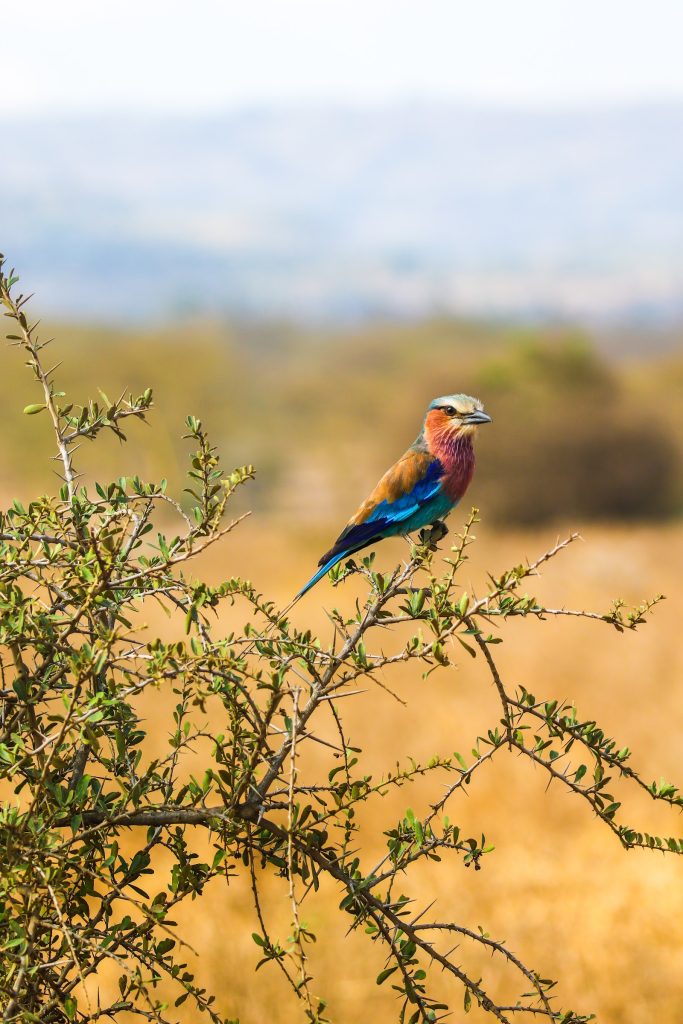
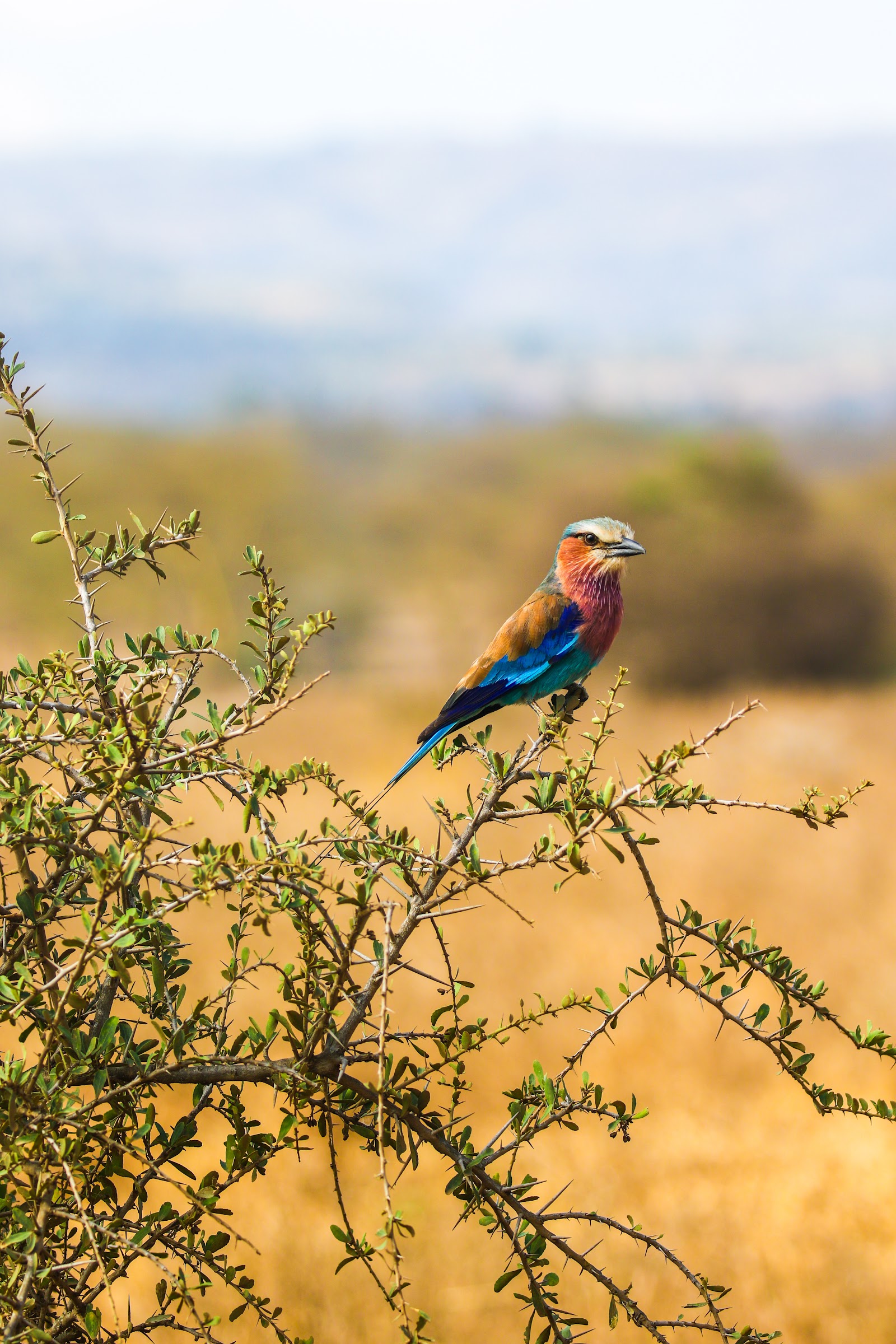
No. Every game drive is also a bird drive, and your driver-guide helps with identification from the vehicle. Beginners usually start with easy, colourful species such as rollers, bee-eaters and sunbirds. Tell us your experience level, and we will set the pace, the length of forest walks and the balance with mammals.
Can I see flamingos in 2027?
Possibly, but nobody can promise it. Flamingo numbers change with lake levels and food supply, and the flocks move between the Rift Valley lakes, so a shore that is pink one year can be quiet the next. We check recent reports before your trip and build the route around many other waterbirds as well.
Which regions should a first birding safari include?
A strong first route links two or three habitats: the Rift Valley lakes for waterbirds, Kakamega Forest for rainforest species and a savannah park such as the Masai Mara for raptors and ground birds. Add the coast at Arabuko-Sokoke and Mida Creek if you have more time and want forest specialities and waders.
What does a Kenya birding safari cost?
Our 8-day Kenya Birding Tour through the Rift Valley lakes, Kakamega and the Masai Mara is from USD 2,050 per person sharing, and a Lake Nakuru day safari is from USD 180. Prices include a private 4×4, driver-guide, park fees and accommodation as listed. Your written quote confirms the price for your dates.
What are the Masai Mara fees for birders?
Non-resident adults pay USD 100 a day from January to June and USD 200 a day from July to December. Children aged 9 to 17 pay USD 50, and children aged 8 and under are free. Payment is cashless, and we confirm the 2027 rates in your written quote.
What should I pack for a birding safari in Kenya?
Bring good binoculars for each traveller, a field guide or app for East African birds, neutral-coloured clothes, a warm layer for early starts, a hat and sun cream. Comfortable walking shoes matter for Kakamega’s forest trails. Photographers should bring a long lens and a beanbag to rest it on the vehicle.
Start Your Kenya Birding Safari
Lakes, forest, savannah or coast, tell us the birds you dream of and we will plan the route privately. Escape. Explore. Discover.
WhatsApp +254 799 160 081 Email reservations@senseofadventure.co.keFor official background on Kenya’s birdlife and protected areas, visit Kenya Wildlife Service, which publishes park information and fees.