Tented camp vs lodge is one of the first real decisions in planning a Kenya safari, and it shapes the whole feel of the trip more than almost any other choice. A tented camp puts you inside the landscape, canvas walls and all, with the sounds of the bush audible after dark; a lodge gives you a permanent brick-and-stone building with hotel-style facilities and, often, a pool. Neither is objectively better — the right pick depends on what kind of nights you want between game drives.
This tented camp vs lodge guide compares the two honestly: how they are built, how they feel at night, how they cope with rain, which suits families, couples and first-timers, and how the cost compares. Sense of Adventure books both styles across Kenya every week, so the advice below comes from what our guests actually tell us after they come home.
✅ Tented Camp vs Lodge: Quick Answer
- Tented camp: canvas walls, usually a solid en-suite bathroom, small and intimate, with the bush right outside your tent.
- Lodge: a permanent stone or brick building, more rooms, more facilities, often a pool and a fenced garden.
- Choose a camp for atmosphere, honeymoons, photography and a classic “real bush” feel.
- Choose a lodge for young children, travellers who want hotel-style reliability, and very wet weeks.
- Comfort: both range from simple to high-end; a luxury tent can be more comfortable than a basic lodge room.
- Best of both: many itineraries mix a lodge in one park with a tented camp in another.
Still torn between canvas and stone? Tell us how you like to travel and we will recommend one.
Tented Camp vs Lodge: What Actually Separates Them
The core difference is construction: a tented camp is built from canvas, though its bathroom is usually still brick or masonry even in a luxury tent, while a lodge is a permanent building made entirely of brick or stone. Tented camps split further into two types — permanent camps that stay in one prime location year-round, and mobile or semi-permanent camps that physically relocate with the seasons for a smaller, more intimate bush experience.
Lodges tend to host more guests and pack in more facilities: buffet dining, a bar, sometimes a swimming pool inside a fenced, manicured garden. A tented camp trades some of that scale for proximity — wildlife moves through the same landscape you’re sleeping in, rather than past it. That single idea sits at the heart of every tented camp vs lodge decision.

What a modern safari tent is really like
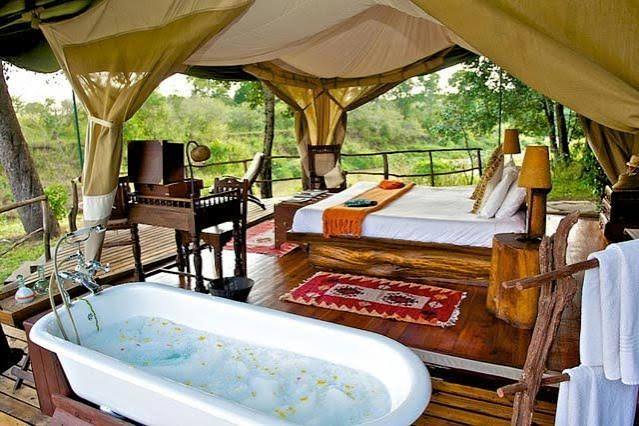
Many first-time visitors picture a small camping tent. A permanent safari tent is nothing like that. It usually stands on a raised wooden or concrete platform under a shade roof, with proper beds, wardrobes, electric lighting, mesh windows and a zip-up front that opens onto a veranda. The bathroom at the back is normally plumbed, with a flushing toilet and a hot shower.
Power is often solar, so hairdryers may not work and charging can be limited to set hours. Our guides to what a safari tent is like inside and electricity, charging and Wi-Fi at safari camps cover those details if you are weighing up a tented camp vs lodge stay for the first time.
What a safari lodge is really like
A safari lodge feels closer to a country hotel set in the wild. Rooms sit in stone or brick blocks or cottages, with solid doors, glass windows and often air conditioning or fans. There is usually a main building with a restaurant, a bar, a lounge and a pool, and many lodges have mains power or a large generator, plus more reliable Wi-Fi.
Classic Kenyan examples include Kilaguni Serena Safari Lodge in Tsavo West, built around a floodlit waterhole, and Mara Serena Safari Lodge on a ridge in the Mara Triangle. You can still watch wildlife from the terrace, but you sleep behind walls rather than canvas.
Tented Camp vs Lodge at a Glance
This side-by-side table sums up the tented camp vs lodge comparison on the points our guests ask about most.
| Factor | Tented camp | Lodge |
|---|---|---|
| Walls | Canvas, usually with a solid bathroom | Brick or stone throughout |
| Size | Often small, sometimes under a dozen tents | Usually larger, with more rooms |
| Atmosphere | Intimate, close to nature, night sounds | Hotel-like, quieter rooms |
| Facilities | Focused: dining tent, lounge, campfire | Wider: bar, buffet, pool, sometimes a spa |
| Heavy rain | Copes well if well built, but you hear it | Generally more comfortable |
| Young children | Some camps set minimum ages | Usually more child-friendly |
| Price range | Budget to ultra-luxury | Budget to ultra-luxury |
- Walls: tented camps use canvas (bathrooms are usually still masonry); lodges are built entirely from brick or stone.
- Permanent tented camps: stay in one location year-round with larger rooms, indoor and outdoor bathrooms, and sometimes a spa.
- Mobile tented camps: relocate seasonally for a smaller, more intimate, classic bush-safari feel.
- Lodges: typically host more guests and offer more facilities — buffet dining, a bar, sometimes a pool in a fenced garden.
- Weather: a permanent brick-and-stone lodge generally copes better with heavy rain than even a luxury tent.
- Luxury level: both categories range from simple to high-end — the real difference is atmosphere and proximity to the wild, not comfort.
5 Things to Weigh Before You Choose
Atmosphere & Proximity to Wildlife — canvas puts you inside the landscape
A tented camp’s canvas walls mean the sounds of the bush — insects, distant calls, sometimes closer ones — are part of the night, not something you watch through a sealed window. For many guests this proximity is the whole point of choosing a camp over a lodge.
Comfort in the Rains — brick and stone handle a storm better
A permanent, brick-and-stone lodge generally copes better with heavy rain than even a well-built luxury tent. If your trip falls in one of Kenya’s wetter months, that’s worth factoring in alongside atmosphere.
Permanent vs Mobile Tented Camps — fixed year-round or seasonal and exclusive
Permanent tented camps stay in one prime location with fuller amenities — larger rooms, indoor and outdoor bathrooms, sometimes a spa. Mobile camps physically relocate with the seasons, trading some of that polish for the most exclusive, classic bush-safari feel available.
Facilities & Scale — lodges host more guests, offer more extras
Lodges can typically host more guests and offer more facilities — a full bar, buffet dining, sometimes a pool in a fenced garden. Tented camps stay deliberately small, so shared spaces feel purposeful rather than expansive.
Which Fits Your Trip — match the stay to the occasion
A first safari, or a trip with young kids or older relatives who want dependable hot water and full facilities, often suits a lodge. A honeymoon or a bucket-list “real bush” experience is where a permanent or mobile tented camp usually wins.
Which Is Right for You? Tented Camp vs Lodge by Traveller Type
The best way to settle the tented camp vs lodge question is to start with who is travelling and why. Here is how we usually advise each type of guest.
Honeymooners and couples
Most couples love a permanent tented camp. Small guest numbers, private decks, bush dinners and the sound of lions at night make it feel special in a way a larger lodge rarely matches. If you want a pool and a spa as well, choose a luxury camp that offers both. Our best honeymoon lodges in Kenya guide lists romantic options in both styles.
Families with young children
In the tented camp vs lodge debate, lodges are usually the easier choice with small children. Solid walls, fenced grounds, a pool for the afternoon break and larger family rooms all help. Many tented camps welcome children too, but some set minimum ages for safety, and guests must be escorted after dark. Check our guide to safari minimum ages for children before you choose.
First-time safari travellers
Either works well on a first safari. If you are nervous about sleeping under canvas, start with a lodge in one park and move to a tented camp in the next. Most guests who try that combination say the tent was the night they remember most.
Photographers and wildlife enthusiasts
Tented camps, especially those in private conservancies, usually suit keen photographers best. They are often closer to the action, game drives leave straight from camp, and small numbers mean fewer vehicles at sightings. Read our guide on camping inside or outside the Masai Mara to see how location affects your first and last light.
Older travellers and those with mobility needs
Lodges often have shorter, flatter paths, and some offer step-free rooms. Many tented camps sit on raised platforms with steps, and paths can be uneven. If walking is a concern, tell us early and we will check each property’s layout for you.

Let Us Shortlist the Right Stays for Your Group
Tell us who is travelling, from honeymooners to grandparents, and we will suggest a camp, a lodge or a mix for each park on your route.
Weather and Seasons: How the Rains Change the Tented Camp vs Lodge Choice
Kenya has two rainy seasons: the long rains, roughly March to May, and the short rains, roughly November and December. In the drier months, from about June to October and January to February, a tented camp is at its most enjoyable, with warm days, cool nights and very little to disturb your sleep. In those months the tented camp vs lodge choice comes down purely to taste.
In the rains, a good tent stays dry, but you will hear every downpour on the canvas, and paths can turn muddy. A stone lodge feels cosier on a stormy night. Some smaller camps close for part of the long rains, while most lodges stay open all year. If you are travelling in a wet month, our green season safari guide explains the trade-offs, including quieter parks and lower rates.
Nights can be cold in both styles, especially in the Masai Mara and the central highlands. Camps usually provide hot-water bottles and thick blankets, and many lodges have fireplaces in the lounge. Pack a warm layer whichever you choose.
Travelling in the Rains? Ask Which Camps Stay Open
Send us your travel month and we will tell you which tented camps and lodges are open and comfortable at that time of year.
Safety, Night-Time and Practical Differences
Safety is a common worry when people weigh up a tented camp vs lodge stay. In practice, well-run camps in Kenya have excellent records. The key rule is simple: in unfenced camps, you stay inside your tent at night and an askari, or trained escort, walks you to and from dinner. Animals see a closed tent as a solid object and usually walk around it.
Lodges are more often fenced, so you can move around the grounds more freely after dark. That is one reason families with toddlers often prefer them. Either way, follow the staff briefing on arrival, keep the tent zipped and never wander off alone at night.
- Noise: canvas lets in sound both ways, so keep voices low at night; lodge rooms are quieter.
- Insects: safari tents have sealed groundsheets and mesh windows; keep them zipped.
- Valuables: most camps and lodges have room safes or keep valuables at reception.
- Bathrooms: both usually have flushing toilets; some mobile camps use bucket showers filled with hot water on request. Our guide to toilets and bathrooms on safari explains each type.
For general safety and entry information before you travel, see the GOV.UK travel advice for Kenya or your own government’s advice.
Tented Camp vs Lodge Cost: Is a Camp Cheaper?
Not necessarily. In any tented camp vs lodge price comparison, cost depends far more on location, exclusivity and inclusions than on whether the walls are canvas or stone. Kenya has budget tented camps and budget lodges, and it also has some of Africa’s most expensive tented camps. A small luxury camp in a private conservancy often costs more than a large lodge inside a national reserve.
What usually raises the price is a private conservancy location, very few rooms, high guide-to-guest ratios, and inclusions such as drinks, laundry, walking safaris and night drives. Our best budget safari camps in Kenya guide shows good-value options, and our Kenya safari cost guide explains how accommodation fits into the full budget.
When comparing quotes, check exactly what each one includes. A camp rate that covers game drives and drinks can work out better value than a cheaper lodge rate where activities are extra. Conservancy fees and park fees can also differ by property.
How to book the best tented camp vs lodge option early
The best small tented camps have limited rooms, so they book early for the peak months of July to October and over Christmas and New Year. Lodges have more rooms, but popular ones still fill up in migration season. Booking several months ahead gives you the widest choice of both styles and the best chance of keeping the same camp for your whole stay.
Compare a Camp and a Lodge on the Same Itinerary
We will price your route twice, once with tented camps and once with lodges, so you can see the real difference in writing before you decide. The best small camps book early in peak season.
Tented Camp vs Lodge Examples: Where You’ll Actually Stay
Our Kenya safari packages each list their accommodation type upfront, from tented luxury on a Masai Mara migration safari to lodge comfort at properties like Solio. Planning a honeymoon safari? A permanent tented camp is usually the most romantic middle ground between full bush immersion and reliable luxury.
Here are a few well-known examples of each style in Kenya’s main parks:
- Masai Mara: Governors’ Camp is a classic tented camp on the Mara River, while Mara Serena Safari Lodge is a stone-built lodge on a ridge. Our luxury lodges in the Masai Mara guide covers more.
- Tsavo: Satao Camp in Tsavo East is a tented camp beside a busy waterhole; Kilaguni Serena Safari Lodge in Tsavo West is a traditional lodge.
- Amboseli: Tortilis Camp offers tents with Kilimanjaro views, and Ol Tukai Lodge is a lodge inside the park.
- Laikipia: Solio Lodge and Ol Pejeta Bush Camp show the two styles side by side in rhino country.
Mixing Both: The Itinerary Many Guests Prefer
You do not have to pick one style for the whole trip. Many of our guests settle the tented camp vs lodge question by using both. A typical pattern is a lodge in Amboseli or Lake Nakuru, where facilities and views matter most, followed by a tented camp in the Masai Mara for the big-cat finale.
Mixing styles also helps with budget. You can save in one park and spend on a special camp in another. It gives children or nervous first-timers a gentle start, too. When we plan a private Kenya safari or a luxury Kenya safari, we usually suggest the best style for each stop rather than one for the whole route.
Wherever you stay, the parks themselves are managed by the Kenya Wildlife Service or by county governments and conservancies, and you can find wider destination ideas on Magical Kenya, the official tourism site.
7 Proven Tented Camp vs Lodge Tips
- Decide what nights you want. If falling asleep to the sounds of the bush excites you, choose a tent.
- Check the travel month. In the long rains, lean towards a lodge or a very well-built permanent camp.
- Ask about age limits. Some tented camps do not accept young children, or limit activities for them.
- Look at the location, not just the rooms. A camp near the action can save hours of driving each day.
- Compare inclusions. Activities, drinks, laundry and conservancy fees can change the value of a quote.
- Ask about power and Wi-Fi. Solar-powered camps may limit charging times; lodges are usually better connected.
- Book early for the best camps. Small camps have few tents, so peak dates go first.
Canvas or Stone? Let Us Plan Every Night of Your Safari
Whatever your tented camp vs lodge decision, our Nairobi team knows these properties first-hand. Share your dates and budget and we will design a route with the right stay in every park.
Frequently Asked Questions
What’s the main difference between a tented camp and a lodge in Kenya?
A tented camp is built from canvas, though its bathroom is usually still brick or masonry, while a lodge is a permanent brick-and-stone building. The tented camp trades some hotel-style polish for a closer connection to the surrounding wildlife and bush sounds, while a lodge usually offers more rooms and facilities.
Are tented camps as comfortable as lodges?
Luxury tented camps can match or exceed a lodge’s comfort level, with proper beds, en-suite bathrooms and sometimes a plunge pool. The real difference is atmosphere and weather resilience, not necessarily comfort. A basic tented camp, however, will feel simpler than a good lodge, so compare like with like.
What is a mobile tented camp?
A mobile, or semi-permanent, tented camp physically relocates with the seasons, offering a smaller, more exclusive and classic bush-safari feel compared to a permanent camp that stays in one location year-round. Facilities are simpler, and some use bucket showers filled with hot water when you ask.
Which is better in the rainy season, a camp or a lodge?
A permanent, brick-and-stone lodge generally handles heavy rain more comfortably than a tented camp, though well-built luxury tents still cope reasonably well and stay dry. You will hear the rain on canvas, and paths can get muddy. Some smaller camps close during the long rains, while most lodges stay open.
Should first-time safari visitors choose a lodge or a tented camp?
Either side of the tented camp vs lodge choice works well for a first safari. Families or travellers who want maximum reliability often lean toward a lodge, while those chasing the classic “real bush” experience often choose a permanent tented camp. Many first-timers mix both, starting in a lodge and finishing in a camp.
Is it safe to sleep in a tented camp in Kenya?
Yes. Well-run tented camps have strong safety records. Stay inside your zipped tent at night, and let an askari, a trained escort, walk you to and from dinner in unfenced camps. Wild animals usually treat a closed tent as a solid object and walk around it.
Is a tented camp cheaper than a lodge?
Not always. In the tented camp vs lodge comparison, price depends mainly on location, exclusivity and inclusions. Kenya has budget options in both styles, and some small conservancy camps are among the most expensive stays in the country. Always compare what each quote includes before deciding.