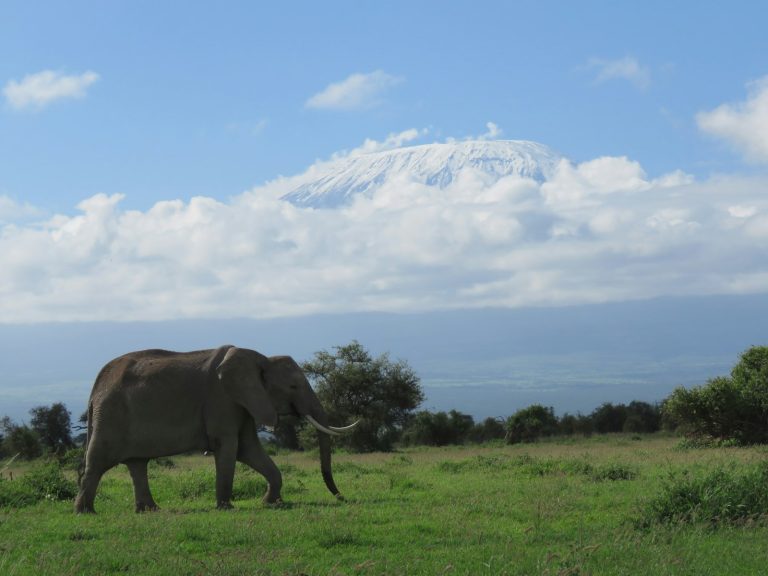
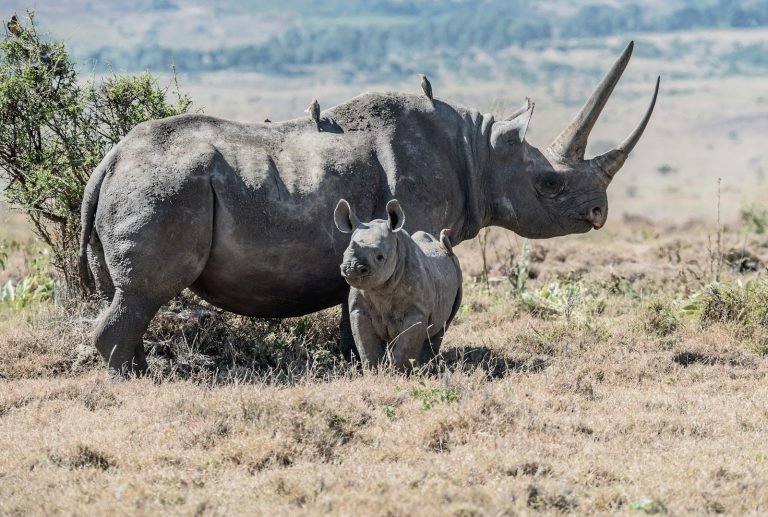
Amboseli vs Ol Pejeta comes down to one question: elephants or rhinos? Amboseli National Park gives you Kenya’s most photogenic elephant herds beneath Mount Kilimanjaro. Ol Pejeta Conservancy gives you all of the Big Five, East Africa’s largest black rhino sanctuary, night drives and walks. With a week, you can enjoy both.
Sense of Adventure is a TRA-licensed safari company based at Mountain Mall on Thika Road, Nairobi, and we plan private trips to both destinations every season. This guide is written for travellers comparing Amboseli vs Ol Pejeta for a first or return safari, and for travel agents building Kenya itineraries for their clients. You will find wildlife, activities, seasons, access, cost drivers and a sample route, so you can decide with confidence.
Elephants and Kilimanjaro, or Rhino Conservation?
Tell us your dates and interests, and our Nairobi team will help you choose Amboseli, Ol Pejeta, or a private safari that includes both.
Amboseli vs Ol Pejeta at a Glance
Amboseli is a government national park built around elephants and a mountain view, while Ol Pejeta is a private conservancy built around rhinos and variety. The table below compares the points that matter most when you plan a private Kenya safari.
| Amboseli vs Ol Pejeta | Amboseli National Park | Ol Pejeta Conservancy |
|---|---|---|
| Type | Government national park (Kenya Wildlife Service) | Private, not-for-profit conservancy |
| Location | Kajiado County, south-east of Nairobi near the Tanzanian border | Laikipia County, north of Nairobi on the equator |
| Size | About 392 km² | About 90,000 acres (roughly 360 km²) |
| Signature sighting | Elephant herds with Kilimanjaro behind | Black and white rhino; the last northern white rhinos |
| Big Five | Four of five; no rhino, leopard rarely seen | All five present |
| Night game drives | Not permitted inside the park | Permitted |
| Walking and riding | Limited inside the park; offered in some neighbouring conservancies | Guided walks and horse riding offered |
| Road time from Nairobi | Around 4 to 5 hours | Around 3 to 3.5 hours |
| Nearest airstrip | Amboseli (scheduled flights from Wilson Airport) | Nanyuki (scheduled flights from Wilson Airport) |
| Best for | Photographers, elephant lovers, first-time visitors | Rhino seekers, families, conservation-minded travellers |
Amboseli National Park: Elephants Beneath Kilimanjaro
Amboseli is the best place in Kenya to photograph elephants against a mountain backdrop. The park is compact, open and flat, set on dry plains below Kilimanjaro, Africa’s highest mountain, whose summit rises across the border in Tanzania. On clear mornings the snow-capped peak fills the horizon, and elephant families crossing the plains in front of it create one of Africa’s most recognisable wildlife scenes.
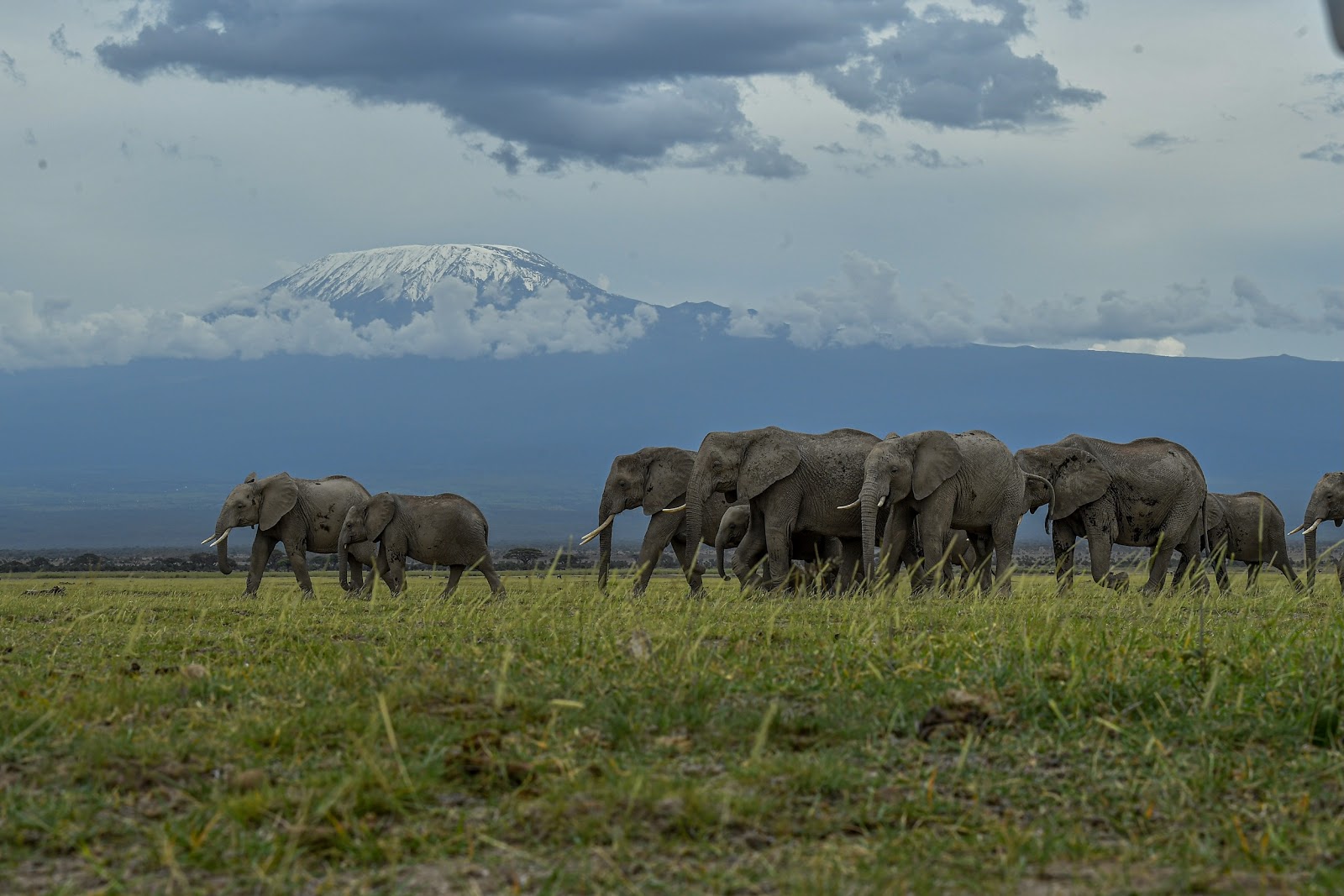
Those elephants are no ordinary population. In 1972, researcher Cynthia Moss established the Amboseli Elephant Research Project, now run by the Amboseli Trust for Elephants. It is the longest continuous study of wild elephants anywhere. Because Amboseli’s herds largely escaped the heavy poaching of the 1980s, the population includes mature bulls with impressive tusks and matriarchs who have led their families for decades.
Water is the other reason Amboseli works. Springs fed by Kilimanjaro’s groundwater surface in permanent swamps in the middle of an otherwise dry landscape. Elephants wade in up to their bellies to feed, hippos and buffalo gather at the edges, and the wetlands attract more than 400 recorded bird species. Observation Hill, one of the few places inside the park where you can step out of the vehicle, gives a panoramic view across the swamps and plains.
What Amboseli does not offer is rhino. Lion, buffalo and spotted hyena are present, cheetah are seen on the open plains, and leopard sightings are uncommon. If seeing all of the Big Five on one trip matters to you, Amboseli needs a partner destination. For a deeper look at the park itself, read our Amboseli National Park guide.
Ol Pejeta Conservancy: Kenya’s Rhino Stronghold
Ol Pejeta is the most reliable place in Kenya to see both black and white rhino in one game drive. It began as a cattle ranch and set land aside for rhino conservation in 1988. Today it is a not-for-profit conservancy between the Aberdare foothills and Mount Kenya, with all of the Big Five present and the largest black rhino sanctuary in East Africa.
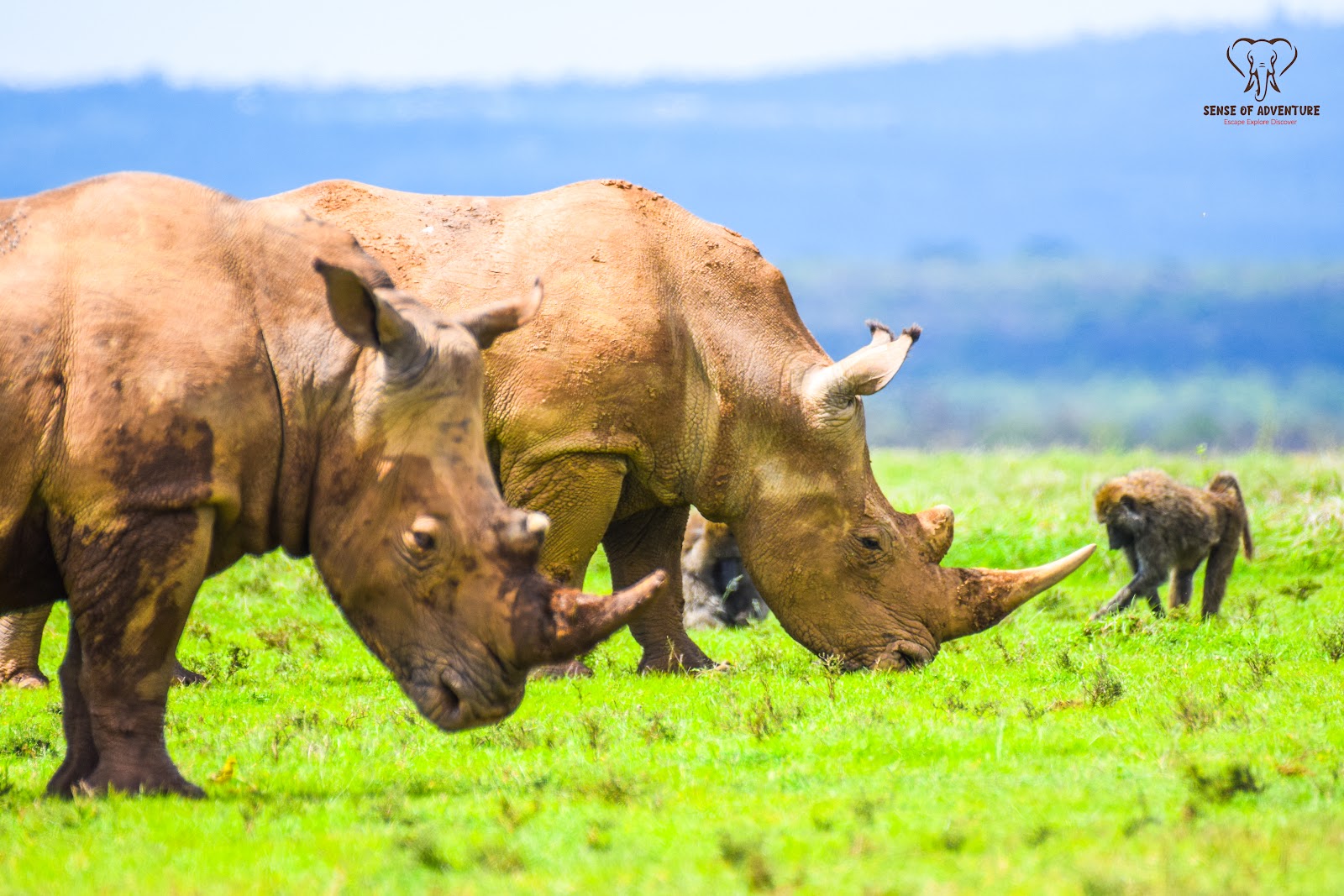
Southern white rhino graze its open grasslands. The conservancy’s guarded enclosure protects the last northern white rhinos, which came from a zoo in the Czech Republic in 2009. Scientists in the BioRescue programme are working to save the subspecies through assisted reproduction, and you can learn about the project during a visit. You can read about the conservancy’s work on the Ol Pejeta Conservancy website.
Because Ol Pejeta is private land, it is not bound by the national park rules that prohibit night driving. That opens up a different side of safari: night game drives with a spotlight, guided bush walks, horse riding and lion tracking with the conservancy’s research team. Ol Pejeta also runs the Sweetwaters Chimpanzee Sanctuary, which cares for chimpanzees rescued from the illegal wildlife trade.
The conservancy also holds northern species rarely seen further south, including Grevy’s zebra, beisa oryx and Jackson’s hartebeest, and Mount Kenya forms a dramatic backdrop on clear days. For travellers who care about how their safari money supports conservation, Ol Pejeta tells one of the clearest stories in Kenya.
7 Key Differences Between Amboseli vs Ol Pejeta
The seven differences below decide most Amboseli vs Ol Pejeta choices: scenery, rhinos, research, activities, landscape, geography and primates.
1. Only Amboseli Has the Kilimanjaro Backdrop
No other Kenyan park gives you elephant herds and Africa’s highest mountain in the same frame. Ol Pejeta’s mountain view is Mount Kenya instead, which is beautiful but less often clear. Amboseli vs Ol Pejeta verdict for scenery: Amboseli.
2. Only Ol Pejeta Has Rhino
Black and southern white rhino are seen regularly at Ol Pejeta, along with the last northern white rhinos in their guarded enclosure. Amboseli has no rhino population at all. Amboseli vs Ol Pejeta verdict for rhinos: Ol Pejeta.
3. Amboseli’s Elephants Are the Best Studied in Africa
More than five decades of continuous research mean an experienced guide can often tell you which family you are watching and how it behaves. Amboseli vs Ol Pejeta verdict for elephant knowledge: Amboseli.
4. Ol Pejeta Allows Night Drives, Walks and Riding
As a private conservancy, Ol Pejeta offers activities that Kenya Wildlife Service rules do not allow inside Amboseli National Park. Amboseli vs Ol Pejeta verdict for activities: Ol Pejeta.
5. Amboseli Is Drier and More Open
Amboseli’s dusty plains and swamps contrast with Ol Pejeta’s greener highland grassland, acacia woodland and the Ewaso Nyiro river. Expect more dust in Amboseli and cooler air in Laikipia. In the Amboseli vs Ol Pejeta weather contest, pack for both heat and chill.
6. They Lie in Opposite Directions From Nairobi
Amboseli is south-east of the capital and Ol Pejeta is north. Travelling between them by road means going back through Nairobi, which takes most of a day. Amboseli vs Ol Pejeta on one trip therefore needs at least a week.
7. Ol Pejeta Includes a Chimpanzee Sanctuary
The Sweetwaters Chimpanzee Sanctuary is the only place in Kenya to see chimpanzees, adding a primate encounter to a savannah safari. It cares for rescued animals and is not a wild population. Amboseli vs Ol Pejeta verdict for primates: Ol Pejeta.
Big Five Sightings: Amboseli vs Ol Pejeta
Ol Pejeta holds all five, while Amboseli holds four and excels at one: elephants. Here is how each species compares.
Elephant, Amboseli vs Ol Pejeta: Amboseli wins clearly. Large family groups are seen on almost every drive, often at close range and in open country with nothing between you and the mountain. Ol Pejeta has elephants too, but in smaller numbers and often in thicker bush.
Rhino, Amboseli vs Ol Pejeta: Ol Pejeta wins outright. Amboseli has none. Our guide to your real chances of seeing the Big Five in Kenya shows where else rhinos are reliable.
Lion, Amboseli vs Ol Pejeta: Both have resident lions. Ol Pejeta’s prides are monitored by the conservancy, and guests can sometimes join lion tracking. Amboseli’s lions are seen on the open plains and around the swamps, often resting in the shade of the few trees.
Buffalo, Amboseli vs Ol Pejeta: Common in both, particularly around Amboseli’s swamps and across Ol Pejeta’s grasslands. Large herds are easy to find in the dry months.
Leopard, Amboseli vs Ol Pejeta: Uncommon in both. Ol Pejeta’s night drives give a better chance than daytime drives anywhere, but no honest operator can promise a leopard sighting.
Safari Activities Compared: Amboseli vs Ol Pejeta
Amboseli is a classic game-drive destination, while Ol Pejeta packs more variety into a short stay.
In Amboseli, days follow a rhythm of early morning drives, when Kilimanjaro is most likely to be clear, a relaxed midday at your lodge, and an afternoon drive into the golden light. Guests staying in the community conservancies that border the park, such as those around Kimana, can add guided walks and cultural visits with Maasai communities. Our guide to luxury lodges in Amboseli explains which camps offer these extras.
At Ol Pejeta, alongside day game drives, you can book a night drive to look for nocturnal species such as aardvark, bat-eared fox, white-tailed mongoose and striped hyena. You can also take a guided walk, ride horses, visit the chimpanzee sanctuary or meet the team behind the rhino protection programme. Some activities carry an extra fee and are best reserved in advance. To understand what happens after dark, see our guide to night drives on safari.
Expert tip from our Nairobi team
In Amboseli, ask your guide to leave camp at first light. Kilimanjaro is usually clearest from sunrise to mid-morning, and cloud often builds by late morning. At Ol Pejeta, book your night drive for your first evening, so you still have a second chance if rain cancels it. Whatever you decide on Amboseli vs Ol Pejeta, early starts reward you.
Best Time to Visit: Amboseli vs Ol Pejeta by Season
Both destinations are good all year, but the dry seasons of roughly June to October and January to February bring the easiest game viewing.
In Amboseli, short grass and concentrated water make wildlife easy to find. During the long rains of April and May, roads can be muddy and the mountain is often hidden by cloud, although the park turns green and many lodges lower their rates. Ol Pejeta’s highland setting keeps temperatures mild, with cool mornings and evenings year round. Rhino viewing is reliable in every month, which makes it a strong green-season choice.
| Amboseli vs Ol Pejeta by month | Amboseli | Ol Pejeta |
|---|---|---|
| January to February | Dry, good mountain views, warm days | Dry, excellent rhino viewing |
| March to May | Long rains, green and quiet, mountain often cloudy | Green season, rhinos still easy to find |
| June to October | Peak dry season, elephants gather at the swamps | Cool, dry and busy; book early |
| November to December | Short rains, usually brief showers | Short rains, fresh grass and young animals |
Bring warm layers for early starts and night drives at any time of year. Park and conservancy fees can change between seasons, so check our Kenya national parks entrance fees guide and the official Kenya Wildlife Service site before you budget.
Getting There: Combining Amboseli and Ol Pejeta
You can combine the two by road with a night in Nairobi between them, or save a day by flying from Wilson Airport.
By road, Amboseli is around four to five hours south-east of Nairobi, and Ol Pejeta around three to three and a half hours north. Because they lie in opposite directions, a road transfer goes back through Nairobi and takes most of a day. Many of our guests break the journey with a night in Nairobi, which also leaves time for the Giraffe Centre or the elephant orphanage.
If time matters more than budget, scheduled light aircraft fly from Wilson Airport to the Amboseli airstrip and to Nanyuki, the nearest airstrip to Ol Pejeta. A fly-in itinerary turns a long road day into a short flight. Remember that light aircraft have strict baggage limits, usually soft bags only. If you are starting from the capital, our Kenya safari from Nairobi page shows the most practical routes.
Amboseli vs Ol Pejeta? Why Not Both
We design private itineraries with your own Land Cruiser and guide, by road or fly-in, at the comfort level you prefer.
Amboseli vs Ol Pejeta: Which Should You Choose?
Choose Amboseli for elephants and photography, Ol Pejeta for rhinos and variety, and both if you have a week. The right answer depends on what you want to come home with.
- Wildlife photographers: Amboseli. The light, the open plains and the elephants beneath Kilimanjaro produce images you cannot get anywhere else.
- Big Five completers: Ol Pejeta, where all five are present, or both together, so Amboseli adds the elephant spectacle.
- Families with children: Ol Pejeta. Shorter road time, mild temperatures and varied activities keep younger travellers engaged.
- Honeymooners: Either. Amboseli’s mountain sunrises are unforgettable, and Ol Pejeta’s smaller camps feel private and peaceful.
- Conservation-minded travellers: Ol Pejeta for rhino protection and Amboseli for elephant research. Visiting both shows you two of Kenya’s great conservation stories.
- Short trips of two to three nights: Pick one. The transfer between them is too long to fit both comfortably.
Many guests who first ask about Amboseli vs Ol Pejeta also weigh up the Masai Mara. If big cats are high on your list, our Masai Mara safari packages show how the Mara fits alongside either destination.
How Many Days and What Drives the Cost
Plan two nights minimum in each destination, and expect the cost to depend mainly on accommodation, fees and whether you fly.
On a combined Amboseli vs Ol Pejeta trip, two nights in Amboseli give you three or four game drives, enough for a clear Kilimanjaro morning in most seasons. Two nights at Ol Pejeta give you time for rhino viewing, the chimpanzee sanctuary and one night drive. Three nights in each feels relaxed. The main cost drivers are your lodge or camp, KWS park fees for Amboseli, Ol Pejeta’s conservancy fees, optional activities and fly-in versus road transfers.
For Amboseli vs Ol Pejeta budgets, a private safari with your own vehicle and guide costs more than a shared tour, but it lets you set the pace, wait longer at a sighting and leave early for the mountain view. Our private Kenya safari page explains how this works, and our luxury Kenya safari options cover premium camps in both areas.
Sample 7-Day Itinerary: Amboseli vs Ol Pejeta Combined
This outline shows how the two fit together on a private road safari. We adjust every itinerary to your dates, pace and preferred accommodation.
- Day 1: Arrive in Nairobi and transfer to your hotel.
- Days 2 to 3: Drive to Amboseli for two nights of morning and afternoon game drives, with a stop at Observation Hill.
- Day 4: Return to Nairobi for one night, with an optional afternoon at the Giraffe Centre.
- Days 5 to 6: Drive north to Ol Pejeta for two nights of rhino viewing, a night game drive and the chimpanzee sanctuary.
- Day 7: Return to Nairobi for your onward flight, or continue to Samburu or the Masai Mara.
Prefer a ready-made route? Our Ol Pejeta and Masai Mara Luxury Conservancy Safari and the Amboseli Elephant Photographic Safari can be joined into one longer trip. Short on time? The Ol Pejeta Day Safari is a full day from Nairobi.
Amboseli vs Ol Pejeta FAQs
Amboseli vs Ol Pejeta: which is better?
Neither is better overall. Amboseli is the best place in Kenya to see large elephant herds with Kilimanjaro behind them. Ol Pejeta is better for rhinos, all of the Big Five and extra activities such as night drives, guided walks and the chimpanzee sanctuary. If you have a week, visiting both gives you the best of each.
Can you see rhinos in Amboseli?
No. Amboseli National Park has no rhino population, so it offers four of the Big Five at most. Ol Pejeta Conservancy in Laikipia is one of the most reliable places in Kenya to see both black and white rhino, and it also protects the last northern white rhinos in a guarded enclosure.
Can you do a night game drive in Amboseli?
Not inside Amboseli National Park, where Kenya Wildlife Service rules do not allow night driving for visitors. Some community conservancies bordering the park offer night activities to their own guests. Ol Pejeta, as a private conservancy, offers night game drives with a spotlight, usually as an extra activity booked in advance.
Amboseli vs Ol Pejeta: how far apart are they?
They lie in opposite directions from Nairobi, so a road transfer between them goes back through the capital and takes most of a day. Many travellers spend a night in Nairobi in between. Scheduled light aircraft from Wilson Airport to Amboseli and Nanyuki can turn that long drive into short flights.
How many days do you need for Amboseli and Ol Pejeta?
Plan at least two nights in each, plus a travel day between them. That gives you three or four game drives in Amboseli and time for rhinos, a night drive and the chimpanzee sanctuary at Ol Pejeta. A week allows a relaxed itinerary with a night in Nairobi in the middle.
Is Ol Pejeta good for families with children?
Yes. Ol Pejeta is closer to Nairobi than Amboseli, has mild highland temperatures, reliable rhino sightings and family-friendly experiences such as the chimpanzee sanctuary. Age limits apply to some activities, including walks, riding and night drives, so check the rules for your children before you book.
Experience Two of Kenya’s Great Conservation Stories
Kenya-based experts. Real local knowledge. Transparent pricing.
Sense of Adventure is a TRA-licensed Nairobi safari company. Message us and we will plan your Amboseli and Ol Pejeta safari. Email: reservations@senseofadventure.co.ke
Related Safari Guides
- Ol Pejeta vs Lewa: Kenya’s Top Rhino Conservancies Compared
- Lake Nakuru vs Ol Pejeta: Best Rhino Sanctuary Compared
- Nairobi National Park vs Ol Pejeta: Fastest Big Five Access
- Private Amboseli Safari: Elephants and Kilimanjaro From Nairobi
- Laikipia vs Masai Mara: Big Five and Rhino Sanctuaries Compared