
The Masai Mara and the Serengeti are one continuous wilderness that a national border happens to cut through — but that border creates a genuine logistics catch that catches out travellers who assume it’s a simple drive. The Mara River, which flows through the reserve, is the only permanently flowing river in the entire Serengeti-Mara ecosystem, and the two parks have formed a single Lion Conservation Unit since 2005. On paper, wildlife moves freely between them. In practice, since mid-2025, Kenyan-registered vehicles can no longer enter Tanzanian parks and Tanzanian-registered vehicles can’t enter Kenyan ones — so crossing by road means physically walking across the border and switching vehicles. Here’s what that actually looks like, and the faster alternative.
Let Us Handle the Border Crossing Logistics
Message us and we’ll build a Masai Mara + Serengeti itinerary that handles every transfer for you.
One Ecosystem, Two Countries, One Real Complication
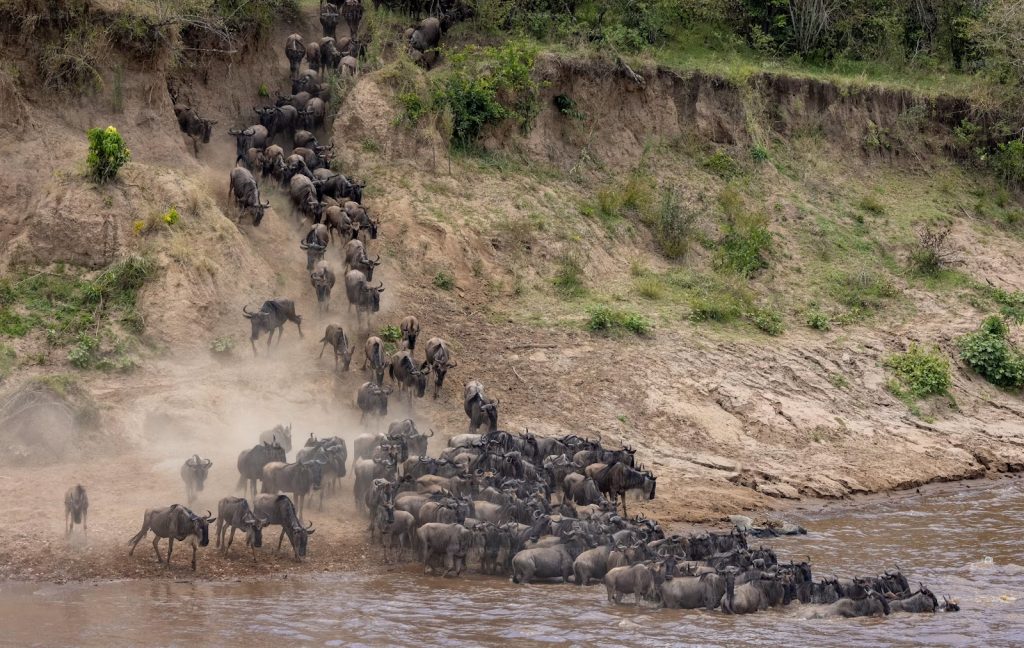
The Serengeti-Mara ecosystem is one of the largest unbroken wildlife landscapes on Earth, and the wildebeest migration itself pays no attention to the Kenya-Tanzania border — it simply follows the rain and grass, moving through the Serengeti’s far larger 14,763km² territory before pushing north into the Mara’s 1,510km² roughly every July. Getting a vehicle across that same border is the part that isn’t seamless. The main road crossing is at Isebania on the Kenyan side, connecting to Sirari in Tanzania — a 24-hour commercial and passenger post, but one where the road on both sides is rough, and since mid-2025 you can no longer simply drive through: you physically walk across the line and change into a vehicle registered in the country you’re entering. Border delays can add anywhere from an hour to several hours depending on traffic. Total road time from a Mara camp to a Serengeti camp, including the crossing, commonly runs half a day or more.

Nobody told us we’d actually be walking across a literal line in the road with our bags while our guide waited on the Tanzanian side with a different vehicle — it sounds chaotic written down but it took maybe twenty minutes once we knew what was happening, and the flight option we took on the way back was worth every extra dollar for the time it saved.
— Sense of Adventure guest, combined Kenya-Tanzania safari
How to Actually Cross
By Road via Isebania-Sirari — vehicle swap required, half-day+ journey
The standard land route: drive to the Isebania border post, walk across, and continue in a Tanzanian-registered vehicle on the other side. Roads are rough on both sides of the crossing, and border processing adds unpredictable time — budget half a day or more for the full transfer.
By Air — faster, no vehicle-swap hassle
Flying is the preferred option for most travellers doing both parks — a light aircraft connection, sometimes routed via an airstrip near Isebania on the Kenyan side, cuts the journey dramatically and avoids the border walk-and-swap entirely.
Book It as One Combined Package — let your operator handle both legs
The simplest approach: book a single itinerary spanning both parks and let your operator arrange the transfer, vehicles and border logistics as one seamless leg rather than two separate trips. Book our Kenya & Tanzania Classic Safari – Masai Mara & Serengeti (10 Days).
One Booking, Both Parks, No Logistics Headache
Message us to plan a Masai Mara and Serengeti safari with every transfer and border crossing handled for you.
Masai Mara to Serengeti Facts
- Shared river: the Mara River is the only permanently flowing river in the entire Serengeti-Mara ecosystem — critical to wildlife on both sides of the border.
- Joint conservation status: the Masai Mara and Serengeti have formed a single Lion Conservation Unit since 2005.
- Main road border: Isebania (Kenya) to Sirari (Tanzania), a 24-hour crossing point with rough roads on both sides.
- Vehicle rule: since mid-2025, vehicles registered in one country cannot enter the other’s national parks — travellers walk across the border and change vehicles.
- Road transfer time: commonly half a day or more, including the crossing itself.
- Faster alternative: flying between the two parks, avoiding the road crossing and vehicle swap entirely.
Planning a Combined Kenya-Tanzania Safari
If you’re still deciding whether to prioritise one park over the other, read our Masai Mara vs Serengeti comparison. Ready to see the migration crossings on both sides? Book our Kenya & Tanzania Classic Safari.
The Mara and the Serengeti, One Seamless Trip
Message us your travel dates and we’ll build a combined Kenya-Tanzania itinerary with the crossing sorted.
Frequently Asked Questions
Can you drive from the Masai Mara to the Serengeti?
Yes, via the Isebania-Sirari border crossing, though since mid-2025 vehicles registered in one country cannot enter the other’s national parks — travellers walk across the border and switch to a locally registered vehicle, adding time to the journey.
How long does it take to travel from Masai Mara to Serengeti?
By road, including the border crossing, the transfer commonly takes half a day or more due to rough roads on both sides and unpredictable border processing time; flying is significantly faster.
Is it better to fly or drive between the Masai Mara and Serengeti?
Flying is generally the preferred option for most travellers, since it avoids the vehicle swap at the border and cuts the total transfer time substantially compared to the road route via Isebania.
Why are the Masai Mara and Serengeti considered one ecosystem?
They share the Mara River, the only permanently flowing river in the entire ecosystem, and have been jointly recognised as a single Lion Conservation Unit since 2005, despite being split by the Kenya-Tanzania border.
Can I book a single safari that covers both the Masai Mara and Serengeti?
Yes — combined itineraries spanning both parks are common and let your operator handle vehicle changes, transfers and border logistics as one seamless trip rather than two separate bookings.