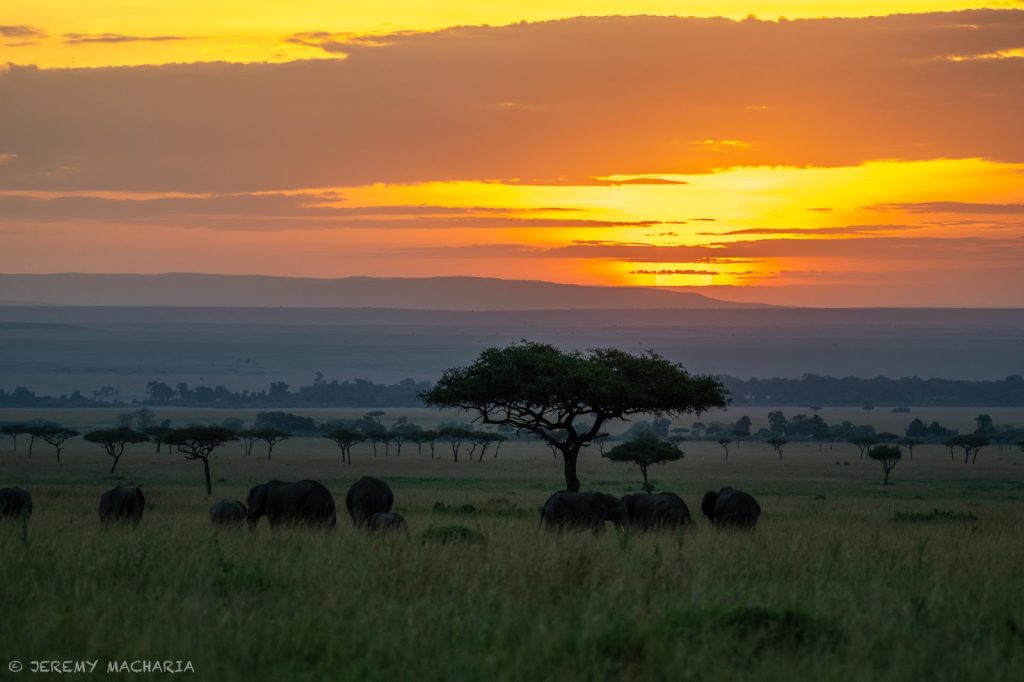
The Kenya sundowner is one of the finest rituals in African travel. At 17:30, the afternoon game drive slows. Your guide pulls off the track onto a flat-topped acacia ridge or a granite kopje with a clear sightline to the west. The vehicle stops. From a cool box in the back, drinks appear — gin and tonic, cold Tusker beer, fresh juice — alongside warm samosas and chapati.
The sun, enormous and impossibly orange, begins its descent toward the horizon. Wildebeest move in silhouette across the plain below. A lion calls somewhere to the north. You sit in the open air of the African bush, a glass in hand, watching the sky change colours in a sequence that no painter has ever entirely captured, and you understand — perhaps for the first time — what people mean when they say Kenya changes you. Sense of Adventure builds sundowners into every game drive itinerary because they are not a luxury add-on. They are the point.
Every Drive Ends With a Sundowner
Sense of Adventure builds sundowners, bush breakfasts, and every magic-hour bush experience into your Kenya safari as standard. Contact us to start planning.
How a Kenya Sundowner Works
A Kenya sundowner is simple: you pause at the end of the afternoon game drive, step down from the vehicle at a safe viewpoint and share a drink while the sun sets. Because Kenya sits on the equator, sunset falls at roughly the same time all year, usually between about 18:15 and 18:45, and darkness follows quickly. Most guides stop 30 to 40 minutes before sunset so there is time to set up, enjoy the light and pack away.
Where you are staying changes the timing. National parks and reserves have strict rules about when vehicles must be back at camp or out of the park, often around 18:30, so inside them your guide will choose a spot close to your lodge. In private conservancies the rules are more flexible, so a sundowner can run past dark and lead straight into a night drive. That is one reason we often recommend at least a few nights in a conservancy.
The Seven Bush Experiences That Define a Kenya Safari
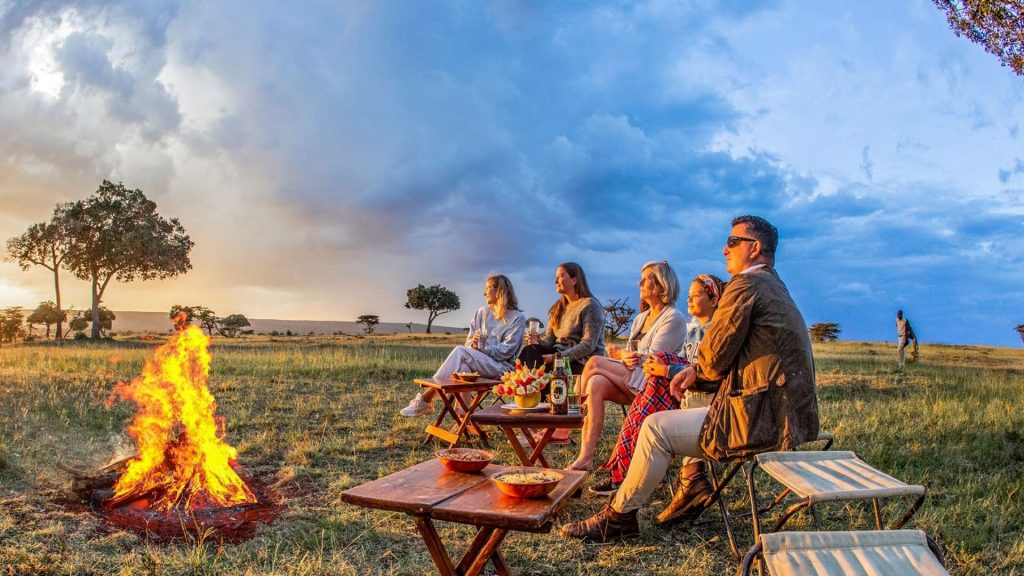
The Kenya sundowner is the best known of these rituals, but it is only one of seven bush experiences that give a safari its rhythm, from dawn breakfasts to campfire nights.
The Sundowner — Drinks at Dusk in the Bush
The classic Kenya sundowner stops the afternoon game drive 30–40 minutes before sunset on a ridge, a termite mound, or a rocky outcrop with a clear western horizon. The guide sets up a folding table, the drinks come out, and for half an hour you watch the equatorial sun fall. At this latitude, sunsets are fast and vertical — the sun drops like it means business — and the colours that follow, the afterglow pinking the underside of the clouds and the Rift Valley or escarpment turning purple, are the most purely beautiful half hour of any Kenya day. Sense of Adventure selects sundowner spots in each park for their specific combination of view, wildlife, and accessibility.
Bush Breakfast — Eating in the Wild at Dawn
The morning game drive begins in the dark and reaches its peak wildlife productivity in the first two hours of daylight. Rather than returning to camp for breakfast, Sense of Adventure arranges bush breakfasts in the field — a folding table set on a flat piece of ground near a river or waterhole, eggs cooked on a camp stove, fresh fruit and coffee, while the wildlife continues around you. Bush breakfasts are consistently rated the most memorable meals of any Kenya safari. The elephant that investigates the table from 40 metres. The lions audible from beyond the tree line. The hornbills queuing for scraps.
Bush Picnic Lunch — The Full-Day Drive Experience
The full-day game drive — leaving camp at 05:30 and returning at 18:30 — is the most intensive Kenya safari experience. Lunch is served in the field, either at a designated picnic site or on a flat rock in the conservancy: cold cuts, bread, salads, and fruit, eaten in the shade while the midday heat shimmers across the grass and the zebras graze five metres from the lunch table. The full-day format is available in the private conservancies and is Sense of Adventure’s recommendation for guests who want to maximise their time in the bush, especially during the Great Migration river crossing period.
Night Game Drive — The Nocturnal Bush
The bush after dark is a completely different ecosystem. Everything changes: the hunters become different animals, the prey becomes different prey, and the sounds shift from the daytime chorus of birds to the night’s more urgent and disquieting repertoire — hyena whoops, lion roars that carry five kilometres, the bark of a leopard in the riverine forest. Sense of Adventure’s night drives use a handheld spotlight to find aardvarks, genets, civets, nightjars, and occasionally pangolins. Night drives are available in the private conservancies — Ol Kinyei, Mara North, Naboisho — and at several northern Kenya lodges. They cannot be done inside the national reserve, which makes conservancy accommodation the prerequisite.
Walking Safari — The Bush at Ground Level
A walking safari reverses the power dynamic of the game drive entirely. In a vehicle, you are elevated, enclosed, and separated from the ecosystem. On foot, you are in it. Your guide — an armed ranger with years of bush tracking experience — reads the landscape at pace: fresh tracks, broken grass, the smell of a recent predator. Every sense is engaged. The distance you cover matters less than the depth you gain — two hours on foot in the bush produces an understanding of the ecosystem that two weeks in a vehicle cannot replicate. Available at Lewa, Samburu, and selected Mara conservancies.
Hot Air Balloon — The Masai Mara From Above
A hot air balloon over the Masai Mara at dawn is one of the most visually extraordinary experiences in African travel: the Mara River in loops of silver below, the wildebeest herds as brown rivers across the plain, the Oloololo escarpment lit copper by the rising sun. The flight lasts approximately one hour and lands in the bush for a champagne bush breakfast served on white linen. Sense of Adventure books balloon safaris for guests staying in the Mara and can arrange the full experience — flight, breakfast, and vehicle transfer back to camp — as part of a 3-night Mara itinerary.
Campfire Evening — Africa’s Original After-Dark Ritual
The campfire after the evening game drive is where a Kenya safari day is processed and consolidated. The fire is lit at sunset. Dinner is served in the open air or in a boma under the stars. The guide sits with guests and talks through the day’s sightings, the animal behaviour, the ecological questions that the bush raised. The sky at altitude in Kenya — away from any city glow — is a spectacular unfiltered view of the Milky Way. The hyenas call from beyond the camp perimeter. Someone pours another glass. Nobody checks their phone.
The Best Sundowner Locations in Kenya
| Location | Sundowner Setting | What You Watch |
|---|---|---|
| Masai Mara | Oloololo escarpment ridge | Plains, river, wildebeest herds, the escarpment |
| Amboseli | Open plain facing Kilimanjaro | Kili turning pink, elephant silhouettes |
| Samburu | Ewaso Ng’iro riverbank | River, elephants bathing, northern plains |
| Lake Naivasha | Boat on the lake | Rift Valley walls, hippos, fish eagles |
| Lewa Conservancy | Kopje with Mount Kenya view | Mountain, Grevy’s zebra, conservancy plains |
The Kenya sundowner is not only a bush tradition. On the coast, a sunset sail on a wooden dhow gives the same ritual a Swahili setting; our sunset dhow cruise guide explains how it works. On Lake Naivasha, an evening boat ride among hippos and fish eagles is a gentle alternative, covered in our Lake Naivasha boat safari guide.
What You Drink and Eat at a Sundowner
The drinks box usually holds cold beer such as Tusker, gin and tonic, wine, soft drinks and juice. Many guides can also mix a dawa, a Kenyan cocktail of vodka, lime and honey whose name means “medicine” in Swahili. Snacks vary by camp: samosas, nuts, crisps, small skewers or local bites. Tell us in advance if you prefer alcohol-free drinks, have food allergies or follow a special diet, and the camp will pack accordingly.
At many mid-range and luxury camps, sundowner drinks are included in the rate, while at others they are charged as extras. Our guide to full board versus all-inclusive safari rates explains the difference, and we always confirm what is included before you book.
Kenya Sundowner Etiquette and Safety
Simple rules for a safe Kenya sundowner
- Wait for your guide. Only step down from the vehicle when your guide says the area is clear, and stay close to it.
- Keep voices low. Wildlife is often nearby at dusk. Quiet conversation lets you hear the bush wake up for the night.
- Take everything back. Bottle tops, cans and wrappers all go back in the cool box.
- Drink sensibly. You will be back in the vehicle on bumpy tracks soon, and dinner is usually not far away.
- Cover up. Mosquitoes appear at dusk, so put on long sleeves and repellent before the light fades.
Photography Tips for Golden Hour
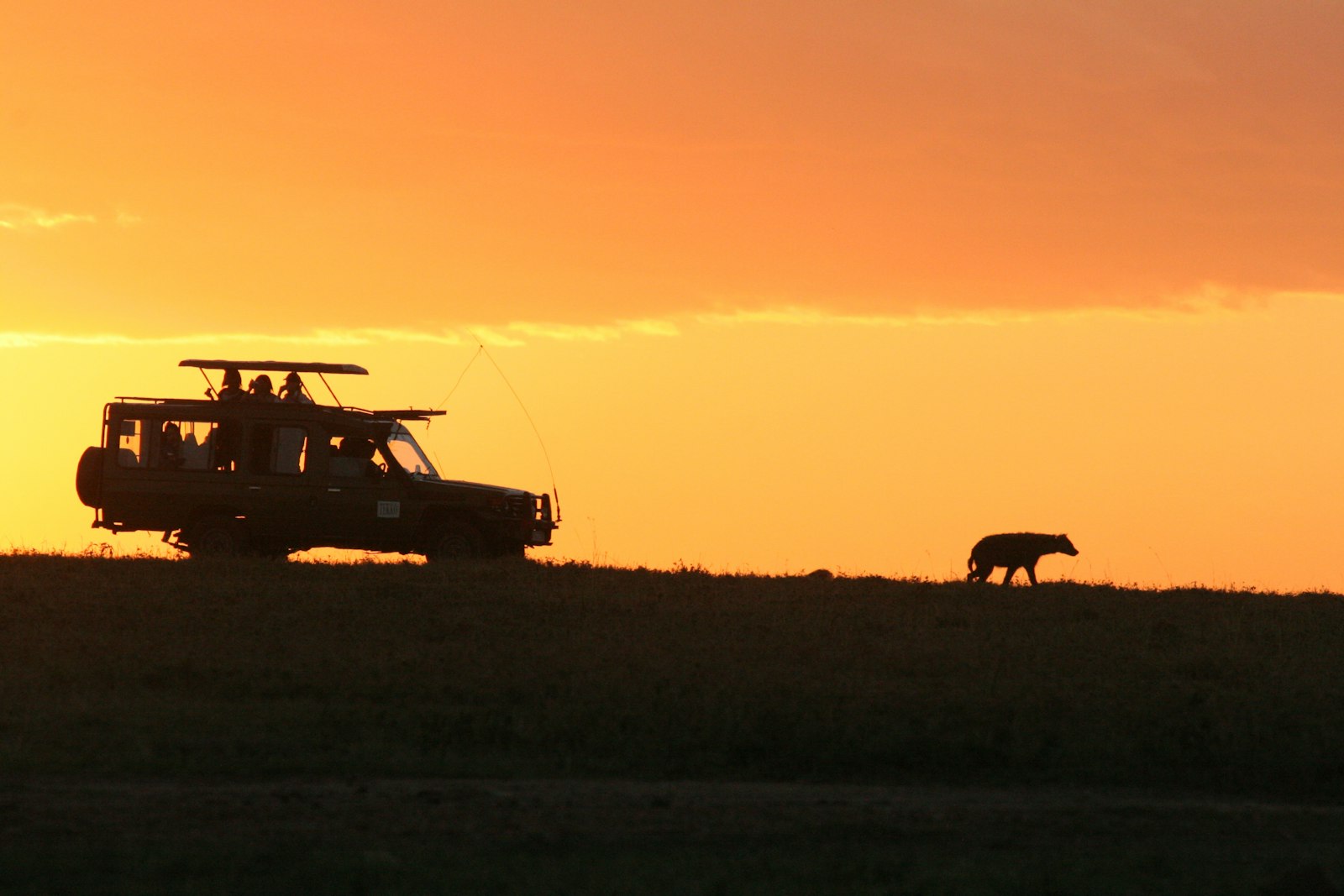
The half hour before sunset is the best light of the day for photography. Shoot animals and acacia trees as silhouettes against the bright sky, and set exposure for the sky rather than the ground. A beanbag on the vehicle door keeps a long lens steady. After the sun drops, keep shooting for 10 to 15 minutes, because the afterglow often brings the richest colours. Phones handle silhouettes well; tap on the brightest part of the sky to lock exposure. Above all, put the camera down for a few minutes during your Kenya sundowner and simply watch.
What to Wear and Bring
Temperatures drop quickly once the sun goes down, especially in the Masai Mara, Laikipia and other high areas. Bring a fleece or light jacket, long trousers and closed shoes for the evening. Add a small torch or headlamp, insect repellent and a scarf against dust. Our safari packing list covers the full kit, and our hour-by-hour guide to a typical day on safari in Kenya shows how sundowners fit into the daily rhythm.
Best Time of Year for Sundowners
You can enjoy a Kenya sundowner in every month. The long dry season from about June to October and the shorter dry spell from January to February bring clear skies and reliable sunsets, and in the Mara the Great Migration may be in view from about July to October. The rainy months of April, May and November bring more cloud and the odd shower, but also some of the most dramatic skies of the year and fewer vehicles. For a month-by-month view, see our Kenya weather by month guide.
Safaris With Sundowners: Packages and Prices
Kenya sundowner trips from our current packages
Sundowners are part of almost every safari we run. These trips are especially good for magic-hour experiences, with prices per person in US dollars:
- 3 Day Masai Mara Safari Package — from USD 207, a short road safari with afternoon drives on the Mara plains.
- Masai Mara Honeymoon Safari (4 days) — from USD 1,900, with private sundowners and romantic evenings.
- Celebration Safari – Masai Mara Conservancy (5 days) — from USD 2,950, ideal for birthdays and anniversaries in a conservancy where evenings can run late.
- Fly-in Masai Mara Luxury Safari (4 days) — from USD 3,200.
- Laikipia & Masai Mara Walking Safari (7 days) — from USD 4,200, combining walks, sundowners and conservancy nights.
Balloon flights, private bush dinners and special set-ups are usually priced separately, so check current rates with us. For more ideas, browse our Masai Mara safari packages, or see how a private Kenya safari lets you choose exactly where and when to stop. Park rules and fees are set by the Kenya Wildlife Service and county authorities, and Magical Kenya, the official tourism site, has more background on the parks.
The Best Moment of Your Day Is the Last One
Sense of Adventure designs every Kenya itinerary around moments — sundowners, bush breakfasts, campfire evenings. Contact us and tell us what experience matters most to you.
Frequently Asked Questions — Kenya Sundowners & Bush Experiences
Is a sundowner included in a standard Kenya safari?
At most mid-range and luxury camps, sundowners during the afternoon game drive are standard and included in the all-inclusive rate. At budget camps and some mid-range lodges, they may require a nominal additional charge for drinks. Sense of Adventure confirms sundowner inclusion for every property before booking and will flag any additional costs clearly. The experience itself — stopping the vehicle, the setting, the ritual — is always included in how we plan your drive.
What is a bush breakfast and how is it arranged?
A bush breakfast is a meal served in the field during or after the morning game drive — usually at a designated spot with a scenic view near a waterhole, river, or prominent landmark. The camp kitchen prepares food in advance, the guide carries it in the vehicle, and the table is set up on site. At luxury camps, bush breakfasts are arranged with advance notice; at some ultra-luxury properties they are a standard morning format. Sense of Adventure arranges bush breakfasts for all guests who request them.
Are night game drives safe in Kenya?
Night drives in the private conservancies are conducted by experienced guides who know the conservancy’s terrain intimately in the dark, and who carry appropriate equipment. The vehicles used for night drives have spotlights and often reinforced roofs for standing. The primary wildlife risk — unexpected encounters with buffalo or elephant at close range — is managed through slow speeds and constant guide vigilance. Night drives are a standard and safe activity at all the conservancies where Sense of Adventure operates them.
Can I do a hot air balloon safari without being a morning person?
No — balloon safaris require a 05:00 departure to launch at first light. The balloon inflates in the predawn darkness and launches at sunrise. This is non-negotiable. However, guests who would normally struggle with 05:00 starts consistently report that the balloon experience is the most worth-it early morning of their lives. The champagne bush breakfast afterward provides suitable recovery.
What time does a Kenya sundowner start?
Most sundowners start between about 17:30 and 18:00, around 30 to 40 minutes before sunset. Because Kenya lies on the equator, sunset is close to 18:30 all year. Inside national parks and reserves you need to be back at camp by closing time, so the stop is shorter; in private conservancies it can continue after dark.
Can children join a sundowner?
Yes. Children usually love the stop, and camps pack juice, soft drinks and snacks for them. Keep younger children close to the vehicle and the guide at all times, bring a warm layer as the temperature drops, and use repellent at dusk. Some conservancy camps also run family-friendly bush dinners and campfire evenings.
Is it safe to get out of the vehicle for a sundowner?
Yes, when your guide chooses the spot. Guides pick open ground with good visibility, check the area before anyone steps down and stay alert throughout. Never wander away from the group or the vehicle, follow your guide’s instructions straight away and get back in calmly if asked.