
Laikipia Plateau Safari Guide: The Laikipia Plateau is Kenya’s most underrated safari destination, a 9,500 km² elevated plain north of Mount Kenya at 1,700–2,300 metres, where private conservancies and community ranches hold the largest populations of endangered species outside of the protected national parks. Laikipia holds Kenya’s largest population of black and white rhinos, the highest density of wild dogs in East Africa, a growing lion population, and endemic northern species including Grevy’s zebra and reticulated giraffe, all accessible in a landscape where night drives, walking safaris, horseback safaris, and camel-back safaris are standard across all conservancy properties, not premiums reserved for specific camps.
Sense of Adventure includes Laikipia in extended Kenya circuits for guests who want more than the standard Mara-and-Amboseli loop, and who specifically want the most exclusive and least-crowded Kenya safari environment available.
✅ Laikipia Plateau Safari Guide: The Quick Answer
- Where: a high, cool plateau north-west of Mount Kenya, made up of private and community conservancies rather than one national park.
- Why go: black and white rhinos, Grevy’s zebra, reticulated giraffe, a real chance of wild dogs, and few other vehicles.
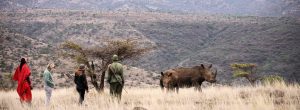
- What makes it different: walking safaris, night drives, horseback and camel safaris are allowed on many conservancies.
- How long: 3 nights on its own, or 3 nights paired with 3 in the Masai Mara.
- Getting there: about 1 hour by light aircraft from Nairobi, or roughly 4 hours by road via Nanyuki.
- Price guide: our 5-day Laikipia and Loisaba Conservancy Luxury Safari starts from USD 3,600 per person.
Reading this Laikipia Plateau safari guide for a first or second Kenya trip? Tell us the wildlife you most want to see and we will suggest the right conservancy.
Find My Laikipia ConservancyWhy Laikipia Is Different From the Mara and Amboseli
Laikipia Plateau Safari Guide: a different kind of Kenya safari
The Masai Mara and Amboseli are Kenya’s best-known parks for genuine reasons: extraordinary wildlife, accessible infrastructure, and the specific experiences (river crossings, elephant families under Kilimanjaro) that define the Kenya safari brand. However, the Laikipia Plateau Safari Guide reveals a very different yet equally exceptional safari destination.
Laikipia is different in character rather than quality. The landscape is higher, cooler, and more varied, with open grass plains, acacia scrub, riverine forest, and rocky escarpments all within a single day’s drive. The camps are fewer and far more exclusive, with some of Kenya’s most architecturally distinguished safari properties located across the Laikipia region.
Exceptional Wildlife & Conservation Value
The Laikipia Plateau Safari Guide is also defined by its strong conservation focus. The region is home to some of Africa’s most important endangered species populations, including:
- Black rhino
- Grevy’s zebra
- African wild dog
This high concentration of rare species gives every wildlife sighting in Laikipia a deeper conservation meaning. Unlike busier safari parks, encounters here often feel private, purposeful, and highly immersive.
Why Laikipia Stands Apart in Kenya Safaris
While destinations like Maasai Mara National Reserve and Amboseli National Park represent classic Kenya safari experiences, the Laikipia Plateau Safari Guide highlights a more exclusive, low-density, and activity-rich safari alternative.
For travelers seeking space, privacy, adventure, and conservation-driven experiences, Laikipia offers one of the most refined and diverse safari environments in all of Kenya.
Five Laikipia Wildlife Highlights
African Wild Dogs — East Africa’s Best
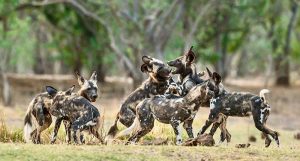
Laikipia holds the highest density of African wild dogs in East Africa. The packs are large (10–25 individuals), well-habituated to vehicles, and actively monitored by conservancy trackers. A wild dog dawn hunt, the coordinated sprint of a full pack across open ground, is one of Africa’s most kinetically exciting predator sightings. Sense of Adventure identifies active pack locations from conservancy intelligence before every Laikipia visit.
Black and White Rhinos — Kenya’s Largest Population
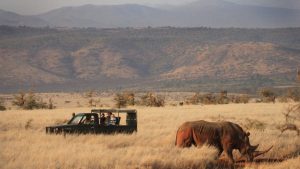
The Lewa-Borana ecosystem in Laikipia holds Kenya’s largest rhino population, with black rhinos in the scrub and white rhinos on the open grassland. The rhinos are tracked daily by conservancy rangers and GPS-monitored. Laikipia rhino encounters are typically closer and less vehicle-crowded than at any other destination in Kenya.
Horseback Safari — Among Lions and Elephants
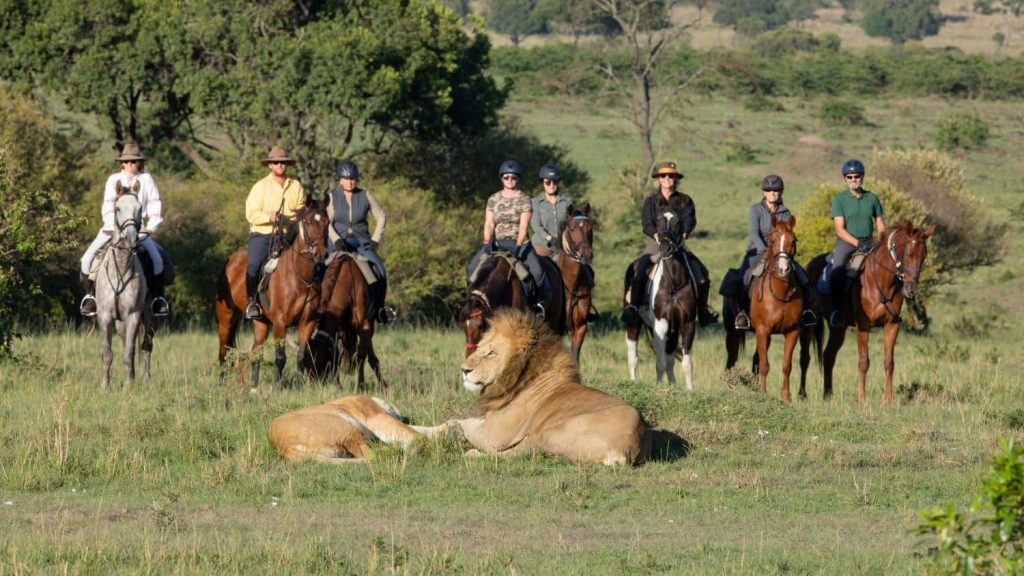
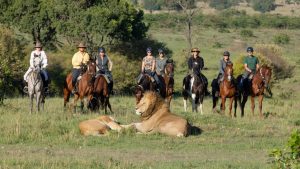
Laikipia’s horseback safaris (available at Ol Malo, Lewa, and several other conservancy properties) allow guests to approach wildlife on horseback, exploiting the fact that wildlife treats horses as natural, non-threatening presences. You can ride to within meters of elephant families and zebra herds on horseback that a vehicle would disturb. It is the most intimate form of Kenyan safari. Sense of Adventure arranges horseback safari experiences for riders of all experience levels.
Grevy’s Zebra — Africa’s Most Endangered Zebra
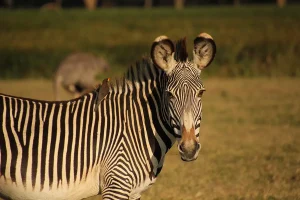
The Grevy’s zebra, larger than the common plains zebra, with tighter striping and large, rounded ears, is restricted almost entirely to northern Kenya and is listed as endangered, with only around 3,000 remaining. Laikipia is one of its last strongholds. Seeing Grevy’s zebra alongside the common zebra in the same landscape makes it immediately apparent how different the two species are, and how threatened the Grevy’s has become.
Mount Kenya Views — Glaciers from the Safari Vehicle
From Laikipia’s elevated plateau, Mount Kenya, 5,199 metres high, with its glaciated peaks standing just south of the equator, is visible on clear mornings as a dramatic backdrop to wildlife sightings. The combination of big game in the foreground and an equatorial glacier in the background produces a visual that is specific to Laikipia and unavailable anywhere else in Kenya.
Laikipia Plateau Safari Guide to the Main Conservancies
Laikipia is not a single park with one gate. It is a patchwork of private ranches, community conservancies and wildlife sanctuaries, each with its own rules, fees and character. This Laikipia Plateau safari guide covers the areas our guests visit most, so you can see how they differ before you choose.
Ol Pejeta Conservancy
Ol Pejeta lies on the equator near Nanyuki, and this Laikipia Plateau safari guide rates it the easiest part of Laikipia to reach by road. It is home to the last two northern white rhinos, a large black rhino population and a chimpanzee sanctuary, and the open plains hold lion, elephant and buffalo. It also works as a long day trip: our Ol Pejeta day safari from Nairobi starts from USD 380 per person.
Lewa and Borana
Lewa and its neighbour Borana share an unfenced landscape on the slopes below Mount Kenya, and Lewa forms part of the Mount Kenya UNESCO World Heritage Site. Both protect black and white rhinos and good numbers of Grevy’s zebra. Our rhino sanctuary lodges guide explains where to sleep closest to them.
Loisaba, Mugie and northern Laikipia
The northern conservancies are drier, wilder and even quieter. Loisaba is known for elephants, night drives and sleeping out under the stars, and wild dogs pass through regularly. Mugie is a working ranch with lions, elephants and kayaking on its dam; read our Mugie Conservancy guide for the detail. In this part of the Laikipia Plateau safari guide, think fewer vehicles and longer drives between sightings.
Solio
Solio, between the Aberdares and Mount Kenya, is a private rhino sanctuary with some of the most reliable rhino viewing in the country. It now has a luxury lodge, covered in our Marriott Solio Lodge guide.
What You Can Do in Laikipia That You Cannot Do in the Mara
The biggest reason to read a Laikipia Plateau safari guide is the range of activities. National reserves such as the Masai Mara limit you mostly to daytime vehicle game drives. Many Laikipia conservancies set their own rules, so they can offer experiences that bring you closer to the land.
- Guided walks: walk with a trained guide and an armed ranger, reading tracks and learning the small details you miss from a vehicle.
- Night drives: with a spotlight you may find aardvark, striped hyena, genet, bush babies and hunting leopard.
- Horseback safaris: for confident riders, an unforgettable way to move among zebra and giraffe.
- Camel walks: a gentle, family-friendly way to explore, often with Samburu or Maasai handlers.
- Rhino tracking: on some conservancies you can join rangers to find rhinos on foot.
- Community visits: many conservancies share income with neighbouring communities, and visits can be arranged respectfully.
Not every activity is available at every property, and some have age limits or riding requirements. When you use this Laikipia Plateau safari guide to enquire, we check what your chosen camps allow and build the days around it. Our Laikipia horseback safari is designed for riders, while the Laikipia and Masai Mara walking safari focuses on guided walks.
Combining Laikipia With the Mara, Samburu or the Coast
The key decision in any Laikipia Plateau safari guide is where to put Laikipia in your route. Most guests use it in one of three ways. The first is the classic pairing: three nights in Laikipia and three in a Masai Mara conservancy, giving you rhinos, rare northern species and walking first, then big cats and, from July to October, the migration.
The second is a northern loop that adds Samburu, just to the north, for gerenuk, Beisa oryx and Somali ostrich. Our Kenya northern circuit itinerary shows how the north fits together by road. The third option in this Laikipia Plateau safari guide is a bush-and-beach trip that flies from Laikipia to the coast for a few days of rest.
Laikipia Plateau safari guide tip: road or fly-in?
Road trips are better value and let you stop at the equator and Nanyuki on the way. Flying saves a long day in the vehicle and suits shorter trips or the northern conservancies, which are further from tarmac. Many guests drive in and fly out. For first-timers, our private Kenya safari page explains how a road trip with your own guide works.
Wild dogs, black rhinos, horses: where should Laikipia sit in your route?
Tell us how many nights you have and whether you also want the Mara, Samburu or the beach. We will turn this Laikipia Plateau safari guide into a route that fits your dates.
Build My Laikipia RouteBest Time to Visit: Laikipia Plateau Safari Guide by Season
Laikipia is a year-round destination because its wildlife is resident rather than migratory. The seasons still change the experience, and this Laikipia Plateau safari guide sums them up below.
| Months | Conditions | Good for |
|---|---|---|
| January to March | Dry, warm days, clear Mount Kenya views | Game viewing, walking, photography |
| April to May | Long rains, green landscapes, some camps close | Value and solitude for flexible travellers |
| June to October | Dry, cool mornings, busiest months | Pairing with the Mara migration |
| November to December | Short rains, then drying out before Christmas | Quieter trips and festive breaks |
As this Laikipia Plateau safari guide notes, the plateau sits high, so mornings and evenings are cool all year, especially from June to August. Afternoon showers in the wet months rarely last all day, and the green season brings newborn animals and excellent birding.
Laikipia Safari Costs: Sample Trips and Prices
Laikipia is one of Kenya’s more exclusive regions because most camps are small and conservancy fees support conservation. All prices in this Laikipia Plateau safari guide are “from” prices per person from our own trip pages, and every quote is confirmed in writing.
| Trip | Length | From (per person) |
|---|---|---|
| Ol Pejeta Day Safari from Nairobi | 1 day | USD 380 |
| Northern Kenya Cultural Safari: Samburu and Laikipia | 5 days | USD 1,500 |
| Laikipia and Loisaba Conservancy Luxury Safari | 5 days | USD 3,600 |
| Laikipia Horseback Safari | 5 days | USD 3,900 |
| Ol Pejeta and Masai Mara Luxury Conservancy Safari | 6 days | USD 3,900 |
| Laikipia and Masai Mara Walking Safari | 7 days | USD 4,200 |
| Multigenerational Family Fly-in Safari: Laikipia and Masai Mara | 7 days | USD 4,400 |
| Luxury Fly-in Safari: Masai Mara, Laikipia and Lamu | 12 days | USD 8,900 |
Prices change with season, camp choice and group size. Conservancy fees are set by each property and can change, so we use the fees that apply to your exact dates. For a wider view of budgets, see our Kenya safari cost guide.
When to book a Laikipia safari
Camps here are small, often with only a handful of tents, so they fill quickly; the booking advice in this Laikipia Plateau safari guide is simple. For June to October and the Christmas holidays, book nine to twelve months ahead. For January to March, four to six months is usually enough, and green-season trips can often be arranged at shorter notice.
Small camps, few tents: check your Laikipia dates now
Ready to act on this Laikipia Plateau safari guide? Send us your travel month and group size. We will check which conservancy camps still have space and send a written quote within 24 hours.
Check Laikipia Camp AvailabilityGetting to Laikipia
This Laikipia Plateau safari guide starts with the road. The drive from Nairobi to Nanyuki takes around three and a half to four hours on good tarmac, passing coffee and pineapple farms and the slopes of Mount Kenya. From Nanyuki, Ol Pejeta is close by, while Lewa, Borana and the northern conservancies need another one to three hours, partly on dirt roads.
By air, scheduled and charter light aircraft fly from Nairobi’s Wilson Airport to Nanyuki, Lewa and several conservancy airstrips in about an hour. Laikipia also links well by air to Samburu and the Masai Mara, so you can fly between regions without returning to Nairobi. Soft bags are required on these flights, with weight limits of around 15 kg per person on most routes.
Entry and planning checks
Every visitor needs a Kenya Electronic Travel Authorisation, applied for only through the official Kenya eTA portal. For national parks and reserves on your route, the Kenya Wildlife Service publishes current fees, and the national tourism board site Magical Kenya has more ideas for the Mount Kenya region.
What to Pack for the Laikipia Plateau
Pack for altitude. Early mornings and night drives can feel cold, while midday sun is strong. This Laikipia Plateau safari guide recommends layers rather than bulk.
- Warm layer: a fleece or light down jacket for dawn drives and evenings by the fire.
- Walking shoes: comfortable, broken-in shoes or light boots in muted colours for bush walks.
- Riding kit: if you plan to ride, long trousers, closed shoes with a small heel and gloves; helmets are usually provided.
- Sun protection: a wide-brimmed hat, sunglasses and high-factor sunscreen for equatorial light.
- Binoculars: essential for spotting rhinos and Grevy’s zebra at a distance.
Frequently Asked Questions — Laikipia Plateau Safari Guide
How do I get to Laikipia?
Laikipia is about 1 hour by light aircraft from Wilson Airport to the conservancy airstrips (Nanyuki, Lewa Downs, Ol Pejeta airstrip). By road, it is 3.5–4 hours from Nairobi via Nanyuki. Most Sense of Adventure Laikipia circuits use charter flights to maximize time in the conservancy.
What is the best time to visit Laikipia?
January–March and June–October are the driest periods, with the best game-drive conditions. Laikipia, at a higher altitude than the Mara (1,700–2,300m vs 1,500m), is cooler year-round; morning temperatures can drop to 10°C in July–August. Wildlife is present and good year-round. Sense of Adventure advises on the specific advantages of the month for Laikipia.
How does Laikipia compare to the Masai Mara?
The Mara wins for sheer wildlife volume and the migration spectacle. Laikipia wins for exclusive activities (horseback riding, camel rides, multi-day walks), a high density of endangered species (wild dogs, Grevy’s, black rhinos), and the specific quality of a cooler, less-visited, more varied landscape. Laikipia is the natural complement to a first-time Mara visit, not a replacement for it. Sense of Adventure’s most popular extended Kenya circuit pairs 3 nights in the Mara conservancy with 3 nights in Laikipia.
Is Laikipia good for a first safari?
Yes, and this Laikipia Plateau safari guide recommends pairing it with the Masai Mara. Laikipia gives first-timers rhinos, rare northern species and activities such as guided walks, while the Mara adds big cats and, from July to October, the migration. On its own, Laikipia suits travellers who value privacy and variety more than sheer animal numbers.
Can children go on a Laikipia safari?
Yes. Many Laikipia conservancies welcome families and offer camel walks, short bush walks and family tents. Age limits usually apply to walking, riding and some night activities, often from around 12 years. Our multigenerational fly-in safari through Laikipia and the Masai Mara starts from USD 4,400 per person.
Do I need riding experience for a horseback safari?
For a multi-day horseback safari among wildlife you should be a confident rider, able to trot and canter in open country, because animals can move suddenly. Beginners can often enjoy a short, gentle ride at a ranch. As with every trip in this Laikipia Plateau safari guide, we check each property’s riding rules and weight limits before you book.
Discover the quiet side of Kenya beneath Mount Kenya
Turn this Laikipia Plateau safari guide into your own trip. Tell our Nairobi planners your dates, who is travelling and whether you want walking, riding or rhinos most. We will send a day-by-day plan with clear prices in writing.
Plan My Laikipia Safari Call Our Safari Planners
Rather email? Write to reservations@senseofadventure.co.ke
Escape. Explore. Discover.