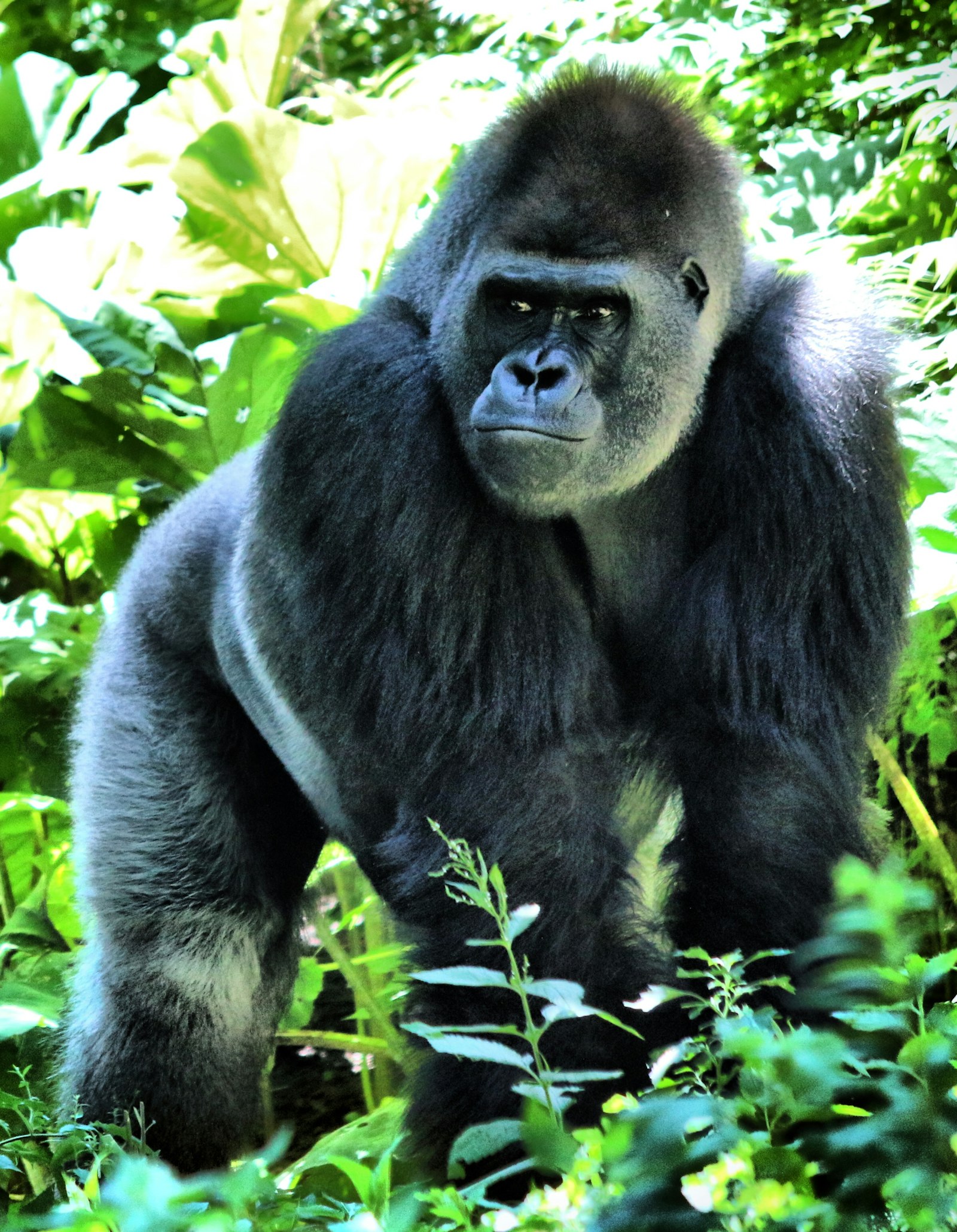
This Uganda gorilla trekking guide starts with a simple fact: Uganda is the most affordable route to a mountain gorilla encounter on earth, and for many guests the most atmospheric. Bwindi Impenetrable National Park, a UNESCO World Heritage forest in southwestern Uganda, holds close to half of the world’s remaining mountain gorillas in one of the most ancient and intact Afromontane forests in Africa. The forest is genuinely impenetrable in places, dense, layered and dripping with moss, and pushing through it to find a gorilla family at rest carries a sense of discovery that the more organised Rwanda trekking set-up does not always replicate.
At USD 800 per permit (versus Rwanda’s USD 1,500), Uganda delivers the same gorilla encounter, the same profound hour-long connection with a mountain gorilla family, for USD 700 less per permit. Sense of Adventure arranges Uganda gorilla treks as standalone Uganda experiences and as part of combined East Africa circuits including Kenya, Rwanda and Zanzibar. Use this Uganda gorilla trekking guide to plan permits, sectors, timing and what to pack.
Uganda Gorilla Trekking — USD 800 Permits, Same Gorillas
Sense of Adventure arranges Uganda gorilla permits, Entebbe flights, Bwindi lodge accommodation, and full East Africa circuits combining Uganda with Kenya or Rwanda. Contact us today.
Bwindi Impenetrable Forest — The Gorilla’s Home
Bwindi is one of Africa’s most biologically diverse forests — a UNESCO World Heritage Site containing over 120 mammal species, 350+ bird species, and more tree species per hectare than almost anywhere in mainland Africa. The forest’s age and ecological integrity are palpable: ancient trees draped in moss and orchids, clear forest streams over volcanic rock, and an atmosphere of deep biological complexity that makes you feel very small and very fortunate to be inside it. Bwindi has four gorilla trekking sectors — Buhoma, Ruhija, Rushaga, and Nkuringo — each with habituated gorilla families, each with different trail character, accommodation quality, and drive times from the park entrance.

Uganda Gorilla Trekking Guide: Permits, Costs and Booking
Every trek in Bwindi needs a gorilla permit issued by the Uganda Wildlife Authority (UWA). The standard permit for foreign non-residents is USD 800 under the UWA tariff in force since July 2024, and it covers your ranger-guided trek, park entry for the day and one hour with a habituated gorilla family. The Gorilla Habituation Experience costs USD 1,500. UWA reviews its tariffs from time to time, so check current rates with us before you budget.
Each habituated family can be visited by a maximum of eight people per day, which means permits for popular months sell out early. For June to September and the December holidays, we suggest booking three to six months ahead, and longer for larger groups who want to trek together. Permits are tied to a specific sector and date, so your lodge should be chosen to match the sector of your permit, not the other way round.
Beyond the permit, your main costs are transport (road or a domestic flight), lodge nights near your trekking sector, an optional porter on the day and tips for guides and porters. For a wider view of what a combined East Africa trip costs, see our honest guide to how much an African safari costs.
Bwindi’s Four Trekking Sectors Compared
Choosing the right sector shapes your whole trip. All four have habituated families, and the gorilla hour is the same everywhere, but the terrain, drive times and lodge choices differ.
- Buhoma (north): the original trekking sector, with the widest choice of lodges and good access from Queen Elizabeth National Park. A natural fit for guests coming from the north or flying into Kihihi.
- Ruhija (east): higher and cooler, with excellent birding along the trail to Mubwindi Swamp. Fewer lodges and a quieter feel.
- Rushaga (south): the sector with the most habituated families and the base for the Gorilla Habituation Experience. Closest to the Rwanda border, which suits guests flying into Kigali.
- Nkuringo (south-west): dramatic views towards the Virunga volcanoes, but the steepest terrain. Best for fit, confident walkers.
If you are unsure, tell us your fitness level, budget and where you are flying in from, and we will recommend the sector and family that fit best.
Five Reasons to Choose Uganda for Gorilla Trekking
The Permit Is USD 700 Less Than Rwanda
A group of four saves USD 2,800 on permits alone by choosing Uganda over Rwanda for the same gorilla trek experience. The savings fund extra nights of accommodation, a Zanzibar beach extension, or a Queen Elizabeth National Park add-on with lions, hippos and chimpanzees. For budget-conscious guests, the gorilla encounter itself is identical — one hour, a habituated family, extraordinary closeness — and the permit is far more affordable.
Add Chimpanzee Trekking in Kibale Forest
Uganda is the easiest country in which to combine mountain gorilla trekking and chimpanzee trekking in a single itinerary. Kibale National Park, around 5 hours from Bwindi, is famous for one of the highest densities of primates in Africa — with habituated chimpanzee communities that are trekked daily in dense tropical forest. Spending one day with gorillas and another with chimpanzees, comparing the two great apes’ social structures and behaviours in the wild, is one of the great experiences of East Africa. Sense of Adventure designs Uganda itineraries combining both.
The Forest Is More Raw
Bwindi is denser, steeper, and more primeval-feeling than Rwanda’s Volcanoes National Park. Rwanda has better infrastructure and shorter drive times from Kigali; Uganda has a deeper sense of genuine wilderness. Guests who have done both often describe Bwindi as feeling more like true discovery — the forest resists you, and the gorillas appear within it as something entirely wild rather than managed. The experience is not better or worse than Rwanda, but it is different, and for some guests the rawness is precisely what they came for.
Queen Elizabeth National Park — Uganda’s Safari Complement
A few hours’ drive from Bwindi, Queen Elizabeth National Park delivers a classic savannah safari that makes Uganda a complete wildlife destination in its own right. Tree-climbing lions in the Ishasha sector, hippos on the Kazinga Channel boat cruise, elephants, buffalo, and the park’s extraordinary concentration of Uganda kob. Adding 2 nights at Queen Elizabeth to a Bwindi gorilla trek creates a Uganda circuit with a wide range of African wildlife experiences.
Gorilla Habituation Experience — Four Hours Instead of One
Uganda offers an experience unavailable in Rwanda: the Gorilla Habituation Experience (GHEX). For USD 1,500, guests join the research team during the habituation process for a partially habituated gorilla family — spending up to four hours with the group rather than one hour. This is the deepest gorilla immersion available anywhere in the world, and it runs in Bwindi’s southern sectors. Sense of Adventure books GHEX permits for guests wanting the most intensive gorilla research experience possible.
What a Gorilla Trekking Day Looks Like
Trek days start early. After breakfast at your lodge, you are driven to the sector headquarters for a briefing at around 7:30 to 8:00am. Rangers explain the rules, introduce the gorilla families and divide trekkers into groups of up to eight, matching slower walkers with families that are usually closer to the trailhead where possible.
Trackers head out at dawn to locate the family from where it nested the night before, and they radio its position to your ranger. The walk in can take anything from 30 minutes to several hours, along muddy paths and sometimes through thick bush cut open with a machete. Once you reach the gorillas, you leave bags and walking sticks with the porters and spend one magical hour watching the family feed, groom and play.
Afterwards you walk back out, often stopping for a packed lunch in the forest. Most guests are back at the lodge by early or mid-afternoon, with time to rest, join a community walk or simply sit and take in what they have seen.
Gorilla Trekking Rules, Fitness and Porters
The rules protect the gorillas, which share much of our DNA and can catch human illnesses. The key ones are simple: you must be at least 15 years old; you cannot trek if you have a cold, flu or other infectious illness; keep at least seven metres from the gorillas; wear a face mask when asked; do not eat, drink or use flash photography near them; and keep your voice low. If a gorilla approaches you, stay still and follow your ranger’s lead.
You do not need to be an athlete, but you should be comfortable walking for several hours on steep, slippery slopes at altitudes of roughly 1,200 to 2,600 metres. Regular walks or hikes in the weeks before your trip make a real difference. Families with younger children can read our guide to safari minimum ages for children.
We strongly recommend hiring a porter at the trailhead. Porters carry your daypack, give you a steadying hand on steep sections and earn a valuable income for local families, many of whom once depended on the forest for a living. The fee is modest and is paid locally on the day.
Best Time to Go Gorilla Trekking in Uganda
The short answer in any honest Uganda gorilla trekking guide is that trekking runs all year, and the gorillas do not migrate, so you can see them in any month. The drier months of June to September and December to February are the most popular, because trails are firmer and walking is easier. These are also the months when permits sell out first.
The wetter months of March to May and October to November bring more rain, muddier trails and fewer visitors. The forest is lush and green, some lodges offer lower rates, and permits are easier to secure at short notice. Rain in Bwindi usually falls in heavy showers rather than all day, so treks still go ahead. Our best time for safari in Africa calendar compares Uganda with Kenya, Rwanda and Tanzania month by month.
What to Pack for Bwindi
Uganda Gorilla Trekking Guide Packing Checklist
- Waterproof hiking boots with good grip, already worn in
- Long trousers and a long-sleeved shirt in neutral green, brown or khaki
- A light waterproof jacket, as rain is possible in any month
- Gardening gloves to grip vines and avoid stinging nettles
- Gaiters, or socks pulled over trouser bottoms to keep out ants
- A small daypack with a rain cover, two litres of water and snacks
- A camera with spare batteries (no flash) and a dry bag for electronics
- Insect repellent, sunscreen, a hat and any personal medicines
- Your passport and printed permit details, which are checked at the briefing
Walking sticks are usually handed out at the trailhead. Evenings in Bwindi can feel cool at altitude, so a fleece or warm layer is useful at the lodge.
Uganda Gorilla Trekking Packages
Every package below follows the advice in this Uganda gorilla trekking guide, and we can tailor each one to your dates and budget:
- Uganda Bwindi Gorilla Trek (3 Days), a short, focused trip for guests with limited time.
- Uganda Gorillas & Chimps Safari (5 Days), combining Bwindi with chimpanzee trekking.
- Uganda Wildlife & Gorillas Safari (7 Days), adding savannah game drives and boat cruises.
- Gorillas & Savannah – Rwanda, Uganda & Kenya (11 Days), our full East Africa primate and safari circuit.
Each package page shows what is included and the current price. Send us your dates on WhatsApp and we will check permit availability before you commit.
Health, Entry and Safety Essentials
No Uganda gorilla trekking guide is complete without the paperwork. Uganda no longer requires a yellow fever certificate for entry (the rule was removed in October 2026), but the vaccine is still recommended, and Kenya, Rwanda, Tanzania or your airline may ask for proof when you travel on from Uganda. You will need a visa, usually applied for online before you travel. Malaria is present, so speak to a travel clinic about prevention and read the World Health Organization malaria guidance. Entry rules can change, so always check the latest UK Foreign Office travel advice for Uganda or your own government’s equivalent before booking.
Comprehensive travel insurance that covers hiking at altitude and medical evacuation is essential. To learn more about why Bwindi is protected, see its UNESCO World Heritage listing.
Combining Uganda With the Kenya Circuit
Entebbe (Uganda’s main airport) is around 1 hour 15 minutes’ flying time from Nairobi. Sense of Adventure builds Uganda into East Africa circuits as a pre- or post-Kenya extension: gorillas and chimpanzees in Uganda, then the Masai Mara or Amboseli for the classic Kenya safari. The combination delivers every major East African wildlife experience — primates, plains game, and the Big Five — in 10–14 days. For the full permit comparison between Rwanda and Uganda, read our gorilla permits guide. For Rwanda’s alternative, see our Rwanda gorilla trekking guide.
Gorillas. Chimps. Tree-Climbing Lions. One Circuit.
Sense of Adventure designs complete Uganda wildlife circuits — Bwindi gorillas, Kibale chimps, Queen Elizabeth safari — and connects them seamlessly to Kenya and Zanzibar. Contact us today.
Frequently Asked Questions — Uganda Gorilla Trekking
Which is better for gorilla trekking — Uganda or Rwanda?
Uganda is the better value choice: USD 800 permit (vs USD 1,500 in Rwanda), an easy chimps-and-gorillas combination, rawer forest experience, and the exclusive Gorilla Habituation Experience. Rwanda is better for infrastructure, shorter drive times, and premium lodge options. Both deliver a genuine, hour-long mountain gorilla encounter. Our gorilla permits comparison guide covers every dimension of this choice.
How do I get from Nairobi to Bwindi?
Fly Nairobi to Entebbe (about 1 hour 15 minutes, multiple daily flights), then either drive to Bwindi (a long day of roughly 8–10 hours) or take a domestic flight to Kihihi or Kisoro airstrips, which cuts the final road journey to 1–2 hours. Guests connecting through Kigali in Rwanda can reach the southern sectors in around 4–5 hours by road. Sense of Adventure arranges all transfers.
What should I wear for gorilla trekking in Bwindi?
Long-sleeved shirts, long trousers, and waterproof hiking boots. The forest floor is often wet and steep. Gardening gloves protect hands from stinging nettles on the trail. A light rain jacket is essential — Bwindi receives rain year-round. Gaiters help keep trousers dry in deep vegetation. Sense of Adventure sends a comprehensive equipment list to all Uganda guests.
Is gorilla trekking in Uganda safe?
Gorilla trekking in Bwindi operates under strict ranger escort with armed rangers on every trek. The habituated gorilla families are accustomed to human presence and are not aggressive. The primary physical risk is the terrain — the forest is steep and occasionally slippery. Sense of Adventure assesses fitness levels and advises on appropriate sectors for each guest’s capability.
What is the minimum age for gorilla trekking in Uganda?
The minimum age is 15 years, and the rule is applied strictly at the briefing, so bring passports for teenagers. Younger children cannot trek, but families can still visit Bwindi together: children can join community walks or nature trails while adults trek, and the whole family can enjoy safari activities in nearby parks.
How far in advance should I book a Uganda gorilla permit?
Book three to six months ahead for June to September and the Christmas period, and earlier for groups of four or more who want to trek with the same family. In the wetter months, permits are often available at a few weeks’ notice. We check live availability with UWA before taking your deposit, so you never pay for a trek we cannot secure.
How hard is gorilla trekking in Bwindi?
Difficulty depends on the family and the day. Some treks reach the gorillas in under an hour; others take three or four hours each way on steep, muddy slopes at altitude. Anyone who can walk for several hours with breaks can usually manage, especially with a porter and walking stick. Tell us about your fitness so we can suggest the right sector.