
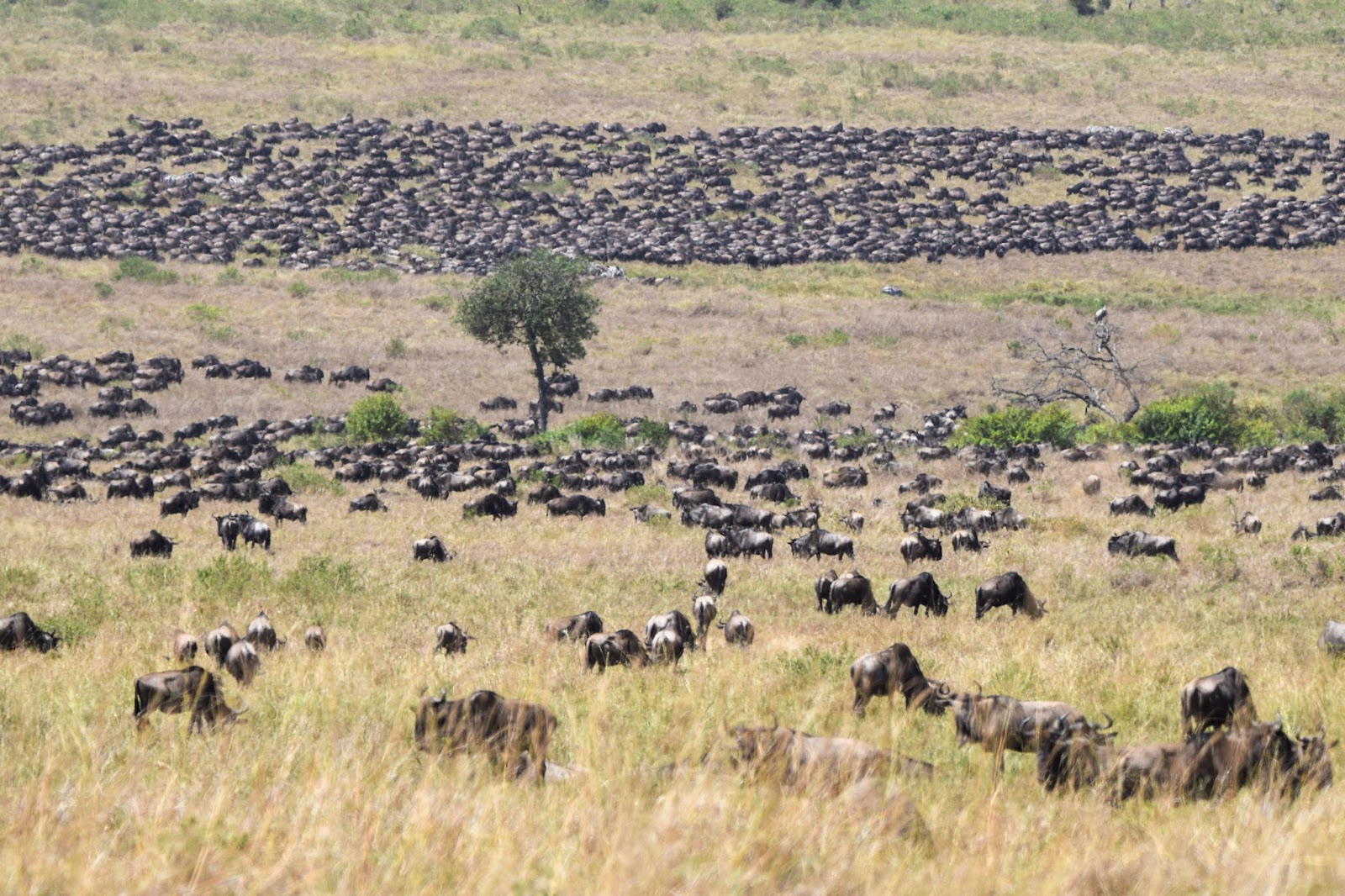
Masai Mara buffalo rarely headline a safari brochure, yet seasoned guides will tell you plainly that the Cape buffalo is the Big Five member most likely to actually charge a vehicle or a person on foot — and that respect, not indifference, is the correct response to every sighting. Herds several hundred strong move across the reserve’s plains like a single dark, dust-raising organism, calves tucked safely at the centre while battle-scarred old bulls patrol the edges. Then there are the loners: “dagga boys,” retired males expelled from herd life, wallowing alone in mud (dagga in Swahili) and regarded by professional hunters and guides alike as Africa’s single most dangerous and unpredictable large mammal. Between the herd’s sheer numbers and the dagga boys’ quiet menace, buffalo offer some of the Mara’s most underrated drama — and Sense of Adventure guides never treat a buffalo sighting as a footnote.
Meet the Big Five’s Most Underrated Member
Herd dynamics, boss-horned bulls and lone dagga boys — ask us to build proper buffalo time into your game drives.
Why Buffalo Deserve More Respect Than They Get
Cape buffalo are Africa’s only true wild cattle species and among the most successful large herbivores on the continent, forming matriarchal herds that can number in the hundreds and move with remarkable collective coordination — grazing, drinking and resting on a shared schedule that keeps calves protected at the centre of the group at all times. Their heavy, fused horn boss (nicknamed a “boss” for good reason, sometimes weighing over 45 kilograms on a mature bull) makes frontal attack on an adult buffalo a serious proposition for any predator, which is why lion prides typically target only young, old or isolated animals, and why successful hunts often cost the pride serious injury even when they succeed. Buffalo have killed more professional hunters historically than any other African species, a reputation earned specifically by wounded or solitary bulls whose unpredictable, sustained aggression when cornered outstrips even that of lion or elephant.

Our guide pointed out a lone bull standing dead still in thick brush and immediately reversed the vehicle without explanation — only afterward did he tell us dagga boys are the one animal in the Mara he never gets casual around, ever. Ten minutes later we found a herd of maybe four hundred crossing a valley, and the contrast between that calm river of animals and the single silent bull earlier stuck with me the whole trip.
— Sense of Adventure guest, Masai Mara game drive
The 7 Things That Make Masai Mara Buffalo Genuinely Fascinating
The Mega-Herd — hundreds moving as one
Masai Mara buffalo herds can number several hundred animals, moving, grazing and drinking in tight coordination with calves shielded at the centre and dominant bulls patrolling the perimeter. Watching a mega-herd cross open ground — dust rising, the low rumble of hooves carrying across the plain — is one of the reserve’s most underrated big-mammal spectacles, migration season or not.
Dagga Boys — the loners with the fiercest reputation
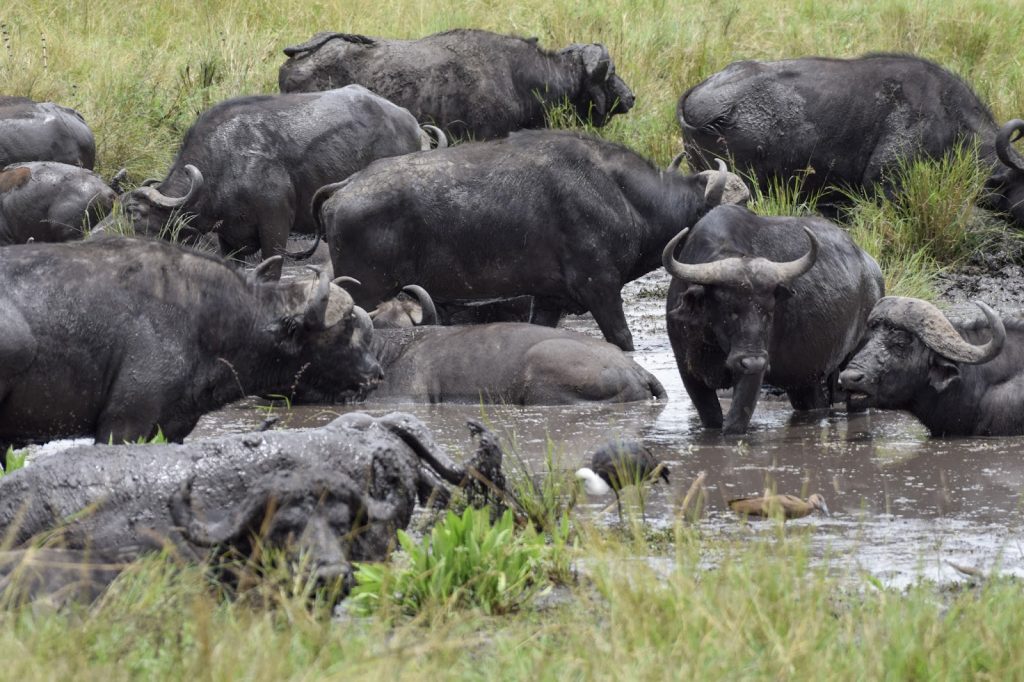
Older bulls, edged out of herd life by younger rivals, often pair off or go entirely solitary, wallowing in mud (the origin of the Swahili-derived nickname) and grazing alone or in small bachelor groups. Professional guides and hunters alike consider a lone or wounded buffalo bull the single most consistently dangerous animal encounter in the African bush — unpredictable, capable of sustained, deliberate charges rather than a single bluff rush.
The Buffalo-Lion Standoff — a fight the buffalo often wins
A lion pride hunting buffalo takes on genuine risk — a cornered or counter-charging buffalo has killed and seriously injured lions on record, and successful hunts of adult bulls typically require the coordinated effort of a large pride willing to absorb losses. Watching a herd mob together to drive off a pride threatening a calf is one of the Mara’s most dramatic, underappreciated predator-prey reversals.
Oxpeckers and the Cleaning Crew — the buffalo’s constant companions
Red-billed and yellow-billed oxpeckers ride buffalo constantly, picking off ticks and ridding wounds of parasites in a genuine mutualistic partnership — and their sharp alarm hiss often alerts buffalo to approaching danger before the herd itself notices. Cattle egrets, too, follow grazing herds to snap up insects flushed from the grass, turning a buffalo sighting into a small multi-species scene.
Reading the Boss — ageing and sexing a bull at a glance
A mature bull’s horns fuse into a solid, helmet-like “boss” across the forehead by around seven to eight years old — the wider and more continuous the boss, the older and more dominant the animal. Cows and younger bulls retain a visible gap at the centre, an easy field mark guides use to size up a herd’s hierarchy at a distance.
Mud Wallows at Midday — thermoregulation as theatre
Buffalo wallow heavily in mud through the hottest hours, coating themselves in a natural sunscreen-and-insect-repellent layer that dries to a pale crust — a scene that produces some of the Mara’s most texturally striking wildlife photography, all wrinkled hide, dried mud and clouds of biting flies swirling around unbothered heads.
The Matriarchal Herd Structure — who actually leads a buffalo herd
Contrary to the assumption that dominant bulls run the show, Cape buffalo herds are typically led by an experienced older female whose knowledge of grazing routes, water sources and danger zones guides the group’s daily movements, with bulls contributing mainly to defence and breeding rather than day-to-day leadership — a social structure that surprises many first-time visitors expecting a strict bull hierarchy.
Give the Herds Real Attention
Buffalo behaviour rewards patience most guests never give it. Ask for a dedicated herd-watching stop on your drive.
Masai Mara Buffalo Facts
- Herd size: Mara buffalo herds regularly number in the hundreds, among the largest single-species gatherings in the reserve outside migration season.
- Weight: mature bulls can weigh up to 700-900 kg, among the heaviest animals in the Big Five after elephant, rhino and hippo.
- The boss: a fused horn plate across the forehead, fully developed by around age seven to eight, used in head-to-head dominance clashes.
- Danger reputation: wounded or solitary bulls (“dagga boys”) are widely considered Africa’s most consistently dangerous large mammal encounter on foot.
- Lifespan: wild buffalo typically live 15-20 years, with dominant bulls often losing herd status well before the end of their natural lives.
- Partnerships: oxpeckers and cattle egrets travel with herds constantly, cleaning parasites and flushing insects in a mutually beneficial relationship.
- Predator relationship: lions are the primary natural predator of buffalo, but successful hunts of healthy adults often come at real cost to the pride.
Fitting Buffalo Into a Big Five Mara Safari
Buffalo herds feature on virtually every route on our 3-day Masai Mara safari, alongside the reserve’s other Big Five members — see our Masai Mara lions guide and Masai Mara rhinos guide to complete the checklist. For the wider herbivore picture, our antelope and plains game guide covers the reserve’s other grazing species.
Give the Big Five’s Toughest Member Its Due
Mega-herds and lone dagga boys both deserve real attention on a Mara safari. Message us to plan it properly.
Frequently Asked Questions
How big are buffalo herds in the Masai Mara?
Masai Mara buffalo herds regularly number in the hundreds, moving and grazing with coordinated group behaviour that keeps calves protected at the centre. These mega-herds are among the largest single-species gatherings visible in the reserve outside the wildebeest migration season.
What is a “dagga boy” in the Masai Mara?
A dagga boy is an older male Cape buffalo, typically pushed out of herd life by younger bulls, that lives solitary or in small bachelor groups and wallows heavily in mud (dagga). Dagga boys are widely regarded by guides and professional hunters as Africa’s most consistently dangerous large mammal on foot.
Are buffalo dangerous to see on a Masai Mara game drive?
From a vehicle, buffalo sightings in the Masai Mara are safe when guides maintain sensible distance, though buffalo — particularly solitary or wounded bulls — are considered one of Africa’s most unpredictable animals and are treated with genuine caution rather than casual approach.
Do lions hunt buffalo in the Masai Mara?
Yes — lions are the primary natural predator of Masai Mara buffalo, but hunting a healthy adult is genuinely risky; buffalo have killed and seriously injured lions in self-defence, so prides typically target young, old, sick or isolated animals rather than challenging a full, alert herd.
How can you tell a buffalo’s age or dominance in the field?
A mature Masai Mara bull’s horns fuse into a solid “boss” across the forehead by around seven or eight years old — the wider and more continuous this boss, the older and typically more dominant the animal, while cows and younger bulls retain a visible central gap.