

Masai Mara Hot Air Balloon Safari: Everything You Need to Know
Of all the experiences available in the Masai Mara, few match the sensation of rising silently above the savannah in a hot air balloon as the sun crests the horizon and the plains below come alive in golden light. A Masai Mara hot air balloon safari is genuinely one of Africa’s most iconic and unforgettable experiences — and if your budget allows it, it belongs on your itinerary without question.
This guide covers everything you need to know about the balloon safari experience in the Masai Mara: what to expect, when to do it, what you will see from the air, how much it costs, and how to book. For your complete Masai Mara planning context, start with our Ultimate Masai Mara Safari Guide.
What Is a Masai Mara Balloon Safari?
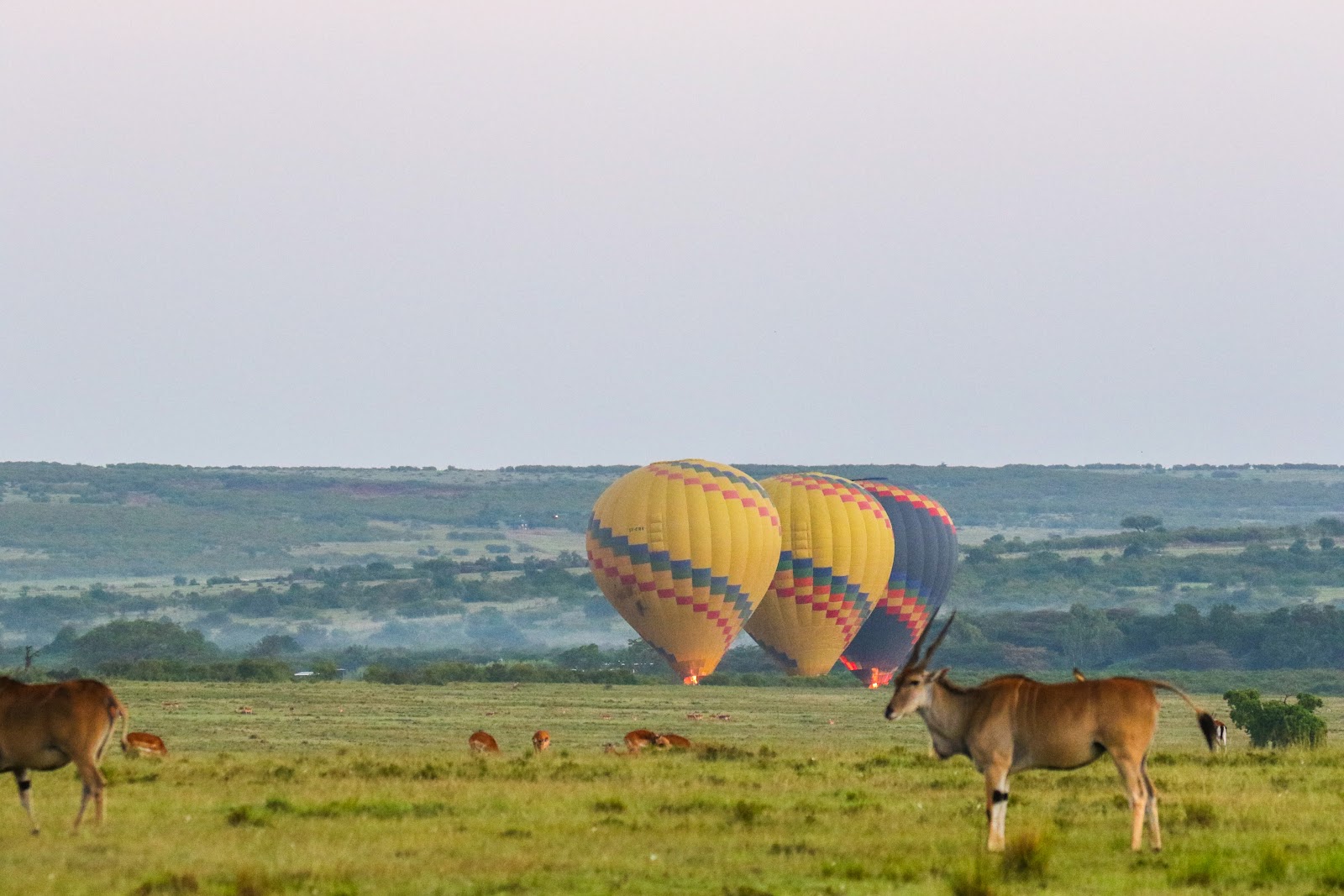
A hot air balloon safari in the Masai Mara is a one-to-two hour flight in a commercial hot air balloon, departing at sunrise from a launch point within or near the main reserve. Depending on the operator, balloons carry between 12 and 24 passengers in a large basket beneath a massive canopy that fills with hot air as the crew prepares for flight in the pre-dawn darkness.
The balloon follows the wind, drifting low over the plains, the rivers, and the scattered acacia woodlands of the Mara. The pilot manages altitude and direction to maximise wildlife viewing, descending close to the treetops when a herd of elephants moves below, or hovering silently above the Mara River as hippos splash and crocodiles bask on sandbars. The flight ends wherever the wind carries the balloon — typically somewhere on the open plains — where a champagne breakfast awaits in the bush.
Where Does a Masai Mara Hot Air Balloon Safari Launch?
Launch sites are spread across different parts of the reserve and some of the neighbouring conservancies. Your flight is usually arranged from the launch site closest to your camp, because the transfer happens in the dark before sunrise. If your camp is far from a launch site, expect a longer early-morning drive, sometimes an hour or more.
Because the balloon goes where the wind takes it, nobody can promise a fixed route. Pilots read the wind before take-off and choose a direction that gives the best mix of wildlife, rivers and open plains, and the ground crew follows below to meet you wherever you land.
What to Expect: Step by Step
Pre-dawn wake-up: Your camp will wake you before 05:00. The pre-dawn safari is part of the experience — transfer to the launch site in the dark, watching the balloon inflate, and seeing the first hint of light on the eastern horizon while the crew completes final preparations.
Inflation and briefing: The crew inflates the balloon while your pilot briefs the group on safety procedures — what to hold, how to position yourselves for landing, and what to do in the unlikely event of any issue. The whole process is professional and reassuring.
Lift-off: The moment the basket leaves the ground is remarkable — effortlessly, silently, the Masai Mara drops away beneath you. Within moments you are above the acacia canopy, watching the plains stretch to the horizon in every direction as the sun rises behind you.
The flight: One to one and a half hours of drifting across the Mara at varying altitudes. Your pilot descends for close-up views when wildlife appears and climbs for panoramic perspectives. Conversation happens naturally but the dominant sensation is simply wonder — at the scale of the ecosystem, the beauty of the light, and the extraordinary privilege of seeing this place from the air.
Landing and breakfast: The balloon descends gradually onto the plains. After landing (which can be gentle or slightly exciting depending on wind conditions — the crew handles it skillfully), a support vehicle arrives with tables, linen, glassware, and a full cooked bush breakfast with champagne or sparkling juice. Eating breakfast on the savannah, surrounded by nothing but grass and sky, is a deeply special experience.
Back to camp: After breakfast you are driven back to camp, usually with a game drive on the way, and arrive mid to late morning. Most guests rest in the heat of the day and head out again for an afternoon drive.
What You Will See from the Air
The aerial perspective completely changes your understanding of the Masai Mara ecosystem. From the ground, the landscape appears open but bounded by your immediate field of view. From a balloon, you see how vast and interconnected everything is: the Mara River winding through its acacia gallery forest, the scattered luggas (dry stream beds) that form the hidden highways of the ecosystem, and the herds — truly comprehending the scale of a migration herd or a breeding elephant herd requires seeing it from above.
Common wildlife sightings from the balloon include elephant herds moving in family groups, hippo pods in the river, giraffe browsing at treetop level, and — during migration season — the extraordinary spectacle of wildebeest herds stretching across the plains in their thousands. Predators — lions on a carcass, cheetahs coursing across the short-grass plains — are sometimes spotted from the balloon and followed down for a closer look. The wildebeest migration viewed from the air between July and October is particularly spectacular.
Birdlife is a highlight that many visitors do not anticipate. At balloon height, you are on the same level as raptors riding thermals — kite, eagle, and vulture species that look down on everything from the ground. The lilac-breasted roller, a bird that is common in the Mara, is indescribably beautiful when seen from the air against a golden-grass backdrop.
Keep your expectations balanced: a balloon is a wonderful way to see the landscape and the herds, but it is not a substitute for a game drive when it comes to close, long sightings of big cats. To plan your ground viewing, read our guide to the Big 5 in Masai Mara.

Best Time for a Masai Mara Balloon Safari
Balloon safaris operate year-round in the Masai Mara, and the experience is genuinely extraordinary in every season. However, certain times are particularly special:
- July – October (Migration season): Flying over the plains during the wildebeest migration is the most dramatic version of the experience. Seeing herds from above gives you a complete understanding of the migration’s scale that is simply impossible from ground level.
- January – February (Green season): The lush green landscape, dramatic cloud formations, and beautiful morning light make for the most visually striking balloon photography. Predators are active and the plains feel fresh and alive.
- November – December: Post-rain air is exceptionally clear, morning light is beautiful, and the landscape is green with excellent resident wildlife. The balloon experience during these months is often particularly serene and uncrowded.
For a full seasonal breakdown, see our guide to the best time to visit Masai Mara.
Flights depend on the weather. Strong wind or heavy rain can delay or cancel a flight, which is more likely in the long rains from about March to May. If you are travelling in a wetter month, book the balloon for your first full morning in the Mara so there is time to rebook if it is called off.
How Much Does a Masai Mara Balloon Safari Cost?
Hot air balloon safaris in the Masai Mara are priced at approximately $550–$650 per person (2026 pricing) for the full experience including the flight, champagne bush breakfast, and a flight certificate. This is a significant addition to your overall safari budget, but it is widely regarded by our guests as money extremely well spent — many describe the balloon safari as the single most memorable hour of their entire trip.
The balloon safari is not typically included in standard lodge or camp rates — it is booked and paid for separately, either through your camp or directly through one of the Mara’s licensed balloon operators. We include balloon bookings in our safari packages for guests who want us to handle the coordination.
For a full breakdown of safari costs including the balloon as an optional extra, see our guide to how much a Masai Mara safari costs.
Is a Masai Mara Hot Air Balloon Safari Safe?
Commercial balloon flights in Kenya are run by licensed operators under the oversight of the Kenya Civil Aviation Authority. Pilots are trained and licensed, balloons are inspected, and every flight starts with a safety briefing. The biggest safety decision is the weather call: if the wind is too strong, the pilot will not fly, and that is a good sign rather than a disappointment.
The part most guests remember is the landing. In calm conditions it is a gentle touchdown; in a light breeze the basket may tip onto its side and slide a short way, which is normal. Follow the pilot’s landing position instructions, hold the rope handles and keep loose items secured.
Make sure your travel insurance covers adventure activities such as ballooning. Our Kenya travel insurance guide explains what safari cover should include.
Who a Masai Mara Hot Air Balloon Safari Suits
- Couples and honeymooners: sunrise over the plains and a champagne breakfast make it a natural highlight of a Masai Mara honeymoon safari.
- Families: operators set a minimum age for children, and children must be tall enough to see over the basket. Check before booking; see our family safari to the Masai Mara guide for ideas.
- Photographers: the low sunrise light and aerial view of the herds give images you cannot get from a vehicle.
- Older travellers: the flight itself is gentle, but you stand throughout and need to climb into the basket and brace for landing. Discuss any mobility or back issues in advance.
- Not advised: balloon flights are generally not recommended during pregnancy.
Practical Tips for Your Balloon Safari
- Dress in warm layers: Pre-dawn temperatures in the Mara can drop to 10–15°C, and the open basket at altitude can be cooler than expected. Bring your fleece and a jacket, even in the dry season.
- Camera settings: Low-light shooting at sunrise requires a camera that handles ISO well. Prime or wide-angle lenses work beautifully for landscape shots; a telephoto for wildlife below.
- Book in advance: Particularly during July-October, balloon flights book up weeks ahead. We recommend booking as part of your initial safari package rather than waiting until arrival.
- Weight limits: Some operators have weight limits per passenger and per basket position. Ask when booking if this is relevant for your group.
- Standing during flight: The basket requires standing throughout the flight (no seating). If you have mobility limitations, discuss this with the operator before booking.
Wear a hat that will not blow off, or one with a chin strap, as the burners above the basket give off strong heat. Closed shoes are better than sandals for climbing in and out. Our guide on what to pack for a Masai Mara safari covers the rest of your kit, and the camera gear and lens checklist helps you choose lenses for the flight.
Photography Tips From the Basket
- Use a fast shutter speed, as the basket moves gently and the light changes quickly at sunrise.
- Shoot the inflation on the ground: the glowing envelope against the dark sky is often the best picture of the morning.
- A mid-range zoom is the most useful lens; very long lenses are hard to use in a crowded basket.
- Keep a strap on your camera and phone at all times, especially during landing.
Sample 3-Day Itinerary With a Balloon Flight
A balloon flight fits easily into a short Mara stay. A typical pattern looks like this:
- Day 1: travel to the Mara by road or light aircraft, lunch at camp and an afternoon game drive.
- Day 2: pre-dawn pickup for the Masai Mara hot air balloon safari, champagne bush breakfast, game drive back to camp, rest, then an afternoon drive.
- Day 3: a final morning game drive before returning to Nairobi.
The flight can be added to our 3-day Masai Mara safari package, the 4-day fly-in Masai Mara luxury safari or the 4-day Masai Mara honeymoon safari. For other special moments to pair with it, see our Masai Mara bucket list and the guide to sundowners and bush dinners.
Frequently Asked Questions
How long is a Masai Mara hot air balloon safari?
The flight itself usually lasts about one hour, sometimes a little longer depending on the wind. With the pre-dawn transfer, inflation, the champagne bush breakfast and the game drive back, the whole experience takes most of the morning, and you are usually back at camp by mid to late morning.
What time does the balloon safari start?
Pickup is very early, usually before 05:00, because balloons launch at sunrise when the air is calm. You are driven to the launch site in the dark, watch the inflation and briefing, then take off as the sun comes up. Your camp will give you the exact pickup time the evening before.
Is the balloon safari worth the money?
For most guests, yes. It is one of the most expensive single activities in the Mara, but many travellers describe it as the highlight of their trip. If your budget is tight, prioritise more days of game drives first; if you can afford it, the balloon adds a view of the Mara you cannot get any other way.
What happens if the balloon flight is cancelled?
If the pilot cancels because of wind or rain, the flight is normally moved to the next morning or refunded under the operator’s terms. This is why we suggest booking it for your first full morning in the Mara. Check the cancellation and refund policy when you book, and do not plan it for your last day.
Can children go on a balloon safari in the Masai Mara?
Yes, but operators set a minimum age and children must be tall enough to see over the side of the basket and follow the landing instructions. The rules vary between operators, so ask before you book. Younger children can enjoy the morning game drive instead and meet the family back at camp.
What should I wear on a balloon safari?
Wear warm layers, as the early morning can be cold, plus long trousers, closed shoes and a hat that will stay on. Neutral safari colours are best. You can remove layers once the sun is up. Keep bags small, as space in the basket is limited and loose items must be secured for landing.
Add a Balloon Safari to Your Masai Mara Itinerary
At Sense of Adventure, we include hot air balloon bookings as a seamless part of our safari packages — you do not need to coordinate with operators separately or worry about morning logistics. We handle everything: the pre-dawn vehicle transfer, the booking confirmation, and the post-flight return to camp in time for your morning game drive.
If you are planning a stay at one of the Mara’s best camps and want to add a balloon safari to your itinerary, talk to us today — and we will make sure this extraordinary experience is perfectly integrated into your trip. For wider inspiration on travelling in Kenya, the official Magical Kenya tourism site is a useful resource.
Or call us directly: +254 799 160 081 — we are always happy to help.