Diani Beach diving and snorkelling open up a side of Kenya most safari travellers never see, and this guide explains where to go, when to go and how to book it safely. Diani Beach’s Indian Ocean is not just beautiful from the shore. Beneath the surface, Kenya’s south coast reef system holds one of East Africa’s most diverse and well-preserved marine ecosystems — coral gardens, whale shark aggregation sites, a resident population of bottlenose dolphins, and the extraordinary Kisite-Mpunguti Marine Park where the water is so clear you can count individual coral heads from ten metres above them.
The beach itself — 17 km of white sand backed by coastal forest full of sykes’ monkeys and Angolan colobus — delivers everything a coast holiday requires on land. But the water is the reason that serious divers, kitesurfers, and marine wildlife enthusiasts specifically choose Diani over every other Kenya coastal option. Sense of Adventure arranges the full range of Diani marine and water sport experiences, from first-time snorkelling trips to multi-day dive packages on the outer reef.
The Indian Ocean Awaits. Get Into It.
Sense of Adventure arranges diving, snorkelling, kitesurfing, dolphin trips, and whale shark excursions at Diani — contact us to plan your Kenya coast experience.
Diani’s Dive Sites — Kenya’s Best Underwater World
Diani Beach diving centres on one reef system with very different sites. The Diani reef system runs parallel to the coast approximately 1–3 km offshore, and outside the reef a series of outer walls, pinnacles, and channels delivers diving that experienced divers consistently rate as exceptional — particularly for soft coral diversity, turtles, and pelagic fish populations. The water temperature sits at 24–28°C year-round, visibility averages 15–30 metres, and the Indian Ocean monsoon system creates two distinct diving seasons, each with its own specific site conditions.
🌊 Diani’s Key Dive Sites
Kinondo Reef — A shallow, coral-rich reef ideal for beginner divers and snorkellers. Excellent turtle sightings, Napoleon wrasse, and the full spectrum of Indian Ocean reef fish. Accessible year-round from the main Diani beach strip.
Two Thousand Steps — An intermediate dive site with spectacular soft coral gardens on the reef wall, moray eels in the coral formations, lionfish, and occasional reef shark sightings. Named for the walk across the lagoon at low tide to reach the boat launch.
Kisite Marine Park — Kenya’s premier marine park, 50 minutes south of Diani by boat. A pristine outer reef with exceptional visibility, hawksbill and green turtles, spinner dolphins that approach the boats, and the area’s largest coral formations. The park’s strict protection has maintained a fish density that is noticeably higher than the unprotected reef sections.
Wasini Channel — A deep channel between Wasini Island and the mainland with strong current dives, large pelagics, and exceptional soft coral. For experienced divers only. Whale sharks are encountered here from October to March.
Diani Beach Diving Seasons: Month by Month
The coast has two monsoon seasons, and they change the diving more than the temperature does. Use this table as a general guide to Diani Beach diving; conditions vary from week to week, and your dive centre will choose sites to suit the day.
| Months | Sea conditions | Best for |
|---|---|---|
| Oct – Mar | Calmer, warmer water under the north-east kaskazi | Reef diving, snorkelling, whale shark chances |
| Apr – May | Long rains, more run-off, visibility can drop | Quiet dive boats, lower rates |
| Jun – Sep | Windier south-east kusi, bigger swell on the outer reef | Kitesurfing, sheltered lagoon snorkelling, humpback whale season |
Humpback whales pass along the Kenyan coast on their annual migration, usually between about July and October, and are sometimes seen from boats on the way to Kisite. For a wider view of the seasons, see our Kenya weather by month guide.
Snorkelling at Diani: Where and How
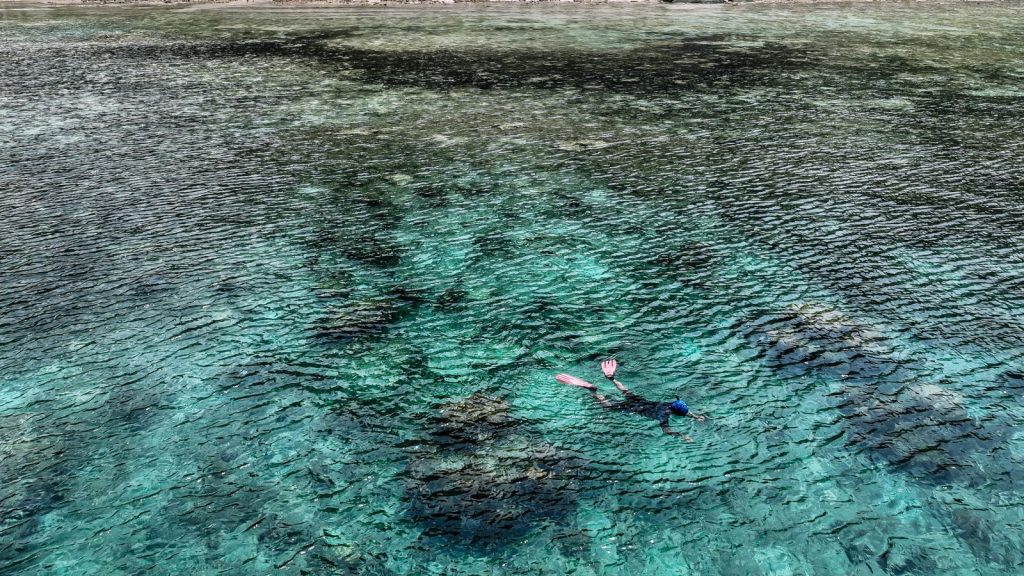
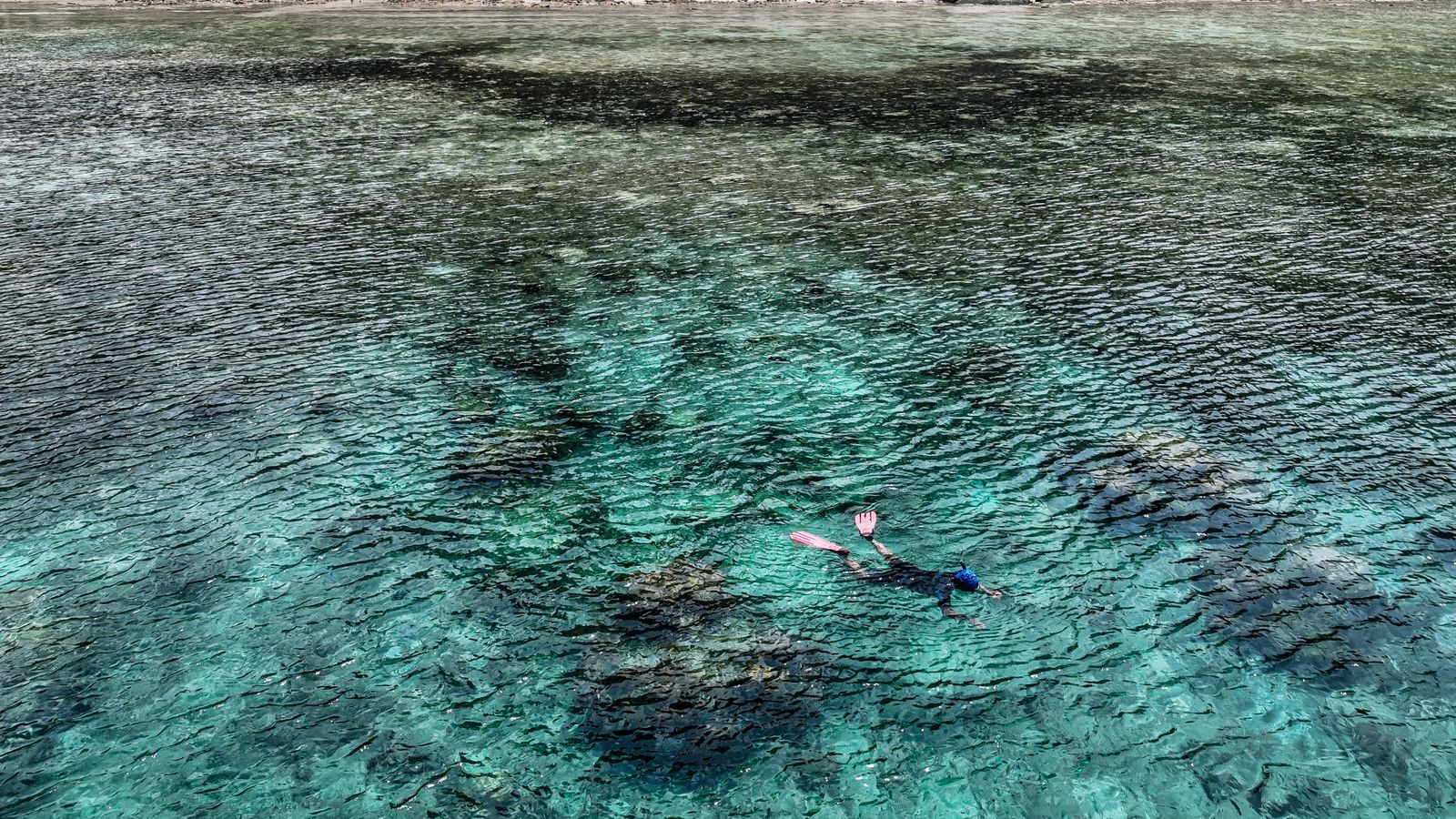
You do not need to dive to enjoy the reef. At low tide the lagoon inside Diani’s reef becomes a warm, shallow pool where you can float over sea grass, coral heads and small reef fish just a short swim from the beach. For the best snorkelling, though, take a boat trip to the outer reef or to Kisite-Mpunguti, where the coral is healthier and the fish far more plentiful.
Tips for better snorkelling
- Go at the right tide. Lagoon snorkelling is best around low tide on a calm day. Ask your hotel for a tide table.
- Bring a mask that fits. Rental gear is available, but your own mask makes a big difference to comfort.
- Wear a rash vest. The equatorial sun is strong on your back while you float face down.
- Stay with your boat crew. Currents near the reef edge can be strong. Swim where the guide shows you and keep the boat in sight.
Six Essential Diani Marine & Water Sport Experiences
Whale Shark Swimming — October to March
Whale sharks — the world’s largest fish, reaching 12 metres and completely harmless — aggregate off Kenya’s south coast from October to March, feeding on the zooplankton brought by the northeast monsoon. Sense of Adventure arranges whale shark excursions by boat from Diani — the guides use a spotter system to locate the animals, then guests enter the water with snorkel gear only (no scuba — whale sharks are disturbed by bubbles) and swim alongside them. An encounter with a whale shark is one of the most profound wildlife experiences available anywhere on earth, and very few Kenya visitors know it is possible.
Kisite-Mpunguti Dolphin Trip
The boat trip from Diani’s main beach strip to Kisite Marine Park passes through the Shimoni channel, where resident populations of Indo-Pacific bottlenose dolphins and spinner dolphins travel in groups of 30–100 animals. On most excursions the dolphins approach the boat and ride the bow wave — photographing them from the bow while Kisite’s pristine reefs appear on the horizon is one of Diani’s finest morning experiences. Sense of Adventure arranges full-day Kisite excursions combining dolphin encounters, snorkelling on the outer reef, and lunch at Wasini Island.
Kitesurfing — Diani’s Signature Water Sport
Diani has developed into one of East Africa’s premier kitesurfing destinations — the consistent Indian Ocean trade winds (strongest June–September), the warm shallow water inside the reef, and the long flat lagoon at low tide create textbook conditions. Multiple certified kitesurfing schools operate on the beach, offering beginner courses, equipment rental, and advanced coaching. Sense of Adventure partners with the best Diani kitesurfing operators and can arrange all-inclusive surf-and-safari packages for guests who want to combine big cats and kite lines in a single Kenya trip.
Colobus Monkey Forest Walk
The coastal forest behind Diani beach — remnant patches of East African coastal forest, one of the most biodiverse and threatened ecosystems on the continent — supports an Angolan colobus monkey population that is habitually encountered along the beach road and in the forest trails behind the hotels. The Colobus Conservation Centre on the Diani beachstrip provides guided forest walks and education on the colobus population’s ecology and the threats it faces from habitat loss. It is one of the few places in Kenya where you can see colobus monkeys at sea level, metres from the Indian Ocean shore.
Deep Sea Fishing — Blue Marlin & Sailfish
Kenya’s south coast is a world-class big game fishing destination — blue marlin, black marlin, sailfish, and yellowfin tuna move through the Diani offshore waters year-round, with peak marlin season from October to April. Sense of Adventure arranges full-day offshore fishing charters from Shimoni with experienced captains who know the south coast fishing grounds. Catch-and-release practices are standard, and the boats are equipped for serious offshore work.
Sunset Dhow Cruise — Diani the Classic Way
A traditional dhow cruise along the Diani coastline at sunset — sailing silently on a vessel that has used this coast for centuries, the beach turning gold and the ocean flat and luminous — is one of the most quietly perfect experiences Kenya’s coast delivers. Sense of Adventure arranges private dhow cruises for couples and small groups, with cold drinks, canapés, and a captain who knows where the dolphin pods typically surface in the late afternoon light.
Learning to Dive at Diani
Diani is a good place to try scuba for the first time, and Diani Beach diving courses are some of the most relaxed in East Africa. The water is warm, the shallow reefs are gentle and dive centres are used to beginners. You can choose between a short introduction and a full certification course.
Diani Beach diving for beginners
A try-dive or “discover scuba” session starts with a pool lesson and is followed by a supervised shallow dive on the reef, all in one day. A full Open Water course usually takes around three to four days, combining theory, pool skills and four open-water dives, and gives you a certification you can use anywhere in the world. Before any course you will be asked to fill in a medical questionnaire; some conditions need a doctor’s sign-off, so check this before you travel.
Flying after diving
This matters on a bush-and-beach trip. Dive training agencies advise waiting at least 12 hours after a single dive and at least 18 hours after repeated dives or multiple days of diving before you fly, and many divers allow a full 24 hours. If you are flying from Ukunda to the Masai Mara or home after Diani, plan your last dive the day before, or swap it for snorkelling. We build this into your itinerary for you.

Marine Life You Can See at Diani
Even on a single snorkel you are likely to see parrotfish, butterflyfish, angelfish, surgeonfish and wrasse. Divers often add moray eels, lionfish, octopus, rays and colourful nudibranchs. Green and hawksbill turtles are regular sights, especially around Kisite. Spinner and bottlenose dolphins are common on the boat ride to Kisite, and in season you may also be lucky with whale sharks or humpback whales. Our Kisite-Mpunguti Marine National Park guide explains the park in more detail.
What Diving and Snorkelling at Diani Cost
Diani Beach diving prices depend on the centre, the number of dives and whether you need equipment, so check current rates with us for your dates. Marine park fees for Kisite are set by the Kenya Wildlife Service and are usually paid on the day or included in your trip. These are prices from our current coast packages, per person in US dollars:
- Wasini Island & Kisite dolphin day trip from Diani — from USD 140, with dolphin watching, snorkelling and a seafood lunch.
- Diani Beach Getaway (4 days) — from USD 650, with free time for dives or reef trips.
- Watamu & Malindi Marine Escape (4 days) — from USD 700, for more snorkelling on the north coast.
- Masai Mara fly-in safari from Diani (3 days) — from USD 1,450, if you want to add big cats to your beach stay.
Reef Etiquette and Safety
Kenya’s reefs are fragile, and a few simple habits help keep them healthy for the next visitor.
- Look, do not touch. Never stand on coral, collect shells or touch turtles and fish.
- Use reef-safe sunscreen and cover up with a rash vest so you need less of it.
- Keep your distance from wildlife. Let dolphins and whale sharks choose how close to come, and never chase or ride them.
- Choose a registered dive centre affiliated with a recognised training agency, with well-maintained equipment and oxygen on board.
- Get the right insurance. Make sure your travel insurance covers scuba diving to the depth you plan, and check the latest UK government travel advice for Kenya or your own government’s equivalent before you go.
What to Pack for a Diani Dive Holiday
Bring your certification card and logbook, your own mask and, if you have them, your own fins and dive computer. Add a rash vest or thin shortie for long snorkels, reef-safe sunscreen, a hat for the boat, a dry bag and seasickness tablets if you are prone to it. Most centres offering Diani Beach diving rent wetsuits, regulators and BCDs, so there is no need to carry heavy kit unless you prefer your own.
Combining Diani With a Kenya Safari
Diani is the ideal coastal finale to a Kenya safari circuit. Most Sense of Adventure guests fly from the Masai Mara or Amboseli directly to Ukunda Airstrip (Diani’s private airstrip) in roughly one to two hours, arriving at the beach in time for a late lunch after a morning game drive. The contrast — dust and savannah in the morning, white sand and turquoise water by afternoon — is one of the most satisfying experiences available in Kenya. For full planning, read our Diani Beach destination guide and our Kenya safari planning guide.
A private Kenya safari gives you the most flexibility to time dives around flights, and our luxury Kenya safari trips pair fly-in camps with top beach hotels. If you want more time under water, add Watamu: our Watamu marine park guide covers the north coast reefs. However you combine them, Diani Beach diving makes the perfect contrast to days in the bush.
Safari in the Morning. Indian Ocean in the Afternoon.
Sense of Adventure arranges seamless Diani connections from every Kenya safari park — diving, whale sharks, dolphins, kitesurfing, and the finest beach on the East African coast.
Frequently Asked Questions — Diani Beach Water Sports
What is the best time for diving at Diani?
Diani offers two distinct dive seasons: the southeast monsoon season (June–September) brings stronger currents and cooler water but excellent visibility and larger pelagics. The northeast monsoon season (October–March) is calmer, warmer, and ideal for whale shark encounters and reef diving. The short transitional periods (April–May and October) can bring reduced visibility. Sense of Adventure recommends October–March for the combination of calm conditions and whale shark potential, and June–September for pelagic diving and kitesurfing.
Do I need a diving certification for Diani reef trips?
Certified divers (PADI Open Water or equivalent) can dive all Diani reef sites. Non-certified guests can take a resort course (a single-day introduction to scuba diving) that qualifies them for supervised shallow reef dives to 12 m. Snorkelling is available at all sites without any certification. Sense of Adventure books diving through certified operators only and can recommend courses for guests wanting to qualify during their Diani stay.
Are whale sharks guaranteed at Diani?
Whale shark encounters are not guaranteed — they are wild animals and their location cannot be predicted precisely. However, the Shimoni-Wasini channel is one of East Africa’s most consistent whale shark aggregation sites from October to March. Sense of Adventure’s whale shark excursion operators use spotter boats and a network of reports to maximise the probability of encounters. When whale sharks are reported in the area, the success rate is very high.
How far is Diani from Mombasa airport?
Diani is approximately 35 km south of Mombasa’s Moi International Airport — about 45–60 minutes’ drive including the Likoni Ferry crossing. Diani also has its own Ukunda Airstrip served by light aircraft from Nairobi Wilson Airport (a little over an hour) and from the main safari parks. Sense of Adventure arranges all airport transfers and flight bookings for Diani arrivals.
Can non-swimmers snorkel at Diani?
Weak swimmers can often enjoy the shallow lagoon at low tide wearing a life jacket or buoyancy vest, staying close to a guide. Boat snorkelling over the outer reef or at Kisite is better suited to confident swimmers, as water is deeper and currents can be stronger. Tell us your comfort level and we will choose the right trip.
How long should I wait to fly after diving at Diani?
Training agencies advise at least 12 hours after a single dive and at least 18 hours after repeated dives or several days of diving, and many divers prefer 24 hours. This applies to light aircraft from Ukunda to safari parks as well as international flights, so plan your last dive the day before you fly.
Is Diani good for children who want to snorkel?
Yes. The calm lagoon at low tide is ideal for children to try snorkelling with a well-fitting mask and a buoyancy aid. Many dive centres also run bubble-maker or junior programmes for older children, usually from around eight to ten years old. Kisite boat trips suit children who are comfortable swimming in open water.