This Mombasa Diani Beach Kenya guide is for travellers who want to end a safari on the Indian Ocean, with everything from Fort Jesus to the best snorkelling spots in one place. After the extraordinary intensity of a Kenya safari — the pre-dawn game drives, the adrenaline of predator encounters, the vast scale of the savannah — the Kenyan coast arrives like a long exhale. Mombasa, Kenya’s second city and historic Indian Ocean port, is the gateway to East Africa’s most beautiful coastline: white-sand beaches, warm turquoise water, fresh seafood grilled at the edge of the ocean, and the fascinating Swahili architecture and culture of a city with over a thousand years of maritime history.
Diani Beach — 30 kilometres south of Mombasa — is consistently rated among Africa’s finest beaches and the jewel of the Kenyan coast. This guide covers both destinations: what to expect, what to do, how to get there from your safari, and why so many Kenya safari travellers end their trip at the coast, knowing they will be back.
Table of Contents
Mombasa and Diani at a Glance
- Mombasa: Kenya’s oldest major port, with Fort Jesus and the Swahili Old Town.
- Diani Beach: about 30 km south of Mombasa, with roughly 17 km of white coral sand.
- Sea temperature: warm all year, typically 27–29°C.
- Best beach weather: December to March, with a second dry spell from July to October.
- Main airports: Moi International Airport in Mombasa and the Ukunda airstrip serving Diani.
- Ideal stay: three to five nights after a safari.
Mombasa: The Swahili City
Mombasa is one of East Africa’s oldest cities — a trading hub that has connected the African interior to Arabia, Persia, India, and beyond for over a thousand years. The city sits on an island connected to the mainland by two bridges and a ferry (the iconic Likoni Ferry, which crosses the channel every few minutes in a chaotic, wonderful procession of matatus, pedestrians, and motorcycles). Old Town Mombasa — a UNESCO-listed labyrinth of narrow streets, carved wooden doors, mosques, and Indian merchant houses — is one of the most atmospheric urban environments in East Africa.
Fort Jesus, built by the Portuguese in 1593 to control the trade routes of the Indian Ocean, is Mombasa’s most significant historical landmark and a UNESCO World Heritage Site. The fort — built in the shape of a man, with towers representing the head and limbs — tells the story of four centuries of colonial struggle between the Portuguese, Omani Arabs, and British for control of East Africa’s coast. The fort’s museum houses extraordinary Portuguese artefacts, Swahili ceramics, and Chinese porcelain recovered from merchant vessels that traded along the coast.
The Old Town is best explored on foot, ideally with a local guide who can explain the layers of Swahili, Arab, Indian, and Portuguese influence visible in every doorway and street corner. The architecture is genuinely beautiful — ornate carved wooden doors, coral-stone walls worn smooth by centuries of sea air, and rooftop views over the dhow harbour where traditional wooden sailing vessels are still built and sailed.
You can read UNESCO’s description of the fort on the World Heritage listing for Fort Jesus, Mombasa.
More to See in and Around Mombasa
- The spice and fruit markets: the busy streets around the old market are full of colour, smells and Swahili street food.
- Mombasa Marine National Park: the protected reef off the north coast beaches at Nyali and Bamburi is good for glass-bottom boats and snorkelling.
- Haller Park, Bamburi: a former limestone quarry restored into a nature park, with giraffes, antelope and giant tortoises.
- Swahili food: try biryani, pilau, samaki wa kupaka (fish in coconut sauce), mahamri and fresh mango or coconut from street stalls.
For a deeper look at the city itself, see our Mombasa travel guide, or join our 3-day Swahili Coast Heritage Tour.
Diani Beach: Kenya’s Finest Coastline
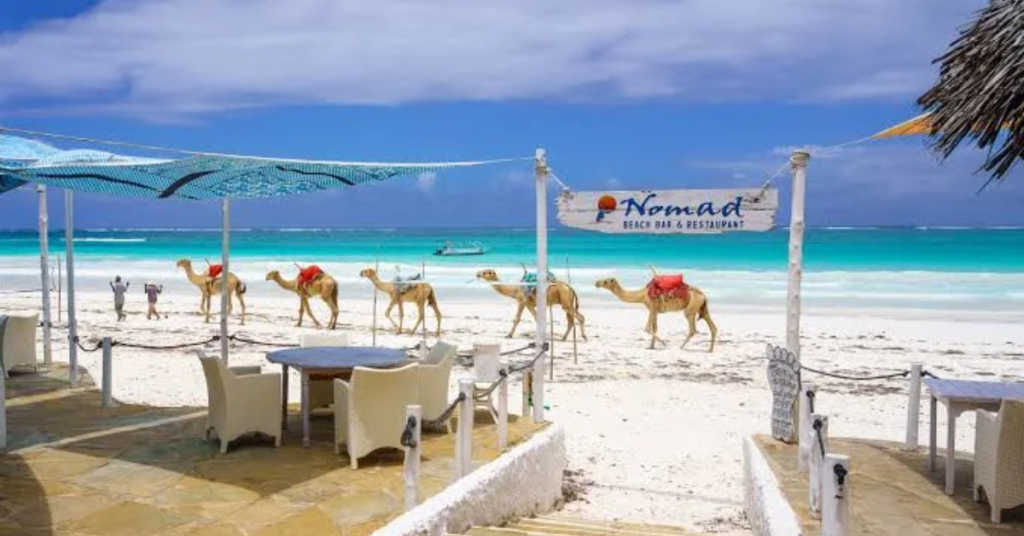
Diani Beach is approximately 30 kilometres south of Mombasa on the mainland coast, connected by the Likoni Ferry and a 30-minute road transfer. The beach itself — 17 kilometres of powder-white coral sand backed by coconut palms and coastal forest — is one of Africa’s genuinely great beaches. The Indian Ocean here is calm (protected by a coral reef 500 metres offshore), warm (27–29°C year-round), and extraordinary clear.
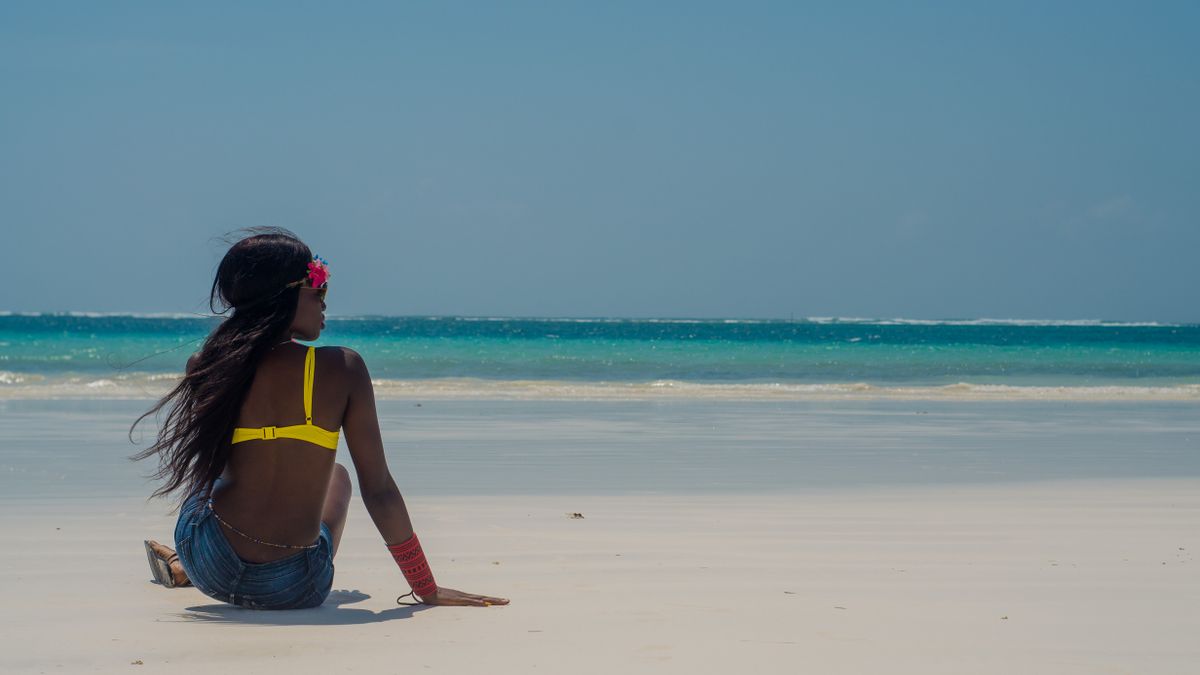
The coral reef is one of Diani’s greatest natural assets. Snorkelling directly off the beach reveals a rich reef ecosystem — parrotfish, angelfish, turtles, rays, and the occasional whale shark further offshore. Diving operators offer both introduction dives and full PADI certification courses; the marine life diversity rivals anything in the Indo-Pacific. Glass-bottom boat trips over the reef are available for non-divers and families.
Beyond the beach, Diani’s surrounding coastal forest is home to the Angola colobus monkey — a beautiful black-and-white colobus that lives in the canopy of the coastal forest patches between hotels and residential areas. The Colobus Conservation organisation has worked for decades to protect these monkeys and their forest habitat; a visit to their rescue centre (where injured and orphaned colobus are rehabilitated) is one of Diani’s most rewarding wildlife experiences.
Our Diani Beach Kenya guide goes deeper into the beach itself, from the quieter northern stretches to the busier central strip.
What to Do on the Kenyan Coast
- Snorkelling and diving: The Diani reef and the more remote Wasini Island (south of Diani) offer excellent reef diving and snorkelling. Dolphin watching at Wasini, where spinner dolphins are reliably encountered, is a superb half-day excursion.
- Deep sea fishing: The waters off Diani support excellent game fishing — marlin, sailfish, and yellowfin tuna in season. Several operators offer half-day and full-day deep sea charters.
- Dhow sailing: Sunset dhow cruises — traditional wooden sailing vessels, cold drinks, the horizon going pink — are quintessentially Kenyan coast and one of the most romantic experiences available. Highly recommended for honeymooners. See our Kenya honeymoon safari guide.
- Kite surfing: Diani’s consistent Indian Ocean wind makes it one of East Africa’s premier kite surfing destinations. Schools offer instruction for beginners through to advanced riders.
- Shimba Hills National Reserve: Just 30 kilometres inland from Diani, this small coastal forest reserve is home to sable antelope (rare in Kenya), elephant, buffalo, and a beautiful canopy walkway through coastal rainforest. An excellent half-day addition to a Diani beach stay.

Coast Day Trips We Run from Diani and Mombasa
- Wasini Island & Kisite dolphin day trip — sail by dhow into Kisite-Mpunguti Marine Park to snorkel and look for dolphins.
- Shimba Hills day trip — sable antelope, coastal forest elephants and a walk to Sheldrick Falls.
- Tsavo East day safari — a full day among Tsavo’s red elephants, back at your beach hotel by evening.
Getting to Mombasa and Diani Beach
Most travellers reach the coast in one of three ways, and the right choice depends on time, budget and where your safari ends.
- By air: scheduled flights from Nairobi land at Moi International Airport in Mombasa in about an hour, and some also serve the Ukunda airstrip, a short drive from Diani’s hotels. Light aircraft also link the Masai Mara with the coast.
- By train: the Madaraka Express on the Standard Gauge Railway runs between Nairobi and Mombasa and passes the edge of Tsavo, so you may see wildlife from the window.
- By road: the Nairobi–Mombasa highway is a long day’s drive, and many travellers break it with a safari in Tsavo or Amboseli on the way.
Our Nairobi to Mombasa guide compares the train, flights and driving in detail. To reach Diani from Mombasa, you either cross on the Likoni Ferry or use the newer southern bypass road, and we arrange transfers either way.
Combining Safari With the Kenyan Coast
The classic Kenya travel formula: safari first, beach after. This sequencing — typically 5–7 nights of safari followed by 3–5 nights at the coast — is one of the world’s great travel combinations and our most popular Kenya itinerary format. Flying from the Masai Mara to Mombasa takes approximately 1 hour 15 minutes on a scheduled charter, making the transition seamless. You leave the savannah at dawn for a morning game drive, and by early afternoon you are on the beach at Diani with a cold drink in hand watching dhows sail past.
For families, this combination is particularly powerful: the safari delivers the wildlife wonder, and the coast delivers the beach relaxation that balances it. See our Kenya family safari guide for specific recommendations on the coast for children. For honeymooners, the combination of the Tsavo safari ending at Diani creates an accessible and extraordinarily romantic itinerary without the need for Nairobi transit. Talk to our team and we will design the exact combination that fits your dates and priorities.
How Long to Spend on a Mombasa Diani Beach Kenya Trip
Three nights is enough to relax, snorkel and take one excursion. Four or five nights lets you add a day in Mombasa Old Town, a dhow trip to Wasini and a lazy beach day without rushing. If you are flying straight from the Masai Mara, plan your first coast day as a rest day.
Packages that already combine both include our Kenya safari and beach holiday, the Tsavo, Amboseli and Diani family safari and, for a beach-only stay, the 4-day Diani Beach getaway. Already on the coast? Our Masai Mara fly-in safari from Diani works the other way round.
Best Time to Visit the Kenyan Coast
The Kenyan coast has two dry seasons: December to March (hot and dry — the best beach weather of the year) and July to October (the southeast monsoon brings drier conditions and excellent conditions for kite surfing). The long rains fall April–June; the short rains in November. Even during rainy periods, rain typically falls in concentrated showers rather than all-day downpours, and the coast remains very visitable.
Christmas, New Year and Easter are the busiest periods on the coast, so book well ahead if you are travelling then. The quieter rainy months often bring lower hotel rates and emptier beaches.
Where to Stay on the Coast
Diani has the widest choice of beach accommodation, from simple guesthouses and self-catering cottages to large resorts and small boutique hotels directly on the sand. The northern end near Tiwi is quieter, while the central stretch has more restaurants and activities within walking distance.
North of Mombasa, the Nyali, Bamburi and Shanzu beaches are closer to the city and the airport, which suits travellers with only one or two nights. If heritage matters more than a beach, a night inside or near Mombasa Old Town puts Fort Jesus on your doorstep.
Practical Tips for a Mombasa Diani Beach Kenya Holiday
- Health: the coast is a malaria area, so ask your doctor or a travel clinic about prevention and use insect repellent in the evenings.
- Sun and sea: the equatorial sun is strong, so use reef-safe, high-factor sunscreen and wear water shoes on the reef, where sea urchins are common.
- Tides: the tide range is large; at low tide the water can retreat a long way, so plan snorkelling around high tide.
- Dress: Mombasa Old Town is largely Muslim, so cover shoulders and knees when exploring away from the beach.
- Beach sellers: a polite “no, thank you” usually works; book boat trips through your hotel or a trusted operator.
- Entry: most visitors need an eTA before arrival, and it is worth reading the latest UK government travel advice for Kenya, including its coastal guidance.
For general ideas about the coast and the rest of the country, the official Magical Kenya tourism website is a useful starting point.
Mombasa and Diani Beach FAQs
How far is Diani Beach from Mombasa?
Diani Beach is about 30 kilometres south of Mombasa. The journey usually takes 45 minutes to an hour and a half by road, depending on traffic and whether you use the Likoni Ferry or the southern bypass. Some flights also land at the Ukunda airstrip, just a few minutes from Diani’s hotels.
Is it better to stay in Mombasa or Diani?
For a beach holiday, Diani is usually the better base: the sand is wider, the water is calmer and there are more beach hotels. Mombasa suits travellers interested in history and culture. Many visitors stay in Diani and take a half-day or full-day trip to Fort Jesus and the Old Town.
When is the best time to visit Diani Beach?
December to March offers the hottest, driest beach weather, and July to October is also dry and good for kite surfing. April to June brings the long rains, though showers rarely last all day. The sea stays warm all year, so Diani is enjoyable in any month.
Can you combine a safari with Diani Beach?
Yes, and it is one of the most popular Kenya itineraries. You can fly from the Masai Mara to the coast in under two hours, or travel by road through Tsavo and Amboseli. Most travellers spend five to seven nights on safari, then three to five nights relaxing at Diani.
Is Diani Beach safe for tourists?
Diani is a popular, well-established resort area and most visits are trouble-free. Take normal precautions: use hotel safes, avoid walking on empty beaches after dark, book activities through reputable operators and follow your hotel’s advice. Check official travel advice for Kenya before you go, as guidance can change.
What is Mombasa best known for?
Mombasa is best known for Fort Jesus, its historic Swahili Old Town and its long history as an Indian Ocean trading port. It is also famous for Swahili cuisine, nearby north coast beaches and the dhow harbour, where traditional wooden boats still sail.
Or call us: +254 799 160 081 — we love planning great safaris.