It is just after six in the morning at Main Gate. The air is cool, almost sharp, and a thin mist lies over the lake. Your guide lifts the roof hatch, and the first sound you hear is the low, distant honking of birds on the shore. Ten minutes later the engine falls silent beside a white rhino and her calf, cropping wet grass so close you can hear each bite. Behind them, the water flashes pink as a line of flamingos takes off.
Lake Nakuru National Park is a 188 km² fenced rhino sanctuary on the floor of Kenya’s Great Rift Valley, about 156 km north-west of Nairobi. It is one of the most reliable places in Kenya to see both black and white rhinos, plus Rothschild’s giraffe, lions, buffalo and more than 450 bird species. Non-resident adults pay USD 90 per day in 2026.
We are Sense of Adventure, a licensed safari operator based at Mountain Mall on Thika Road in Nairobi (Tourism Regulatory Authority licence TRA1/47/C01/77087). Lake Nakuru National Park is one of the parks our driver-guides visit most often, as a day trip, an overnight stop or part of a longer Rift Valley circuit. This guide covers the wildlife and honest sighting odds, the 2026 KWS fees, gates and roads, the best months, the people who protect the park, where to stay and a sample itinerary.
✅ Lake Nakuru National Park: The Quick Answer
- Where: Nakuru County, in the Rift Valley, about 156 km north-west of Nairobi on the A104; Main Gate is 4 km from Nakuru city.
- Best for: black and white rhinos, Rothschild’s giraffe, lions, buffalo, waterbirds and wide Rift Valley views.
- Best time: June to October and January to February for dry roads and short grass; it is good all year.
- Entry fee: USD 90 per non-resident adult and USD 45 per child per day; KES 1,500 for East African citizen adults.
- How long to stay: one full day covers the highlights; one night gives you a sunset and a dawn drive.
- Getting there: about 2.5 to 3 hours by road from Nairobi, or 1 to 1.5 hours from Lake Naivasha.
🌍 Planning a Safari to Lake Nakuru National Park?
Tell us your dates and who is travelling, and we will plan the right route, lodge and timing for you. 💬 WhatsApp Us Now or call +254 799 160 081
Why Lake Nakuru National Park Is Worth Your Time
Lake Nakuru National Park packs more variety into a small, easy-to-reach area than almost any other park in Kenya. In one morning you can drive past a soda lake, open grassland, yellow fever-tree woodland, rocky cliffs and a forest of candelabra euphorbia trees.
That mix of habitats, inside an electric fence, is the reason sightings are so reliable. Animals cannot wander far, rangers can patrol closely, and the road network is good. You spend more of your day watching wildlife and less of it searching.
A short history of the park
Lake Nakuru National Park grew in stages. According to the Kenya Wildlife Service park page, the southern tip of the lake became a bird sanctuary in 1961, and the sanctuary was extended to the whole lake in 1964. The national park was gazetted in 1968 and expanded with WWF support to its present 188 km² in 1974.
In 1986 an electric perimeter fence went up, a landmark step for Kenyan conservation at the time. In 1987 Lake Nakuru National Park became Kenya’s first government-managed rhino sanctuary. Today the lake is part of the Kenya Lake System, inscribed as a UNESCO World Heritage Site in 2011 together with Lake Bogoria and Lake Elementaita.
What You Will See: Wildlife and Honest Sighting Odds
In Lake Nakuru National Park, rhinos and Rothschild’s giraffe are the near-certain highlights; flamingos and leopards are a bonus. Here is what to expect on a typical full day, based on how the park works rather than promises.
| Species | Where to look | Honest odds on a full day |
|---|---|---|
| White rhino | Open grassland near the southern and western shore | Very likely |
| Black rhino | Thicker bush and acacia woodland | Possible; needs patience |
| Rothschild’s giraffe | Fever-tree and acacia woodland | Very likely |
| Buffalo, waterbuck, zebra, impala | Shoreline and grassland | Almost certain |
| Lion | Woodland edges, grassland, occasionally in trees | Good chance |
| Leopard | Acacia woodland and rocky areas | Occasional; a lucky bonus |
| Flamingos | Shallows, depending on water level | Variable; from a few to many |
| Great white pelicans | River mouths and shoreline | Likely |
| Elephant | Not present in the park | None |
Rhinos: black and white in one park
Lake Nakuru National Park protects both African rhino species, and KWS describes it as holding one of Kenya’s largest black rhino populations. White rhinos are grazers with a wide, square lip. They feed in small groups on the open grass, so they are the easier of the two to find.
Black rhinos are browsers with a hooked lip. They are more solitary, more nervous and prefer thicker cover. Seeing one takes time and a guide who reads the bush well. Always keep at least the 20 metres KWS asks for, and never block a rhino’s path.
Rothschild’s giraffe and the big cats
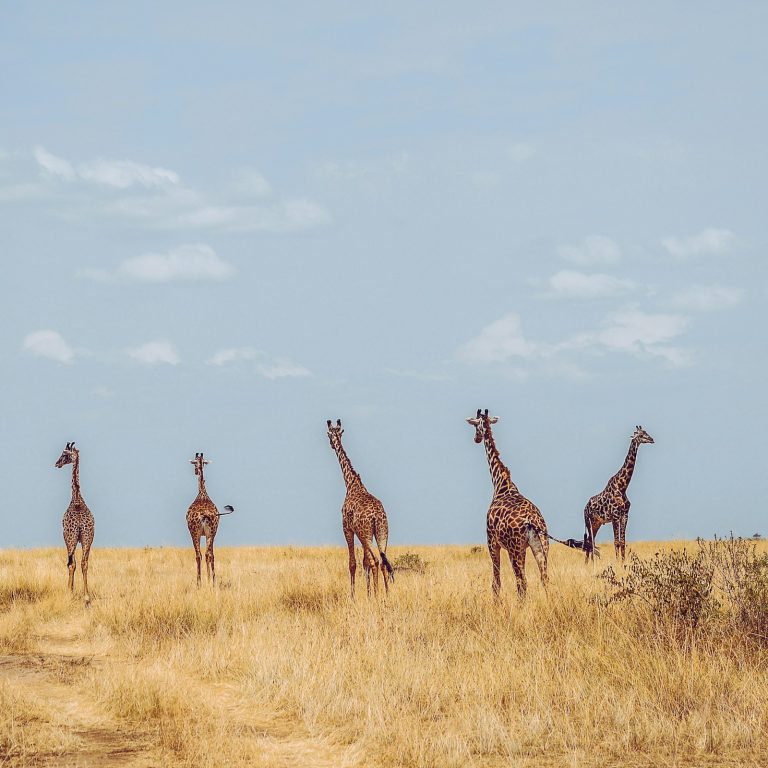
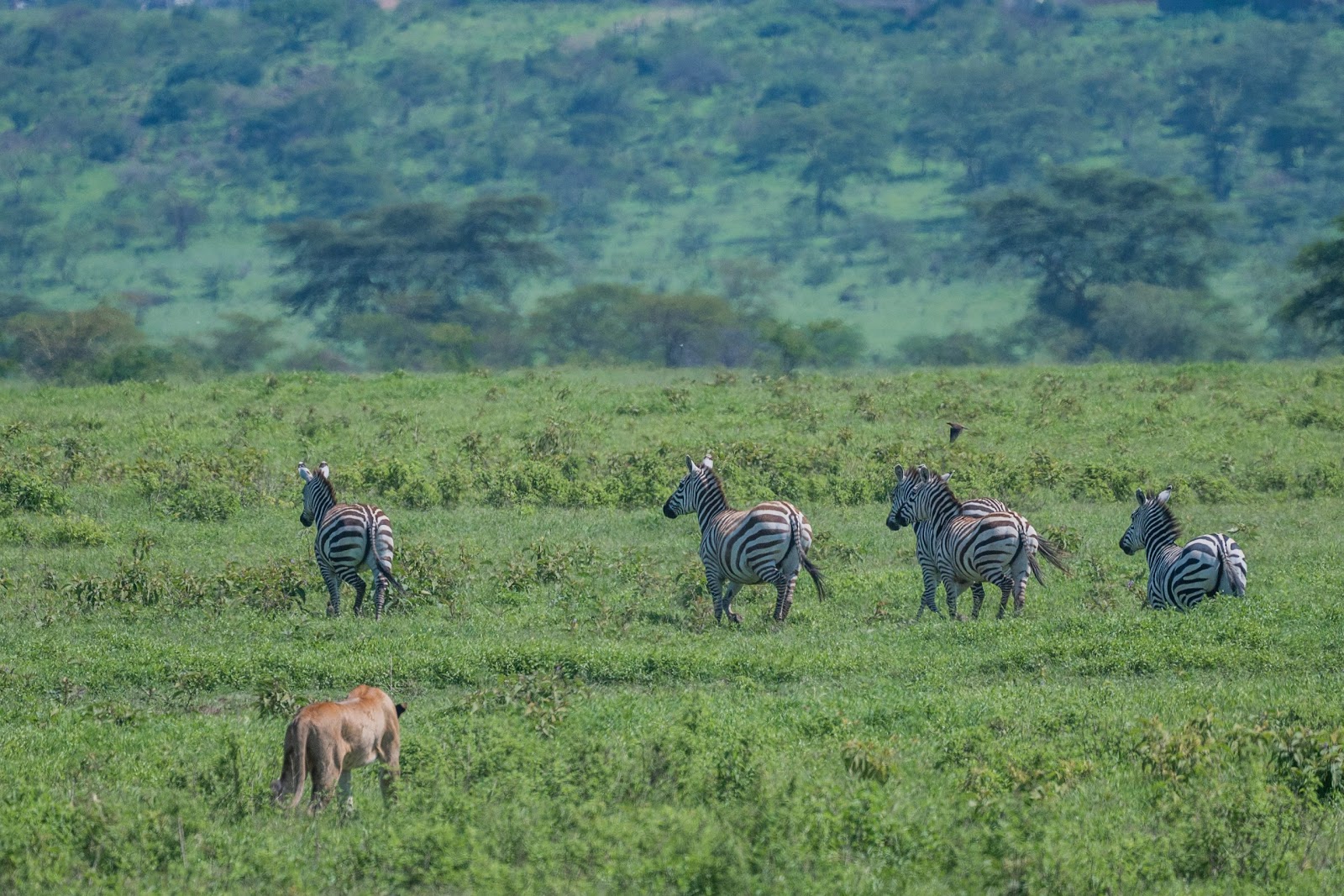
Lake Nakuru National Park is a stronghold for Rothschild’s giraffe, an endangered subspecies recognised by its pale, unmarked lower legs. Look for them browsing the acacias near the lake. Lions are seen fairly often, and the park is known for occasional tree-resting lions. Leopards are present but shy.
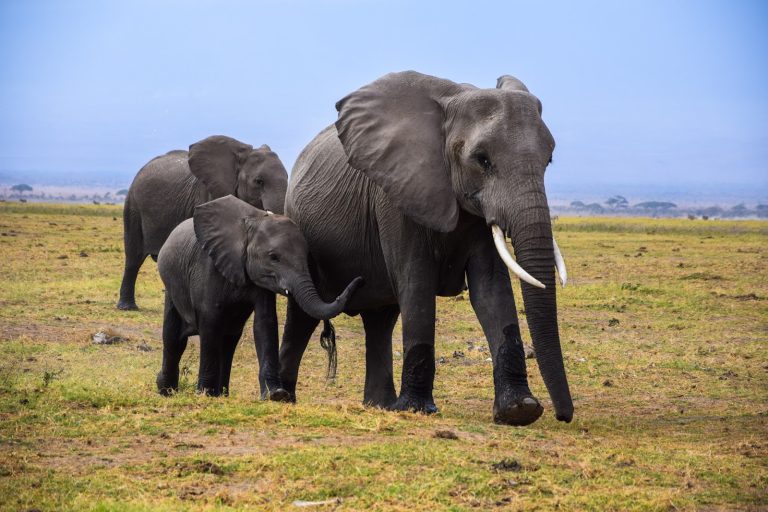
Spotted hyenas, side-striped jackals, olive baboons, vervet monkeys, warthogs, eland and Bohor reedbuck complete the cast. There are no elephants, so most visitors pair the park with Amboseli or the Masai Mara to finish their Big Five.
Flamingos: what really changed
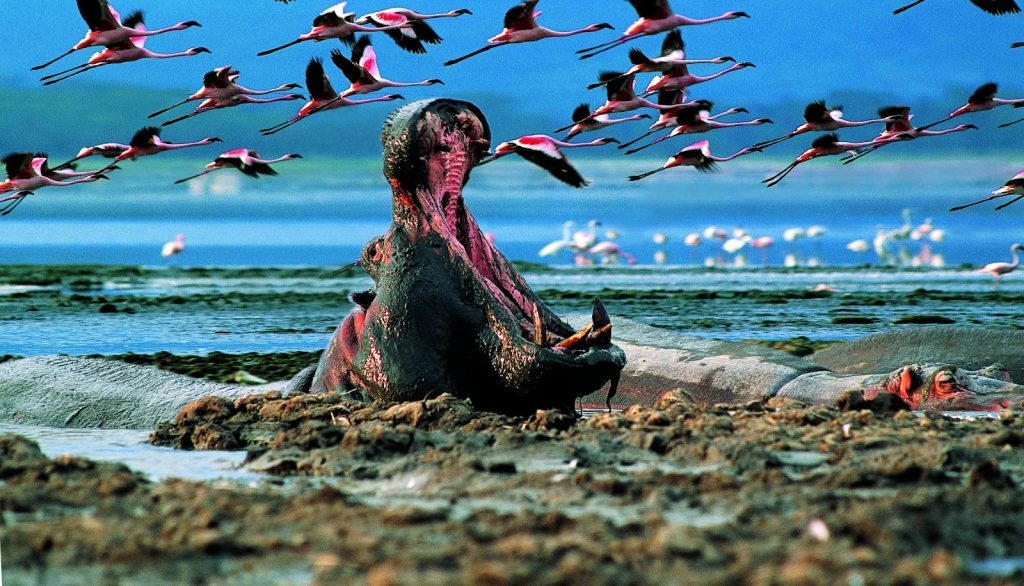
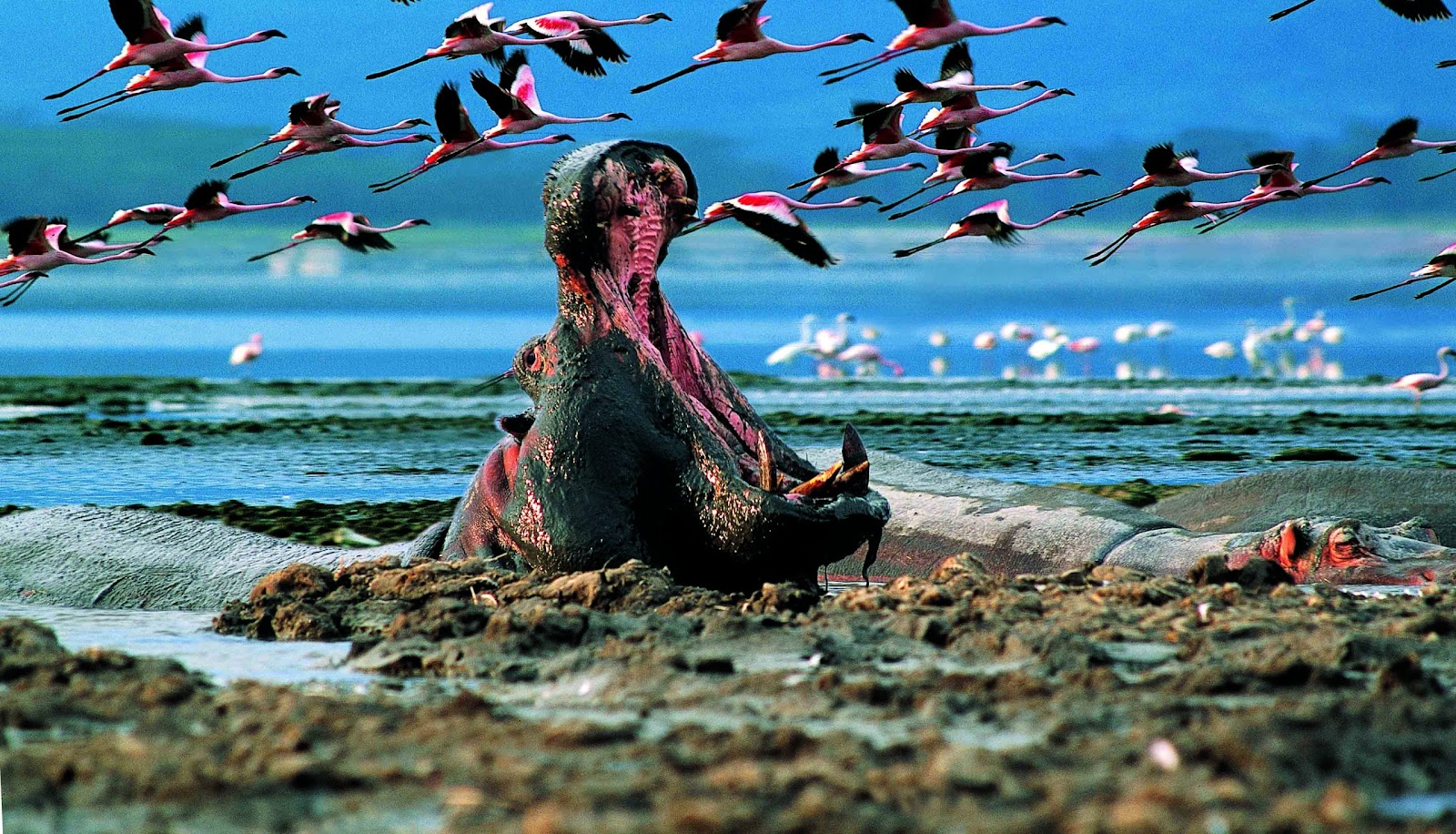
Lesser flamingos feed on algae that thrive in very salty, alkaline water. Since the early 2010s, heavy rains have raised the lake and diluted it, so flamingo numbers here are now far lower and less predictable than in the famous photographs. UNESCO notes that the birds move between Nakuru, Bogoria and Elementaita.
At Lake Nakuru National Park, treat flamingos as a bonus, not the reason to come. Our update on flamingos in Lake Nakuru in 2026 explains the latest picture, and Lake Bogoria is often the better bet for big flocks.
💡 Expert tip from our Nairobi team: Ask your guide to start on the southern grassland at first light. Rhinos are most active in the cool of the morning, and you will often have them to yourself before the day-trip vehicles arrive from Nairobi.
Birdlife in Lake Nakuru National Park
With around 450 species recorded, according to KWS, Lake Nakuru National Park is one of the best birding parks within easy reach of Nairobi. You do not need to be a birder to enjoy it.
On the shore, look for great white pelicans, yellow-billed storks, African spoonbills, marabou storks, herons and, when the water suits them, lesser and greater flamingos. African fish eagles perch on dead trees and announce themselves with a ringing call. In the woodland you will see superb starlings, lilac-breasted rollers and augur buzzards. Many Palearctic migrants arrive from about October to April. Keen birders can join our Kenya Birding Tour, which covers several Rift Valley lakes.
Lake Nakuru Entry Fees 2026
Lake Nakuru National Park is a KWS Premium Park, sharing that category with Amboseli. These are the conservation fees published by Kenya Wildlife Service, in force since October 2025. Each ticket covers a single entry for up to 24 hours.
| Visitor category | Adult (per day) | Child (per day) |
|---|---|---|
| Non-resident | USD 90 | USD 45 |
| African citizen (outside East Africa) | USD 50 | USD 25 |
| Kenya resident | KES 2,025 | KES 1,050 |
| East African citizen | KES 1,500 | KES 750 |
Children aged 5 and under enter free; the child rate applies from 5 to under 18. Vehicle fees are charged on top, for example KES 600 a day for a vehicle with fewer than six seats. KWS fees change from time to time and are paid electronically, not in cash, so check the official rates before you travel. Every written quote from us includes them. For every park in one place, see our list of Kenya national parks entrance fees for 2026.
Best Time to Visit Lake Nakuru
Lake Nakuru National Park is rewarding all year, but the dry months make game viewing easiest. Shorter grass means rhinos and lions are easier to spot, and the tracks in the south stay firm.
| Month | Weather | What to expect |
|---|---|---|
| January–February | Dry and warm | Excellent rhino viewing, short grass, good light |
| March | Hotter, rains start late in the month | Good game, fewer visitors |
| April–May | Long rains | Green and quiet; some southern tracks muddy |
| June | Drying out, cool mornings | Very good game, low crowds |
| July–October | Dry season | Peak game viewing and busiest months |
| November | Short rains | Lush scenery, migrant birds arrive |
| December | Mostly dry after short rains | Good all-round; busy over the holidays |
Rainfall varies from year to year, so use this as a guide, not a guarantee. Our Kenya weather by month guide gives the bigger picture. Nakuru sits at about 1,750 metres, so mornings can be cold in June, July and August.
Getting There: Lake Nakuru Distance From Nairobi
Lake Nakuru National Park is about 156 km from Nairobi on the A104 highway, a drive of roughly 2.5 to 3 hours depending on traffic. Most people go by road; there is no need to fly.
The road climbs to the edge of the Rift Valley escarpment, where a viewpoint stop gives a superb first look across the valley floor. From Lake Naivasha, the drive is about 1 to 1.5 hours, and from the Masai Mara it is roughly 5 to 6 hours.
Gates, hours and the airstrip
There are three gates: Main Gate, 4 km from Nakuru city, Lanet Gate on the Nairobi side, and Nderit Gate in the south-east, which is handy if you are coming from the Elementaita side. Gates open at 6:00 am and close at 6:00 pm unless you are staying overnight inside the park. KWS lists the Naishi airstrip as serviceable, but charter flights here are rare.
The People Behind Lake Nakuru National Park
The success of Lake Nakuru National Park is the work of people, not just a fence. KWS rangers patrol the sanctuary day and night, monitor individual rhinos and maintain the perimeter fence that keeps wildlife in and livestock out.
The park sits right beside Nakuru city, one of Kenya’s fastest-growing cities, in a county shaped by many communities, including Kalenjin, Kikuyu and Maasai families. That closeness brings pressure: pollution in the rivers that feed the lake, and settlement up to the fence. Your conservation fee goes to KWS, which funds rangers, rhino monitoring, fence maintenance and the wider national park system.
Local driver-guides, lodge staff and campsite teams also earn their living from visitors. When you choose a guide based in Kenya, more of your safari budget stays in the country. Read how this works in our complete list of Kenya national parks, reserves and conservancies.

Things to Do in Lake Nakuru National Park
Game drives are the main activity in Lake Nakuru National Park, broken up with short stops at viewpoints and picnic sites. Walking safaris and night drives are not offered inside the park.
Viewpoints: Baboon Cliff, Lion Hill and Out of Africa
Baboon Cliff on the western escarpment gives a classic panorama over the lake and is a favourite sunset stop. Lion Hill and the Out of Africa lookout give wide views over the woodland and water. These are among the few places where you may step out of the vehicle.
Makalia Falls
In the south of the park, Makalia Falls is a seasonal waterfall with a public campsite nearby. It is at its best after the rains and makes a pleasant picnic stop on a full-day loop.
Photography
The best light is in the first two hours after sunrise and the last two before sunset. A 100–400 mm zoom covers rhinos on the grass and birds on the shore. A beanbag on the window frame steadies your shots.
📅 Get a Free, No-Obligation Safari Quote
Send us your travel dates and group size, and we will reply with a clear, itemised quote including park fees. ✉ Send Us Your Dates on WhatsApp
Park Rules and Safety
KWS rules in Lake Nakuru National Park are simple and sensible. Follow them and you will have a safe, respectful visit.
- Stay in your vehicle except at designated viewpoints and picnic sites, and keep the doors closed.
- Keep to the roads: off-road driving is prohibited and the speed limit is 40 km/h.
- Keep your distance: at least 20 metres from wildlife, and never feed animals.
- No single-use plastics, and carry all rubbish out with you.
- Respect the hours: 6:00 am to 6:00 pm unless you are staying inside the park.
- No drones without prior KWS and aviation authority permission.
Baboons around the picnic sites of Lake Nakuru National Park are bold, so keep food inside the vehicle. Use insect repellent in the evening and speak to a travel clinic about malaria advice. Check current guidance on the UK government’s Kenya travel advice page or your own government’s equivalent before you book.
How Many Days Do You Need?
One full day is enough to see the highlights of Lake Nakuru National Park; one night is better. Staying over means an afternoon drive, a sunset at Baboon Cliff and a dawn drive when rhinos and lions are most active.
A day trip from Nairobi works well if you are short on time, but it means about five to six hours on the road. If Nakuru is part of a longer trip, one night is usually the right balance. For whole-trip planning, see how many days you need for a Kenya safari.
Where to Stay Near Lake Nakuru
You can stay inside Lake Nakuru National Park, which puts you closest to the wildlife for early drives, or in Nakuru city and the surrounding farmland, which is usually cheaper. Lodges inside the park sit on the hillsides above the lake.
KWS also runs Mbugani Homes and Naishi Guest House inside the park, plus the public Makalia campsite and several special campsites. For a side-by-side look at real properties, read our guide to Lake Nakuru National Park lodges.
What to Pack for Lake Nakuru
For Lake Nakuru National Park, pack for cool mornings, warm middays and dust. Layers matter more than anything else.
- A warm fleece or light jacket for early drives
- Binoculars, ideally one pair per person
- Sun hat, sunglasses and high-factor sunscreen
- Insect repellent for evenings
- A camera with a zoom lens and spare batteries
- A soft bag, which fits safari vehicles better than a hard case
Our what to pack for an African safari list covers the rest.
💡 Expert tip from our Nairobi team: Bring one pair of binoculars for each person. On a lake shore and in woodland, the best sightings are often 100 metres away, and sharing one pair means somebody always misses the moment.
Combining Lake Nakuru With Nearby Parks
Lake Nakuru National Park sits on the main Rift Valley route, so it fits naturally into most Kenya safaris. It is an easy stop between Nairobi and the Masai Mara, or a first night before heading north.
- Lake Naivasha and Hell’s Gate: hippos, boat rides and cycling, about an hour away. See our Lake Naivasha safari guide and Hell’s Gate guide.
- Lake Elementaita and Lake Bogoria: the other two UNESCO lakes, often better for flamingos. Read our Lake Elementaita guide.
- Masai Mara: big cats and, from about July to October, the Great Migration. Start with our Masai Mara National Reserve guide.
- Ol Pejeta: another rhino stronghold in Laikipia. Compare them in Lake Nakuru vs Ol Pejeta.
Sample 2-Day Lake Nakuru National Park Itinerary
This is how we usually plan a relaxed overnight visit to Lake Nakuru National Park. It can be shortened to a day trip or extended into a longer circuit.
Day 1: Nairobi to Lake Nakuru National Park
Leave Nairobi at about 7:00 am and stop at the Rift Valley viewpoint. Arrive in time for lunch, then spend the afternoon on the southern grassland looking for rhinos and Rothschild’s giraffe. Finish at Baboon Cliff for sunset before heading to your lodge.
Day 2: Dawn drive, then onward
Head out at 6:00 am for the best rhino and lion activity, then loop through the acacia woodland to Makalia Falls. After brunch, continue to Lake Naivasha, the Masai Mara or back to Nairobi.
Bookable trips that include the park
- Lake Nakuru Day Safari from Nairobi, from USD 180 per adult.
- Masai Mara and Lake Nakuru Camping Safari (4 days), from USD 590 per adult sharing.
- 5 Days Kenya Safari: Masai Mara, Nakuru and Naivasha: message us for a quote.
- Kenya Highlights Safari (9 days) through Samburu, Ol Pejeta, Lake Nakuru and the Masai Mara: message us for a quote.
Prefer your own vehicle and guide? See how a private Kenya safari works, or browse every Kenya safari from Nairobi.
Lake Nakuru National Park FAQs
Is Lake Nakuru National Park worth visiting?
Yes, especially if rhinos are on your wish list. Few parks in East Africa offer such reliable white and black rhino sightings, and it is only about three hours from Nairobi. You also get Rothschild’s giraffe, lions, buffalo and excellent birdlife. Visit for the rhinos and treat flamingos as a bonus.
How much is the entry fee for Lake Nakuru National Park in 2026?
Lake Nakuru is a KWS Premium Park. Non-resident adults pay USD 90 and children USD 45 per day. Kenya residents pay KES 2,025 per adult and East African citizens KES 1,500. Children aged 5 and under enter free. Fees are paid electronically and each ticket is valid for up to 24 hours.
Are there still flamingos at Lake Nakuru?
Some flamingos still visit, but numbers are far lower and less predictable than in the past. Since the early 2010s, rising water has diluted the lake and reduced the algae they eat. Flocks move between Nakuru, Bogoria and Elementaita, so ask us for the latest picture before you travel.
Can you see the Big Five in Lake Nakuru National Park?
You can see four of the Big Five: rhino, buffalo, lion and leopard. There are no elephants in the park, so most travellers combine Lake Nakuru with Amboseli or the Masai Mara to complete the five. Rhinos and buffalo are almost certain, lions likely and leopards a lucky bonus.
How far is Lake Nakuru from Nairobi?
Lake Nakuru National Park is about 156 km north-west of Nairobi on the A104 highway. The drive takes roughly 2.5 to 3 hours depending on traffic, with a stop at the Rift Valley viewpoint on the way. Main Gate is about 4 km from Nakuru city, so access is easy.
Can you do Lake Nakuru as a day trip from Nairobi?
Yes. Leave Nairobi early, enjoy a full game drive with a picnic lunch and return in the evening. Expect five to six hours on the road in total. Our Lake Nakuru Day Safari is planned around this timing, but one night in the park gives you a calmer dawn drive.
What are the opening hours of Lake Nakuru National Park?
The gates open at 6:00 am and close at 6:00 pm, according to Kenya Wildlife Service. Visitors staying overnight inside the park can remain after closing time. Plan to enter early: rhinos and lions are most active in the cool morning, and the light over the lake is at its best.
Is Lake Nakuru National Park good for families with children?
Yes. The park is compact, the roads are good and drives between sightings are short, which suits children well. Rhinos, giraffes, buffalo and baboons are usually easy to spot, and viewpoints let everyone stretch their legs. Children aged 5 and under enter free, and it pairs well with Lake Naivasha.
🏕 Plan Your Lake Nakuru National Park Safari With Sense of Adventure
Kenya-based experts. Real local knowledge. Transparent pricing. Tell us when you want to travel and we will build a Lake Nakuru safari around your dates, budget and interests. 💬 WhatsApp Us — Start Planning Today
Call or WhatsApp: +254 799 160 081 · Email: reservations@senseofadventure.co.ke
Related Safari Guides
- › Masai Mara National Reserve: Complete Visitor Guide
- › Amboseli National Park: Complete Visitor Guide
- › Lake Elementaita: The UNESCO Flamingo Lake
- › Lake Naivasha Safari Guide
- › Kenya National Parks Entrance Fees 2026
Official travel & park resource: Kenya Wildlife Service ↗ · Magical Kenya ↗