Mobile camping safari Kenya trips are the closest thing left to the original safari, from the days before permanent lodges: a small canvas camp that is taken down, loaded onto a truck and set up again at a new site every few days, following your route rather than staying fixed in one place. You wake under canvas, wash with water warmed over the fire and step out of your tent straight into the bush.
Sense of Adventure is a TRA-licensed private safari company based at Mountain Mall on Thika Road, Nairobi, and we build nights under canvas into many of our private routes. It is a different kind of trip from lodge-hopping, and it suits travellers who want to feel closer to the wilderness without giving up good food and a proper bed. This guide explains how a mobile camp works, what the tents and facilities are really like, where camps can be set up, what affects the cost, and how it compares with our own budget camping safari and with lodges.
✅ Mobile Camping Safari Kenya: Quick Answer
- What it is: a fully staffed canvas camp that moves with your itinerary, set up by a crew before you arrive.
- Comfort: walk-in tents with beds and bedding, a bucket-style shower and a private toilet tent are typical.
- Where: often on reserved special campsites in parks, or on private land and conservancies by arrangement.
- Best length: longer trips linking several areas, where moving camp saves backtracking.
- Best time: the dry seasons; the April to May long rains make tracks and campsites difficult.
- Budget alternative: our 4-day camping safari uses permanent tents at campsites, from USD 750 per adult sharing.
- Not the same as: pitching your own tent at a public campsite, which is self-catered.
Dreaming of nights under canvas? Tell us your route and dates and we will tell you honestly what camping options fit.
Ask About Camping OptionsHow a Mobile Camping Safari Actually Works
A mobile camp is a small set of canvas tents, plus a mess tent and a kitchen, that travels by truck between sites as your itinerary moves on. On a mobile camping safari Kenya route, the crew usually packs up after you leave for a morning game drive, drives ahead, and has the new camp ready before you arrive in the afternoon, so you rarely see it mid-move.
On most mobile camping safari Kenya trips, the same crew and guide stay with you for the whole trip. That continuity is one of the quiet pleasures of the style: the cook learns how you like your coffee, and the guide knows exactly what you still want to see. It is a different rhythm from lodge-hopping, where each stop is a fixed building with its own staff.
A typical day on a mobile camping safari Kenya route
- Dawn: a wake-up call with tea or coffee brought to your tent, then an early game drive.
- Mid-morning: breakfast back at camp or out in the bush.
- Midday: lunch and a rest in the shade of the mess tent.
- Afternoon: a second game drive, or the drive to your next site.
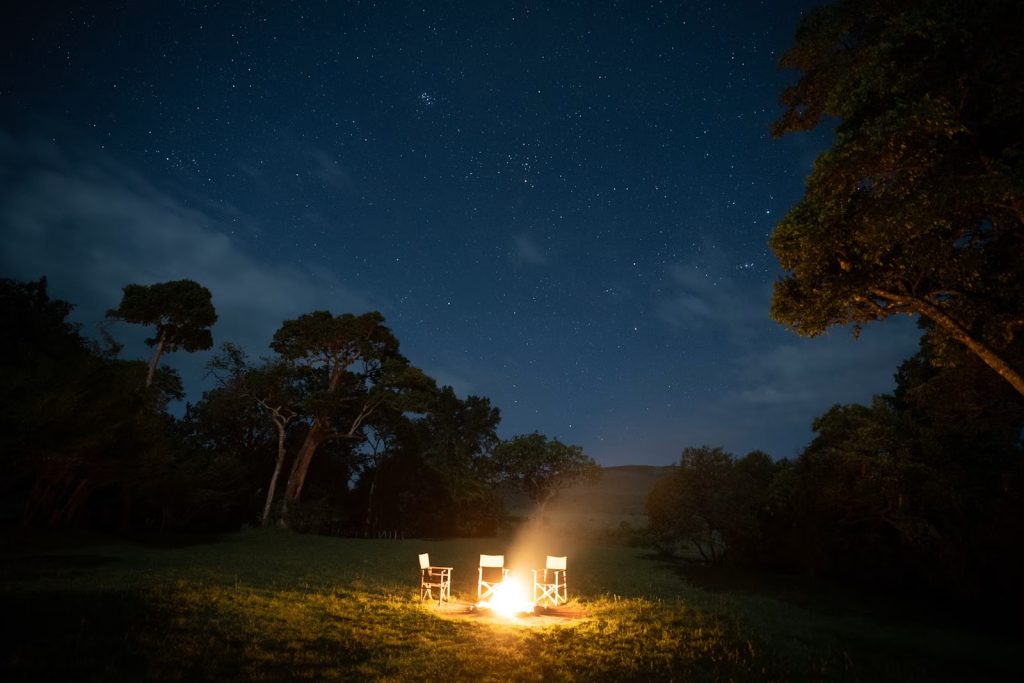
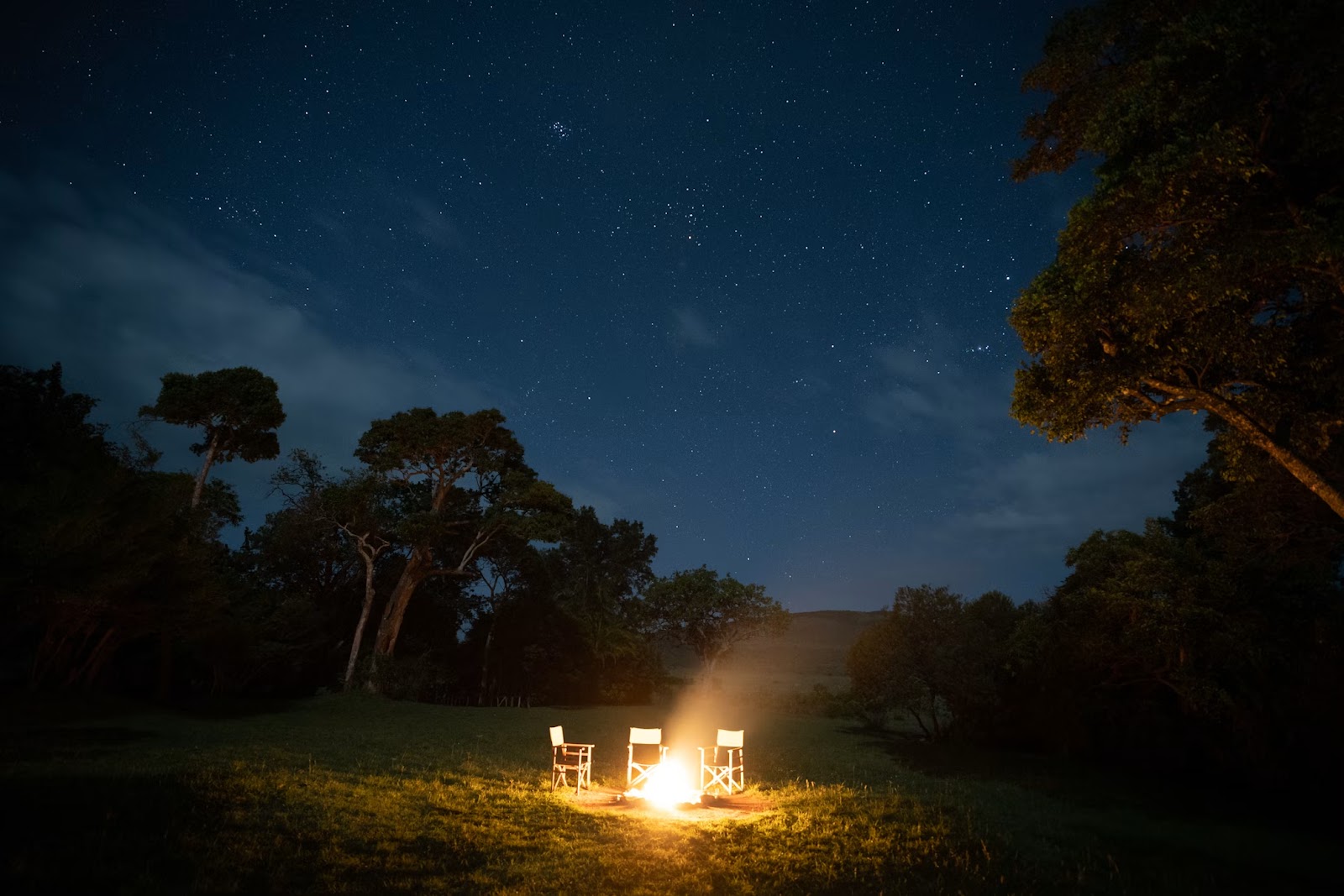
- Evening: a hot shower, dinner and stories around the campfire.
What the Tents and Facilities Are Like
Comfort on a mobile camping safari Kenya trip is far closer to a simple tented camp than to backpacking. Exact set-ups vary by outfitter, but these are typical:
- Tents: walk-in canvas tents you can stand up in, with proper camp beds, bedding and a small table.
- Washing: a bucket or safari shower filled with water warmed on the fire, often in a private shower area attached to the tent.
- Toilet: a private toilet tent, usually a chemical or dug toilet, rather than a flushing one.
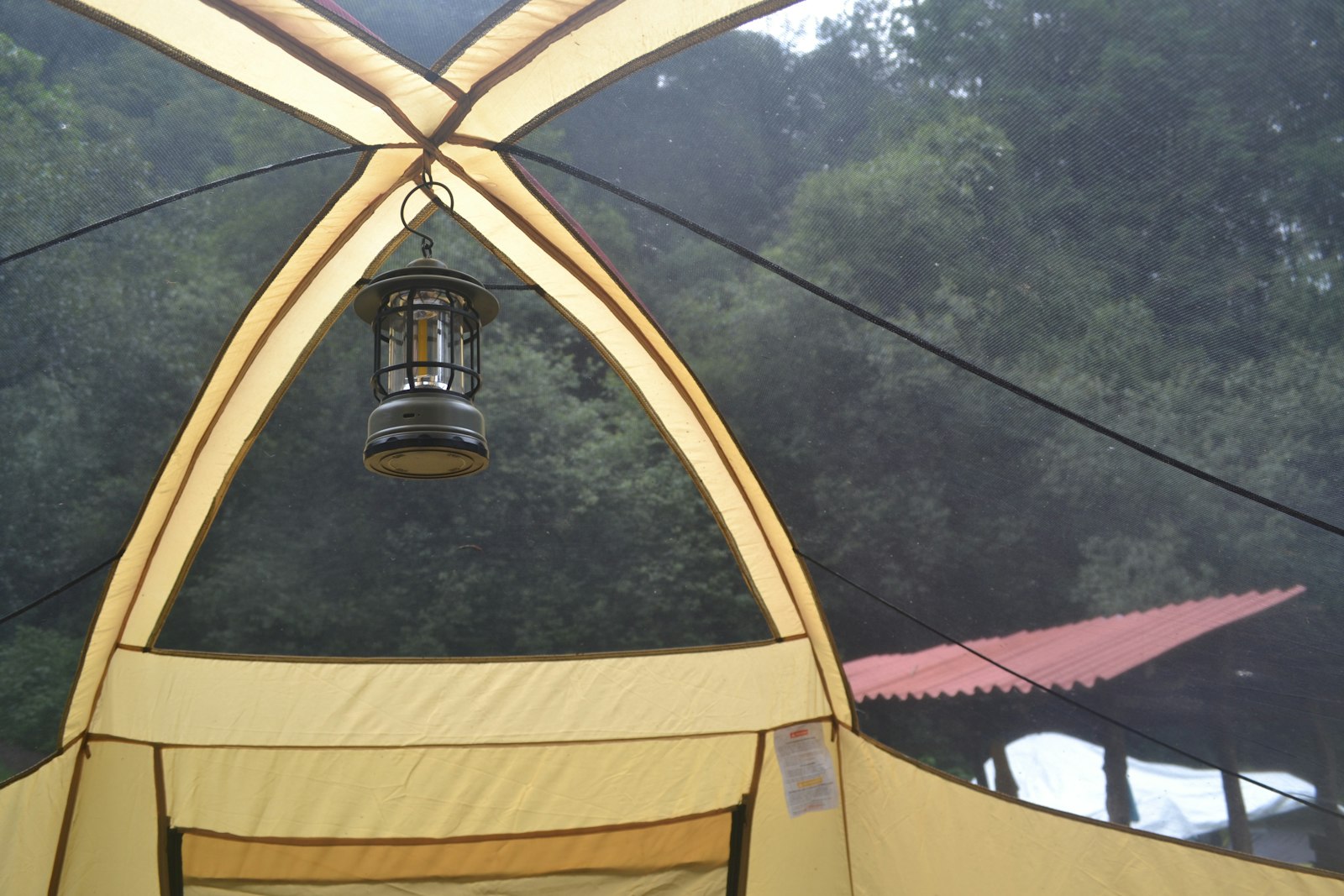
- Light and power: lanterns or solar lights; charging is often limited to the vehicle or a small solar unit.
- Meals: freshly cooked by the camp cook, served in a mess tent or under the stars.
If the bathroom set-up matters to you, read our guide to toilets and bathroom facilities on safari and what a safari tent is like inside before you decide.
5 Things to Know About a Mobile Camping Safari Kenya Trip
The Camp Moves So You Do Not Retrace Your Steps
Instead of driving back to a fixed lodge every evening, the camp relocates ahead of you, so a longer circuit can cover more ground without hours spent backtracking to the same base each night.
Canvas Tents With Private Facilities
Modern mobile camps are not rough camping. Expect a proper bed, a private toilet tent and a bucket shower with water warmed on the fire, closer to a simple tented camp than a backpacking tent. Set-ups vary, so ask for details.
The Same Crew Usually Follows You the Whole Trip
Unlike lodge-hopping, where staff change at every stop, a mobile camp usually travels with one consistent crew and guide, building a familiarity over the trip that a run of different lodges cannot match.
Best Suited to Longer, Multi-Park Circuits
The style works best on longer itineraries linking several parks or conservancies, where the effort of moving camp pays off across enough distance, rather than on a short trip to a single destination.
Not the Same as Public Campsite Camping
A mobile camping safari is fully staffed and catered. Pitching your own tent at a Kenya Wildlife Service public campsite is a different thing: you bring your own gear, and there is no crew, no cook and no guide unless you hire them.
Where Mobile Camps Can Be Set Up
Where a mobile camping safari Kenya crew can pitch depends on who manages the land. In national parks, Kenya Wildlife Service offers public campsites, which are first come, first served with basic facilities, and special campsites, which can be reserved for one group. Special campsites are the usual choice for a private mobile camping safari Kenya crew.
Camping fees are charged per person per night and are paid through the KWS service on eCitizen; rates differ by park and visitor category, so check the current figure on the Kenya Wildlife Service website. National reserves run by county governments and private conservancies set their own rules. Our guides to camping in Kenya’s national parks and camping in Tsavo National Park explain the difference between public and special sites.
Mobile Camping vs Our Camping Safari vs Lodges
It helps to compare a mobile camping safari Kenya trip with the other ways to sleep in the bush, from permanent tents to lodges.
| Style | Where you sleep | Best for |
|---|---|---|
| Mobile camping safari | Canvas tents moved between sites by a crew | Adventurous travellers on longer routes |
| Our camping safari | Permanent walk-in tents at campsites on the reserve edge | Budget travellers, students, solo guests |
| Tented camp | Permanent luxury or mid-range tents with en-suite bathrooms | Canvas feel with more comfort |
| Lodge | Solid rooms, often with a pool | Families and travellers wanting walls |
| Self-camping | Your own tent at a public campsite | Experienced, self-sufficient campers |
If a full mobile camping safari Kenya trip is more than you need, our Masai Mara and Lake Nakuru camping safari is the closest product we list: four days, permanent tents with proper beds at campsites on the edge of the reserve, a camp cook and fresh meals, from USD 750 per adult sharing. For the wider choice, see tented camp vs lodge.
Canvas, Tented Camp or Lodge?
Tell us how adventurous you feel and how much comfort you need, and we will suggest the camping or tented style that suits your trip.

What Affects the Cost of a Mobile Camping Safari Kenya Trip
A private mobile camping safari Kenya trip is not automatically cheaper than staying in lodges. You are paying for a crew, a support truck, equipment, fuel and campsite fees for your group alone. The main cost drivers are:
- Group size: the crew and truck cost much the same for two guests or six, so larger groups pay less per head.
- Length and distance: more moves mean more fuel and longer crew days.
- Comfort level: simple camps cost less than those with larger tents, en-suite set-ups and extra staff.
- Park and campsite fees: charged per person per day or night, and special campsites cost more than public ones.
- Season: peak months bring higher park fees and more demand for sites.
For a lower-cost taste of mobile camping safari Kenya life, our 4-day camping safari from USD 750 per adult sharing is the simplest option. For a bespoke private camp, we price each route individually in a written quote.
Where Mobile Camping Fits on a Longer Circuit
A mobile camping safari Kenya plan suits multi-park circuits rather than short single-destination trips. Longer routes such as our 14 Days Kenya Safari Circuit and 18-Day Kenya Safari Itinerary show the kind of ground a circuit covers; ask us whether some nights under canvas can be built into a route like these. If you are weighing camping against fixed lodges more generally, our guide to camping in Kenya national parks covers the independent, self-catered version for comparison.
A private vehicle is the natural partner for a mobile camping safari Kenya route, because the camp and the vehicle both follow your pace; see our private Kenya safari packages for how private trips work.
Best Time for a Mobile Camping Safari Kenya Trip
Weather matters more on a mobile camping safari Kenya trip than in a lodge. The long dry season, roughly June to October, and the short dry spell from January to February are the best times for a mobile camping safari Kenya trip: tracks are firm, nights are clear and wildlife gathers near water. July to October also brings the Great Migration to the Masai Mara.
The long rains of April and May make tracks muddy and campsites hard to reach, and many camping operations pause. The short rains of November and early December are usually lighter but can still be wet. Nights in higher areas such as Laikipia and the Mara can be cool all year, so pack warm layers. Our Kenya weather by month guide has the detail.
Planning a Dry-Season Camping Trip?
Campsites and crews in the dry months are in demand. Send us your dates and we will reply with a written quote and the camping options available.
Request My Camping QuoteSafety and Camp Rules Under Canvas
Mobile camps, like most safari camps, are unfenced, so wildlife can walk through at night. Safety on a mobile camping safari Kenya trip comes from simple rules that the crew explains on arrival:
- Keep your tent zipped at all times, day and night.
- Never walk around camp alone after dark; ask a crew member or guard to walk with you.
- Keep food out of your tent.
- Carry a head torch and keep it by your bed.
- Follow your guide’s instructions on walks and at the vehicle.
Before you travel, check the GOV.UK travel advice for Kenya and make sure your travel insurance covers safari activities.
Expert tip from our Nairobi team
Before you commit, ask exactly what the bathroom set-up is at each site: flush or chemical toilet, bucket or pressure shower, and how hot water is supplied. Ask too how many nights you will stay at each campsite. Two or three nights per site gives you time to settle, while moving every day can feel rushed.
Who a Mobile Camping Safari Kenya Trip Suits
A mobile camping safari Kenya trip is not for everyone, and it is better to know that before you book.
A mobile camping safari Kenya trip is a great fit if you
- love the outdoors and want to hear the bush at night;
- are happy with a bucket shower and a simple toilet tent;
- are travelling on a longer route through several parks;
- want the same crew and guide for the whole trip.
Consider a tented camp or lodge instead if you
- need step-free access, a flushing toilet or a reliable power supply;
- are travelling with very young children;
- have only two or three days in one park;
- are travelling in the April to May long rains.
Our best budget safari camps guide is useful if cost is the main reason you are looking at camping.
Mobile Camping Safari Kenya: Quick Reference
- Camp: a small set of canvas tents, a mess tent and kitchen, moved by truck between sites.
- Facilities: usually a private toilet tent and a bucket shower with water warmed on the fire.
- Crew: usually one team travels with you and rebuilds camp ahead of each stop.
- Best itinerary: longer trips across several parks or conservancies.
- Not the same as: self-catered public campsite camping, which includes no crew or meals.
- Best fit: travellers who want a close-to-nature feel without giving up proper meals and a real bed.
What to Pack for a Mobile Camping Safari Kenya Trip
- Warm layers: a fleece and a light jacket for cool evenings and early drives.
- Head torch: essential for moving around your tent at night.
- Soft bag: easier to load onto vehicles and trucks than a hard suitcase.
- Neutral clothing: khaki, olive and brown tones work best in the bush.
- Power bank: charging may be limited in camp.
- Personal medication: enough for the whole trip, as you will be far from shops.
Our Kenya safari packing list covers everything else you need for a mobile camping safari Kenya trip.
Experience the Original Kenya Safari
Tell us the parks you most want to see and how many nights you would like under canvas, and we will show you the options for your route.
Mobile Camping Safari Kenya FAQs
What is a mobile camping safari in Kenya?
A mobile camping safari Kenya trip uses a small canvas camp that a dedicated crew takes down and sets up again at a new site every few days. It lets a longer itinerary move between parks without staying in fixed lodges, and the crew usually has camp ready before you arrive.
Is mobile camping comfortable or is it rough camping?
A mobile camping safari Kenya trip is comfortable, not rough. Mobile camps are fully staffed and catered, with walk-in tents, proper beds and bedding, a private toilet tent and a bucket shower with water warmed on the fire. It feels closer to a simple tented camp than to backpacking, though set-ups vary by outfitter.
How long should a mobile camping safari be?
A mobile camping safari Kenya trip works best on longer itineraries that link several parks or conservancies, with two or three nights at each site. On a short single-destination trip, a permanent tented camp or our 4-day camping safari usually makes more sense, because there is little distance to gain from moving camp.
What is the difference between a mobile camping safari and public campsite camping?
A mobile camping safari is fully staffed, with a crew, meals and a guide included. Public campsite camping in Kenya’s national parks is self-catered: you bring your own tent and gear, and there are no staff unless you hire them. Mobile camps in parks usually use reserved special campsites instead.
Does the same crew stay with you throughout a mobile camping safari?
Usually, yes. One crew and guide typically travel with you for the whole circuit, moving ahead to set up camp at each new site before you arrive. That continuity is a big part of the appeal, as the team gets to know your tastes and interests over the trip.
When is the best time for a mobile camping safari in Kenya?
The dry seasons are best: roughly June to October and January to February, when tracks are firm and nights are clear. The long rains of April and May make many campsites hard to reach. Nights can be cool in higher areas such as Laikipia and the Masai Mara, so pack warm layers.
Is a mobile camping safari safe?
A mobile camping safari Kenya trip is safe when you follow the camp rules. Camps are unfenced, so keep your tent zipped, keep food out of it and never walk around camp alone after dark; ask a crew member to walk with you. Your guide and crew brief you on arrival and know how to manage wildlife around camp.
Sleep Closer to the Wild in Kenya
From our budget camping safari to a tailor-made route, our Nairobi team will give you a straight answer on which camping style fits your dates and budget.
Kenya-based experts. Real local knowledge. Transparent pricing.