
Nairobi National Park gates that most visitors use are three: Main Gate on Langata Road for the city centre, Karen and Wilson Airport; East Gate off Mombasa Road for JKIA and airport hotels; and Mbagathi Gate on the Magadi Road side for Ongata Rongai. All open at 6 am and charge the same fees.
Because the park sits right against the edge of a capital city, the gate you choose can easily save or cost you 30 to 40 minutes of driving before your safari begins. Sense of Adventure is a TRA-licensed safari operator based on Thika Road in Nairobi, and our guides use all three gates every week.
Entrance fees and the wildlife inside are the same whichever gate you use; only the journey changes. This guide explains each of the Nairobi National Park gates in plain terms, which one suits your hotel or flight, opening times, what to bring, and how our guides plan the route so you spend more time with lions and rhinos and less time in traffic.
✅ Nairobi National Park Gates: Quick Answer
- Main Gate (Langata Road): best for the city centre, Westlands, Karen and Wilson Airport; the most visitor facilities.
- East Gate (off Mombasa Road): best from Jomo Kenyatta International Airport and Mombasa Road hotels, and usually quieter.
- Mbagathi Gate (Magadi Road side): best from Ongata Rongai and the southern Langata and Karen areas.
- Smaller gates: Langata, Banda and Maasai gates see limited visitor use; the old Cheetah Gate is closed.
- Fees: identical at every gate, paid online through eCitizen in advance; no cash at the gate.
- Opening time: gates open at 6 am, the best time to start a game drive.
Not sure which gate is closest to your hotel or flight? Send us your pick-up point and we will tell you.
Find My Fastest GateNairobi National Park Gates at a Glance
Nairobi National Park covers about 117 square kilometres just south of the city centre. Because the city wraps around three sides of the park, Nairobi National Park gates sit on quite different roads. This table brings the main options together.
| Gate | Road | Best for | Visitor use |
|---|---|---|---|
| Main Gate | Langata Road | CBD, Westlands, Karen, Wilson Airport | Main public entrance |
| East Gate | Off Mombasa Road | JKIA, Mombasa Road hotels | Public entrance, often quieter |
| Mbagathi Gate | Magadi Road side | Ongata Rongai, southern Langata | Public entrance |
| Langata, Banda, Maasai gates | Various | Local and staff access | Limited |
| Old Cheetah Gate | South-eastern side | n/a | Closed |
Arrangements at Nairobi National Park gates can change, so it is worth checking the Kenya Wildlife Service website or asking your operator before a self-drive visit.
The Three Nairobi National Park Gates Most Visitors Use
For a standard game drive, you only need to think about three of the Nairobi National Park gates. Each one is built for a different direction of approach into the park.
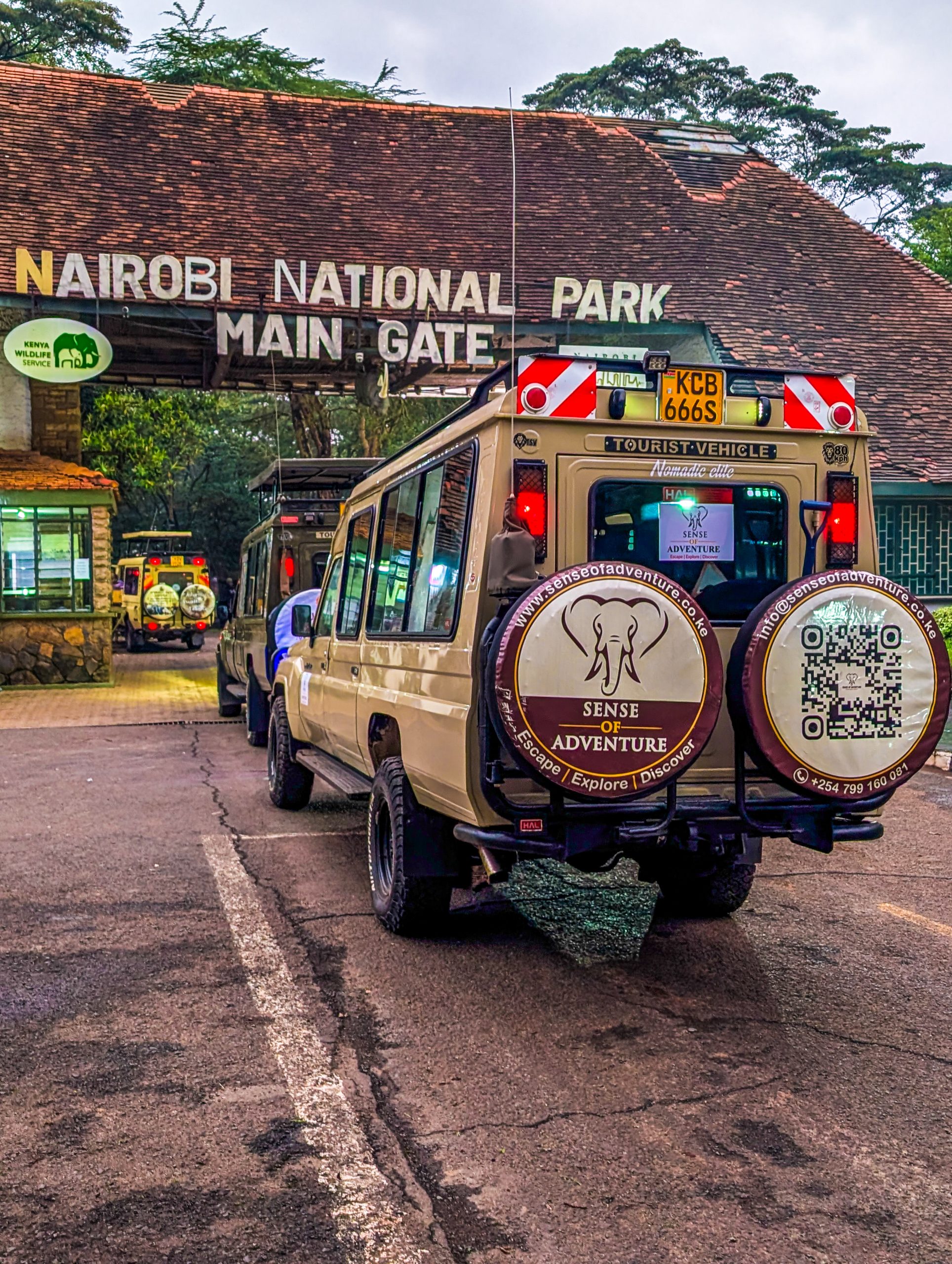
Main Gate, Langata Road: For the CBD, Westlands, Karen and Wilson Airport
Main Gate is on Langata Road beside the Kenya Wildlife Service headquarters, about 7 km from the city centre. It is the park’s best-known public entrance, with the most visitor facilities, and the natural choice if you are staying in the city centre, Westlands or Karen, or flying from Wilson Airport. The Animal Orphanage, the Safari Walk and the Ivory Burning Site Monument are all close to this gate.
East Gate, Off Mombasa Road: For JKIA Arrivals and Mombasa Road Hotels
East Gate is reached by a short access road off Mombasa Road on the park’s eastern side. It is the entrance that makes a layover safari straight from Jomo Kenyatta International Airport practical, because you avoid crossing the city. It is usually quieter than Main Gate, as fewer visitors know about it.
Mbagathi Gate, Magadi Road Side: For Ongata Rongai and Southern Langata
Mbagathi Gate is on the Magadi Road side of the park’s south-western edge. It was opened to the public more recently, having previously served mainly as a Kenya Wildlife Service entrance. It is sometimes loosely called “Cheetah Gate”, although that name belongs to an older, closed gate. It is the quickest way in from Ongata Rongai or the southern parts of Karen and Langata.
Which of the Nairobi National Park Gates Fits Your Route?
The right gate depends almost entirely on where you start. Here is how our guides usually choose between the Nairobi National Park gates for the most common pick-up points.
From the city centre, Westlands or Upper Hill
Use Main Gate. Langata Road leads directly there, and in light early-morning traffic it is often a short drive. It also puts you close to the Animal Orphanage and the Ivory Burning Site Monument if you want to add them.
From Jomo Kenyatta International Airport or a Mombasa Road hotel
Use East Gate. It saves you driving across the city, which matters on a tight layover. Our guide to the 6 hour layover in Nairobi explains how much park time is realistic between flights.
From Karen, Langata or Ongata Rongai
Northern Karen and Langata usually suit Main Gate. If you are further south, towards Ongata Rongai or along Magadi Road, Mbagathi Gate is often faster. Your guide will check the traffic on the day.
Exiting through a different gate
You do not have to leave by the gate you entered. A popular plan is to enter at Main Gate at dawn, drive south and east across the plains, and exit at East Gate for an afternoon flight from JKIA. Using two Nairobi National Park gates like this turns the drive into a one-way crossing with no doubling back.
Main Gate In, East Gate Out?
Tell us where you are staying and where you need to be afterwards, and we will plan an entry and exit route that saves time.
Plan My Gate Route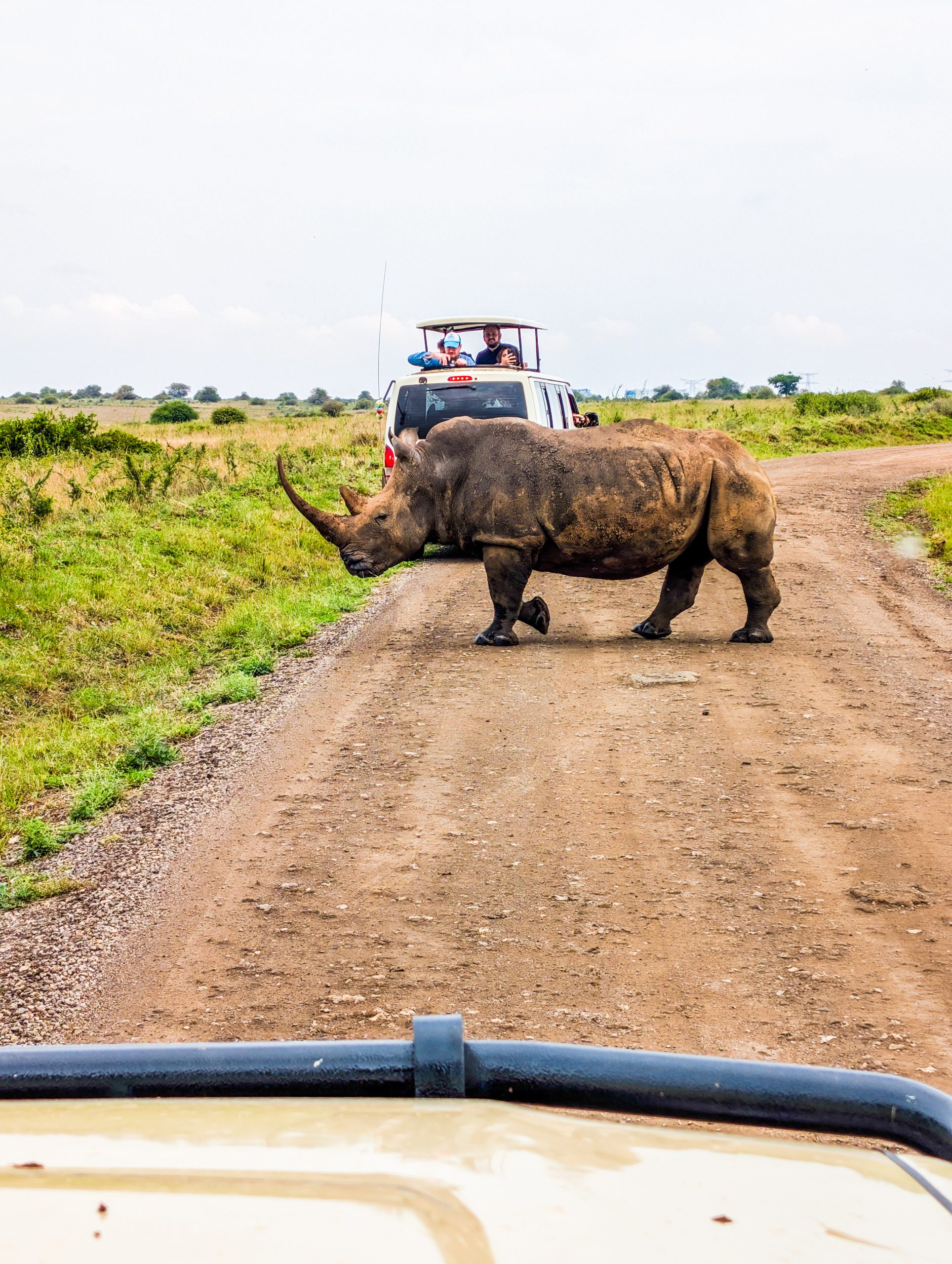
The Smaller and Closed Nairobi National Park Gates
Beyond the three main entrances, the park has several smaller access points. Langata Gate, Banda Gate and Maasai Gate see limited visitor use and mainly serve local, staff or service traffic. Visitor facilities at these Nairobi National Park gates are basic, so we do not plan game drives around them.
The old Cheetah Gate on the south-eastern side has been closed for many years. There has been talk of reopening it, but nothing has been confirmed. If someone mentions “Cheetah Gate” today, they may well mean Mbagathi Gate, so always confirm the road name before you set off.
What Is Near Each of the Nairobi National Park Gates
Your gate choice can also decide which extra stops fit neatly into the day. Several of Nairobi’s best-known wildlife attractions sit close to the park boundary, so a little planning lets you combine them without long detours.
Near Main Gate
The Nairobi Animal Orphanage, the Nairobi Safari Walk and the Ivory Burning Site Monument are all close to Main Gate on Langata Road. Families often visit the orphanage after a morning drive, and history lovers can read our Nairobi National Park history guide before stopping at the monument. The Giraffe Centre in Langata is a short drive away.
Near the Magadi Road side
The elephant nursery run by the Sheldrick Wildlife Trust lies on the western side of the park and is reached from Magadi Road. Its public visiting hour is short and must be booked in advance, so we plan the game drive around it. Ongata Rongai and the southern Langata suburbs are also on this side.
Near East Gate
East Gate is the closest of the Nairobi National Park gates to the airport, and the open plains in the east and south-east of the park are often good for plains game. It is the natural exit if you want to finish the drive and go straight to a flight or a Mombasa Road hotel.
Best Time of Day and Year to Use the Gates
Time of day matters more than season at the Nairobi National Park gates. Arriving at 6 am means short queues, cooler air and the best chance of lions and rhinos on the move. Late afternoon is also good, but plan your exit carefully so you are out before closing time and ahead of evening traffic.
The drier months, roughly June to October and January to February, usually make tracks easier and wildlife easier to find. After heavy rain, some tracks near the smaller gates can be muddy, which is another reason to use the main entrances. Check Kenya weather by month when choosing dates.
Opening Hours, Fees and What to Bring
The Nairobi National Park gates open at 6 am, and that first hour is usually the best for wildlife. Plan to leave the park before the gates close in the early evening; check the current closing time with the Kenya Wildlife Service, as it can change.
Fees are the same at every gate. Under the Kenya Wildlife Service tariff introduced in October 2025, non-resident adults pay USD 80 and children and students USD 40, while Kenya residents and East African citizens pay lower shilling rates; that tariff was challenged in the High Court, so we confirm the rate in force when we quote. Fees are paid online through eCitizen before you arrive, and cash is not accepted. Our Nairobi National Park entrance fees guide explains each category.
What to have ready at Nairobi National Park gates
- Your eCitizen ticket or QR code, saved on your phone and as a screenshot.
- Your passport or ID matching the fee category you booked.
- Vehicle details if you are self-driving; a high-clearance vehicle is wise after rain.
- Water, a hat and binoculars, as there are few facilities inside the park.
Common mistakes at Nairobi National Park gates
The most common mistake is arriving without a prepaid ticket, expecting to pay in cash. The second is heading to the wrong gate after a map app picks an entrance with limited access. The third is booking a resident rate without the right ID. Our team checks all three before every trip, so nothing holds you up at the Nairobi National Park gates.
Getting to the Nairobi National Park Gates
Most visitors reach the park by road with a guide. Self-drive is allowed, but you need a suitable vehicle, a prepaid ticket and confidence on unsigned dirt tracks. Taxis and ride-hailing cars can drop you at one of the Nairobi National Park gates, but they are not allowed to take you on a game drive, so you would still need a safari vehicle.
Traffic is the biggest variable. Early mornings are usually lighter, while weekday rush hours on Langata Road and Mombasa Road can be slow. Starting before 6 am avoids most of it and gets you to the Nairobi National Park gates just as they open.
Tours That Handle the Gate for You
On a guided trip, choosing between the Nairobi National Park gates is part of the plan. Our private half-day game drives include pick-up routed through whichever gate is fastest from your hotel, and our Nairobi National Park tours guide compares every option. The Nairobi Layover Tour starts from USD 190 per person and is planned around East Gate and your flight times, with baby elephants and giraffes added.
Prices depend on group size and timings, so we confirm a written quote for your exact plan. See our game drive guide for what happens once you are through the gate.
Get a Gate-to-Gate Price in Writing
Send your pick-up point, date and group size, and we will reply with one price covering park fees, vehicle, guide and the best gate for your route.
Expert tip from our Nairobi team
Do not let a map app choose your gate. Apps sometimes route you to one of the smaller staff gates, which can mean a wasted drive. Type the gate name and road, for example “Main Gate, Langata Road”, and pay your eCitizen ticket the evening before so you are ready at 6 am.
Nairobi National Park Gates Facts
- Main Gate: Langata Road, beside KWS headquarters, about 7 km from the city centre; the most visitor facilities and best for city-centre and Wilson Airport visitors.
- East Gate: off Mombasa Road on the eastern side; the airport-side entrance, ideal for JKIA layover safaris and generally quieter.
- Mbagathi Gate: Magadi Road side, opened to the public more recently; fastest for Ongata Rongai and southern approaches.
- Smaller gates: Langata, Banda and Maasai gates exist but see limited public use.
- Old Cheetah Gate: closed for many years; a reopening has been discussed but not confirmed.
- Entrance fees: identical at every gate; the choice only affects driving time, not cost or what you see.
Practical Tips for Nairobi National Park Gates
- Match the gate to your start point, not to what a map app suggests.
- Arrive at 6 am to beat traffic and catch active predators.
- Consider a one-way route, entering at one gate and leaving by another.
- Pay online the day before, as mobile signal at the gate can be weak.
- Carry the right ID for the fee category you booked.
- Check official travel advice such as the GOV.UK travel advice for Kenya before you go.
Planning Your Route
Once you know your gate, check our entrance fees breakdown and game drive guide for what happens after you’re through it. Ready to book? Our Nairobi Layover Tour or a private half-day drive includes pick-up routed through whichever gate is fastest from your hotel or flight.
If Nairobi is the start of a longer trip, our Kenya safari from Nairobi and private Kenya safari options can begin with a morning in the park before you head on to the Masai Mara or Amboseli.
Nairobi National Park Gates FAQs
How many gates does Nairobi National Park have?
Nairobi National Park has several gates, but only three see regular visitor use: Main Gate on Langata Road, East Gate off Mombasa Road and Mbagathi Gate on the Magadi Road side. Smaller gates such as Langata, Banda and Maasai see limited use, and the old Cheetah Gate is closed.
Which Nairobi National Park gate should I use from the airport?
East Gate, reached by a short access road off Mombasa Road, is the most practical of the Nairobi National Park gates if you are coming from Jomo Kenyatta International Airport. It avoids crossing the city, which makes a layover safari realistic. Allow for traffic and leave plenty of time to get back for your flight.
Is Cheetah Gate open at Nairobi National Park?
No. The old Cheetah Gate has been closed for many years and has not reopened, although a reopening has been discussed. It is sometimes confused with Mbagathi Gate, which is open to the public and is occasionally given the same nickname, so always confirm the road name before you travel.
Does the entrance fee change depending on which gate you use?
No. Entrance fees are identical at all Nairobi National Park gates. Under the current KWS tariff, non-resident adults pay USD 80 and children USD 40, paid online through eCitizen before you arrive. The only difference between gates is how long it takes to reach them from your hotel or airport.
Which gate is best if I am staying in Karen or Langata?
Main Gate on Langata Road is the usual choice for Karen and Langata, and it is close to the Animal Orphanage and Ivory Burning Site. If you are in the southern part of either area, towards Ongata Rongai, Mbagathi Gate on the Magadi Road side can be faster, depending on traffic.
What time do the Nairobi National Park gates open?
The Nairobi National Park gates open at 6 am, and the first hours after opening are usually the best for wildlife. Plan to leave before the gates close in the early evening. Closing times can change, so check with the Kenya Wildlife Service or your operator before a self-drive visit.
Can I enter at one gate and leave by another?
Yes. Many visitors enter at Main Gate at dawn and leave by East Gate, which is closer to the airport. This one-way route avoids doubling back and suits travellers with an afternoon flight. Your eCitizen ticket covers your visit, not a specific gate, so the exit you choose does not change the fee.
Leave the Gate Planning to Us
From a dawn start at Main Gate to an airport-side exit at East Gate, our Nairobi team plans the route so every minute goes on wildlife, not traffic.
Kenya-based experts. Real local knowledge. Transparent pricing.