Lions roar mostly after dark and at dawn, and in Kenya you can sleep close enough to hear them. The best places are tented camps in the Masai Mara conservancies and Laikipia, the open-air Star Beds at Loisaba, and the Aberdare tree hotels, where wildlife visits a floodlit waterhole below your room. Each night feels completely different.
Sense of Adventure is a TRA-licensed private safari company based at Mountain Mall on Thika Road, Nairobi. We plan safaris where the nights matter as much as the game drives. This guide compares Kenya’s wildest places to sleep, explains why lions roar when they do, and shows you how to choose, book and stay safe.
Where lions roar at night: the quick answer
- Best chance to hear lions: an unfenced tented camp in a Masai Mara conservancy.
- Most exposed night: the Star Beds at Loisaba in Laikipia, four-poster beds rolled out on raised platforms.
- Most relaxed night: The Ark or Treetops in the Aberdares, watching a floodlit waterhole from indoors.
- Best for night drives: private conservancies, where spotlit drives are allowed.
- Safety: staff escort you after dark in every unfenced camp.
Want one unforgettable night in the wild? Tell us your route and we will suggest the right camp, Star Bed or tree hotel.
Find my wild nightWhere Can You Hear Lions Roar at Night in Kenya?
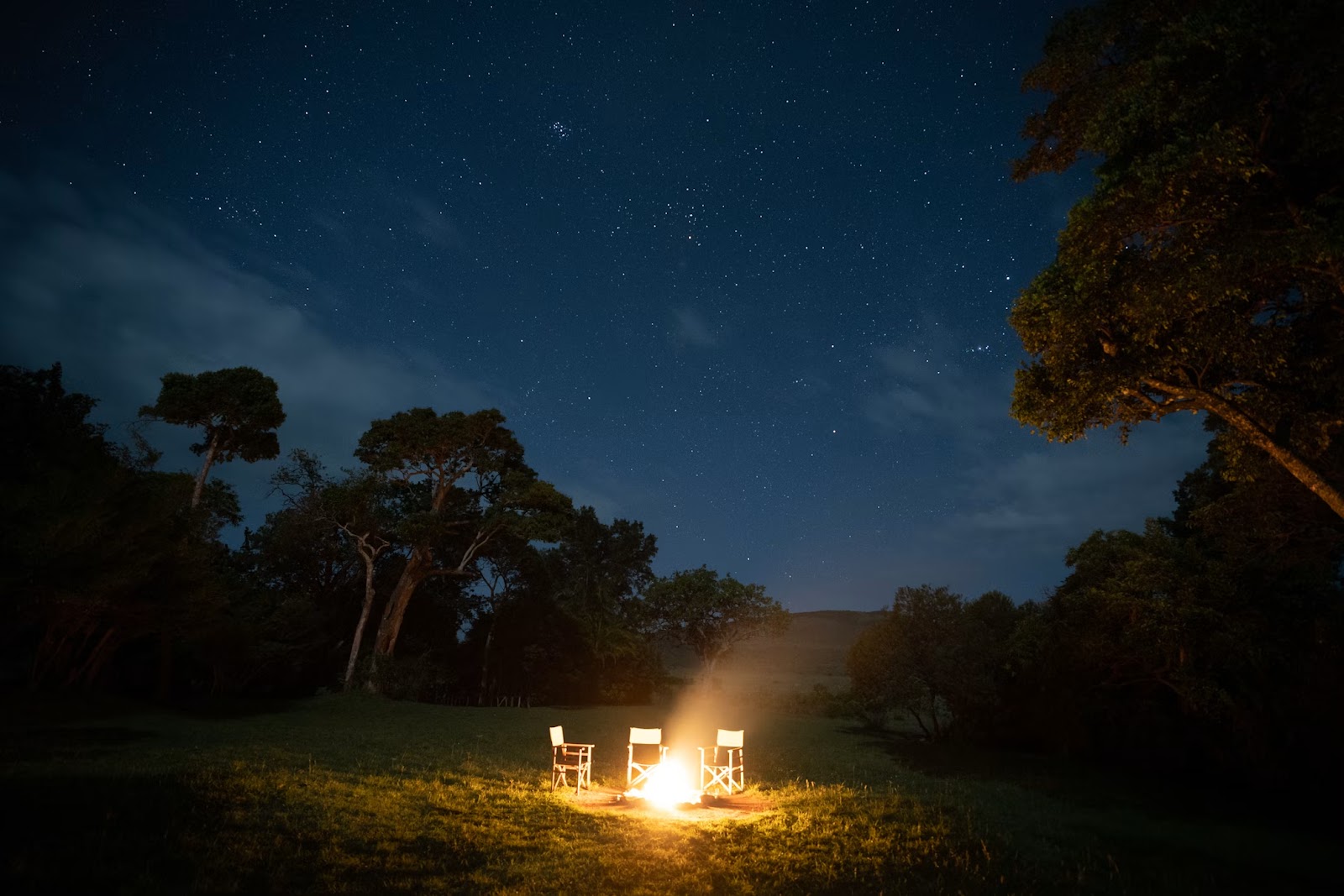
You are most likely to hear lions roar in the Masai Mara ecosystem and in Laikipia, where camps sit inside lion territory without fences.
The Mara has one of Africa’s best-studied lion populations, and its private conservancies keep camps small and unfenced. On a still night a roar can carry for kilometres, so you do not need a pride beside your tent to hear it. Laikipia’s conservancies, including Loisaba, Ol Pejeta and the ranches around them, also hold lions, along with hyenas, leopards and elephants that move freely at night.
Some places are quieter. The Aberdare tree hotels sit in forest where lions are rare, and they are about watching rather than listening. Nairobi National Park has lions, but most visitors sleep in the city. Hearing lions roar is never guaranteed anywhere, because prides move and sometimes stay silent for nights at a time.
Why Lions Roar After Dark
Lions roar mainly to mark territory and keep in touch with their pride, and they do it most between dusk and dawn.
Lions are most active at night, so that is when they patrol and when lions roar most often. A roar tells rival males that the territory is held and lets scattered pride members find each other. Both males and females roar, often in a chorus. Cool, still night air helps sound travel, and researchers commonly describe a roar as audible several kilometres away.
What a Roar Sounds Like From Your Tent
A full roar starts with a few low moans, builds into several deep, powerful roars and fades into a series of grunts. When lions roar close by, you feel it as much as hear it. Far away, it is a soft rumble that can be easy to confuse with distant thunder. Guides can usually tell from the sound roughly how far away the lion is and which direction it is moving.
Other Night Sounds to Listen For
- Spotted hyena: a rising whoop, repeated, often the most common night call.
- Leopard: a harsh rasp like a saw cutting wood.
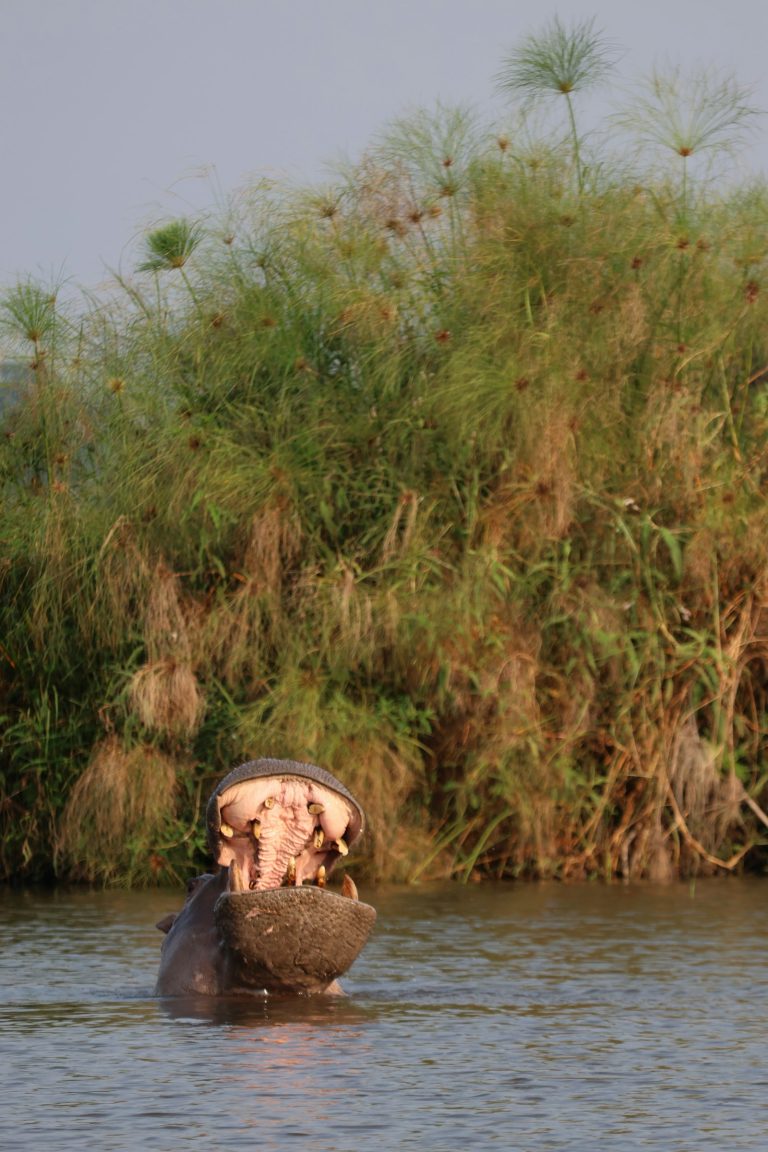
- Hippo: loud honks and grunts near rivers.
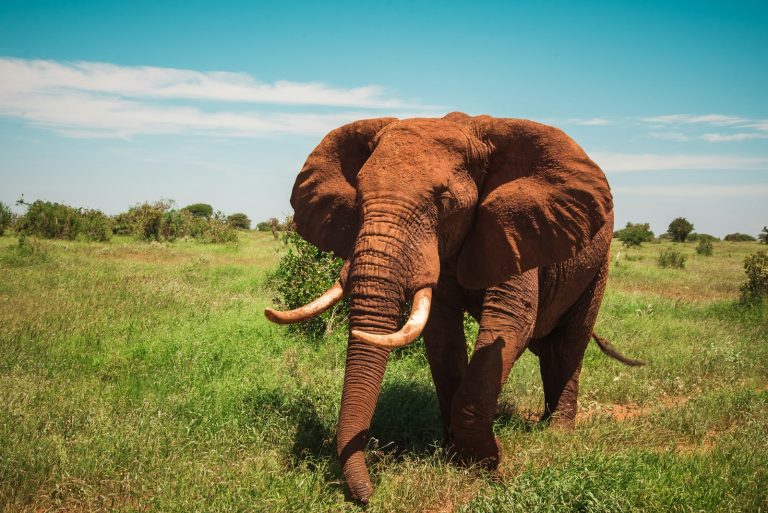
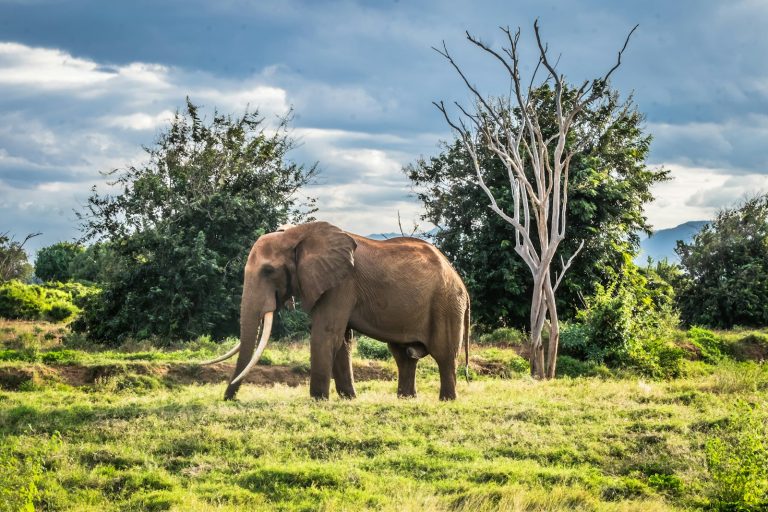
- Elephant: branches breaking and low rumbles close to camp.
- Bushbaby and nightjars: small, strange calls from the trees.
Lions are listed as Vulnerable on the IUCN Red List, so every roar you hear comes from a population that conservancies, rangers and communities work hard to protect.
7 Wild Nights in Kenya Compared
Kenya offers seven very different ways to spend a wild night, from sleeping in the open to watching from a warm lounge.
| Experience | Where | Chance to hear lions roar | Exposure | Best for |
|---|---|---|---|---|
| Conservancy tented camp | Masai Mara conservancies | High | Canvas walls | First-timers and big-cat lovers |
| Loisaba Star Beds | Laikipia | Possible | Open-sided under thatch | Couples and adventurers |
| The Ark | Aberdare National Park | Low | Indoors over a waterhole | Families and photographers |
| Treetops | Aberdare National Park | Low | Indoors over a waterhole | History lovers |
| Mobile or fly camp | Mara, Laikipia, the north | High where lions live | Small dome or canvas tent | Walkers and purists |
| Night drive | Private conservancies | High | Open vehicle with spotlight | Seeing, not just hearing |
| Riverside camp | Samburu, Mara rivers | Moderate | Canvas or lodge room | Elephants and hippos at night |
Loisaba Star Beds: Sleeping Under the Sky
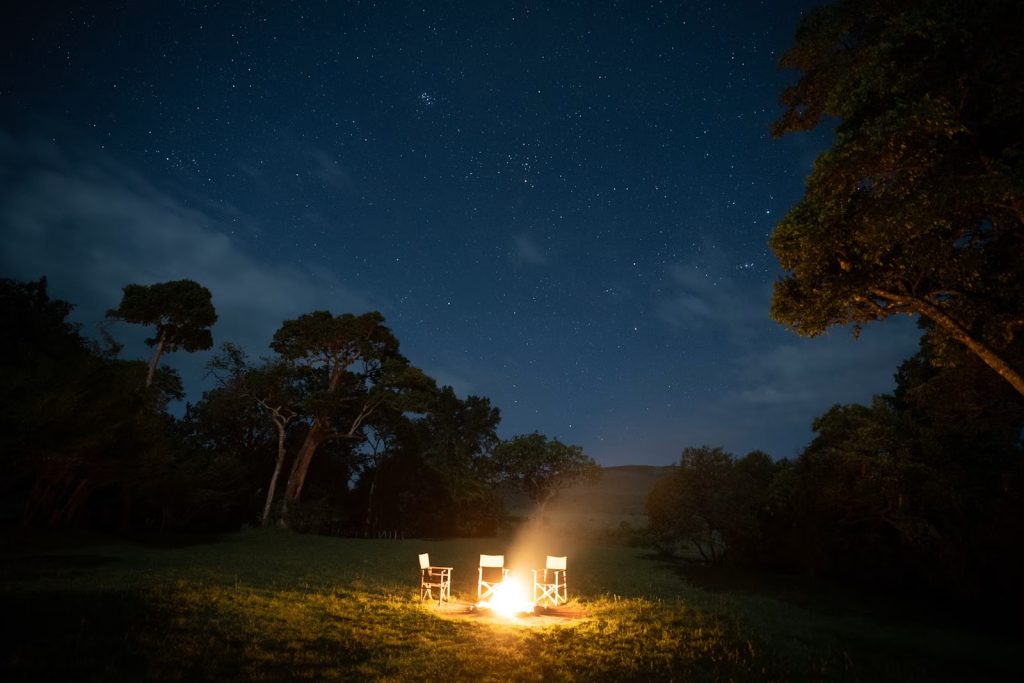
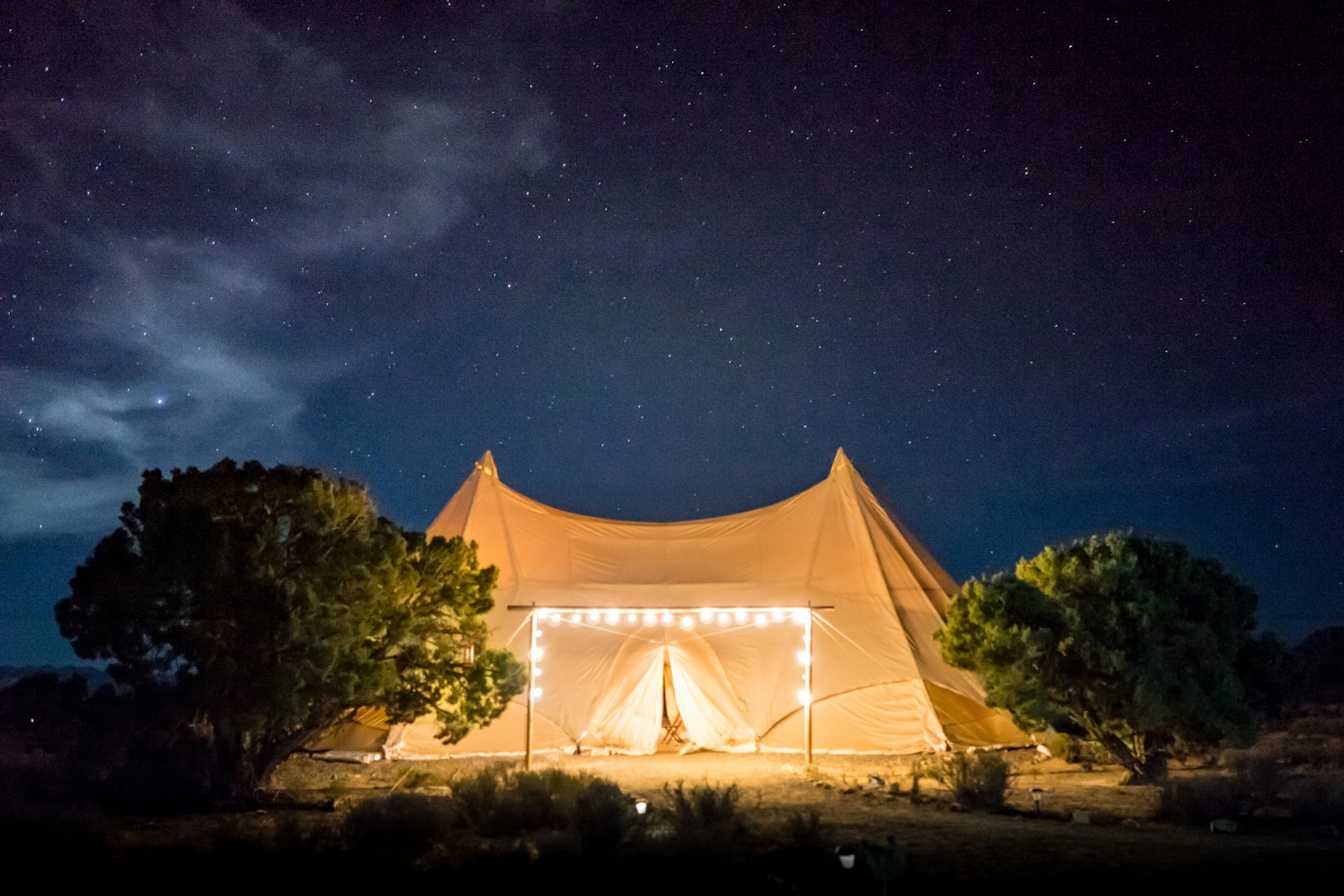
The Star Beds at Loisaba let you sleep almost in the open, on a raised platform with the African sky above you.
Loisaba is a 57,000-acre conservancy in Laikipia County, according to its lodge operator, Elewana. At the Star Beds, handcrafted four-poster beds sit on raised wooden platforms on a rocky outcrop and are rolled out each night. A thatched shelter and a private bathroom are part of each unit, so you can retreat if it rains. Mosquito nets surround the bed.
What to Expect on a Star Bed Night
Most guests spend one night on the Star Beds as part of a longer stay elsewhere in Loisaba. You arrive in the afternoon, watch the sun set over the plains and fall asleep to the sounds of the bush. Elephants and hyenas move through the area, and on some nights lions roar from the plains below. Nights are cool on the plateau, and dawn arrives with birdsong. The Loisaba Conservancy funds rangers, wildlife monitoring and community programmes from guest stays.
Read our full Loisaba Conservancy guide, and see our Laikipia and Loisaba Conservancy Luxury Safari, to which we can add a Star Beds night where available.
Aberdare Tree Hotels: Wildlife Comes to You
The Aberdare tree hotels reverse the usual safari: you stay indoors and the animals come to a floodlit waterhole below.
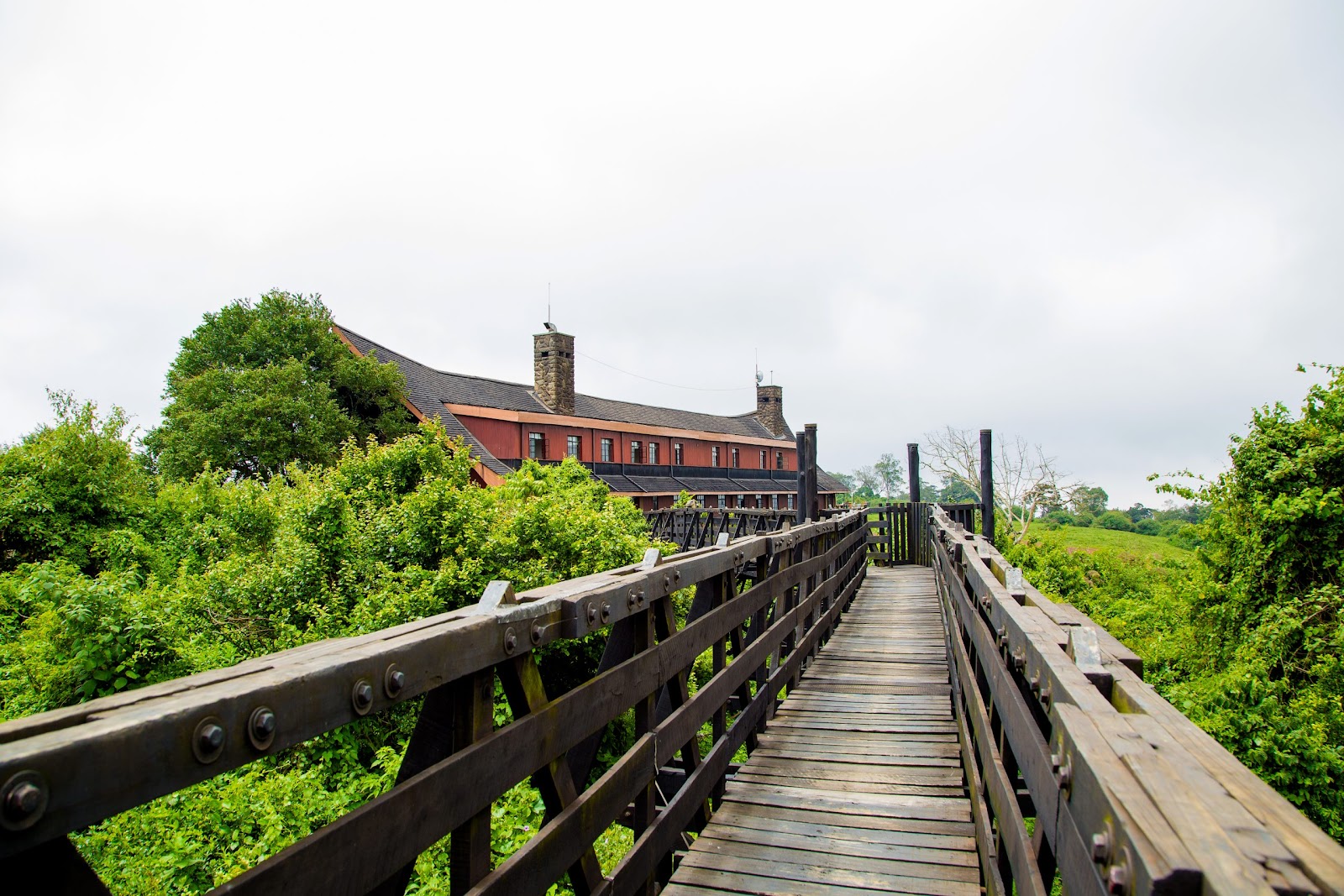
The Ark
The Ark is built in the shape of a ship in the forest of Aberdare National Park. Viewing decks and a ground-level hide face a floodlit waterhole and salt lick, where elephant, buffalo, bushbuck and sometimes leopard or black rhino come to drink. A buzzer in your room alerts you when special visitors arrive. You check in at Aberdare Country Club near Mweiga and travel up with a small overnight bag.
Treetops
Treetops is where the tree hotel idea began, and it is famous as the place where Princess Elizabeth was staying in February 1952 when her father died and she became Queen. It closed during the pandemic and Kenyan media reported its reopening in 2024. Room numbers and operating dates can change, so we confirm availability for your dates before we include it.
Our guide to Aberdare National Park lodges compares both in detail, and our Aberdare Big Five article explains why lions are so rarely seen in the forest.
Tented Camps Where Lions Roar Close By
An unfenced tented camp in a Masai Mara conservancy is the classic place to hear lions roar from your bed.
Conservancies such as Mara North, Naboisho and Olare Motorogi limit vehicles and beds, and most camps there have no fences. That means wildlife can walk past your tent at night, and on many nights lions roar within earshot. The tents themselves are proper rooms, with beds, en-suite bathrooms and zipped doors. Many guests are surprised by how comfortable they are and how thrilling the sounds become.
Inside the Reserve or in a Conservancy?
Camps inside the Masai Mara National Reserve also hear lions roar, but reserve rules restrict driving after dark. Conservancies allow night drives, guided walks and smaller groups, so you can follow up the sounds with a spotlit search. The Maasai Mara Wildlife Conservancies Association explains how these landowner partnerships work.
Compare the options in our Mara North Conservancy camps guide and our inside or outside the Masai Mara guide. For a simpler night under canvas between parks, see our mobile camping safari guide.
Star Beds, tree hotel or tented camp?
Tell us who is travelling and how adventurous you feel. We will match you to the wild night that suits you and fit it into your route.
How to Choose Your Wild Night
Choose by how much exposure you want, who is travelling and where the rest of your safari goes.
- Couples and honeymooners: a Star Beds night at Loisaba, or a secluded conservancy tent. See our best honeymoon lodges in Kenya.
- Families with young children: The Ark or a family tent in a fenced or well-staffed camp. Check age rules in our safari minimum age guide.
- Nervous first-timers: start with a tree hotel or a lodge, then try a tented camp once you feel at home.
- Photographers: a conservancy camp with night drives, plus The Ark’s ground-level hide.
- Walkers: a fly camp in Laikipia or a Mara conservancy, reached on foot with an armed guide.
Expert tip from our Nairobi team
Put your wildest night in the middle of the trip, not the start. By then you know the sounds of the bush, you trust the camp staff, and you will enjoy it when lions roar instead of lying awake. Keep a small torch by the bed and a fleece within reach; the plateau and the forest are cold before dawn.
Staying Safe When Lions Roar Nearby
Unfenced camps are safe when you follow a few simple rules, because animals generally treat a closed tent as an object to avoid.
- Always use the staff escort, often a Maasai askari, between your tent and the main area after dark.
- Keep your tent zipped and never leave it at night except in an emergency.
- Use the whistle, radio or horn provided if you need help.
- Never keep food in your tent.
- If lions roar close by, stay inside and enjoy it; sound travels far at night.
- Stay in the vehicle on night drives and keep your arms inside.
Our honest guide to whether it is safe to sleep in a tent on safari answers the common worries, and our night game drives in Kenya guide explains where spotlit drives are allowed. Check the UK government’s Kenya travel advice before you travel.
Best Time to Book and How Far Ahead
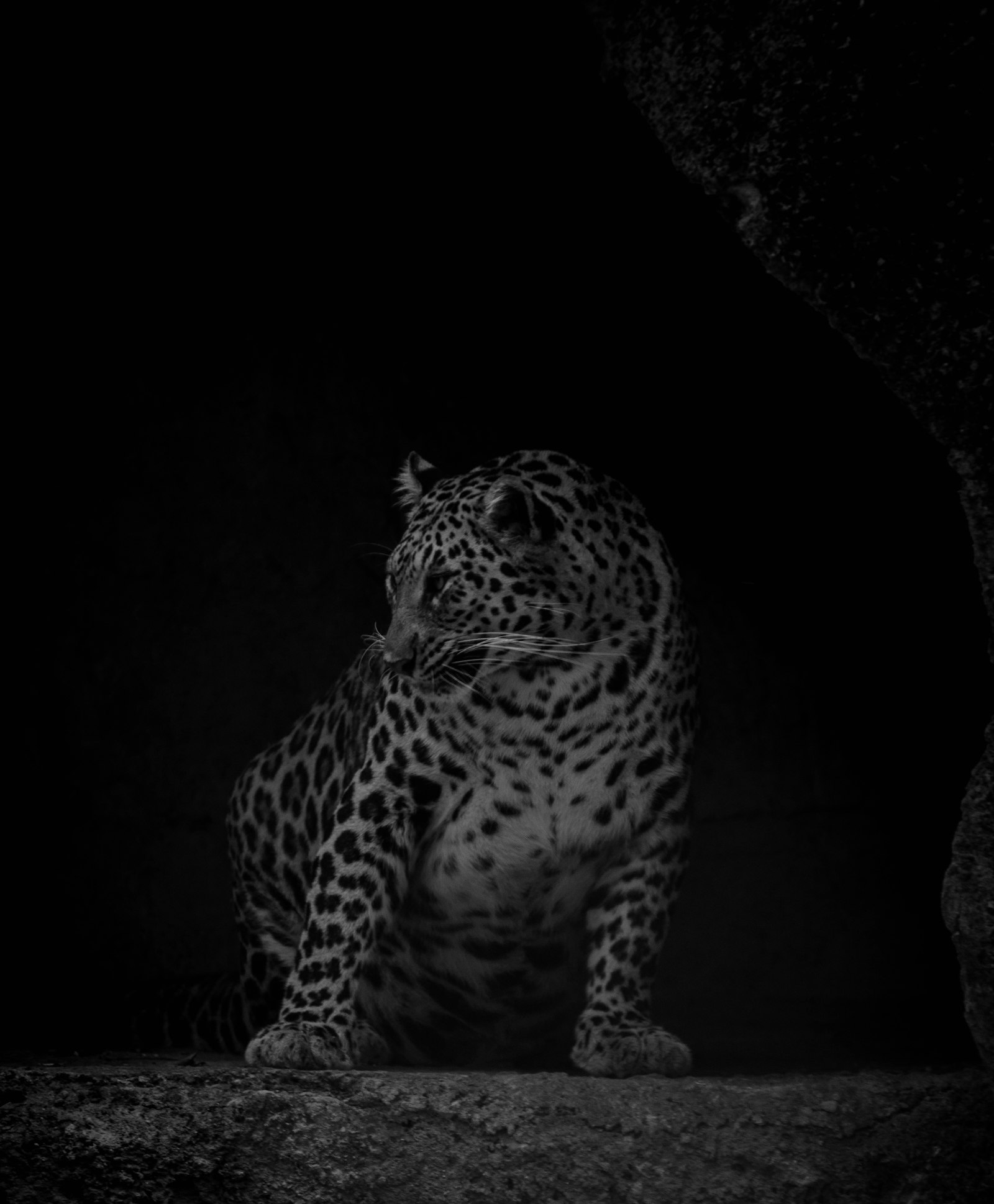
Dry months bring the clearest skies and the most reliable nights out, and the smallest camps book up early.
| Months | Night conditions | Booking advice |
|---|---|---|
| January to March | Warm, mostly dry, clear skies | Good for Star Beds; book three to six months ahead |
| April to May | Long rains, cloudy nights | Some camps close; Star Beds may move under shelter |
| June to October | Dry and cool, peak season | Migration months in the Mara; book six to twelve months ahead |
| November to December | Short rains, then festive demand | Good value in November; Christmas books early |
The best small camps book early for July to October and the Christmas weeks. Lions roar in every season, so choose your month for weather and wildlife. If you have fixed dates, ask us to check availability before you buy flights. Check our Kenya national parks entrance fees 2026 guide for park costs.
Hold your wild night
Star Beds and conservancy camps have very few beds. Send your dates and we will check availability and send a written quote with every night itemised.
A Sample Route With Three Wild Nights
You can combine a tree hotel, Laikipia and the Mara in about eight days, with a different night experience in each.
- Day 1: drive from Nairobi to the Aberdares, about two and a half to three hours, for a night at The Ark.
- Days 2 to 4: continue to Laikipia for rhinos, walks and one night on the Loisaba Star Beds.
- Day 5: fly from Laikipia to the Masai Mara.
- Days 6 to 7: stay in an unfenced conservancy camp with game drives, a night drive and a guided walk, where you may hear lions roar after dark.
- Day 8: fly back to Nairobi.
We build routes like this as a private Kenya safari or a luxury Kenya safari with fly-in links. See our Masai Mara safari packages for the Mara section. Plan the wider trip with Magical Kenya, the official tourism site.
Where Lions Roar: FAQs
Where can I hear lions roar at night in Kenya?
Your best chance is an unfenced tented camp in a Masai Mara conservancy, such as Mara North, Naboisho or Olare Motorogi. Laikipia conservancies, including Loisaba and Ol Pejeta, are also good. Lions move and are sometimes silent, so no camp can promise a roar, but a few nights in lion country usually bring one.
Why do lions roar at night?
Lions roar to mark their territory, warn rival males and keep contact with scattered pride members. They are most active between dusk and dawn, so that is when you hear them. Cool, still night air carries sound well, which is why a roar can be heard several kilometres away.
What are the Star Beds at Loisaba?
The Star Beds are handcrafted four-poster beds on raised wooden platforms on a rocky outcrop in Loisaba Conservancy, Laikipia. They are rolled out each night so you sleep under the sky, with mosquito nets, a thatched shelter and a private bathroom. Most guests spend one night there as part of a longer Loisaba stay.
Is it safe to sleep in an unfenced safari camp?
Yes, when you follow camp rules. Staff escort you after dark, tents stay zipped and you never walk alone at night. Animals usually treat a closed tent as an obstacle to avoid. Camps give you a whistle, radio or horn for emergencies, and guides brief you on arrival about what to expect.
Can you hear lions at The Ark or Treetops?
It is possible but rare. The Aberdare tree hotels sit in mountain forest where lions are seldom seen. The highlight there is watching elephant, buffalo, antelope and sometimes leopard or rhino at a floodlit waterhole. For roaring lions, add a Masai Mara conservancy or Laikipia camp to your route.
How far away can you hear a lion roar?
A lion’s roar is commonly described as audible up to several kilometres away, with some sources citing around eight kilometres in calm conditions. Wind, terrain and vegetation all change this. A roar that sounds very close at night may still be a kilometre or more away, which your guide can usually judge.
Fall asleep to the sound of the wild
From the Star Beds to the Mara conservancies, we plan private safaris with nights where lions roar and you will talk about it for years. Sense of Adventure is a TRA-licensed safari company based in Nairobi.
Kenya-based experts. Real local knowledge. Transparent pricing.