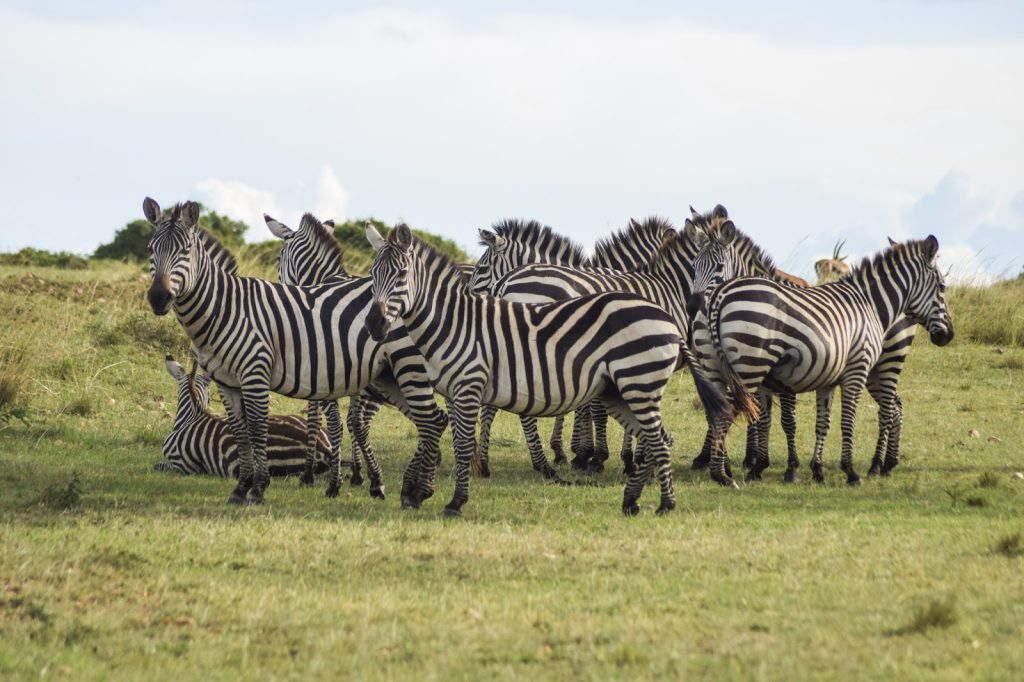
Zebra stripes most likely evolved to deter biting flies. Field experiments show horseflies approach striped coats but struggle to land on them, while the cooling theory has not held up in tests. Predator confusion and social recognition may play smaller roles, so most scientists see flies as the leading, though not the only, explanation.
Sense of Adventure is a TRA-licensed private safari company based at Mountain Mall on Thika Road, Nairobi. Zebras are part of almost every safari we plan, from plains zebras in the Masai Mara to endangered Grevy’s zebras in Samburu. This guide ranks the main theories by evidence and shows you where to compare both species.
Want to see both of Kenya’s zebra species? We plan routes that include Samburu and the Mara.
See plains and Grevy’s zebrasZebra Stripes: The Short Answer
The short answer is that zebra stripes probably protect against biting flies, with other benefits possible but less well supported.
Darwin and Alfred Russel Wallace discussed why zebras are striped in the nineteenth century, and the debate continued for more than a hundred years. Over the last decade, experiments with horses wearing striped coats and with real zebras have tipped the balance towards the biting-fly explanation, while weakening some older favourites.
| Theory | Strength of evidence | Key point |
|---|---|---|
| Deterring biting flies | Strongest | Flies struggle to land on striped surfaces |
| Confusing predators | Weak to moderate | Lions often hunt at night and see stripes poorly at distance |
| Individual recognition | Possible | Every pattern is unique, but zebras also use voice and smell |
| Social bonding | Little tested | Stripes may help herd cohesion, but evidence is limited |
| Cooling the body | Not supported | Tests found no meaningful cooling from stripes |
| Camouflage in long grass | Weak | Zebras graze in the open where stripes stand out |

Why Do Zebras Have Stripes? 6 Theories Ranked
Why do zebras have stripes? Here are the six main theories, ranked from best to least supported by current evidence.
1. Biting Flies: The Leading Theory
In a widely cited 2019 study in PLOS ONE, researchers filmed horseflies around zebras and horses on a farm in Britain. Flies approached zebras but often failed to slow down and land, and horses wearing striped coats received far fewer landings than in plain coats. Zebras also swish their tails and move away from flies more readily. This matters in Africa, where biting flies can carry diseases.
2. Predator Confusion
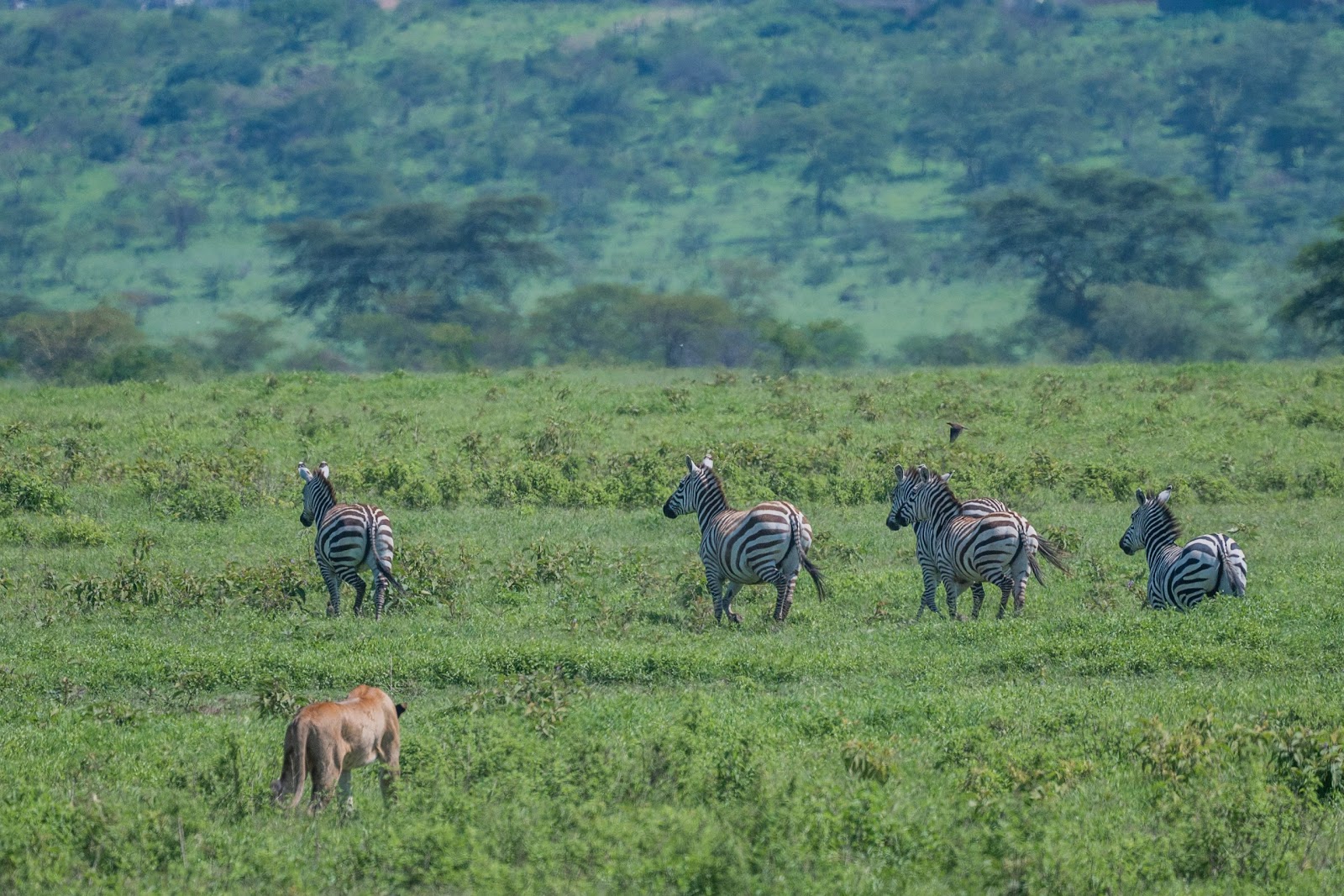
The idea is that a running herd creates a dazzling blur that makes it hard for a lion to pick out one zebra. However, lions often hunt at dusk and at night, and studies of predator vision suggest stripes are hard to resolve at a distance. Predator confusion may help a little, but it cannot explain the stripes on its own.
3. Individual Recognition
No two zebras share exactly the same pattern, and researchers use stripes to identify individuals. Zebras may recognise each other partly by stripes, but they also rely on calls and scent, so this is unlikely to be the main reason stripes evolved.
4. Social Bonding
Some biologists suggest stripes help keep herds together or encourage grooming partners. This idea is appealing but has had little rigorous testing.
5. Cooling the Body
Stripes were once thought to create tiny air currents that cool zebras. Experiments with striped and plain water barrels and with zebra hides did not find a meaningful cooling effect, so most researchers now consider this theory unsupported.
6. Camouflage
Stripes might hide zebras in tall grass or heat haze, but zebras usually graze on open plains where their black and white coats are easy to see. Camouflage is the weakest of the six.
Plains Zebra vs Grevy’s Zebra in Kenya
Kenya is the best country to compare two zebra species, because it is home to widespread plains zebras and most of the world’s endangered Grevy’s zebras.
| Feature | Plains zebra | Grevy’s zebra |
|---|---|---|
| Stripes | Broad stripes, often with shadow stripes on the rump | Narrow, closely spaced stripes; white belly |
| Ears | Medium, pointed | Large and rounded |
| Size | Smaller | The largest wild equid |
| Where in Kenya | Masai Mara, Amboseli, Nairobi National Park, Tsavo | Samburu, Buffalo Springs, Laikipia, northern conservancies |
| Status | Widespread | Endangered |
The Grevy’s Zebra Trust works with communities in northern Kenya to protect the species. Our Westgate and Kalama conservancies guide and Samburu guide explain where to see Grevy’s zebras.
Not sure whether to add Samburu for Grevy’s zebras?
Tell us your dates and we will show you how northern Kenya fits with the Mara or Laikipia on a private route.
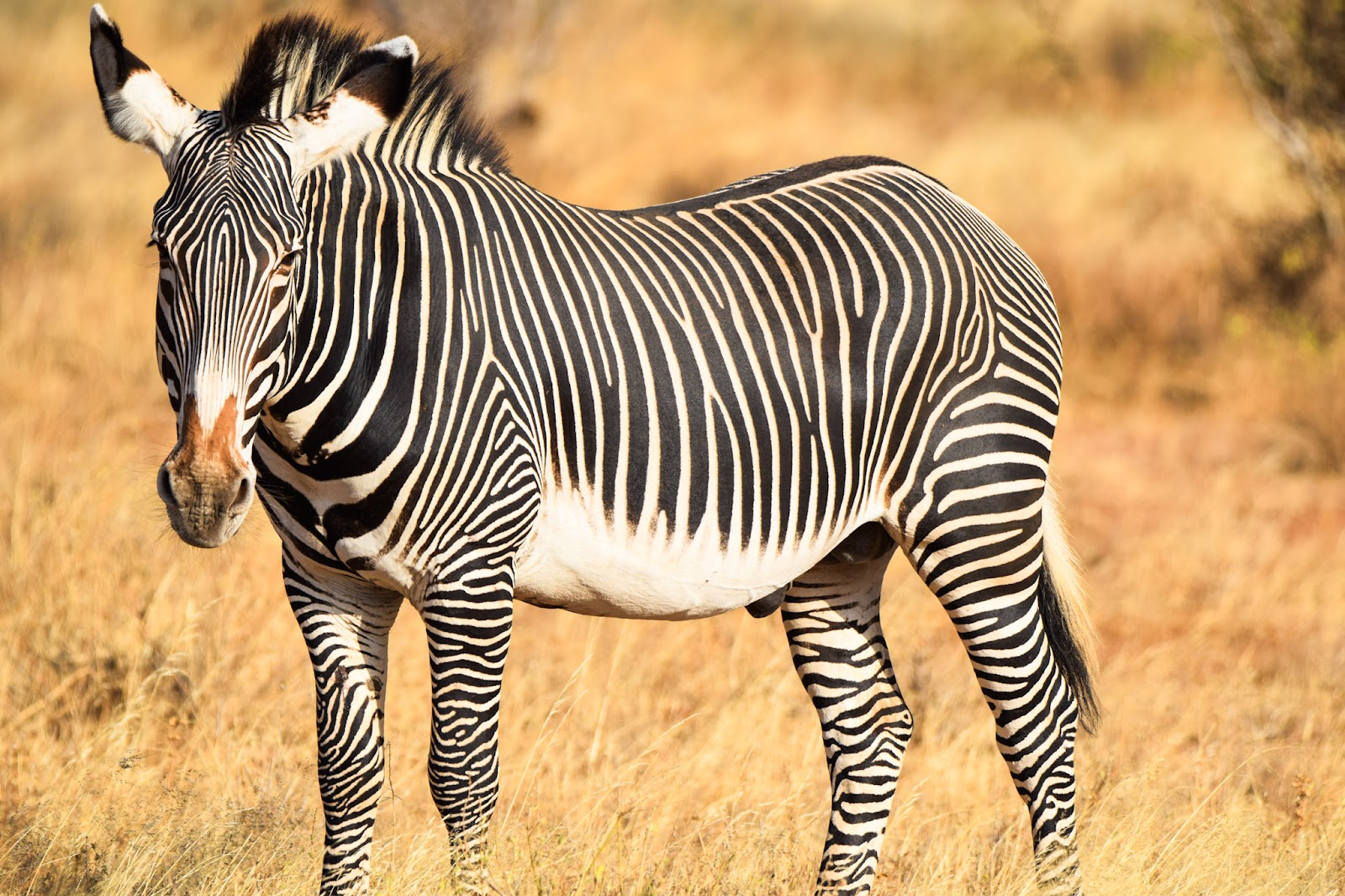
How Zebra Stripes Form and Vary
Zebra stripes form as pigment cells in the skin switch on or off along the body as the foal develops, creating dark and light bands of hair.
Underneath the coat, zebras are generally described as having dark skin. The pattern is laid down before birth, which is why foals arrive with stripes already in place, often brownish at first. Across Africa, zebra stripes vary with geography: some southern plains zebras have paler, browner shadow stripes, while populations closer to the equator tend to have bolder, darker patterns. Some researchers have linked bolder striping to warmer areas with more biting flies, which fits the leading theory.
Rare Variations
Occasionally, zebras are born with unusual patterns, such as spots or very pale stripes. These rare animals have been photographed in Kenya and attract a lot of attention, but they show that zebra stripes are controlled by pigment, not by the shape of the hair. Ask your guide if any unusual individuals have been seen recently in the area you are visiting.
Zebra Stripes Facts You Can Spot on Safari
Watching a herd with these zebra stripes facts in mind turns a common sighting into a fascinating one.
- Unique patterns: compare two zebras side by side; no two are the same.
- Shadow stripes: look for faint brownish stripes between the black ones on plains zebras.
- Belly differences: Grevy’s zebras have white bellies; many plains zebras have stripes underneath.
- Foals: young zebras often have brownish stripes that darken with age.
- Tail swishing: watch how often zebras flick at flies on hot afternoons.
- Mutual grooming: pairs often rest their heads on each other’s backs, scanning in opposite directions.
Expert tip from our Nairobi team
Ask your guide to stop beside a relaxed herd in the late afternoon and count the tail swishes in a minute. Then compare with a nearby wildebeest or antelope. It is a simple field test of the biting-fly idea that children and adults both enjoy, and the light at that hour is perfect for photographing zebra stripes.
How Zebra Stripes Help Researchers
Because patterns are unique, researchers can identify individual zebras from photographs. In northern Kenya, photo-based censuses have helped track Grevy’s zebra numbers, and visitors’ photos can sometimes contribute to citizen science projects.
Where to See Zebras in Kenya
Plains zebras are common across Kenya’s southern parks, while Grevy’s zebras are concentrated in the north.
| Park or area | Species | Why go |
|---|---|---|
| Masai Mara | Plains zebra | Large herds that join the migration |
| Amboseli | Plains zebra | Zebras grazing beneath Kilimanjaro |
| Nairobi National Park | Plains zebra | Easy half-day trip from the city |
| Samburu and Buffalo Springs | Grevy’s and plains zebra | Compare both species |
| Laikipia conservancies | Grevy’s and plains zebra | Walking and horseback options |
Zebras play a big part in the Great Migration; read our honest guide to Great Migration timing and our Masai Mara National Reserve guide. Official park details are on the Kenya Wildlife Service website.

Best Time to See Zebras
Zebras are visible all year, but the dry seasons and the Mara migration months give the biggest herds.
| Months | Conditions | Zebra viewing |
|---|---|---|
| January to February | Short dry season | Good viewing; foals in many areas |
| March to May | Long rains | Lush grass; herds spread out |
| June to October | Long dry season | Big herds; Mara migration usually July to October |
| November to December | Short rains | Green plains and good value |
Park and reserve fees vary, so check our Kenya national parks entrance fees 2026 guide when planning.
Planning a migration or Samburu trip next year?
Camps in the Mara and Samburu book early for July to October. Share your dates and we will send a written quote that includes both zebra species.
Why the Zebra Stripes Debate Matters
The zebra stripes debate shows how science works: ideas are tested, some fail, and the best-supported answer rises to the top.
Biting flies seem to explain the most, and they also connect to a real safari issue: flies such as tsetse can carry disease to livestock and, rarely, people. Read our guide to tsetse fly sleeping sickness for the current facts. For more animal myths and truths, see our warthogs guide.
Who Will Enjoy a Zebra-Focused Safari
Families, photographers and curious travellers all enjoy zebras, because they are easy to see, photogenic and full of interesting behaviour. Children enjoy spotting differences between individuals, photographers love bold patterns against green grass or golden light, and science-minded travellers enjoy testing the theories in the field. Even repeat visitors find something new in a herd when they know what to look for.
Our Northern Kenya cultural safari in Samburu and Laikipia is ideal for Grevy’s zebras, and our Kenya highlights safari combines Samburu with the Masai Mara. A private Kenya safari lets you linger for photos as long as you wish. For more destination ideas, visit Magical Kenya.
Zebra Stripes FAQs
Why do zebras have stripes?
The best current evidence suggests zebra stripes deter biting flies. Experiments show horseflies approach striped coats but often fail to land, and horses in striped coats get far fewer landings. Predator confusion and social recognition may add smaller benefits, while the cooling theory has not been supported by tests.
Do zebra stripes keep zebras cool?
Probably not. Experiments with striped and plain barrels and with zebra hides found no meaningful cooling effect from stripes. Most researchers now consider the cooling theory unsupported, and attention has shifted to biting flies as the most likely reason stripes evolved.
Do zebra stripes confuse lions?
Possibly a little, but it is not the main reason for stripes. Lions often hunt at dusk and at night, and studies of predator vision suggest stripes are hard to see clearly at a distance. Lions still catch zebras regularly, so confusion offers limited protection.
Are zebra stripes unique to each zebra?
Yes. No two zebras have exactly the same pattern of zebra stripes, much like human fingerprints. Researchers use this to identify individual animals in photographs, which helps them count and monitor populations over many years, including the endangered Grevy’s zebra in northern Kenya.
What is the difference between plains and Grevy’s zebras?
Grevy’s zebras are larger, with narrow, closely spaced stripes, a white belly and big rounded ears. Plains zebras have broader stripes, often with faint shadow stripes. In Kenya, plains zebras live in southern parks, while Grevy’s zebras live mainly in Samburu and Laikipia.
Where can I see Grevy’s zebras in Kenya?
Most of the world’s Grevy’s zebras live in northern Kenya. Good places to see them include Samburu, Buffalo Springs, Laikipia conservancies and community conservancies such as Westgate and Kalama. A route that adds Samburu to the Masai Mara lets you see both zebra species.
Plan a Safari With Both Zebra Species
From the Mara plains to Samburu’s dry country, we plan private safaris with guides who explain the science behind every sighting. Sense of Adventure is a TRA-licensed Nairobi safari company.
Kenya-based experts. Real local knowledge. Transparent pricing.