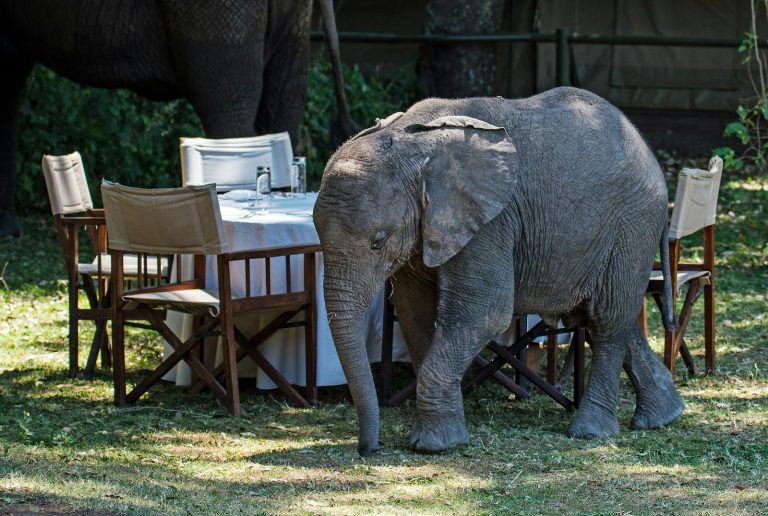
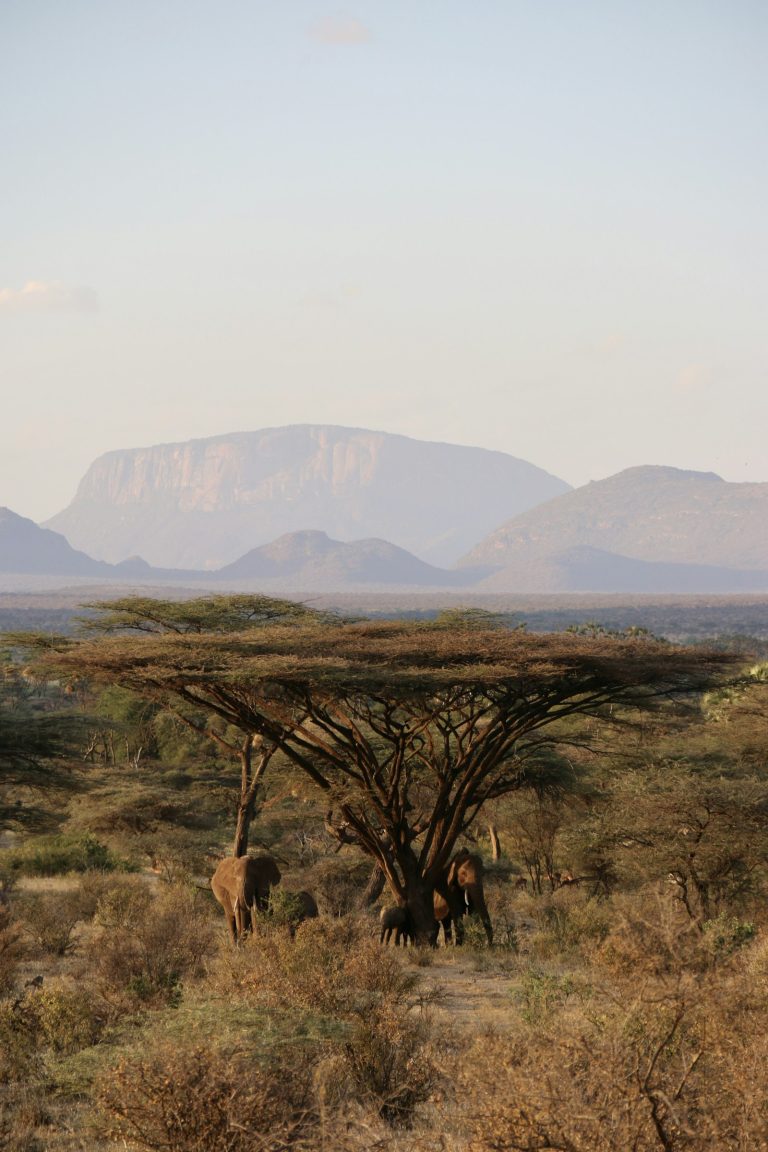
Safari camps in Kenya almost all let you charge phones and cameras, and most now offer Wi-Fi, but remote camps run on solar power, batteries or generators rather than a city grid. Expect UK-style Type G sockets at 240 volts, charging in your tent or at a central point, and Wi-Fi that is good for messages rather than video calls.
Sense of Adventure is a TRA-licensed private safari company based at Mountain Mall on Thika Road, Nairobi. We check power and internet at every camp on your route, so you know what to expect before you pack. This guide explains how power works at safari camps, how to charge your gear, what Wi-Fi and mobile signal are really like and how to stay connected when it matters.
Power and Wi-Fi at safari camps: the quick answer
- Plugs: Type G (UK three-pin), 240 V, 50 Hz in Kenya.
- Power: solar and battery systems, sometimes with a generator; high-wattage appliances may not be allowed.
- Charging: usually in your tent; at some camps, at a central charging station.
- Wi-Fi: common in main areas, often satellite-based; speeds vary.
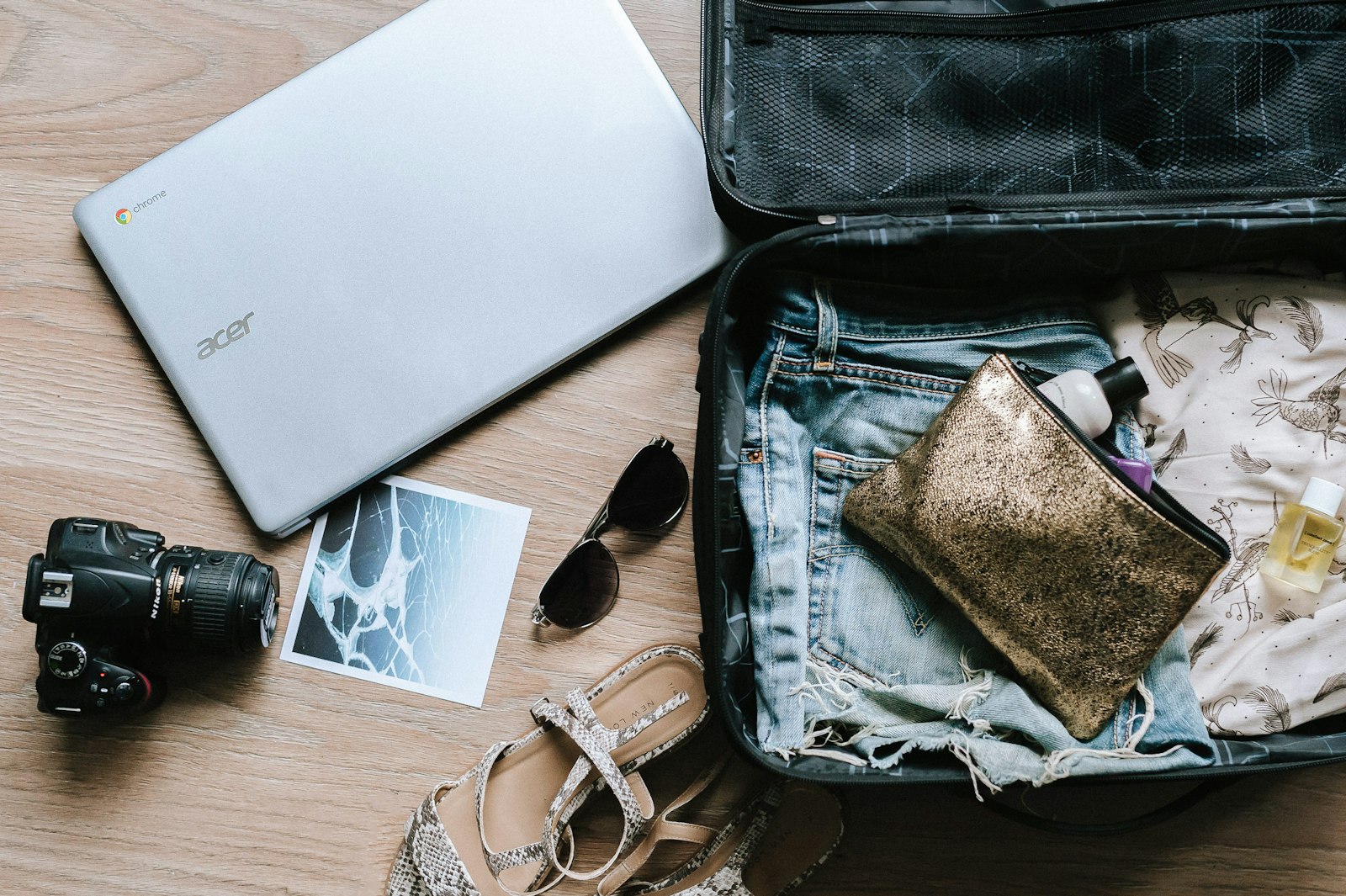
- Bring: a Type G adaptor, a power bank and spare camera batteries.
Need to stay online for work or family? Tell us and we will choose camps with strong Wi-Fi.
Find well-connected campsHow Power Works at Safari Camps
Most remote safari camps make their own electricity, usually from solar panels and battery banks, with a generator as backup.
Lodges near towns may use mains power, but camps deep in the Mara, Laikipia or Samburu are far from the grid. Many have invested heavily in solar, which is quiet and cleaner. Power is often available around the clock for lights and charging, though some camps run generators only at set times or limit power overnight. Because solar systems have limited capacity, many camps ask you not to use hairdryers, straighteners or other high-wattage devices in your tent.
| Type of stay | Typical power | Charging | Wi-Fi |
|---|---|---|---|
| Nairobi hotel | Mains with backup | In room | Usually fast |
| Lodge near a town or park gate | Mains or generator | In room | Usually good in main areas |
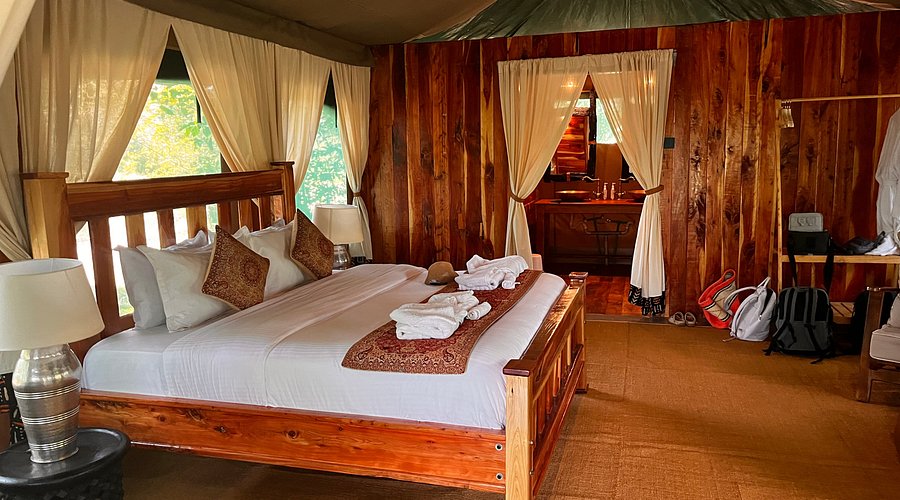
| Permanent tented camp | Solar and batteries, generator backup | In tent, low-wattage only | Often in the lounge or mess tent |
| Mobile or fly-camp | Solar or small generator | Central point or vehicle | Limited or none |
| Public campsite | Often none | Vehicle charging | Mobile data only |
Plugs, Voltage and Adaptors
Kenya uses Type G sockets, the same three-pin plugs as the UK, at 240 volts and 50 Hz.
Travellers from the UK need no adaptor. Visitors from Europe, the USA, India and Australia should bring one. Most phone, laptop and camera chargers accept 100 to 240 volts, so they work with just an adaptor; check the label. If you add other countries, plugs differ: Tanzania uses Type D and G, Uganda uses Type G, and Rwanda uses Type C and J. A small universal adaptor with USB ports covers them all.
| Country | Plug types | Voltage |
|---|---|---|
| Kenya | G | 240 V |
| Tanzania and Zanzibar | D and G | 230 V |
| Uganda | G | 240 V |
| Rwanda | C and J | 230 V |
Charging Your Gear at Safari Camps
At most safari camps you can charge phones, cameras and laptops in your room or tent, with a few habits that make it easy.
- Charge during the day: solar power is strongest while you are out on drives, so plug in before you leave.
- Bring a power bank: it covers any gap overnight or on long drives.
- Carry spare camera batteries: you may shoot far more than usual.
- Use a multi-port USB charger: one socket can then charge several devices.
- Ask about vehicle charging: many safari vehicles have USB or inverter points; check before you rely on them.
Some simpler camps have a central charging station at reception instead of sockets in each tent. If you need overnight power for a medical device, such as a CPAP machine, tell us at booking so we can confirm a suitable camp. Our lens checklist and safari camera gear guide cover batteries and memory cards.
Charging Between Safari Camps
Travel days are a good time to top up. Nairobi hotels and airport lounges have plenty of sockets, and many safari vehicles carry USB points for phones. Power banks must travel in your hand luggage on most flights, including light aircraft, so keep them out of your soft bag. On long road transfers, a short cable lets you charge from the vehicle while you watch the scenery.
Medical Devices and Families
If you rely on a CPAP machine, insulin cooling or another powered medical device, choose safari camps with round-the-clock power and tell them in advance. Some camps can provide a battery pack or a tent near the power room. Families with several tablets and phones should bring a multi-port charger, so one socket serves everyone at bedtime.
Expert tip from our Nairobi team
Make charging part of your morning routine at safari camps. Plug in your camera batteries and power bank before the early drive, when solar panels start working, and collect them at brunch. You will rarely run short, even at camps with modest power.
Protecting Your Devices From Dust and Heat
Dust, heat and bumpy roads are harder on electronics than the lack of a city grid at safari camps.
- Seal them up: keep phones, power banks and spare batteries in zip-lock bags or a padded pouch on game drives.
- Keep them shaded: never leave a phone or camera on the dashboard or a seat in direct sun; heat drains and damages lithium batteries.
- Change lenses carefully: do it inside the vehicle with the windows closed, or not at all on dusty tracks.
- Pack a cleaning kit: a blower, a microfibre cloth and lens wipes take up little space.
- Watch for condensation: on cold mornings, let gear warm up in its bag before you open it.
Our safari duffel bag guide explains how to pack electronics in a soft bag for bush flights.
Backing Up Photos on Safari
Keen photographers often shoot thousands of images on safari, so plan how you will back them up. Bring enough memory cards to avoid deleting in the field, and copy each day’s photos to a laptop or a portable drive in the evening. Uploading large files over shared satellite Wi-Fi is slow and unfair on other guests, so save cloud backups for your Nairobi hotel. If you need to charge a laptop and several camera batteries each night, tell us, and we will choose safari camps with sockets that can handle it.
Power in Safari Vehicles and on Bush Flights
Many safari vehicles carry USB sockets or a small inverter, but the output varies, and some vehicles have none. Treat vehicle power as a top-up for phones, not a way to charge laptops or several camera batteries. Light aircraft rarely have charging points for passengers, and power banks must travel in your hand luggage rather than in the hold. Check the airline’s rules on power bank size before you fly between safari camps.
Wi-Fi at Safari Camps
Most lodges and permanent safari camps now offer Wi-Fi, usually strongest in the lounge, dining area or mess tent.
Remote camps often use satellite internet, and Starlink has been available in Kenya since 2023, which has improved speeds at many properties. Even so, connections are shared between guests and can slow down in the evening. Messaging, email and photo uploads usually work well. Video calls and streaming are possible at some camps but should never be relied on. Some camps deliberately keep Wi-Fi out of the tents to protect the bush atmosphere.
Working Remotely From Safari Camps
If you must join calls or send large files, tell us early. We can choose lodges and safari camps with confirmed satellite connections, plan a day in Nairobi or a conservancy with good coverage, and avoid fly-camps on key work days. A local data SIM as backup is wise.
Working while you travel?
Tell us which days you need to be online, and we will build your route around camps with confirmed internet.
Mobile Signal and Local SIM Cards
Mobile coverage in Kenya is good in towns and along main roads, and patchy but often usable in many parks.
Safaricom has the widest coverage, with Airtel the other main network. Signal in the Masai Mara and around many camps is often usable, but it drops in valleys, remote conservancies and much of northern Kenya. A local SIM or eSIM gives cheap data and is far less expensive than roaming. SIM cards must be registered with your passport, as required by the Communications Authority of Kenya. Shops at Jomo Kenyatta International Airport can set one up when you arrive.
| Area | Typical mobile signal |
|---|---|
| Nairobi and towns | Strong 4G, some 5G |
| Masai Mara | Often usable near camps; patchy in places |
| Amboseli and Lake Nakuru | Generally usable |
| Laikipia conservancies | Varies widely |
| Samburu and the north | Limited in many areas |
| Coast resorts | Generally good |
Staying Safe and Reachable
Even where your phone has no signal, safari camps and guides have reliable ways to communicate.
Camps use radios and satellite links, and guides keep in contact with their base and with each other. Leave your camp list and our office number, +254 799 160 081, with family at home, so they can reach you through us if needed. Our emergency evacuation cover adds peace of mind in remote areas. Check entry rules in the UK government’s Kenya travel advice.
Questions to Ask Safari Camps Before You Book
A few simple questions tell you how well safari camps on your route will suit your power and internet needs.
- Is there power in the tent day and night, or only at set hours?
- What socket type is in the tent, and is there a USB point?
- Can I use a hairdryer, and if not, is one available in the main area?
- Is Wi-Fi available in the tent, or only in the lounge or mess tent?
- Is the connection satellite-based, and is there a data limit per guest?
- Can the vehicle charge phones on game drives?
- Is there a backup generator, and can the camp support a medical device overnight?
We ask these questions for you and note the answers in your itinerary. Our wider list of questions to ask before booking a safari covers vehicles, payments and safety, and our guide to what a safari tent is like inside explains other tent comforts.
Low-Impact Charging Habits
Solar-powered safari camps depend on careful use of every watt. Unplug chargers once devices are full, switch off lights when you leave the tent, and bring rechargeable batteries instead of disposables, which are hard to recycle in remote areas. Small habits like these help camps run on clean energy and keep the generator quiet at night.
The Joy of a Digital Break
Many guests find that limited Wi-Fi at safari camps becomes one of the best parts of the trip.
Without constant notifications, you notice more: birdsong at dawn, the sound of hippos at night, the conversation around the fire. Families often say children talk more when screens are put away. Try setting your phone to flight mode on game drives, using it only as a camera. You can share your best photos with family in the evening, over a drink by the fire.

Choosing Safari Camps for Your Connectivity Needs
Tell us how connected you need to be, and we will match safari camps to suit.
Larger lodges and high-end camps usually have the strongest power systems and internet. Explore a luxury Kenya safari or a private Kenya safari, or a short fly-in Masai Mara luxury safari. Our bathroom facilities on safari guide explains other camp comforts, and our Kenya national parks entrance fees 2026 page covers park costs. Park information is published by the Kenya Wildlife Service, and destination ideas are on Magical Kenya.
Your quote, with power and Wi-Fi confirmed
The best-connected camps book early in peak season. Share your dates and we will note power and internet for every stop.
Safari Camps Power Checklist
- A Type G adaptor (two if you travel as a couple).
- A multi-port USB charger and cables.
- A charged power bank.
- Spare camera batteries and memory cards.
- A head torch for night walks to the dining area.
Safari Camps Power and Wi-Fi FAQs
What plug type does Kenya use?
Kenya uses Type G sockets, the same three-pin plugs as the UK, at 240 volts and 50 Hz. Visitors from Europe, the USA, India and Australia need an adaptor. Most phone, laptop and camera chargers accept 100 to 240 volts, so they work with an adaptor alone. Check the label to be sure.
Is there Wi-Fi at safari camps in Kenya?
Most lodges and permanent camps offer Wi-Fi, usually in the lounge or dining area, and many now use satellite internet. It is good for messages, email and photo uploads, but speeds vary and video calls are not guaranteed. Simple mobile camps and fly-camps may have little or no Wi-Fi.
Can I charge my camera in my tent?
Usually, yes. Most tented camps have sockets inside the tent for low-wattage devices such as phones, cameras and laptops. Some simpler camps use a central charging station instead. Charge during the day when solar power is strongest, and bring a power bank and spare batteries as backup.
Can I use a hairdryer at a safari camp?
Often not in the tent. Many camps run on solar power and batteries, which cannot support high-wattage items such as hairdryers or straighteners. Some lodges provide hairdryers or have a socket in the main area for them. Ask before you pack, or plan simple hairstyles for the bush days.
Is there mobile signal in the Masai Mara?
Often, yes. Safaricom signal is usable near many Mara camps and in large parts of the reserve, though it drops in some valleys and remote conservancies. Coverage is weaker in much of northern Kenya. A local SIM or eSIM registered with your passport gives you cheap data where signal exists.
Should I bring a power bank on safari?
Yes. A power bank is one of the most useful items you can pack. It keeps your phone charged on long game drives and covers any gap if a camp limits power overnight. Choose one that fits airline rules, which usually require it to travel in your hand luggage.
Connected when you need it, wild when you don’t
We match safari camps to your power and internet needs. Sense of Adventure is a TRA-licensed Nairobi safari company.
Kenya-based experts. Real local knowledge. Transparent pricing.