Safari camera gear does not need to be expensive. A modern smartphone captures wide scenes, close animals and video well, while a compact or bridge camera with a long zoom is the best-value upgrade. Light, patience and a guide who positions the vehicle matter more than price. Buy pro lenses only if photography is your passion.
Sense of Adventure is a TRA-licensed private safari company based at Mountain Mall on Thika Road, Nairobi. We plan private Kenya safaris for travellers from Europe, North America, India and Australia, and for overseas travel agents. Every week we see guests with phones, compacts and professional kit, so this guide shares what really works in the field.
✅ Safari Camera Gear: Quick Answer
- A recent smartphone is enough for landscapes, video and animals close to the vehicle.
- The best-value upgrade is a bridge camera with a long optical zoom.
- Keen photographers should prioritise a 100-400 mm zoom over an expensive body.
- Bring a beanbag, spare batteries, several memory cards and a dust blower.
- Bush flights often limit luggage to around 15 kg in a soft bag, camera kit included.
- Early and late light, plus a patient private guide, matter more than price.
Not sure your camera is good enough? Tell us what you own and we will plan a safari that suits it.
Ask about my cameraSafari Camera Gear: The Short Answer
The short answer is that safari camera gear should match how much you care about photography, not what other guests carry.
When people ask us about safari camera gear, most want three things: sharp pictures of the animals they saw, a few memorable scenes and video to share with family. A recent flagship phone handles much of that. What a phone cannot do well is fill the frame with a leopard 80 metres away in a tree. That is where optical zoom earns its place in your safari camera gear.
| Your goal | Recommended safari camera gear | Rough budget level |
|---|---|---|
| Memories and social media | Recent smartphone, spare power bank | Nothing extra |
| Better close-ups of distant animals | Bridge or travel-zoom compact camera | Modest |
| Serious hobby photography | Mirrorless or DSLR body with a 100-400 mm or similar zoom | Significant |
| Specialist big-cat or bird work | Pro body, 500-600 mm lens, second body | High |
Notice that every level of safari camera gear can come home with photos you love. The difference is mostly reach, low-light quality and how fast the camera focuses on moving subjects.

What Really Makes a Great Wildlife Photo
Light, position and patience make a great wildlife photo, and none of them depends on the price of your safari camera gear.
Light Beats Megapixels
The first two hours after sunrise and the last two before sunset give warm, soft light and long shadows. Midday light in Kenya is harsh and flat, so even the best camera produces dull images. This is why good safari days start early, whatever safari camera gear you carry, and pause at lunch.
Position Is Your Guide’s Job
An experienced guide reads the animal, the light and the background, then places the vehicle so the sun is behind you and the subject has room to move into the frame. On a private safari the guide can wait, switch off the engine and reposition without negotiating with strangers.
Patience Is Free
Waiting five more minutes for a lion to lift its head, a cheetah to yawn or an elephant to cross in front of Kilimanjaro turns a record shot into a picture you frame. Private vehicles make that patience possible because nobody is pushing to move on.
9 Honest Truths About Safari Camera Gear
These nine truths sum up what our guides see every week, from first-time phone users to photographers with big lenses.
- A smartphone really works. Phones excel at landscapes, camp life, video and animals that come close, which happens often in places like the Masai Mara.
- Digital zoom is the phone’s weak spot. Pinching to zoom crops the image and loses detail; the telephoto lens on newer phones helps, but only to a point.
- Optical zoom is the real upgrade. A bridge camera with a long zoom gives you most of the reach of a big lens at a fraction of the weight and cost.
- Lens matters more than body. For interchangeable systems, spend on the lens first; a mid-range body with a good 100-400 mm lens beats a top body with a short zoom.
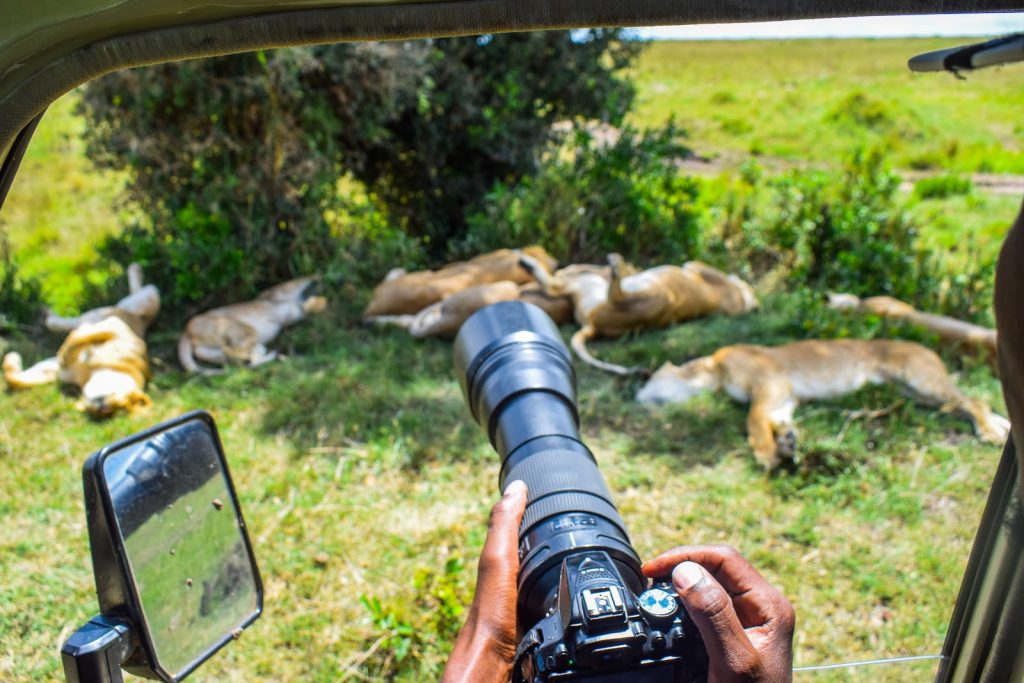
- Support beats tripods. The most useful safari camera gear may be a beanbag. In a vehicle, a beanbag or the window frame steadies the camera far better than a tripod, which has no room to stand.
- Dust is the real enemy. Dry-season roads are dusty and hard on safari camera gear, so change lenses inside a bag and carry a blower.
- Power runs out fast. Cold mornings and long days drain batteries; bring spares and a power bank.
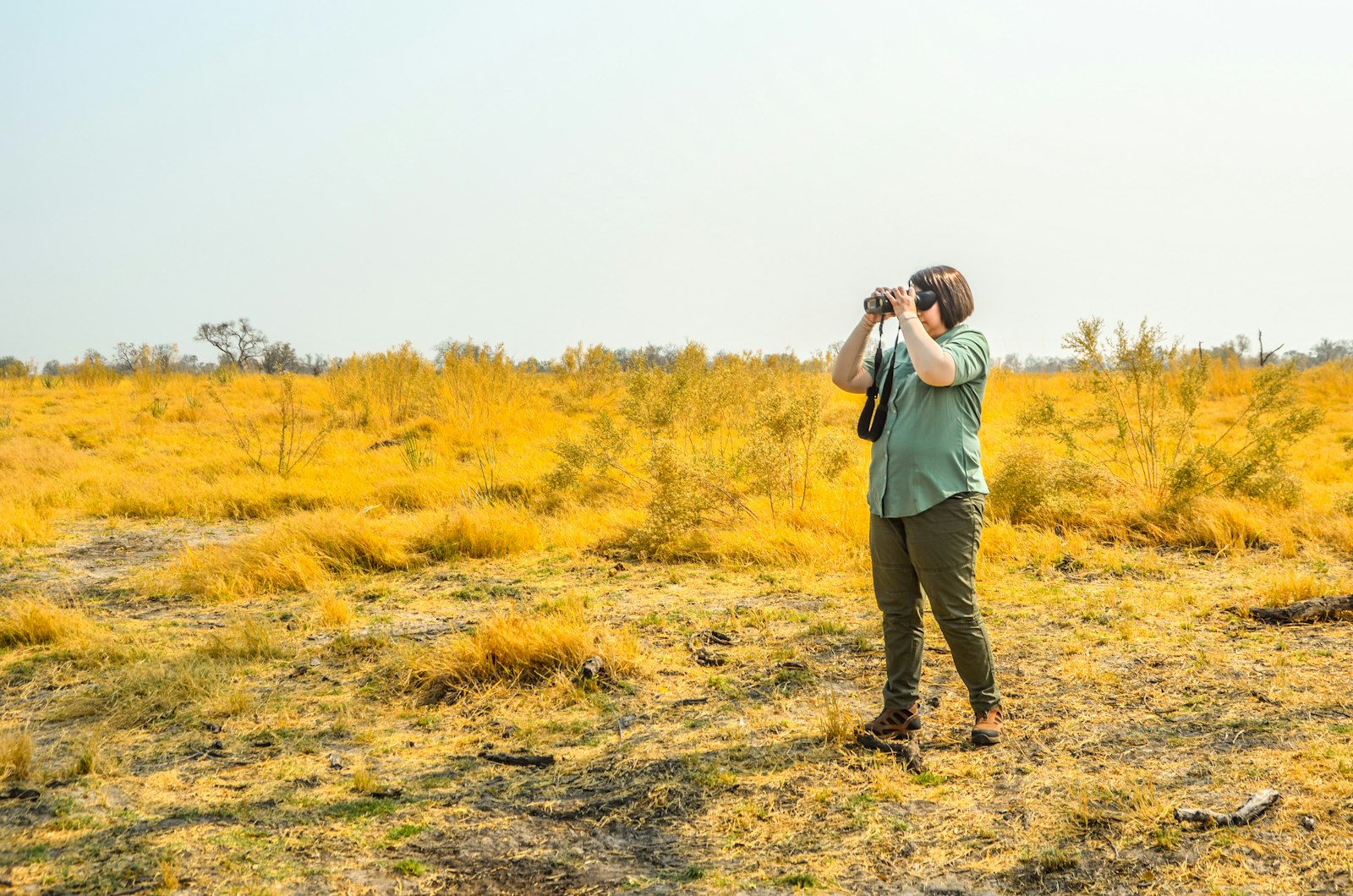
- Binoculars improve every safari. They help you see behaviour in real time, which makes your photographs better because you know what is about to happen.
- Put the camera down sometimes. The moments you only watch often stay with you longest.
Smartphone, Bridge or Mirrorless: Which Safari Camera Gear Suits You?
The right safari camera gear is the one you will actually carry, understand and enjoy using every day of the trip.
| Option | Strengths | Limits | Best for |
|---|---|---|---|
| Smartphone | Always with you, great video, easy sharing | Weak at long distances and in low light | Casual travellers, families, video lovers |
| Bridge or travel zoom | Huge zoom range, light, simple | Smaller sensor, slower focus at dusk | Travellers who want close-ups without carrying lenses |
| Mirrorless or DSLR with zoom | Fast focus, excellent quality, flexible | Heavier, more costly, needs practice | Keen hobby photographers |
| Pro telephoto kit | Maximum reach and low-light quality | Heavy, expensive, bulky for bush flights | Dedicated photographic safaris |
Smartphone Tips That Make a Real Difference
- Clean the lens before every drive; dust softens images more than you think.
- Use the phone’s telephoto lens rather than pinch zoom where possible.
- Tap to focus on the animal’s eye and lower exposure slightly for bright skies.
- Shoot short video clips at sightings; movement often tells the story better than a still.
- A clip-on phone holder for binoculars is fun for distant birds, though results vary.
Bridge and Mirrorless Settings to Learn Before You Go
Learn three settings at home: continuous autofocus for moving animals, a fast shutter speed of around 1/1000 s for action, and auto ISO so the camera adjusts as light changes. Practise with your safari camera gear on birds or pets before you travel so you are not reading the manual while a cheetah hunts.
Choosing between a phone, a bridge camera or a big lens?
Our guides can tell you what works best for the parks on your route and the time of year you travel.
Lenses and Focal Lengths for Kenya
For most wildlife in Kenya, a zoom reaching 300 to 400 mm on a full-frame camera, or the equivalent on smaller sensors, covers almost every sighting.
| Focal length (full-frame equivalent) | What it is good for | Example Kenya situations |
|---|---|---|
| 16-35 mm | Landscapes, camp, big skies | Amboseli plains, sundowners, star skies |
| 24-105 mm | Animals close to the vehicle, people | Elephants at a waterhole, lions beside the track |
| 100-400 mm | The all-round wildlife lens | Cheetahs on termite mounds, giraffes, river crossings |
| 500-600 mm | Distant or small subjects | Leopards in trees, birds, shy antelope |
If your safari camera gear includes one lens only, make it the 100-400 mm range. If you can carry two bodies, pair the long zoom with a wide zoom so you never miss a scene while changing lenses in the dust.
Renting Instead of Buying
Renting a long lens from a camera shop at home is often smarter than buying safari camera gear for one trip. Collect it a week early, practise with it, and check that your insurance covers it abroad.
Insuring Your Safari Camera Gear
Before you fly, check that your travel or home insurance covers safari camera gear abroad, including theft from vehicles and accidental damage. Many standard policies cap single items at a low value, so expensive lenses may need a separate gadget or specialist photography policy. Keep receipts and serial numbers in your email, and photograph each item at home so a claim is simple if anything goes wrong.
Packing Your Safari Camera Gear for Bush Flights
Packing safari camera gear for Kenya is mostly about weight, dust and power, especially if you fly between parks on light aircraft.
Many domestic bush flights limit luggage to around 15 kg per person in a soft bag, including hand luggage, though the exact rule varies by airline and route. Heavy safari camera gear counts towards that limit. Our safari luggage weight limits guide and safari duffel bag guide explain how to plan, and extra seats can sometimes be bought for heavy photo kit.
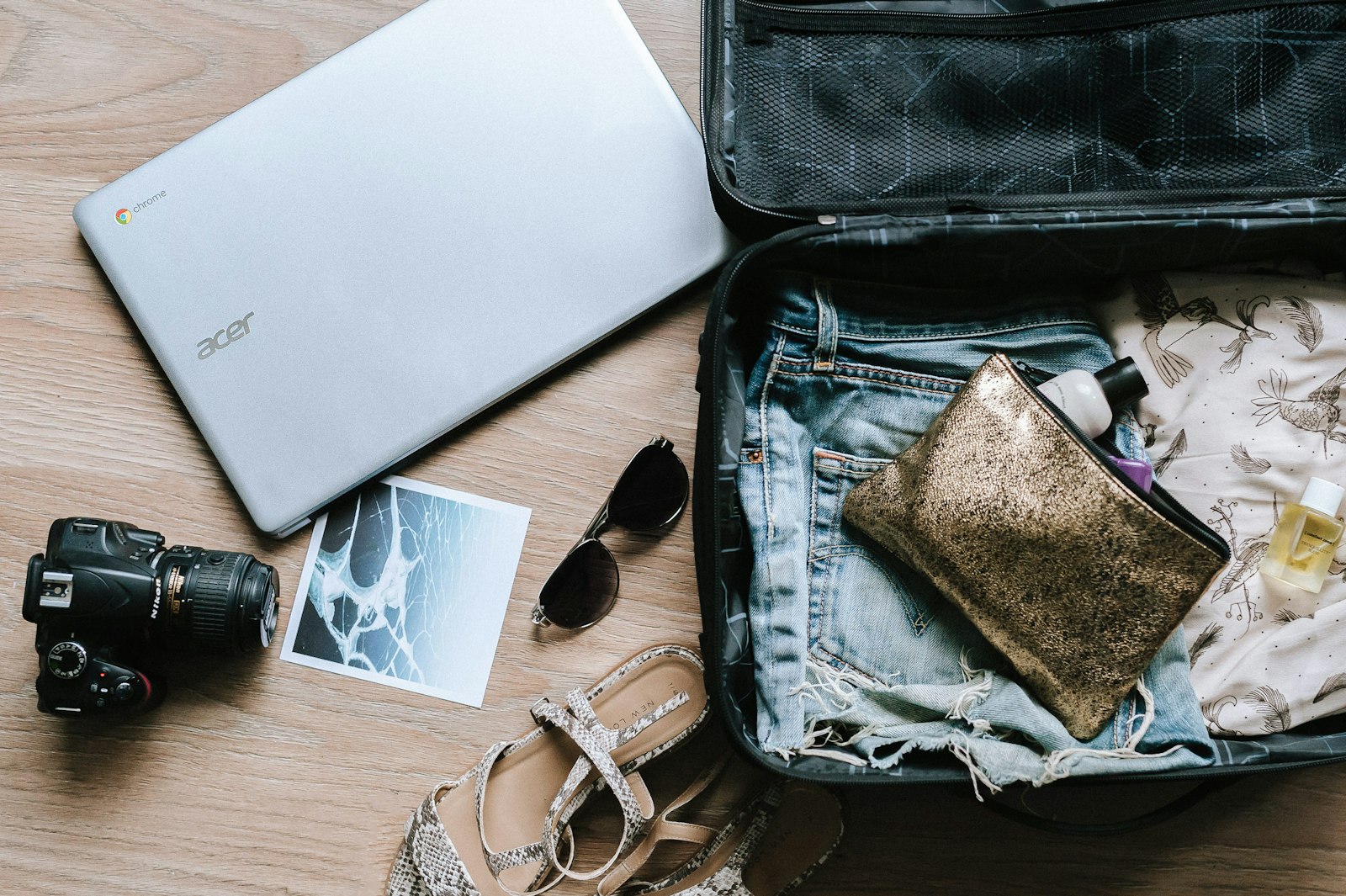
- Two or three spare batteries and the chargers, plus a power bank for your phone.
- Several memory cards rather than one large card, so a failure does not lose the trip.
- A beanbag you can fill locally, or a compact window mount.
- A rain cover or a simple plastic-free dry bag for sudden showers.
- A blower, lens cloths and a soft brush for dust.
- A universal adaptor; Kenya uses the UK-style three-pin plug.
Charging and Backing Up Photos at Camp
Most lodges and tented camps have charging points in the room or at the main area, though some remote camps run on solar power with limited hours. Charge batteries whenever you are back at camp, and carry a multi-port USB charger so one socket covers your phone, power bank and camera.
Back up your photos every evening. A small laptop, a portable drive or a camera that writes to two cards protects the trip if a card fails. Wi-Fi in camps is often slow, so do not rely on uploading full-resolution files to the cloud until you reach Nairobi.
For a full list, see our camera gear and lens checklist for a Kenya safari. Our what not to bring on safari guide covers banned items.
Drones and Plastic Bags
Leave the drone at home unless you have arranged permits well in advance. Flying one in Kenya needs authorisation from the Kenya Civil Aviation Authority, and protected areas need separate permission from the Kenya Wildlife Service. Kenya also bans single-use plastic carrier bags, so pack camera kit in fabric pouches. Check the latest UK government travel advice for Kenya before you fly.
How Your Vehicle and Guide Affect Your Photos
Your vehicle and guide shape your photos as much as your safari camera gear, which is why we build trips around private vehicles.
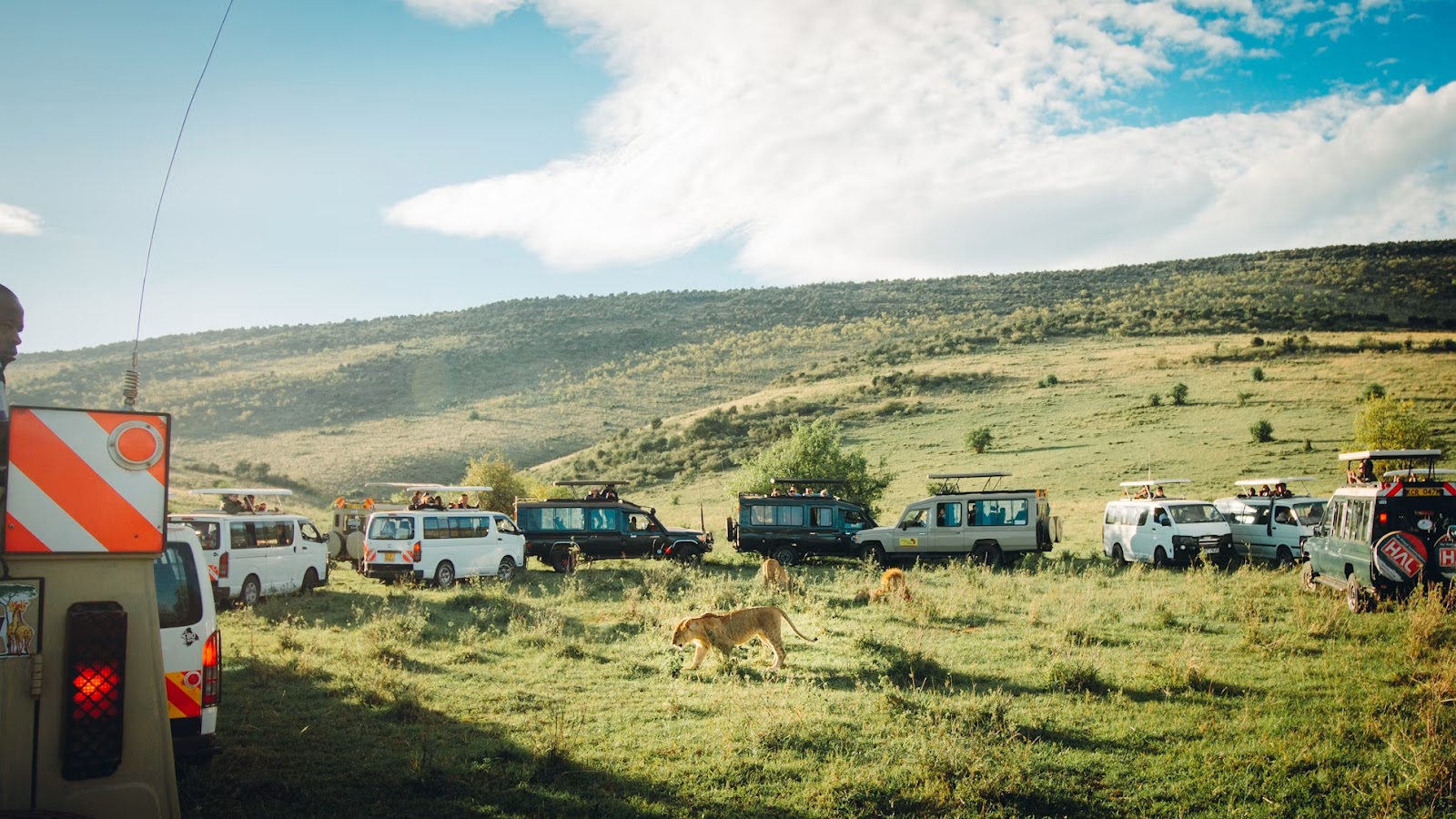
Most Kenya safaris use 4×4 Land Cruisers with pop-up roofs, giving a stable, raised platform. In private conservancies, open-sided vehicles are common and give lower, more intimate angles. Either way, a window seat for everyone matters. Our window seat guarantee guide explains how many people share a vehicle.
Expert tip from our Nairobi team
Tell your guide on the first morning what you want to photograph, whether it is cats hunting, birds or wide landscapes. Ask them to switch off the engine at sightings, since vibration blurs long-lens shots. Keep your safari camera gear on your lap, switched on and set for action, because the best moments rarely give a warning.
Ethical Photography on Safari
No safari camera gear justifies harming wildlife. Never ask a guide to drive off-track, crowd an animal or use calls to attract it. Good photographers wait for natural behaviour. In national reserves, drivers must stay on tracks, and responsible operators follow those rules even when a shot is tempting.
Safari Camera Gear for Low Light and Night Drives
The first and last minutes of a game drive often bring the best action and the poorest light. A lens with a wide aperture, a camera that handles high ISO well and a steady beanbag help more than extra megapixels. Accept some grain rather than missing the moment; a sharp, grainy leopard beats a blurred clean one.
Night drives are not allowed in most national parks and reserves, but many private conservancies offer them with a spotlight. Ask your guide before you set out whether flash is permitted, because many guides prefer you to rely on the spotlight to avoid disturbing animals. Raise your ISO, open the aperture and shoot short bursts.
When to Go for the Best Light and Wildlife
The best months for safari photography in Kenya are the dry seasons, though the green seasons offer dramatic skies and fewer vehicles.
| Months | Conditions | Photography highlights |
|---|---|---|
| January to February | Short dry season, warm | Clear light, calving in the Mara region, Kilimanjaro views |
| March to May | Long rains | Lush colour, storm skies, fewer vehicles; some camps close |
| June to October | Long dry season | Animals gather at water; Mara migration usually July to October |
| November to December | Short rains | Green landscapes, dramatic clouds, good value |
For timing the herds, read our honest guide to Great Migration timing. For Kilimanjaro shots, see our Kilimanjaro view from Amboseli guide.
Want the best light on your dates?
The top photographic camps and private vehicles book early for the dry season. Share your dates and we will send a written quote.
Photographic Safaris and Who They Suit
A dedicated photographic safari suits travellers who want long, flexible game drives and a guide who thinks about light and angles.
Our Big Cats Photographic Safari in the Masai Mara and our photographic safari in the Masai Mara and Great Rift are built around early starts and patient sightings. Any private Kenya safari can be tuned for photography, and a luxury Kenya safari adds conservancy access and open vehicles.
Park fees affect the cost of long days in the field, so check our Kenya national parks entrance fees 2026 guide. For wider ideas, browse Magical Kenya, the official tourism site.
Who Should Keep Safari Camera Gear Simple
Families with young children, travellers who mainly want the experience and anyone flying between several camps often enjoy the trip more with a phone and a compact zoom. You spend less time managing safari camera gear and more time watching.
Safari Camera Gear FAQs
Is a smartphone good enough for a Kenya safari?
Yes for most travellers. A recent phone takes excellent landscapes, video and photos of animals near the vehicle, which happens often in Kenya. It struggles with distant subjects such as leopards in trees, so add a bridge camera with a long optical zoom if close-ups matter to you.
What zoom lens is best for safari?
A zoom reaching about 400 mm on a full-frame camera is the most useful single lens for Kenya. It covers cheetahs, lions, elephants and many birds. Add a wide zoom for landscapes. Lenses of 500 to 600 mm help with birds and leopards but are heavier to carry.
Should I bring a tripod on safari?
Usually not for game drives. There is no room for a tripod in a vehicle and the engine vibrates it. A beanbag on the window frame or roof hatch is better. A small travel tripod is only useful for night skies or landscapes at camp.
Can I fly a drone on safari in Kenya?
Not without planning. Drones need authorisation from the Kenya Civil Aviation Authority, and national parks and reserves need permission from the Kenya Wildlife Service. Most camps do not allow them. Unless you have arranged permits well before travelling, leave the drone at home.
How do I protect my camera from dust on safari?
Keep the camera in a soft bag or wrapped in a cloth between sightings, change lenses inside the bag or with the vehicle stopped, and use a blower each evening. A simple rain cover also helps on dusty roads. Avoid wiping dry dust across the lens with a cloth.
Is it worth buying a camera just for one safari?
Only if you will keep using it. A bridge camera is a good one-off purchase because it is simple and versatile. For expensive lenses, renting from a camera shop at home is often better value. Collect it early and practise before you travel.
How many memory cards and batteries should I bring on safari?
Bring at least two or three spare batteries and several memory cards rather than one large card. Long game drives, video and cold mornings drain power quickly, and splitting photos across cards limits the loss if one fails. Back up to a laptop or portable drive each evening at camp.
Can I charge my safari camera gear at the camps?
Usually yes. Most lodges and tented camps have charging points in rooms or at the main area, and many safari vehicles have USB sockets. Some remote camps run on solar power with limited hours, so charge whenever you can and carry a power bank and a UK-style three-pin adaptor.
Plan a Safari Built Around Your Camera
Whether you shoot on a phone or a 600 mm lens, we will match the parks, season, vehicle and guide to the photos you want. Sense of Adventure is a TRA-licensed Nairobi safari company.
Kenya-based experts. Real local knowledge. Transparent pricing.
Email: info@senseofadventure.co.ke