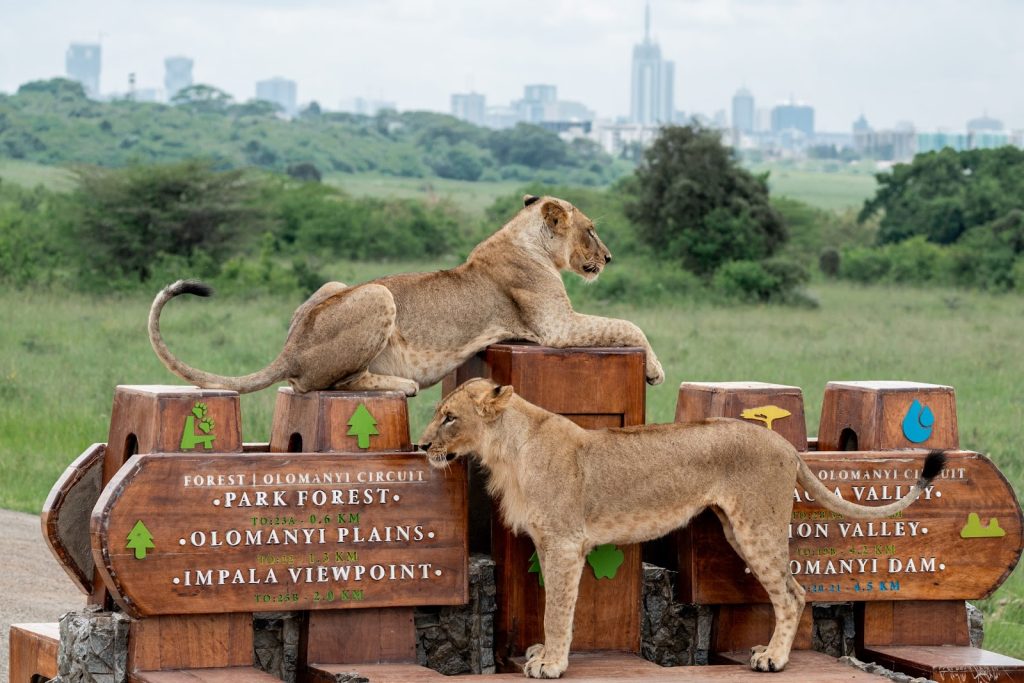
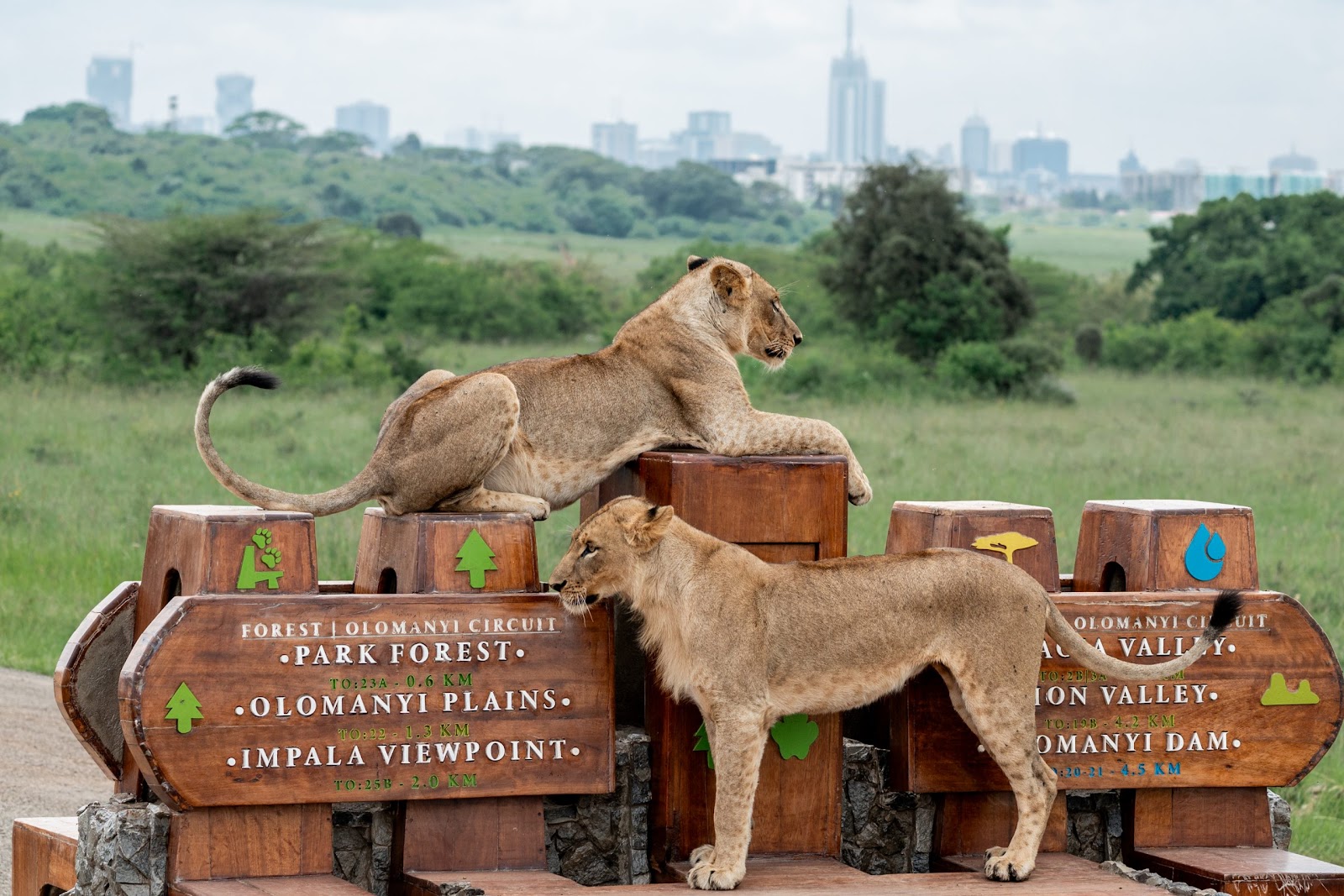
The lions of Nairobi National Park live the strangest big-cat existence in Africa: hunting zebra by night within earshot of matatu horns, raising cubs in valleys where the skyline fills the horizon, and now and then wandering out past the park boundary into the suburbs. Around thirty-plus wild lions patrol this 117 km² park on the capital’s doorstep, genuinely wild, self-sustaining and dramatic.
For visitors, they turn a city morning into a full safari: no other capital offers a realistic chance of lions before breakfast. Sense of Adventure’s dawn departures work the pride territories methodically, and the hit rate surprises everyone except our drivers. This guide covers where the lions of Nairobi National Park live, the best times to find them, the true story of the famous wanderers, costs and how to plan your visit.
✅ Lions of Nairobi National Park Quick Answer
- How many: roughly thirty-plus wild lions in several prides, monitored by the Kenya Wildlife Service.
- Best time: the first two hours after the gates open at 6 am, then late afternoon.
- Where: the river valleys, dams and open southern plains where prey gathers.
- Odds: lions are seen on many drives, but no sighting is ever guaranteed.
- From: our Nairobi Layover Tour, with a game drive in the park, starts at USD 190 per adult sharing.
Lions Before the City Wakes
Dawn-gate departures aimed straight at the pride valleys — Nairobi’s wildest morning, minutes from your hotel.
How Wild Lions Persist Beside a Capital
The park’s lions survive on its rich prey base — zebra, wildebeest, kongoni, eland and warthog — sustained by the open southern boundary, where the Kitengela plains historically let wildlife disperse and return with the rains. Prides den in the whistling-thorn valleys and along the Mbagathi river line, hunting mostly at night and lying up through the warm hours.
The closeness of the city creates famous incidents. Individual lions have wandered out of the park into nearby suburbs and onto highways, making national headlines. Within the park, though, the life of the lions of Nairobi National Park is pure wilderness: territorial roars at dawn, cubs hidden in the drainage lines and buffalo stand-offs by the dams.

The 5 Essential Lion Experiences in Nairobi’s Park
The Skyline Lion Shot — wilderness with the city watching
The park’s defining image — a lion crossing open grass with skyscrapers stacked behind — is achievable with dawn timing and the right valleys. The northern plains frame the city centre best. It is the picture that makes phones ping worldwide, because nobody quite believes it is real.
Dawn Patrol in the Valleys — first ninety minutes or nothing
Nairobi’s lions finish the night’s business in the first cool hour: males walking territory lines, females leading cubs off kills towards their resting places. Enter at the 6 am gate, work the Mbagathi drainage and the dam circuits straight away, and your odds are good. By nine the prides are flat out in thickets and the search gets harder.
The Dam Ambush Theatres — where prey must drink
The park’s dams — the Athi Basin and the Hyena Dam circuit in particular — concentrate zebra and wildebeest, and the lions know their timetable. Waiting at water in the golden hours regularly produces stalks, chases and occasionally the full spectacle. Patience at one dam beats circling the whole park.
Cub Season in the Whistling Thorn — the park’s renewal on display
The prides breed successfully, and litters appear in the thornbush drainage lines with happy regularity — small heads peering above the grass while mothers watch everything. Guides keep a respectful distance from young cubs. There is something extra moving about cubs whose whole world borders a runway.
The Famous Wanderers’ Story — lions who left the park
Ask your guide about the escapes — including the much-photographed male Mohawk, whose story ended sadly in 2016 — and the park’s bigger question comes alive: how the city and the wild share a boundary every day. It adds a very Nairobi layer to every sighting.
The 6 AM Gate Is the Whole Secret
Our layover and city safaris start in the dark for exactly this reason. Book the dawn run and meet the prides.

Nairobi Lion Facts
- Population: thirty-plus wild lions across the park’s prides, monitored by KWS and researchers.
- Hunting: mostly at night, on zebra, wildebeest and kongoni; dawn catches the last act.
- Territory: pride core areas follow the Mbagathi river line, the dams and the southern valleys.
- The fence: the park is fenced on the city sides and open to the south — the historic dispersal corridor.
- Wanderers: roaming lions have reached suburbs and highways several times, always making national news.
- Best odds: 6:00 to 8:00 am at dams and drainage lines; evenings second-best as shadows lengthen.
Where to Find the Lions of Nairobi National Park
The park is small enough to cover in a morning, but lions are easy to miss if you drive the wrong loop. Experienced guides read fresh tracks, alarm calls from impala and baboons, and the behaviour of vultures to narrow the search. They also share news with other drivers on the radio.
The river valleys and southern plains
The Mbagathi river valley along the southern edge, with its thickets and rocky gorges, gives prides shade and cover. The open plains towards the south, where grazers gather after rain, are good hunting grounds. Lions often rest on the slopes above the river at first light, and this is where the lions of Nairobi National Park are most often found in the first hour.
The dams and waterholes used by the lions of Nairobi National Park
In dry weather, the dams are the best places to wait. Prey must come to drink, and lions use the bush around the water as cover. The Hyena Dam and the Athi Basin area are reliable stops on a morning loop.
Near the forest edge
The higher, western side of the park near the main gate is more wooded. Lions pass through it less often, but it is a good place for rhinos, giraffes and birds while your guide checks for lion news.
The True Story of the Wandering Lions
Because the park is fenced only on its city sides, the lions of Nairobi National Park can leave through the open south, and young males looking for new territory sometimes do. In 2016 several lions were reported outside the park within a short period, including sightings near busy roads.
The best known was Mohawk, a male named for his distinctive mane. In March 2016 he left the park, injured a man in the Isinya area to the south and was shot by Kenya Wildlife Service rangers. His death caused public sadness and debate about how Nairobi’s growing suburbs and its lions can share space. Since then, conservation groups and KWS have worked to protect the lions of Nairobi National Park, working with communities on the southern boundary to reduce conflict.
Protecting the Lions of Nairobi National Park
The greatest long-term threat to the park’s lions is the loss of open land to the south. Fences, roads, housing and farming on the Kitengela and Athi-Kapiti plains narrow the corridor that lets prey and predators move with the seasons. A smaller range means more conflict with livestock owners.
Lions are listed as Vulnerable on the IUCN Red List, and Kenya’s national parks are managed by the Kenya Wildlife Service. Your park entry fees help pay for rangers, monitoring and the management of the park.
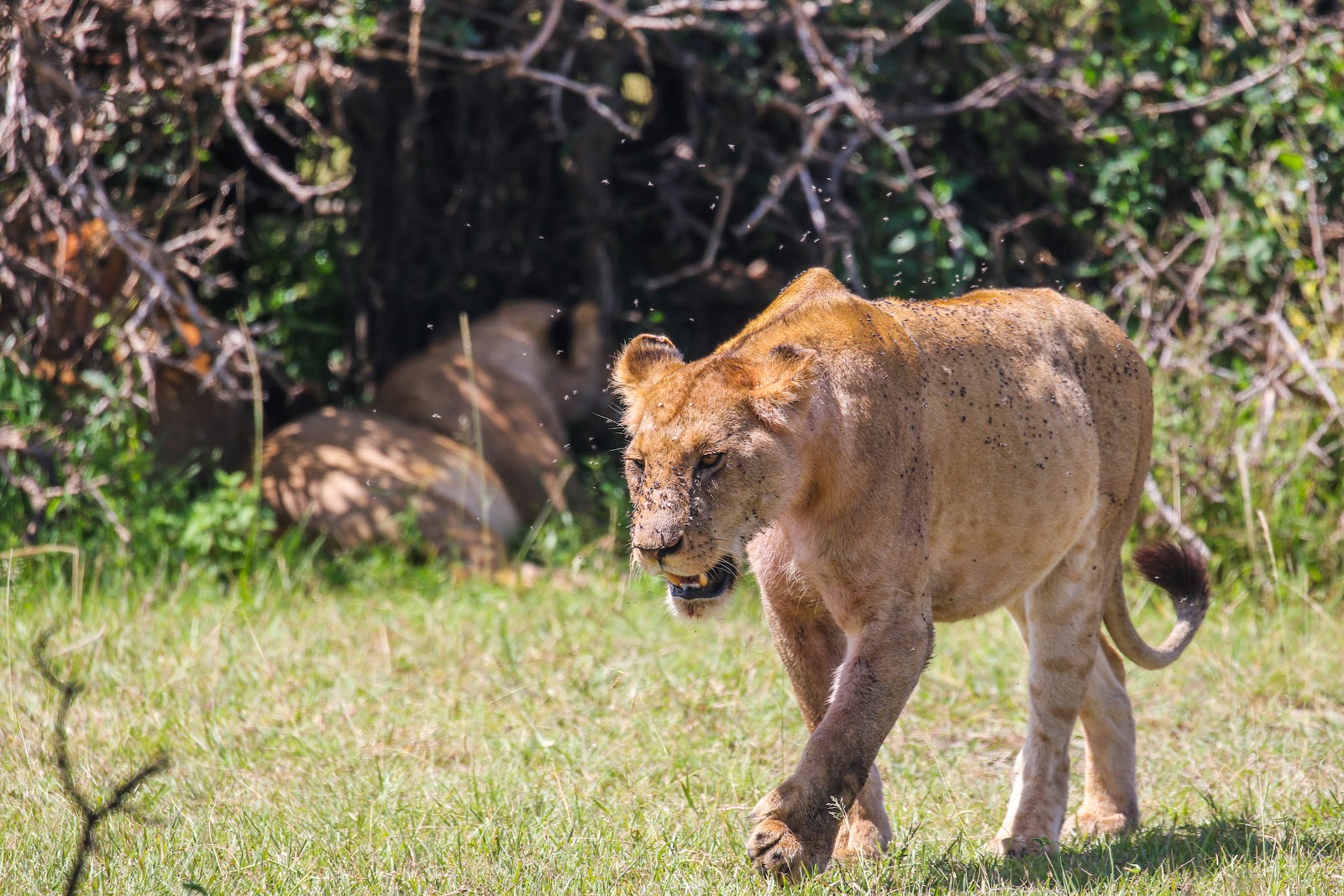
Best Time to See Lions in Nairobi National Park
Lions can be found in every month. The dry months, roughly June to October and January to February, are usually best because the grass is shorter and prey gathers near water. In the long rains from March to May, the grass grows tall and some tracks become muddy, so sightings take more patience.
Time of day matters even more than season. Plan to be at the gate when it opens at 6 am. Lions are most active in the cool first hours and again in the late afternoon before the park closes at 6 pm. Midday drives are good for rhinos and giraffes but rarely for active cats.
How to Plan Your Visit
Half-day game drives and layovers
Most visitors see the lions of Nairobi National Park on a private half-day drive from a city hotel or JKIA. Our Nairobi National Park safari page explains the options, and travellers between flights should read our Nairobi layover safari plan.
Costs
Our Nairobi Layover Tour starts from USD 190 per adult sharing and includes a game drive, the Sheldrick elephant nursery and the Giraffe Centre. Our wider Nairobi day tours start from USD 65 per person. Park fees are set by KWS; see our Nairobi National Park entrance fees guide.
What to bring
- A warm layer for the early start, as Nairobi mornings can be cool.
- Binoculars and a camera with a zoom of at least 200 mm.
- A hat, sunscreen and water for later in the morning.
- Your passport if you are on a layover, plus your eTA approval.
A Sample Dawn Drive for the Lions of Nairobi National Park
This is how a typical early drive in search of the lions of Nairobi National Park runs. Your guide adapts the route every morning to fresh tracks and radio news.
- 5:30 am: pick-up from your Nairobi hotel, with coffee and a light snack for the road.
- 6:00 am: enter as the gate opens and head straight for the valleys where the prides were last seen.
- 6:15 to 8:00 am: slow searching along the drainage lines, dams and southern plains, the prime window for lions on the move.
- 8:00 to 9:30 am: rhinos, giraffes and birds, with a stop at a viewpoint or the Hippo Pools.
- 10:00 am: leave the park, or continue to the Sheldrick elephant nursery for its 11 am public visit.
Lions of Nairobi National Park vs the Masai Mara
The lions of Nairobi National Park are fewer and harder to find than those of the Masai Mara, which has one of the highest lion densities in Africa and much bigger prides. In the Mara, several sightings a day are normal; in Nairobi, one good sighting makes a morning.
What Nairobi offers instead is access and setting. You can see wild lions within an hour of a city hotel or the airport, with skyscrapers behind them, and still be back for lunch. Many of our guests start with the lions of Nairobi National Park on arrival day and then head to the Mara for the full big-cat experience. Read more about the country’s parks on Magical Kenya.
Viewing Etiquette Around Lions
Stay inside the vehicle, keep your voice low and never ask your guide to drive off the track for a closer view. Give mothers with cubs plenty of space, and leave a sighting if the lions start to look disturbed. Avoid flash photography. These simple rules keep the lions of Nairobi National Park relaxed and the park’s wildlife healthy for everyone who visits after you.
Photographing the Lions of Nairobi National Park
- Skyline frames: ask your guide to position the vehicle so the city sits behind the lions; a 70–200 mm lens works well.
- Soft light: the first hour after sunrise gives warm colour and long shadows.
- Behaviour: wait for a yawn, a greeting between pride members or cubs at play.
- Stability: use a beanbag on the window frame and switch off the engine when you shoot.
Lions as Part of the Nairobi Wildlife Day
Pair the prides with the park’s other headline in our Nairobi rhinos guide, and see the full experience on our Nairobi National Park safari page. The bookable dawn run is part of the Nairobi Layover Tour — and connecting travellers should read the layover safari plan to fit lions between flights. For bigger prides, see our Masai Mara safari packages or a private Kenya safari.
Thirty Wild Lions Have a City Address
They’re walking the valleys at dawn while the capital sleeps. Set the alarm and come meet them.
Frequently Asked Questions
Are there wild lions in Nairobi National Park?
Yes. The lions of Nairobi National Park are a wild, self-sustaining population of thirty-plus animals living just 7 km from the city centre. They hunt zebra and wildebeest mainly at night and are best found in the first two hours after the gates open at 6 am.
Where do lions live in Nairobi National Park?
The lions of Nairobi National Park centre their prides on the Mbagathi river line, the whistling-thorn valleys and the dam circuits where prey gathers. Dawn drives that work these drainage lines and waterholes give the most reliable sightings, with the open southern plains good after rain.
Have lions ever escaped Nairobi National Park?
Yes. Because the southern side is open, lions sometimes leave the park, and several did in 2016. The best known, a male called Mohawk, injured a man south of the park and was shot by KWS rangers. Conservation groups now work with boundary communities to reduce conflict.
What time should I visit Nairobi National Park to see lions?
Arrive for the 6 am gate opening. The lions of Nairobi National Park are most visible in the first ninety minutes, finishing night hunts and walking territory lines before lying up in thickets by mid-morning. Late afternoon, before the 6 pm closing, offers a second, smaller window.
Can I photograph lions with the Nairobi skyline behind them?
Yes. The northern plains let you frame lions against the city towers, the photograph the park is famous for. It needs dawn timing, a guide who knows where the prides are and some luck with positioning, but our guests manage it regularly on early drives.
How many lions are in Nairobi National Park?
The park holds roughly thirty-plus lions, split across several prides and roaming males. Numbers change as cubs are born and young males leave, so treat any figure as an estimate. The Kenya Wildlife Service and researchers monitor the population and track individuals over time.
Are the lions of Nairobi National Park dangerous to visitors?
Not when you follow the rules. You view the lions of Nairobi National Park from inside a vehicle, and the cats are used to cars. Stay seated, keep arms inside near a sighting and never get out except at designated sites such as the walking area at the Hippo Pools.