Gorilla trekking Rwanda is the simplest way to spend an hour with wild mountain gorillas: you fly into Kigali, drive about two hours north to Volcanoes National Park, and walk into the bamboo forest with a ranger, a small group and a permit issued by the Rwanda Development Board. This guide explains how it works, what it costs, when to go and how to fit it into a wider East Africa safari.
Rwanda is Africa’s most compelling conservation success story. A country that emerged from the devastation of the 1994 genocide to become one of the continent’s most stable, progressive, and ecologically committed nations — where mountain gorillas now thrive in protected forests, where wildlife tourism funds community development, and where the Kwita Izina gorilla naming ceremony each year celebrates new births in a population that was once sliding toward extinction.
Gorilla trekking in Rwanda’s Volcanoes National Park is one of Africa’s most extraordinary wildlife experiences — and one that carries a depth of meaning that goes well beyond the encounter itself.
Rwanda’s gorilla trekking experience differs from Uganda’s Bwindi in several important ways — both in logistics and in character. This guide covers Rwanda’s gorilla experience in full, helping you decide whether Rwanda, Uganda, or a combination of both is right for your East Africa itinerary.
✅ Gorilla Trekking Rwanda: The Quick Answer
- Where: Volcanoes National Park in northern Rwanda, about 2 hours by road from Kigali.
- Permit: issued by the Rwanda Development Board (RDB); listed on our site at USD $1,500 per person, but prices change, so confirm the current price on visitrwanda.com.
- Time with gorillas: one hour with a habituated family, in a group of no more than 8 trekkers.
- Minimum age: 15 years.
- Best time: the drier months of June–September and December–February, although treks run all year.
- Book ahead: 3–6 months for peak season, as daily permits are strictly limited.
Volcanoes National Park: Rwanda’s Gorilla Sanctuary
Volcanoes National Park — Parc National des Volcans in French — protects the Rwandan sector of the Virunga Massif: a chain of eight extinct and dormant volcanoes straddling the borders of Rwanda, Uganda, and the Democratic Republic of Congo. The park covers 160 square kilometres of Afromontane forest on the volcanic slopes, rising from 2,400 metres to 4,507 metres at the summit of Mount Karisimbi.
The park is home to several habituated mountain gorilla families, managed by the Rwanda Development Board (RDB). It is also the site where the American primatologist Dian Fossey established her Karisoke Research Centre in 1967 — the foundation of our modern understanding of mountain gorilla behaviour and one of conservation science’s most influential research programmes.
Fossey’s grave, alongside that of her favourite gorilla Digit, lies within the national park. A visit to the Karisoke Research Centre site (accessible as a trek) is a powerful addition to any Rwanda gorilla itinerary.
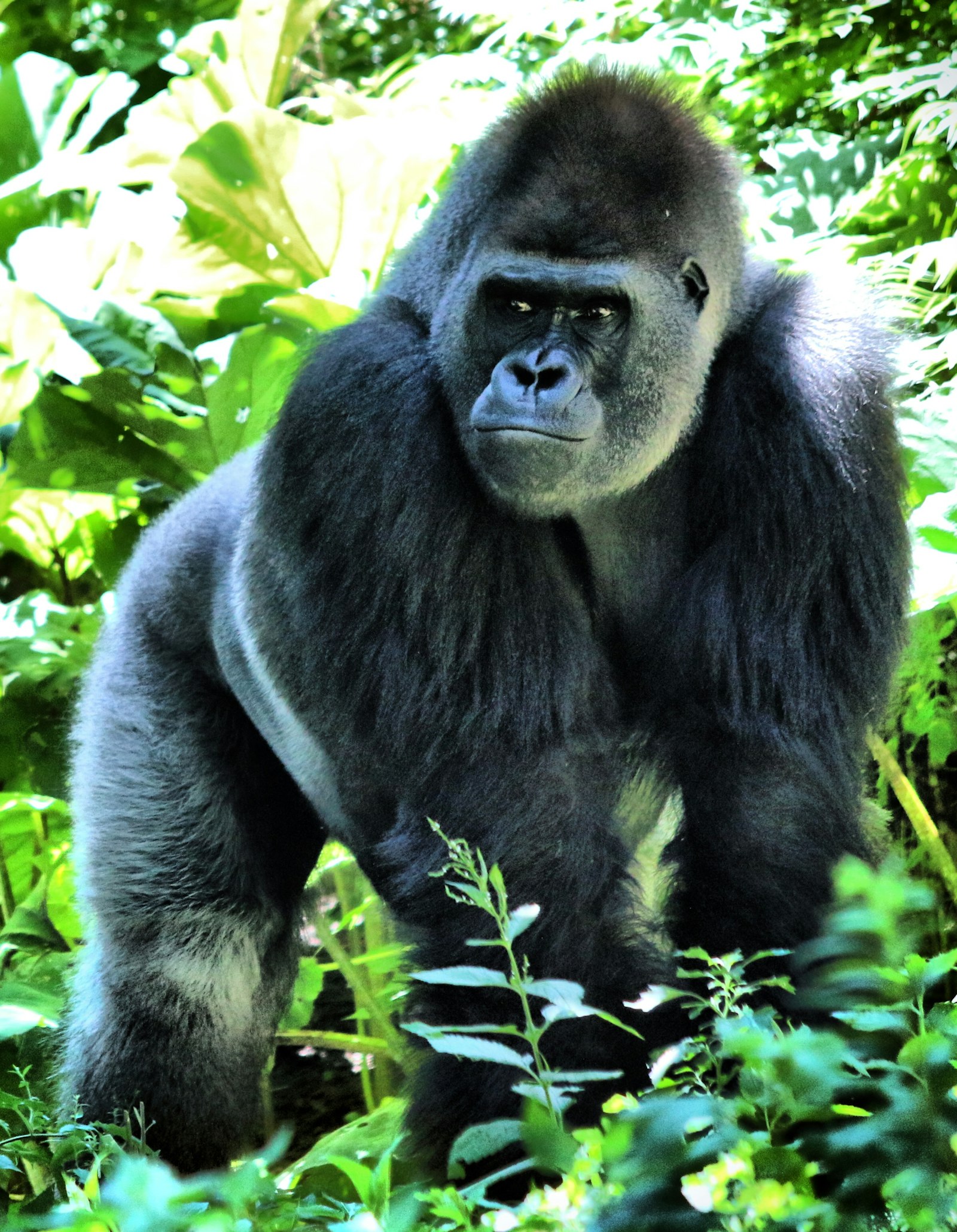
Mountain gorillas live only in the Virunga volcanoes and in Uganda’s Bwindi forest. The total population is just over 1,000 animals, and the species is listed as Endangered on the IUCN Red List. Every gorilla trekking Rwanda permit helps pay for the rangers, trackers and vets who protect them, and a share of park revenue goes to the communities living around the park.
Rwanda vs Uganda for Gorilla Trekking
Both Rwanda and Uganda offer extraordinary gorilla encounters — the experience of spending an hour with a mountain gorilla family is comparably profound in both countries. The differences lie in accessibility, cost, and surrounding landscape:
Rwanda advantages:
- Accessibility: Volcanoes National Park is approximately 2 hours from Kigali — Rwanda’s modern, clean, impressively organised capital. The logistics are seamless. You can fly into Kigali, reach the park the same afternoon, trek the following morning, and depart the next day — making Rwanda viable for travellers with as little as 2–3 days available specifically for gorillas.
- Kigali connection: Kigali is a fascinating city with a remarkable story of recovery and renewal. The Kigali Genocide Memorial is one of the most moving and important memorial sites in Africa — a visit gives profound context to Rwanda’s extraordinary trajectory. The city’s cleanliness, safety, and hospitality make it an outstanding base.
- Exclusive luxury: Rwanda has attracted some of the world’s most acclaimed luxury safari properties to the Volcanoes sector — including One&Only Gorilla’s Nest and Singita Kwitonda Lodge — at prices that reflect the premium product. If ultra-luxury gorilla experiences are your priority, Rwanda’s offering is currently unmatched.
Uganda advantages:
- Permit cost: Uganda gorilla permits are listed on our site at USD $800, against USD $1,500 for Rwanda — a significant difference for budget-conscious travellers or groups. Both governments review their fees, so always check the current figures before you budget.
- Multiple families and sectors: Bwindi’s four sectors and larger number of habituated families offer more permit availability and a wider range of trekking experiences.
- Broader wildlife circuit: Uganda’s Queen Elizabeth National Park, Kibale Forest (chimpanzees), and Murchison Falls combine with Bwindi for an exceptionally diverse wildlife circuit that Rwanda alone cannot match.
For a deeper side-by-side comparison, read our guide to Rwanda vs Uganda gorilla trekking. In short, gorilla trekking Rwanda suits travellers who are short on time and value smooth logistics, while Uganda suits those who want a lower permit price and a longer primate circuit.
Rwanda Gorilla Permits: Cost and Booking
Rwanda gorilla trekking permits are issued by the Rwanda Development Board. Our current published figure is USD $1,500 per person, but permit prices change, so always check the current price with the Rwanda Development Board at visitrwanda.com before you set your budget. Despite the premium price, demand significantly exceeds supply for most of the year — book 3–6 months ahead for peak season (June–September). We handle all Rwanda gorilla permit booking as part of our East Africa packages.
What a Gorilla Trekking Rwanda Permit Covers
A gorilla trekking Rwanda permit covers park entry for the day, the briefing, an armed ranger escort, the trackers who locate your family and one hour in the gorillas’ company once you reach them. It does not cover transport to the park, accommodation, meals, porters or tips. Our gorilla trekking permit cost guide breaks down what is and is not included in both Rwanda and Uganda.
How to Book Your Gorilla Trekking Rwanda Permit
Permits are sold for a specific date, and each habituated family can only be visited by one small group per day, so availability is the real constraint. Most travellers book through a licensed operator, who secures the permit with the RDB and builds the transport and lodge nights around it. Send us your preferred dates early, along with a back-up date, and we will check availability before confirming the rest of your trip.
What a Gorilla Trekking Rwanda Day Looks Like
A gorilla trekking Rwanda day starts early and follows a set routine. Knowing it in advance helps you relax and enjoy the experience rather than worrying about timings.
Early Start at Kinigi Park Headquarters
Trekkers gather at the park headquarters in Kinigi at around 7am. Your driver will leave your lodge in good time, as some lodges are 30 minutes or more away. While you drink a cup of Rwandan coffee, traditional dancers often perform, and the rangers allocate visitors to gorilla families.
Choosing Your Gorilla Family
Each family has its own group of up to 8 trekkers. Rangers try to match fitness to terrain, so tell your driver-guide if you would prefer a shorter, gentler walk or are happy with a long climb. Families move every day, so nobody can promise an exact trekking time, but this conversation makes a real difference.
The Trek Through the Forest
After a briefing on the rules, you drive to the trailhead and walk through farmland to the park boundary wall. From there the path climbs into bamboo and montane forest. Advance trackers radio the family’s position to your ranger. Treks can take anything from under an hour to several hours each way, at altitude and often on muddy, steep ground.
Your Hour With the Mountain Gorillas
When you reach the family, you leave bags and walking sticks with the porters and approach with only your camera. For one hour you watch the silverback, mothers and young ones feeding, grooming and playing. It goes faster than you expect. Many travellers say gorilla trekking Rwanda gave them the most moving wildlife hour of their lives.
Best Time for Gorilla Trekking Rwanda
Gorilla trekking Rwanda runs every day of the year. Gorillas do not migrate, so your chances of seeing them are very high in every month. What changes is the weather, the state of the trails and permit availability.
- June to September: the longest dry season and the most popular time. Trails are firmer and photography is easier, but permits sell out quickly.
- December to February: a shorter dry spell with good trekking conditions and busy festive dates.
- March to May and October to November: the rainy seasons. Expect mud and showers, but the forest is lush and the lodges are quieter.
Whatever month you choose, it can rain in the mountains at any time, so pack a waterproof jacket. If you have flexible dates, our East Africa wildlife calendar shows how gorilla trekking Rwanda fits alongside the Masai Mara migration and other seasonal highlights.
How to Get to Volcanoes National Park
Most visitors fly into Kigali International Airport. From Nairobi, the flight to Kigali takes about an hour and a half, which makes Rwanda an easy add-on to a Kenya safari. From Kigali, the road north to Musanze (the town nearest the park) is paved and takes roughly two hours, winding through green, terraced hills.
We recommend arriving the afternoon before your trek rather than driving up at dawn on the day. Spend a night or two in Kigali first if you can: our Kigali Rwanda travel guide covers the Genocide Memorial, markets and places to eat. Check current entry and health requirements on official sites such as the UK government’s Rwanda travel advice before you fly.
Golden Monkey Trekking: Rwanda’s Second Primate Treasure
Volcanoes National Park is also home to the golden monkey — a charismatic, bamboo-dwelling primate endemic to the Albertine Rift with brilliant golden-orange flanks and a playful, gregarious character that makes it one of Africa’s most delightful wildlife encounters.
Golden monkey trekking permits are listed on our site at USD $100 per person (check the current price with the RDB) and can be done as a second activity on a full Rwanda gorilla day, or as a standalone experience for travellers who have already trekked gorillas. The golden monkey families in Volcanoes are highly habituated and typically give long, close-range encounters in the bamboo forest. Read more in our golden monkey trekking Rwanda guide.
What to Pack for Gorilla Trekking Rwanda
Packing well makes a gorilla trekking Rwanda day far more comfortable. The forest is cool, damp and full of nettles, so think about protection rather than style.
- Waterproof hiking boots with good grip, already worn in.
- Long trousers and a long-sleeved shirt in muted colours to protect against nettles and ants.
- Gardening gloves for grabbing branches and vines.
- A lightweight waterproof jacket and a warm layer for early mornings at altitude.
- A small daypack with water, snacks and your passport (needed at the briefing).
- A camera with spare batteries; flash photography is not allowed.
Rwanda bans plastic bags, so pack in fabric or zip-up bags. For a full checklist, see what to pack for an African safari.
Gorilla Trekking Rules and Fitness
The rules protect the gorillas, who can catch human illnesses. Keep about 7 metres away, speak quietly, do not eat or drink near the family and never use flash. If a gorilla approaches you, stay still and follow your ranger’s lead. If you are unwell on the morning of your trek, tell your guide, as you may not be allowed to join.
You do not need to be an athlete, but you should be comfortable walking uphill for a few hours at altitude. Hiring a porter at the trailhead helps a great deal on steep slopes and supports local families. Our honest guide to safari fitness explains how to prepare.
Mistakes to Avoid on a Gorilla Trekking Rwanda Trip
- Booking flights before the permit: confirm your gorilla trekking Rwanda permit first, then fix flights around it.
- Driving up on trek morning: arrive the day before so you are rested and on time for the 7am briefing.
- Relying on an old price: permit fees change; check the current figure on visitrwanda.com.
- Skipping the porter: a porter carries your bag and helps you on slippery sections.
- Wearing new boots: blisters on a steep trek are miserable, so break them in at home.
- Rushing out of Rwanda: add Kigali or Lake Kivu if you can, rather than leaving straight after the trek.
Combining Rwanda With Kenya or Tanzania
Rwanda combines naturally with Kenya and Tanzania on a comprehensive East Africa circuit. Several formats work well:
- Kenya + Rwanda: Masai Mara (4 nights) → fly Nairobi to Kigali → Volcanoes National Park gorilla trek (2 nights) → Kigali sightseeing → fly home.
- Tanzania + Rwanda: Serengeti and Ngorongoro (5 nights) → fly Kilimanjaro to Kigali → Volcanoes gorilla trek (2 nights).
- Uganda + Rwanda: Bwindi gorilla trek (2 nights) → Queen Elizabeth National Park (2 nights) → overland or fly to Volcanoes, Rwanda gorilla trek (1 night).
See our East Africa safari itinerary guide for the full multi-country circuit options. Our team handles all logistics across Kenya, Tanzania, Uganda, and Rwanda — visas, permits, flights, and accommodation coordination on every combination.

Ready-Made Gorilla Trekking Rwanda Packages
If you would rather start from a tested route, our Rwanda Gorilla Trek Express (3 days) is the quickest option from Kigali. The Rwanda Gorillas & Golden Monkeys (5 days) adds a second primate trek, and the Kenya & Rwanda Safari (8 days) pairs the Masai Mara with mountain gorillas. Every package can be adjusted to your dates and budget.
After the trek, many guests unwind for a night or two on the shores of Lake Kivu, about three hours west of the park. Our Lake Kivu Rwanda guide explains why it makes a relaxing finale to gorilla trekking Rwanda.
Gorilla Trekking Rwanda: Frequently Asked Questions
How much does gorilla trekking Rwanda cost?
The Rwanda gorilla permit is listed on our site at USD $1,500 per person, issued by the Rwanda Development Board. Prices change, so check the current figure on visitrwanda.com. On top of the permit, budget for transport from Kigali, lodge nights, meals, a porter and tips for your ranger and trackers.
How fit do I need to be for gorilla trekking in Rwanda?
You need average fitness and the ability to walk uphill for a few hours at around 2,500 metres or higher. Treks can be short or long depending on where the family is feeding. Rangers try to match groups to ability, and hiring a porter makes steep, muddy sections far easier for most visitors.
What is the minimum age for gorilla trekking Rwanda?
The minimum age for gorilla trekking Rwanda is 15 years, and this rule is applied strictly at the park. Younger children cannot join the trek, but families can still enjoy Kigali, Lake Kivu and other parts of Rwanda, with one adult staying behind while older family members trek.
How long do you spend with the gorillas?
Once your group reaches its gorilla family, you spend one hour with them. The time limit reduces stress on the gorillas and the risk of passing on human illness. The whole day, including the briefing, the drive to the trailhead and the walk in and out, usually takes from a few hours to most of the day.
When should I book my Rwanda gorilla permit?
Book three to six months ahead for June to September and the December holidays, when demand is highest. In the rainy months you may find permits closer to your travel date, but it is never guaranteed. Secure the permit first, then book international flights and lodges around your confirmed trekking date.
Is gorilla trekking Rwanda worth it?
For most travellers, yes. Sitting a few metres from a wild silverback and his family is an unforgettable experience, and your permit directly funds the protection of an endangered species. Rwanda’s short transfer from Kigali also makes it the most time-efficient way to see mountain gorillas in East Africa.
💬 WhatsApp Us — Plan Your Safari Today
Call or WhatsApp: +254 799 160 081