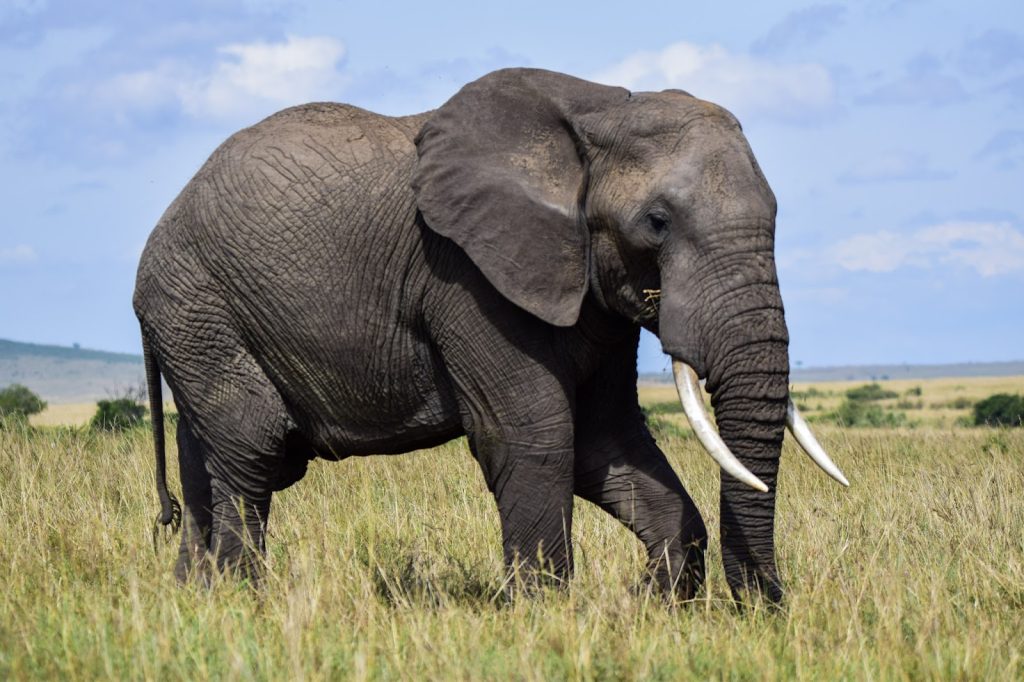
The elephants of Masai Mara country move through the reserve like grey weather systems — matriarch-led families of a dozen, bulls the size of safari trucks, calves hurrying in the herd’s moving shade. The greater Mara ecosystem holds thousands of elephants, and unlike the migration they are here every month of the year, threading between the Mara River forests, the marsh edges and the open plains.
Watching a breeding herd close ranks around a newborn, or a big tusker feed one acacia branch at a time, delivers a different emotion from the cats: not adrenaline but awe. Sense of Adventure guides read herd mood expertly, which is what safe, close, engine-off elephant time requires. This guide covers where the elephants of Masai Mara live, how they behave, the best months and times to see them, costs and how to plan your elephant days.
✅ Elephants of Masai Mara Quick Answer
- Resident all year: the elephants of Masai Mara — breeding herds and lone bulls — stay in every month, not just in migration season.
- Best places: Musiara marsh, the forests along the Mara and Talek rivers, and the conservancies to the north.
- Best time of day: early morning as herds leave the forest, and late afternoon at waterholes and mud wallows.
- Best months: June to October and January to February, when dry weather draws herds to permanent water.
- From: our 3-Day Masai Mara Safari starts at USD 650 per person, and our 4-Day Fly-in Masai Mara Luxury Safari at USD 3,200.
Spend Real Time With the Grey Giants
Engine-off herd sightings, river crossings and marsh feeding — tell us elephants are your priority and we’ll plan for them.
Where the Masai Mara’s Elephants Live and Move
The elephants of Masai Mara follow water and browse. Dawn finds family herds emerging from the riverine forests along the Mara and Talek rivers where they shelter overnight; by mid-morning they string across the open plains toward the marshes — Musiara marsh is famous for exactly this — and the drainage lines where grass stays green. The ecosystem’s population, counted in the thousands, includes impressive tuskers that move between the reserve and surrounding conservancies. Bulls travel alone or in loose bachelor pods; the families, led by matriarchs with decades of route memory, can cover 20 kilometres in a day.
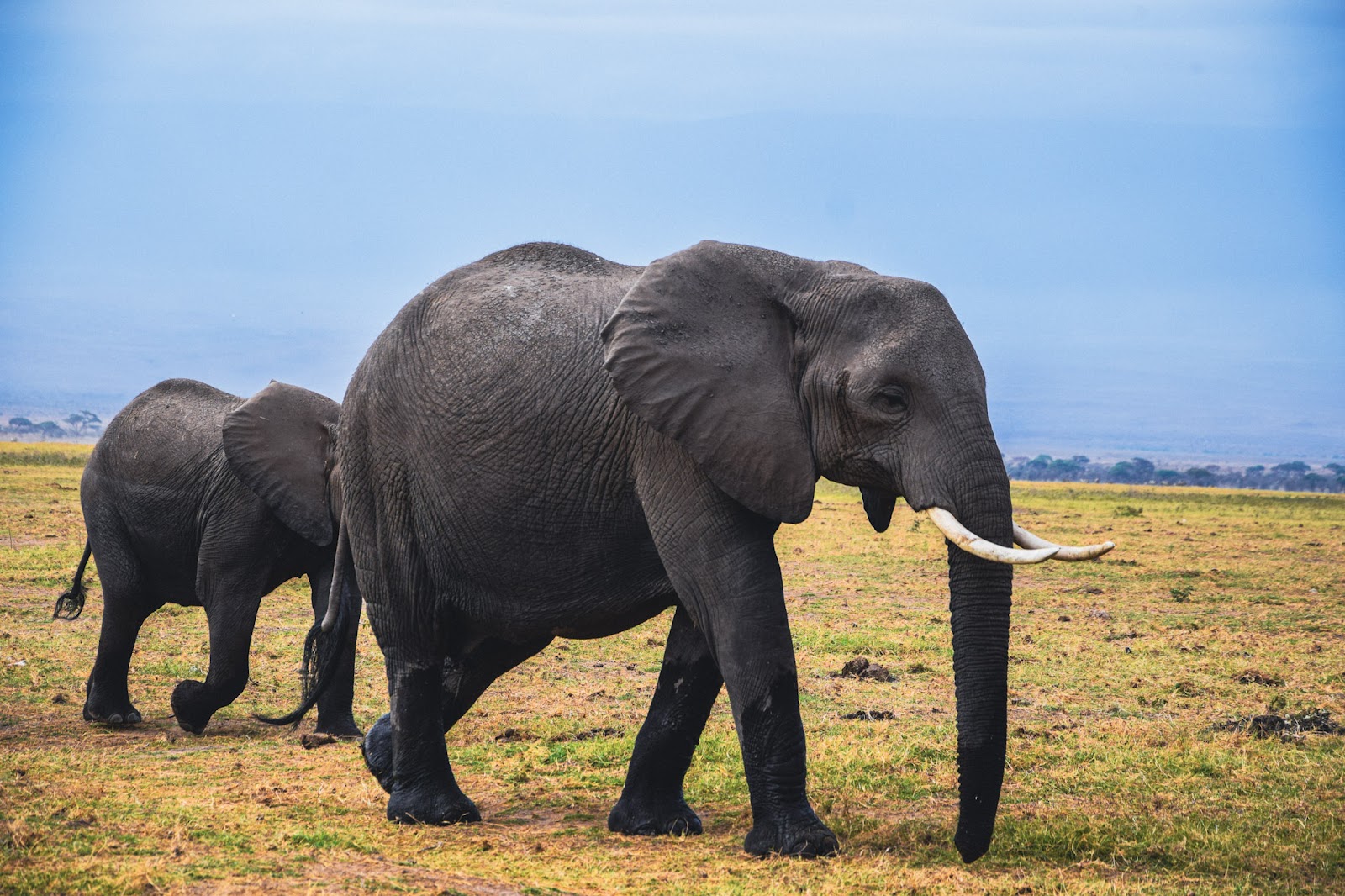
The 5 Essential Elephant Experiences in the Mara
A Breeding Herd Up Close — family life at walking pace
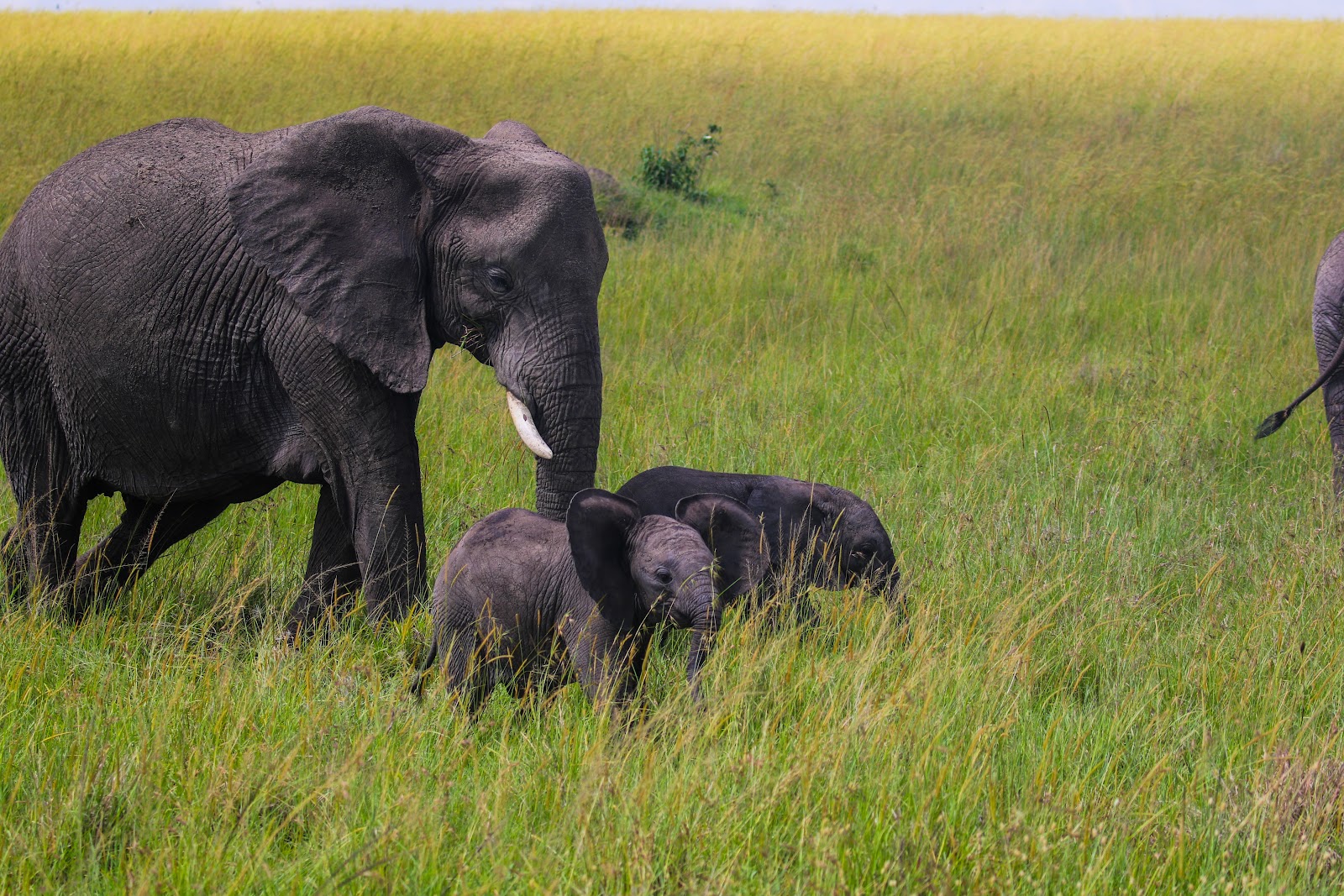
Nothing on safari matches a relaxed family herd flowing around your stationary vehicle — calves tripping over their trunks, teenagers sparring, the matriarch pausing to assess you with one amber eye. The trick is positioning on their line early and going silent. Done right, the herd treats you as landscape; done wrong, you never get within two hundred metres.
The River Crossing — trunks up, calves in the middle
Elephant crossings of the Mara River are quieter than the wildebeest chaos but twice as moving: adults form a wall upstream of the calves, trunks periscope above the current, and everyone boosts the babies up the far bank. Late dry-season months concentrate these crossings. Position at the hippo pools and wait.
The Big Tuskers — walking monuments
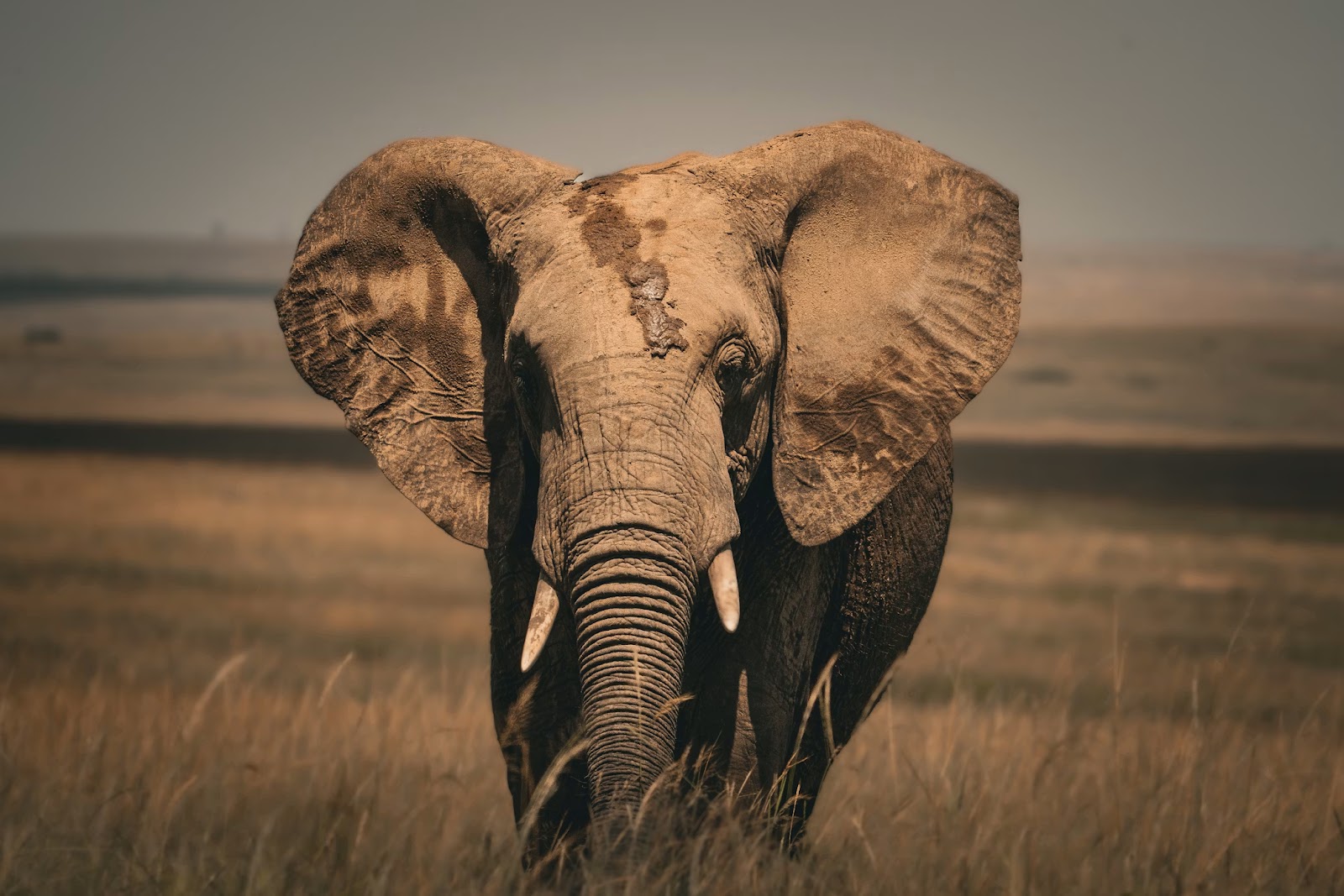
The greater Mara still carries bulls with tusks sweeping near the ground — a sight that poaching has made rare across much of Africa. Finding one feeding calmly at forty metres, ears fanning, is a privilege that resets your sense of scale permanently. Our guides track the known big bulls’ ranges between the reserve and conservancies.
Marsh Feeding at Musiara — the daily green buffet
The Musiara marsh area draws herds almost daily to dig, pull and hose green sedge — up to 150 kg per adult per day. Feeding elephants are busy elephants, which means long, relaxed sightings and endless behaviour: mud-spraying, tusking the ground, calves imitating badly. It is the most reliable elephant appointment in the reserve.
Dust Baths and Mud Wallows — skincare, elephant edition
After drinking comes the spa: mud slapped on by the trunkful, then a talc-layer of red dust. It protects skin from sun and parasites — and produces the Mara’s most joyful photography, especially when calves commit fully and emerge as chocolate-dipped disasters. Waterholes in late afternoon light are your venue.
Plan an Elephant-Rich Itinerary
Marsh circuits, river crossings and tusker territory — with time budgeted to actually watch, not just tick.
Masai Mara Elephant Facts
- Numbers: the greater Mara ecosystem supports thousands of elephants, part of a Kenyan national population counted at about 36,000 in the 2021 national wildlife census.
- Appetite: an adult eats up to 150 kg of vegetation and drinks up to 200 litres daily — hence the constant movement.
- Matriarchy: herds are led by senior females whose memory maps decades of water and browse routes.
- Gestation: at 22 months, elephants carry the longest pregnancy of any land mammal; calves nurse for years.
- Where: riverine forest at dawn, Musiara marsh by day, open plains in the golden hours — a daily rhythm guides plan around.
- Manners: ears out and a head shake mean back off; guides read these signals so sightings stay calm for everyone.
How the Elephants of Masai Mara Live Together
Understanding how the elephants of Masai Mara organise themselves makes every sighting richer. What looks like a random group of grey bodies is usually a tightly knit family with clear roles, long memories and its own daily routine. Your guide will point out who is who, but these are the basics to watch for.
The matriarch and her family
Among the elephants of Masai Mara, a breeding herd is a family of related females and their young, led by the oldest and most experienced cow. She decides when to move, where to drink and how to react to danger. In drought years, her memory of distant water and food can decide whether the family’s calves survive. Several families may join up at the marsh or river and then split again.
How calves grow up among the elephants of Masai Mara
A newborn calf weighs around 100 kilograms and can stand within an hour or so. Calves suckle for several years, and every female in the family helps to guard and guide them. Watch young calves practise with their trunks: they often fail to pick up grass or drink properly, and simply kneel at the water instead.
Bulls, bachelors and musth
Young males leave their birth family in their early teens and join loose groups of bulls. Adult bulls in musth have swollen, streaming glands on the sides of the head, dribble urine and can be short-tempered. Guides give musth bulls extra space. Bulls visit breeding herds to find receptive females, then wander off again.
How elephants communicate
The elephants of Masai Mara talk with rumbles, trumpets and touch, and many of their calls are infrasound, too low for people to hear but able to carry for kilometres. You will often see a whole herd freeze and lift their ears together, listening. Greetings between families can be noisy, with rumbling, ear flapping and trunks twined together.
Best Time to See the Elephants of Masai Mara
The elephants of Masai Mara are present all year, so there is no bad month. The seasons simply change where they gather and how easy they are to find.
| Months | What the herds are doing | Crowds |
|---|---|---|
| January–February | Short dry season; herds gather at marshes and rivers, easy viewing | Moderate |
| March–May | Long rains; herds spread out on fresh grass, lush scenery, lowest rates | Quietest |
| June–October | Long dry season; reliable marsh and river sightings, migration in the background | Busiest |
| November–December | Short rains; green plains, calves and good light after showers | Quiet |
For the elephants of Masai Mara, time of day matters as much as the month. Herds are most active in the cool early morning and late afternoon, and often rest in shade at midday. For more detail on seasons, read our guide to the best time to visit the Masai Mara.
A Day With the Elephants of Masai Mara
A day following the elephants of Masai Mara usually starts at first light near the riverine forest, where families step out of the trees after the night. Your guide will park on their likely line and switch off the engine, so the herd can pass at its own pace while you watch calves catching up and adults feeding as they walk.
By mid-morning, the herds head for the marsh or the river to drink, feed and bathe. A picnic lunch lets you stay with them rather than drive back to camp. In the late afternoon, waterholes and mud wallows give the best behaviour and warm, low light. A full day like this suits families and photographers especially well.
Reserve or Conservancy for Elephant Viewing?
The elephants of Masai Mara move freely between the Masai Mara National Reserve and the private conservancies around it, so you can see them in both. In the reserve, you have the Musiara marsh, the main rivers and a huge area to explore, but vehicles must stay on the tracks.
In most conservancies, vehicle numbers are limited, off-road driving is allowed with care, and some camps offer guided walks where you may see elephants from a safe distance on foot. Many guests split their stay between the two. Read our comparison of the reserve and the conservancies before choosing your camp.
Elephant Etiquette and Safety on Game Drives
The elephants of Masai Mara are calm around vehicles that behave predictably, and good manners keep sightings relaxed. Your guide will follow these rules, and knowing them helps you understand what is happening.
- Let them come to you: the guide parks ahead of the herd’s line and switches off, rather than chasing the elephants.
- Never split a herd: driving between a mother and calf, or between two groups, can cause a charge.
- Keep quiet: speak softly, avoid sudden movements and never stand up through the roof as an elephant passes very close.
- Read the signals: spread ears, head shaking, kicking dust and a raised trunk are warnings, and your guide will back away calmly.
- Give musth bulls room: a bull in musth can be unpredictable, so your guide will keep a wide distance.
Photographing the Elephants of Masai Mara
- Lenses: a 70–200 mm zoom suits close herds, while a 100–400 mm lens isolates calves, eyes and tusks.
- Get low: ask your guide for a low angle from the window, which makes elephants look even more imposing against the sky.
- Tell a story: the elephants of Masai Mara are highly sociable, so look for interactions, such as a calf under its mother, two young bulls sparring or a trunk lifted to test the air.
- Light: shoot in the first and last two hours of the day for warm light and soft shadows on wrinkled skin.
- Dust and mud: fast shutter speeds of 1/1000 second freeze flying mud and dust during bathing time.
Protecting the Mara’s Elephants
The African savanna elephant is listed as Endangered on the IUCN Red List, mainly because of poaching for ivory and loss of habitat. For the elephants of Masai Mara, the bigger day-to-day challenge is conflict with people, as elephants raid crops and farms grow into old migration routes.
Rangers, the conservancies and groups such as the Mara Elephant Project work to protect the elephants of Masai Mara and keep their corridors open. Kenya’s orphaned calves are often rescued and raised by the Sheldrick Wildlife Trust. Your park and conservancy fees support this work, and staying in responsible camps helps local communities see value in living alongside elephants.
Masai Mara Elephant Safari Costs and Packages
The cost of a safari to see the elephants of Masai Mara depends on the season, the number of nights, your camp and whether you drive or fly. Reserve and conservancy fees are set by the authorities and can change; our quotes always use current rates. Popular trips with current starting prices include:
- Masai Mara & Lake Nakuru Camping Safari (4 Days) — from USD 590 per person.
- 3-Day Masai Mara Safari — from USD 650 per person.
- Kenya Classic Safari – Amboseli, Lake Naivasha & Masai Mara (7 Days) — from USD 1,650 per person, ideal for elephant lovers.
- Fly-in Masai Mara Luxury Safari (4 Days) — from USD 3,200 per person.
Compare every option on our Masai Mara safari packages page, or ask about a private Kenya safari so you can stay with a herd for as long as you like.
How to Get to the Masai Mara
The drive from Nairobi takes about five to six hours, with a stop at the Great Rift Valley viewpoint, and it is the best-value way to travel. Scheduled light aircraft from Wilson Airport take about an hour to the Mara’s airstrips, where your guide meets you for a game drive to camp. Flying has a soft-bag limit of about 15 kg. See our guide to a Kenya safari from Nairobi for more on transfers.
What to Pack for an Elephant Safari
Watching the elephants of Masai Mara is mostly about patience and comfort in the vehicle, so pack light and practical.
- Binoculars: one pair per person, so nobody misses a calf or a distant tusker.
- Neutral clothing: greens, browns and khaki in light layers, plus a warm fleece for cold early mornings.
- Sun protection: a wide-brimmed hat, sunglasses and high-factor sunscreen.
- Dust cover: a scarf for you and a bag or cloth for your camera in the dry months.
- Soft bag: essential if you fly to the Mara on a light aircraft.
Elephants Across Kenya — and Beyond the Mara
The elephants of Masai Mara are one chapter of Kenya’s elephant story. Compare them with the swamp-wading giants in our Amboseli safari guide — home of the biggest tuskers — and the red elephants in our Tsavo guide. To photograph herds against Kilimanjaro, see the Amboseli Elephant Photographic Safari, or keep it classic with a 3-day Masai Mara safari. For an upgrade, our luxury Kenya safari packages pair conservancy camps with expert guiding.
Plan Your Trip to Kenya
Most visitors need a Kenya eTA from the official eTA Kenya portal. UK travellers should check the latest GOV.UK travel advice for Kenya, and you can find more ideas for your trip on Magical Kenya.
Stand (Parked) Among Giants
The herds walk the same lines every day. Let us put you gently on one. Message us to plan your elephant days.
Frequently Asked Questions
Are there elephants in the Masai Mara?
Yes — the greater Masai Mara ecosystem holds thousands of elephants, resident year-round. Matriarch-led breeding herds move daily between the riverine forests, the Musiara marsh and the open plains, while impressive lone bulls — including some big tuskers — range across the reserve and conservancies.
Where is the best place to see elephants in the Masai Mara?
The most reliable place to watch the elephants of Masai Mara is the Musiara marsh area, where herds feed on green sedge almost daily, plus the forest edges along the Mara and Talek rivers at dawn. Waterholes and river crossing points deliver action in the dry months.
Does the Masai Mara have big tuskers?
Yes — the greater Mara ecosystem still supports bulls carrying very large tusks, moving between the reserve and neighbouring conservancies. They are scarcer than Amboseli’s famous giants, but guides know the ranges of known big-tusked bulls and sightings are regular.
How many elephants live in the Masai Mara?
Recent counts put the greater Masai Mara ecosystem’s elephant population in the low thousands. Herds are not confined by fences, moving freely between the reserve, the conservancies and the wider Serengeti-Mara landscape, so numbers in the Kenyan Mara rise and fall with the seasons.
Is it safe to be close to elephants on a game drive?
With a professional guide, yes. The elephants of Masai Mara tolerate calm, well-positioned vehicles, and guides read warning signals — spread ears, head shakes, trunk twists — long before a situation develops. The rules are simple: approach slowly, never split a herd, engine off, and let the elephants set the distance.
When is the best time to see the elephants of Masai Mara?
The elephants of Masai Mara can be seen in every month. The dry months from June to October and January to February are easiest, because herds gather at the marshes and rivers. Early morning and late afternoon are the best times of day, as elephants rest in shade at midday.
How many days do I need to see elephants in the Mara?
Most guests see the elephants of Masai Mara on their first game drive, so even a 3-day safari works. For relaxed, close sightings with time at the marsh, a river crossing and a mud wallow, plan at least two full days in the reserve, or three if elephants are your main reason for visiting.
Can I combine Masai Mara elephants with Amboseli?
Yes, and it is one of Kenya’s best combinations. Amboseli is famous for big tuskers and herds beneath Kilimanjaro, while the Mara adds big cats and the migration. Our 7-day Kenya Classic Safari links both parks via Lake Naivasha, from USD 1,650 per person.