
There are two zebra species in Kenya, not just one animal with regional variation, and most visitors never realise it. The plains zebra is the familiar migration-herd animal seen across the Masai Mara, Amboseli and Nakuru, broad-striped and still widespread. Grevy’s zebra is a different species entirely: taller, narrower-striped, with large rounded ears, and listed as Endangered, with only about 3,000 left in the wild, most of them in northern Kenya.
Picture spotting the difference for yourself on the same trip: broad stripes and migration herds in the Mara, then the world’s rarest zebra in Samburu a few days later. Sense of Adventure routes trips to cover both.
✅ Zebra Species in Kenya: Quick Answer
- How many: two, the plains zebra and Grevy’s zebra. The third species, the mountain zebra, lives in southern Africa.
- Plains zebra: common and widespread; easiest in the Masai Mara, Amboseli, Lake Nakuru and Nairobi National Park.
- Grevy’s zebra: Endangered, about 3,000 left; best seen in Samburu, Buffalo Springs, Shaba and northern conservancies.
- Tell them apart: Grevy’s has narrow stripes, a white belly and large round ears.
- See both: combine the Mara with Samburu or Laikipia on one trip.
- Easy option: our 9-day Kenya Highlights Safari covers Samburu and the Mara, from USD 2,350 per person sharing.
Want both zebras on one trip? We route the Mara and Samburu together.
Two Zebra Species in Kenya, Not One
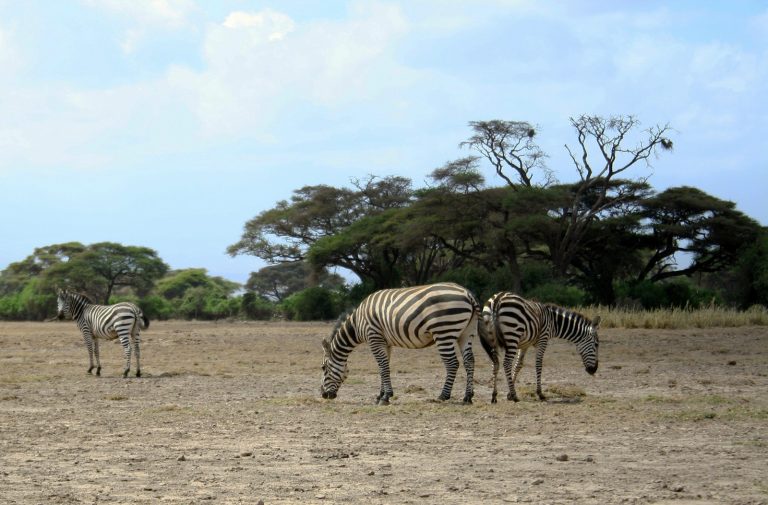
The plains zebra is the common, familiar species seen throughout the Masai Mara, Amboseli, Lake Nakuru and most of Kenya’s classic safari circuit. It lives in family groups that gather into large herds and famously moves with the wildebeest during the Great Migration.
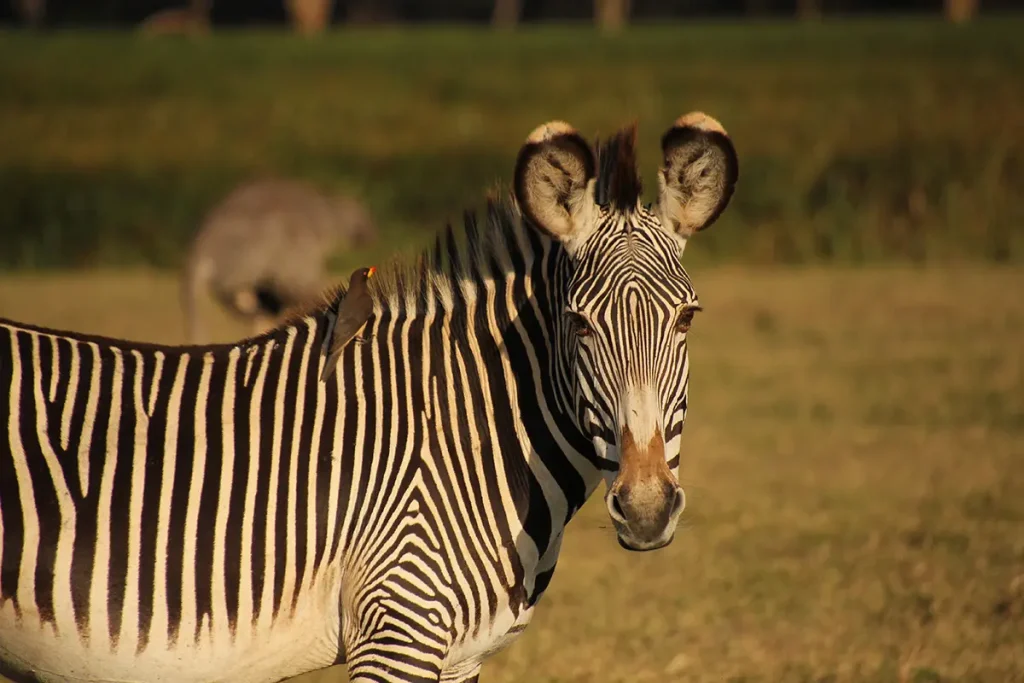
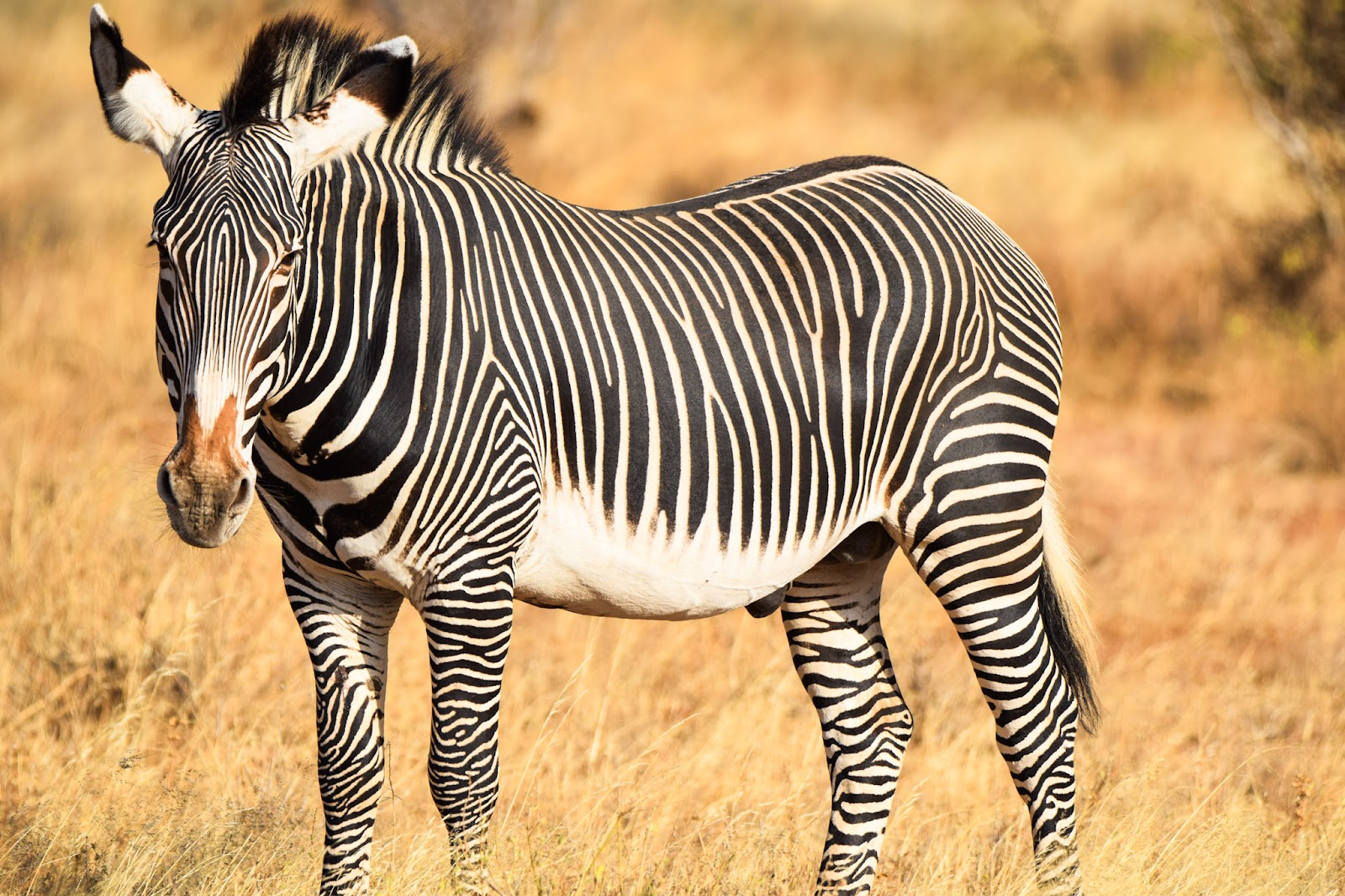
Grevy’s zebra is a separate, larger species and the largest wild member of the horse family. It has the tightest, narrowest stripes of any zebra, large rounded ears, a white belly and an upright mane. It is named after the French president Jules Grévy, who was given one in 1882, and today it is the rarest of the world’s three zebra species.
Of the two zebra species in Kenya, only the plains zebra is common. Grevy’s zebra numbers have fallen sharply since the 1970s because of habitat loss, competition with livestock for grazing and water, and drought. About 3,000 remain in the wild, and most of them live in northern Kenya, with a small population in Ethiopia.
How to Tell the Zebra Species in Kenya Apart
Once you know what to look for, the two zebra species in Kenya are easy to separate, even at a distance.
| Feature | Plains zebra | Grevy’s zebra |
|---|---|---|
| Stripes | Broad, often running under the belly | Narrow and tight, with a white belly |
| Ears | Smaller and pointed | Large and rounded |
| Size | Smaller and stockier | Taller; the largest wild equid |
| Back | Stripes meet along the spine | Dark stripe down the spine, edged with white |
| Social life | Stable family groups, large herds | Looser groups; males hold territories |
| Status | Widespread | Endangered, about 3,000 left |
Plains zebra: the most common of the zebra species in Kenya
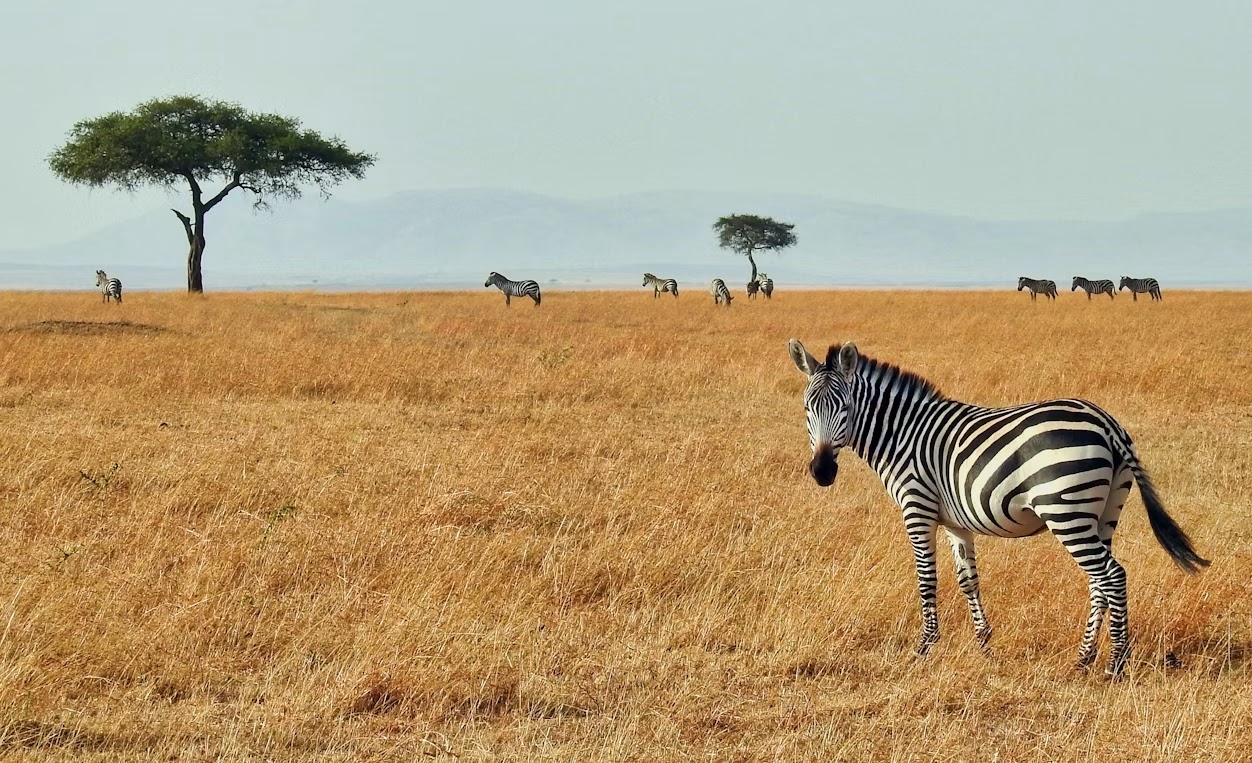
Look for bold, wide black stripes that wrap around the body and often meet under the belly. Some plains zebras show faint brownish “shadow stripes” between the black ones. Herds are large and noisy, with foals sticking close to their mothers.
Grevy’s zebra: the narrow-striped specialist
Look for fine pinstripes, a clean white belly, big round ears and a dark line along the spine. Grevy’s zebras often stand in smaller, looser groups on dry, open ground, and stallions guard territories around water.
Where to See Each of the Zebra Species in Kenya
The two zebra species in Kenya live in different parts of the country, with some overlap in the north.
Plains Zebra — the Masai Mara and migration herds
The species most visitors picture, seen in large herds across the Mara, Amboseli, Lake Nakuru, Nairobi National Park and Tsavo year-round, with numbers in the Mara swelling during the Great Migration, usually between July and October. Compare our Masai Mara safari packages.
Grevy’s Zebra — Samburu, Buffalo Springs & Shaba
These three adjoining reserves on the Ewaso Nyiro river are the most reliable places to see Grevy’s zebra, part of the Special Five that make Samburu distinct from Kenya’s southern circuit. See our Samburu Special Five guide and Shaba National Reserve guide.
Laikipia and Northern Conservancies — Grevy’s outside the reserves
Much of the Grevy’s zebra range lies on private and community land rather than inside formal reserves. Lewa, Westgate and Kalama are known for Grevy’s, and conservancy stays add walks and night drives. See our Westgate and Kalama guide and Lewa lodges guide.
Meru National Park — both species, few vehicles
Meru is one of the few parks with both zebra species in Kenya: it lists Grevy’s zebra among its wildlife alongside plains zebra, reticulated giraffe and a rhino sanctuary, and it sees very few visitors. See our Meru National Park lodges guide.
Hell’s Gate — plains zebra on foot or by bike
One of the few places where you can walk or cycle past grazing plains zebras, about two hours from Nairobi. See our Hell’s Gate National Park guide.
Which Zebra Trip Suits You?
The key decision is whether you want only the familiar plains zebra or both zebra species in Kenya. That choice shapes your route.
Plains zebra only: stay south
If you have a short trip, the Mara, Amboseli and Nakuru give you plenty of plains zebras along with the Big Five. A three- or four-day safari from Nairobi is enough to see the most common of the zebra species in Kenya.
Both species: add the north
To see both zebra species in Kenya, add at least two nights in Samburu or a northern conservancy. Grevy’s zebra is resident there all year, and Samburu’s plains also hold plains zebras, so you may see both on the same drive.
Conservation focus: choose a conservancy
If you want to understand Grevy’s zebra conservation, stay in Lewa or a northern community conservancy, where guides and scouts are often involved in monitoring.
Mara Only, or Mara Plus the North?
Tell us how many days you have and whether Grevy’s zebra is a must. We will show you the route that fits, with honest drive or flight times.
Zebra Behaviour to Watch For
Spend time with a herd rather than driving on after a quick photo, and both zebra species in Kenya reveal very different lives.
- Family groups: plains zebras live in stable groups of a stallion, several mares and their foals, which stay together inside bigger herds.
- Territories: Grevy’s stallions defend territories near water and grazing, while mares and foals move more freely between them.
- Grooming: pairs often stand head to tail or nibble each other’s necks and withers, which strengthens bonds.
- Sparring: young males rear, bite and kick in play fights that can look fierce.
- Stripes: scientists still debate their purpose; one leading idea is that the pattern helps deter biting flies.
Other Northern Specials Near Grevy’s Zebra
A trip north for the rarer of the zebra species in Kenya brings other dry-country specialists you will not see in the Mara. Samburu’s Special Five are Grevy’s zebra, the reticulated giraffe with its crisp netted pattern, the beisa oryx with long straight horns, the gerenuk that browses on its hind legs and the blue-legged Somali ostrich. Elephants, lions and leopards add to the mix along the Ewaso Nyiro river, so a Samburu stay is far more than a zebra stop.
Why Grevy’s Zebra Is Endangered
Of the zebra species in Kenya, Grevy’s is the one in trouble. It is listed as Endangered on the IUCN Red List. Its numbers fell sharply from the 1970s onwards, and today about 3,000 remain. The main pressures are loss and degradation of habitat, competition with livestock for grazing and water, and drought, which hits a dry-country animal hard.
Only a small share of its range lies inside formal protected areas, so community and private conservancies are vital. Organisations such as the Grevy’s Zebra Trust work with local communities on monitoring and protection. Kenya’s 1977 ban on sport hunting helped, but the species still needs active conservation.
Visiting helps. Park and conservancy fees pay for rangers and scouts, and choosing camps that support community conservancies keeps Grevy’s zebra valuable to the people who share its land.
Best Time to See Zebra Species in Kenya
Both zebra species in Kenya are resident, so you can see them all year. Timing affects how easy they are to find.
- June to October: the long dry season. In Samburu, wildlife gathers near the Ewaso Nyiro river; in the Mara, plains zebras arrive with the migration herds.
- January to February: hot and dry, with good sightings and fewer visitors.
- March to May: the long rains bring green grass and foals, but animals spread out and some tracks get muddy.
- November: short rains, usually brief, with fresh scenery.
Early morning and late afternoon are best, as midday is very hot in the north. For northern timing, see our Samburu safari page.
Costs and Sample Trips
Plains zebras come with almost any Kenya safari. Seeing both zebra species in Kenya usually means adding the north, which adds time or a flight. Masai Mara entry is set by Narok County at USD 100 per adult per day from January to June and USD 200 from July to December; Samburu and the other northern reserves set their own fees.
Trips on our site that cover both species include the Kenya Highlights Safari (9 days), with Samburu, Ol Pejeta, Lake Nakuru and the Masai Mara, from USD 2,350 per person sharing, and the Kenya Luxury Big Five Safari (8 days), with the Mara, Amboseli and Samburu, from USD 4,800. Final prices depend on season and group size.
Price Both Zebras in One Itinerary
Remember the Mara fee doubles from July. Send your dates and group size and we will send a written quote for a Mara and Samburu route, with park fees shown.
Getting to Zebra Country
Reaching the best areas for zebra species in Kenya is straightforward. The Masai Mara is about five to six hours by road from Nairobi, or about an hour by scheduled flight. Samburu is about 350 kilometres north of Nairobi, roughly five to six hours by road via Nanyuki and Isiolo, and many guests break the journey at Ol Pejeta. Flights from Wilson Airport reach Samburu’s airstrips in a little over an hour.
A practical route for both zebra species in Kenya is Nairobi to Samburu, then Ol Pejeta or Lake Nakuru, then the Mara, which is the pattern of our Kenya Highlights Safari.
Zebra Species in Kenya: Key Facts
- Grevy’s numbers: about 3,000 left in the wild, most in northern Kenya, after a steep decline since the 1970s.
- Grevy’s features: the narrowest stripes of any zebra, large rounded ears, a white belly and an upright mane.
- Grevy’s core range: Samburu, Buffalo Springs and Shaba National Reserves, plus Laikipia and northern conservancies.
- Grevy’s status: Endangered on the IUCN Red List; only a small share of its range is formally protected.
- Plains zebra: common and widespread across the Mara, Amboseli and Nakuru, and part of the Great Migration herds.
- Hunting ban: Kenya banned sport hunting in 1977, which helped slow, but did not reverse, the Grevy’s zebra decline.
Photographing Zebras on Safari
Both zebra species in Kenya make superb photographic subjects, and a few simple habits help.
- Light: shoot in the first and last two hours of the day, when stripes show texture rather than glare.
- Patterns: fill the frame with overlapping zebras for abstract stripe images.
- Behaviour: wait for sparring stallions, grooming pairs or foals at play.
- Lens: a 100 to 400 mm zoom covers both close herds and distant Grevy’s groups.
- Dust: keep a cloth or cover for your camera on dry northern tracks.
Responsible Zebra Watching
Good habits protect the animals and improve your sightings of both zebra species in Kenya.
- Keep a respectful distance and switch off the engine when watching a herd.
- Never drive between a mare and her foal or cut through a moving herd.
- Stay on marked tracks; off-road driving damages the grazing Grevy’s zebra depends on.
- Keep noise low and never feed or call to animals.
- Pay park and conservancy fees with pride: they fund the rangers and scouts who protect wildlife.
Planning a Zebra-Focused Kenya Safari
Combine both zebra species in Kenya in one trip via our Kenya Luxury Big Five Safari, which routes through both the Mara and Samburu. Read our Samburu Special Five guide for the other species unique to the north.
For a route built around your interests, see our private Kenya safari options or luxury Kenya safari packages. Before you travel, read the Kenya Wildlife Service guidance on park rules at kws.go.ke.
Kenya’s Common and Its Rarest Zebra, One Trip
Broad-striped herds in the Mara, pinstriped Grevy’s in Samburu. Tell us your dates and we will build an itinerary that shows you both zebra species in Kenya.
Frequently Asked Questions
How many zebra species are there in Kenya?
There are two zebra species in Kenya: the common plains zebra, found in the Masai Mara, Amboseli, Nakuru and many other parks, and the Endangered Grevy’s zebra, found mainly in Samburu, Buffalo Springs, Shaba and northern conservancies. The third species, the mountain zebra, lives only in southern Africa.
What is the difference between Grevy’s zebra and plains zebra?
Grevy’s zebra is larger, with much narrower stripes, a white belly, large rounded ears and an upright mane. The plains zebra is smaller and stockier, with broad stripes that often run under the belly. Grevy’s also has a dark stripe down the spine edged with white.
Where can you see Grevy’s zebra in Kenya?
The most reliable places are Samburu, Buffalo Springs and Shaba National Reserves on the Ewaso Nyiro river. Grevy’s zebra also lives in Lewa and northern community conservancies such as Westgate and Kalama, and Meru National Park lists it among its wildlife. Two nights in Samburu usually brings good sightings.
How endangered is the Grevy’s zebra?
Grevy’s zebra is listed as Endangered. About 3,000 remain in the wild, most of them in northern Kenya, after a steep decline since the 1970s caused by habitat loss, competition with livestock and drought. Community conservancies and monitoring programmes now play a big role in protecting it.
Can you see zebra in the Masai Mara?
Yes. The Masai Mara has large numbers of plains zebra all year, and their numbers swell during the Great Migration, usually between July and October, when zebra herds move alongside the wildebeest. Grevy’s zebra does not live in the Mara, so you need to head north to see it.
Can you see both zebra species in Kenya on one safari?
Yes. Combine the Masai Mara or Lake Nakuru with Samburu or a Laikipia conservancy. Our 9-day Kenya Highlights Safari includes Samburu and the Mara from USD 2,350 per person sharing. In Samburu itself you may see both species on the same game drive.