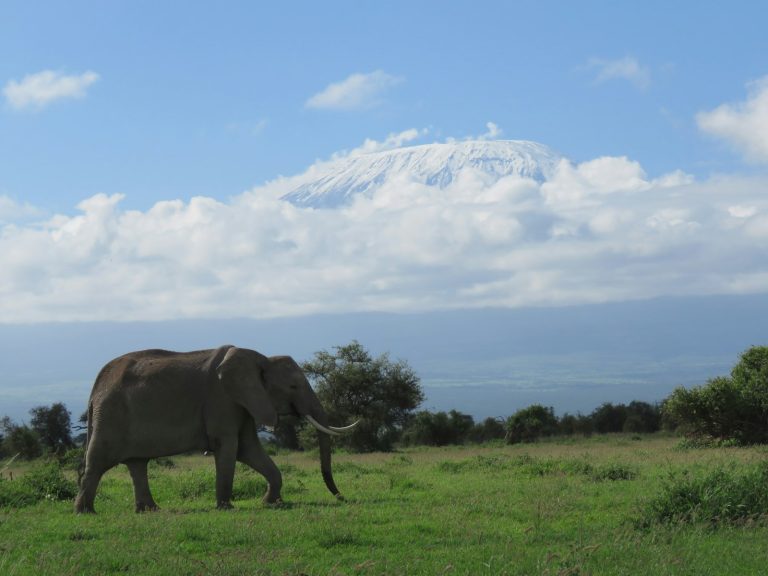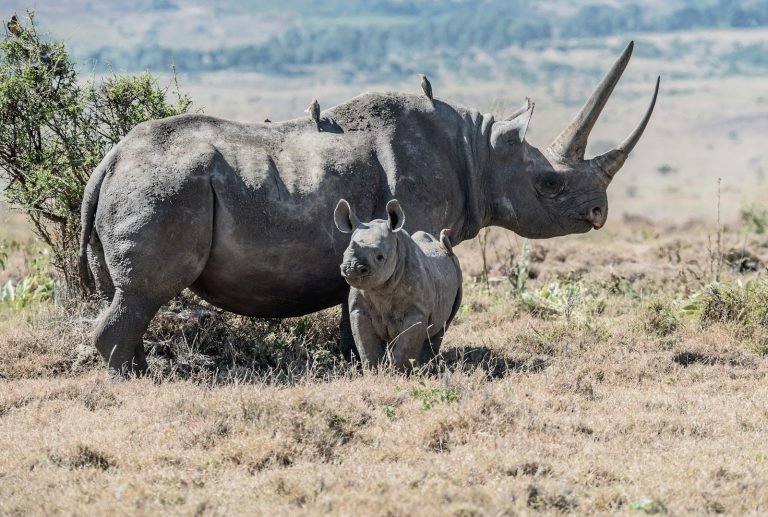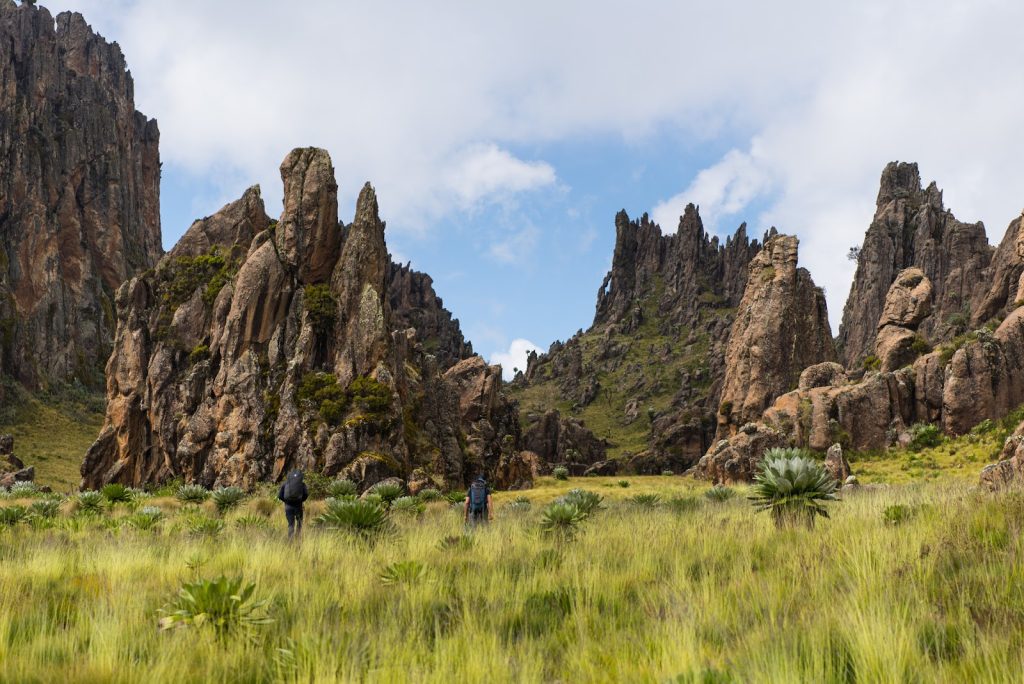
Aberdare Big Five wildlife is four of the five for practical purposes: elephant, buffalo, black rhino and leopard live in Aberdare National Park, but lion is not on Kenya Wildlife Service’s own species list and you should not plan around seeing one. Rhino and leopard are most often seen after dark from a floodlit tree lodge.
Sense of Adventure is a TRA-licensed private safari operator based at Mountain Mall on Thika Road, Nairobi. We plan Aberdare stays as part of tailor-made Kenya itineraries, so this guide gives you the honest wildlife picture, the corrected story of the missing lions, and the planning detail you need: when to go, how to get there, how many nights to spend and what to pair it with.
Plan Your Aberdare Big Five Stay
Tell us your dates and we will build a private Aberdare night or two into your wider Kenya safari.
Does Aberdare Have the Big Five? The Aberdare Big Five at a Glance
Aberdare has four of the Big Five living in the park, and lion is the one you should not expect. Kenya Wildlife Service’s official park page lists elephant, black rhino, leopard and buffalo, along with spotted hyena, olive baboon, black-and-white colobus, warthog and bushbuck. Lion is not on that list.
That makes the Aberdare Big Five story different from the savannah parks. Here you are in a cool, forested mountain park of roughly 766 square kilometres, gazetted in 1950 and rising from about 2,000 metres to almost 4,000 metres. Thick forest hides animals well. The reward is atmosphere: mist, bamboo, moorland, waterfalls, and elephants walking out of the trees towards a floodlit waterhole.

| Aberdare Big Five animal | On KWS park list? | Realistic chance | Where and when you are most likely to see it |
|---|---|---|---|
| Elephant | Yes | Good | Salient forest, tree lodge waterholes, moorland edges; day and night |
| Buffalo | Yes | Very good | Forest glades, waterholes and moorland; often at the lodges |
| Black rhino | Yes | Fair | Salient, mostly after dark at tree lodge waterholes |
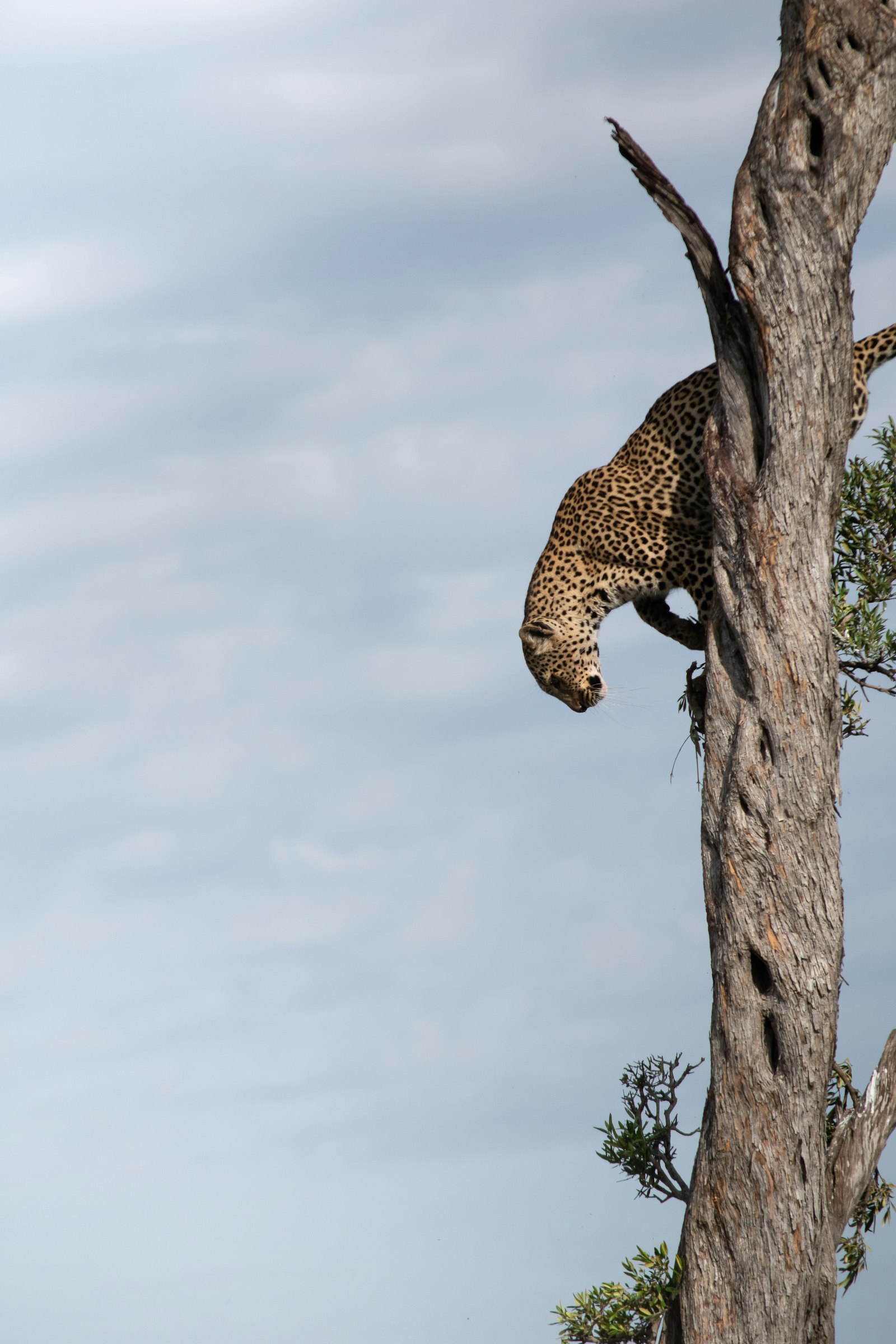
| Leopard | Yes | Low to fair | Forest and moorland; occasionally at floodlit waterholes |
| Lion | No | Do not expect | Not on the current KWS list; see Ol Pejeta or the Mara instead |
The Real Story of Aberdare’s Missing Lions
Lion is the missing piece of the Aberdare Big Five. The short answer is that lions were removed from the Aberdares in the past to ease pressure on rare forest herbivores, but we cannot confirm the popular claim that KWS relocated them specifically to protect bongo. Earlier versions of this article repeated that claim. We have corrected it.
What reliable sources say
A report in The East African describes the Aberdare lions as animals introduced from Laikipia rather than a natural Aberdare population. It says that in the 1990s, with lion numbers at their height, bongo sightings had become rare, and that the lions were then removed to reduce pressure on the increasingly rare herbivores, including the bongo and giant forest hog.
We could not find an official KWS statement describing a relocation programme, and that report does not say lions were moved to another park. So the honest version is simpler: lions were taken out to protect vulnerable prey, and today they are not on KWS’s species list for the park.
Why some sources still list lion
Some older references still include lion among Aberdare’s mammals, and guidebook writers have noted that the lion situation in the park changes over time. Big cats can range over large areas, and records shift over time. For trip planning, though, the rule is clear. If seeing a lion matters to you, add a savannah park or conservancy to your itinerary.
What really threatens the bongo
Lion predation was never the whole story. Peer-reviewed research in Frontiers in Conservation Science links the mountain bongo’s decline to hunting pressure combined with forest loss and degradation. The same study describes the Aberdares as holding Kenya’s most intact wild mountain bongo population, estimated at around 40 to 50 animals, out of fewer than 100 left in the wild.
Aberdare Big Five Animal by Animal
Each of the four Aberdare Big Five species behaves differently in forest, so your chances depend more on where you stay than on how long you drive.
Elephant
Elephants are the most visible of the Aberdare Big Five and one of the park’s great sights. In the Salient, the forested eastern lobe of the park, they come to the tree lodge waterholes and salt licks, often in family groups. On the moorland they are harder to find but feel wonderfully wild when you do. Forest elephants here can be wary, so your guide will keep a respectful distance.
Buffalo
Buffalo are the most reliable of the Aberdare Big Five. You will often see them in forest clearings, on roadside verges and around waterholes at night. They are also the animal guides respect most on foot, which is why walks in the park are done with an armed KWS ranger. Our guide to the best parks for buffalo in Kenya explains where else they are easy to see.
Black rhino
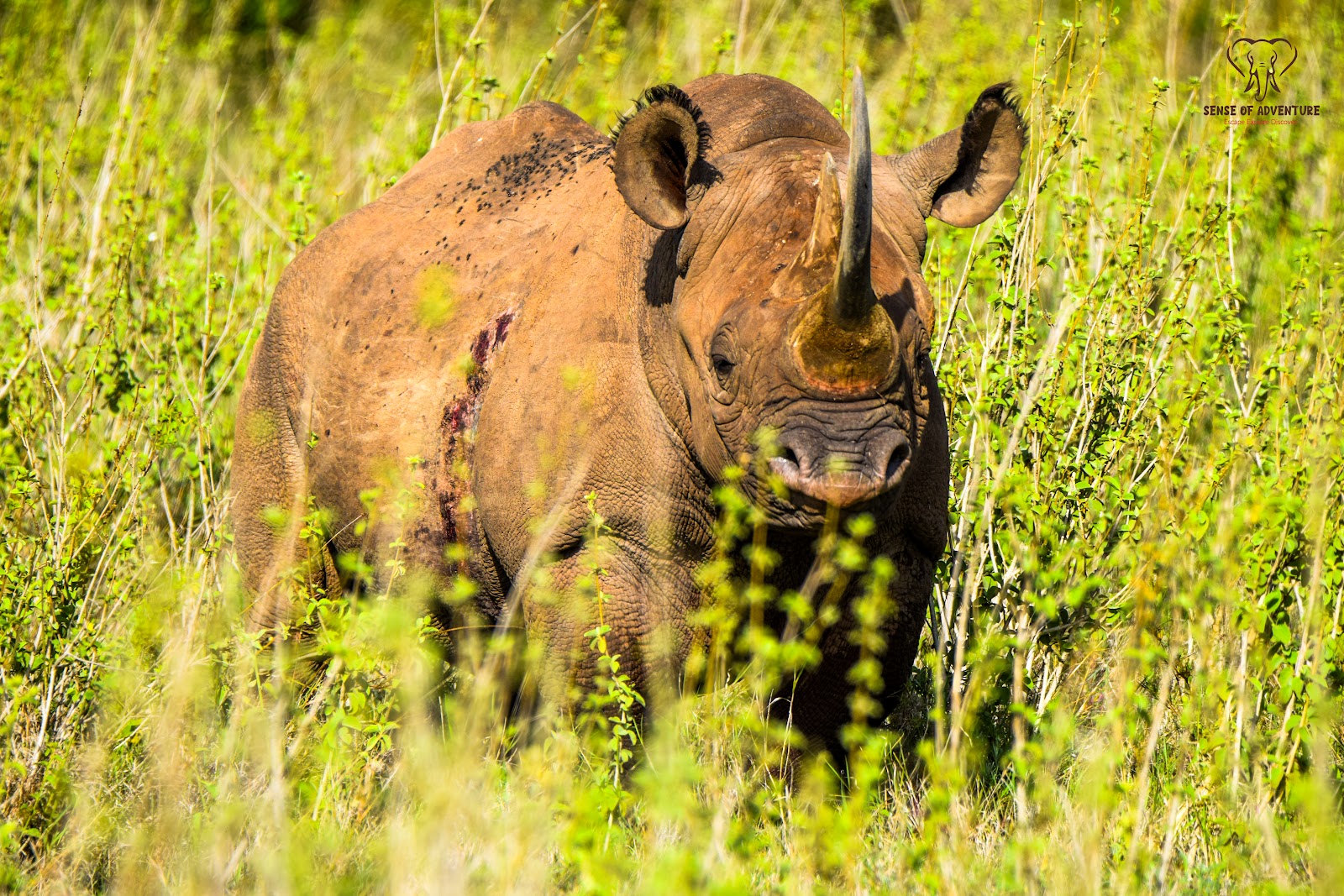
Aberdare protects a significant eastern black rhino population, described in guidebooks as one of the larger ones in Kenya. Black rhinos are browsers and keep to thick cover, so daytime sightings are uncommon. For this Aberdare Big Five member, your best chance is after dark, watching a floodlit waterhole from a tree lodge. Not sure how black and white rhinos differ? Read our black rhino vs white rhino guide.
Protection here rests on a remarkable fence. Work began in 1989 with funding raised by the charity Rhino Ark, first around the Salient where rhinos were being poached, and the electrified fence was completed around the whole Aberdare Conservation Area in 2009. It is close to 400 kilometres long and helps reduce poaching, snaring, illegal logging and conflict with neighbouring farms.
Leopard
Leopards are present across the forest and moorland but rarely seen. Occasionally one visits a lodge waterhole at night. Treat a leopard here as a bonus, not a target. If leopard is high on your list, the Masai Mara and Samburu give far better odds.
Lion: the missing Aberdare Big Five member
As explained above, do not expect lion in Aberdare. Pair the park with Ol Pejeta, Lewa, Samburu or the Masai Mara to complete your list. Our article Will I see the Big Five in Kenya? sets out the real odds park by park.
Beyond the Aberdare Big Five: Bongo, Forest Hog and Birds
The species that make Aberdare special are mostly not in the Aberdare Big Five at all. KWS lists rarer sightings including the giant forest hog, bongo, golden cat, serval, African wild cat, African civet and blue duiker.
Mountain bongo
The mountain bongo is a striped forest antelope found only in Kenya’s highlands and classed as Critically Endangered. Wild sightings are very rare, even for people who live and work here. Do not book Aberdare expecting one. Conservation work continues: in 2025, 17 mountain bongos bred in the United States were flown to a fenced conservation site on Mount Kenya.
Primates, small cats and birds
Black-and-white colobus monkeys are common in the forest, and Sykes monkeys and olive baboons are often around the lodges. KWS records more than 250 bird species, including Jackson’s francolin, sunbirds, sparrowhawks and eagles. The range also has endemic species, such as the Aberdare cisticola, listed in Kenya’s UNESCO World Heritage tentative list entry for the Nyandarua Mountains.

Tree Lodges: How You See the Aberdare Big Five After Dark
A night at a tree lodge is the classic way to see the Aberdare Big Five, because animals come to you at a floodlit waterhole while you watch from a deck.
Night game drives are not allowed in KWS national parks, so the lodges fill that gap. You arrive in the afternoon, settle in, and watch elephant, buffalo, hyena and, with luck, rhino or leopard visit the water and salt lick through the evening. Lodges may offer a buzzer or wake-up call when something special appears. Our guide to night game drives in Kenya explains where after-dark drives are permitted.
Treetops and The Ark
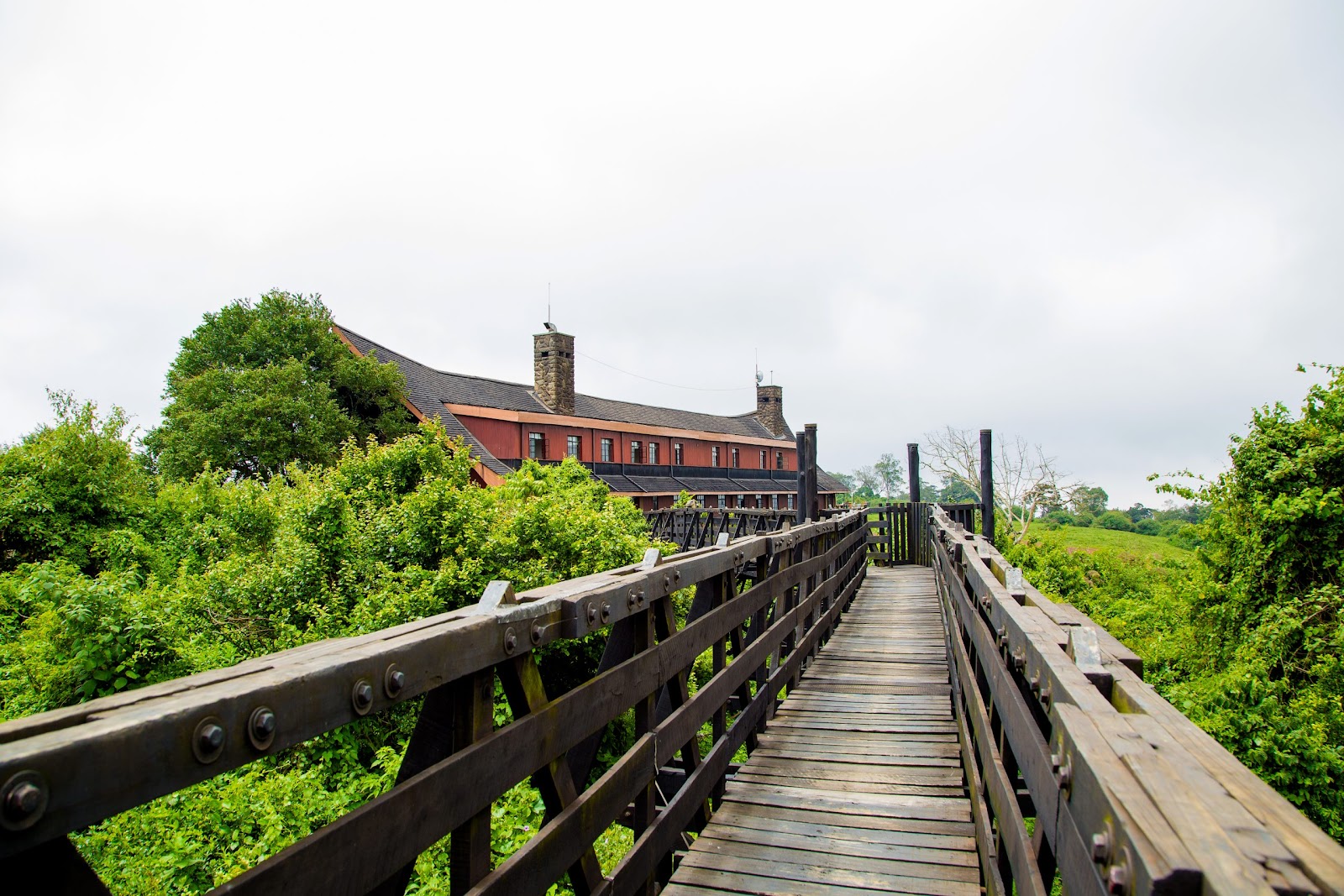
The two famous names sit in the Salient. Treetops is where Princess Elizabeth learned in February 1952 that she had become Queen. It closed in 2021 during the pandemic and reopened in 2024 under new management. The Ark sits deeper in the forest above its own waterhole. Rooms at both are compact and the emphasis is on viewing, not luxury.
Lodge policies on child ages, luggage and arrival times can change, so we confirm current rules for your dates. Our Aberdare tree lodges guide compares the two in detail.
Expert tip from our Nairobi team
Pack warm layers, a hat and a small torch for an Aberdare Big Five tree lodge night. Temperatures in the Salient drop sharply after sunset and mist often rolls in. Bring binoculars with good low-light performance, keep your camera on a high ISO setting, and switch off the flash: it disturbs animals and rarely improves floodlit shots.
Add a Tree Lodge Night to Your Safari
We will check availability, current lodge rules and the best routing for your Aberdare Big Five night.
Beyond Wildlife: Moorlands, Waterfalls and Walking
The high moorland is the other half of Aberdare, a welcome contrast to the Aberdare Big Five waterholes, and it is worth a full day if you have one.
The range runs about 100 kilometres north to south and forms the eastern wall of the Rift Valley. Its two summits are Ol Donyo Lesatima at 3,999 metres and Kinangop at 3,906 metres. Karuru Falls drops about 273 metres and is often described as Kenya’s highest waterfall. Gura and Chania Falls are nearby. The mountains are also a vital water catchment, feeding the Tana River system, Lake Naivasha and much of Nairobi’s water supply.
KWS lists picnics, trout fishing and moorland camping among park activities. Walking is possible with a ranger, and our three-day Aberdare Ranges trek explores the moorland and waterfalls on foot. For the full park overview, see our Aberdare National Park guide.
Best Time to Visit for Aberdare Big Five Sightings
The drier months, roughly late December to February and June to September, are the easiest time for Aberdare Big Five viewing and for driving the moorland.
Aberdare is one of Kenya’s wettest parks. During the long rains, broadly March to May, and the short rains around November, moorland tracks can become muddy and some routes may close. Tree lodge viewing continues year-round, so a single night in the Salient works in most months. Mist is common at any time, and nights are cold throughout the year.
| Period | Conditions | Best for |
|---|---|---|
| Late Dec to Feb | Drier, clearer mornings, cold nights | Moorland drives, waterfalls, photography |
| Mar to May | Long rains, muddy tracks | Tree lodge nights only; fewer visitors |
| Jun to Sep | Mostly dry, cool and often misty | Combining with Laikipia and the Mara migration season |
| Oct to mid Dec | Short rains, variable | Green forest, birding, flexible itineraries |
Getting There, Park Fees and How Many Days
Most visitors drive from Nairobi in about three hours and spend one or two nights on an Aberdare Big Five stay.
Getting there
The usual route runs north through the central highlands towards Nyeri, around 170 kilometres from Nairobi. Tree lodge guests normally check in at a reception point outside the park and are transferred in. If your main goal is an Aberdare Big Five night, a road transfer is usually simplest. Light aircraft can fly into the area if you are coming from Laikipia or the Mara. On a private safari your guide handles the logistics and timings.
Park fees
Aberdare is a KWS national park, so KWS conservation fees apply and are charged per person per entry period. Fees change, so check our Kenya national parks entrance fees 2026 page and the official KWS Aberdare page before you travel. Our quotes include park fees.
How many days
- One night: a tree lodge stop between Nairobi and Laikipia or Samburu. Ideal for the Aberdare Big Five waterhole experience.
- Two nights: one tree lodge night plus a day on the moorland for waterfalls and scenery.
- Three nights or more: for hikers, anglers and keen birders, or to add the trek.
Before you travel, check the latest UK government travel advice for Kenya or your own country’s equivalent.
Who an Aberdare Big Five Safari Suits and How to Combine It
Aberdare suits travellers who value atmosphere and variety over a quick tick-list, and it works best as one stop on a longer route.
Who will love it
- Second-time visitors who have seen the Mara and want a completely different Kenya.
- History lovers drawn by the Treetops story.
- Walkers and photographers who enjoy forest, mist and waterfalls.
- Families with older children, subject to lodge age rules; see our Kenya family safari packages.
It suits you less if you have only three or four days in Kenya and want lions, cheetahs and big open plains. In that case, focus on the Masai Mara.
Smart combinations
Aberdare sits neatly between Nairobi and the Laikipia Plateau. A classic route is Nairobi, one night at a tree lodge, then two or three nights at Ol Pejeta, where you can complete the Aberdare Big Five with lion, and the last northern white rhinos live under guard. From there you can continue to Lewa or Samburu, then fly to the Mara. Our Laikipia Plateau safari guide covers the conservancies nearby.
| Aberdare Big Five vs nearby options | Aberdare | Ol Pejeta | Masai Mara |
|---|---|---|---|
| Lion | Not expected | Yes | Excellent |
| Black rhino | Mostly at night | Good, by day | Possible, harder |
| Landscape | Forest, moorland, waterfalls | Savannah with Mount Kenya views | Open plains |
| Night viewing | Tree lodge waterholes | Night drives in the conservancy | Night drives in conservancies only |
Want help choosing? Browse our private Kenya safari options, see what drives the price in our Kenya safari cost guide, or send your dates through Plan My Safari.
Aberdare Big Five FAQs
Does Aberdare National Park have the Big Five?
Aberdare has four of the Big Five living in the park: elephant, buffalo, black rhino and leopard. Lion is not on Kenya Wildlife Service’s current species list for the park, so do not plan around one. Add Ol Pejeta, Lewa, Samburu or the Masai Mara to your route to complete all five.
Why are there no lions in the Aberdare Big Five?
A report in The East African says lions in the Aberdares were introduced from Laikipia and later removed, after numbers peaked in the 1990s, to ease pressure on rare herbivores such as bongo. We found no official KWS statement of a relocation, and lion is not on KWS’s current park list.
Where is the best place to see the Aberdare Big Five?
The Salient, the forested eastern part of the park, is best. Tree lodges there overlook floodlit waterholes where elephant and buffalo visit most nights and black rhino and leopard appear occasionally. The moorland is wonderful for scenery and waterfalls, but dense cover makes animals harder to spot.
Can you see black rhino in Aberdare National Park?
Yes, Aberdare protects a significant black rhino population. Black rhinos browse in thick cover, so daytime sightings are uncommon. Your best chance is after dark from a tree lodge deck overlooking a floodlit waterhole. For easy daytime rhino viewing, add Ol Pejeta, Solio or Lake Nakuru to your trip.
How many days do you need in Aberdare National Park?
One night at a tree lodge gives you the classic waterhole experience and fits neatly between Nairobi and Laikipia. Two nights let you add a day on the moorland for waterfalls and scenery. Hikers, anglers and keen birders may want three nights or more in the wider range.
Can you see bongo in Aberdare?
It is possible but very rare. The Aberdares hold Kenya’s most intact wild mountain bongo population, estimated at around 40 to 50 animals in dense forest. Most visitors, and many guides, never see one. Treat a sighting as extraordinary luck rather than a reason to book the park.
What is the best time to visit Aberdare National Park?
The drier months, roughly late December to February and June to September, are best for moorland drives and waterfalls. Aberdare is one of Kenya’s wettest parks, and tracks can be muddy in the long and short rains. Tree lodge viewing works year-round, and nights are cold in every season.
Your Aberdare Big Five Safari, Planned Properly
Kenya-based experts. Real local knowledge. Transparent pricing.