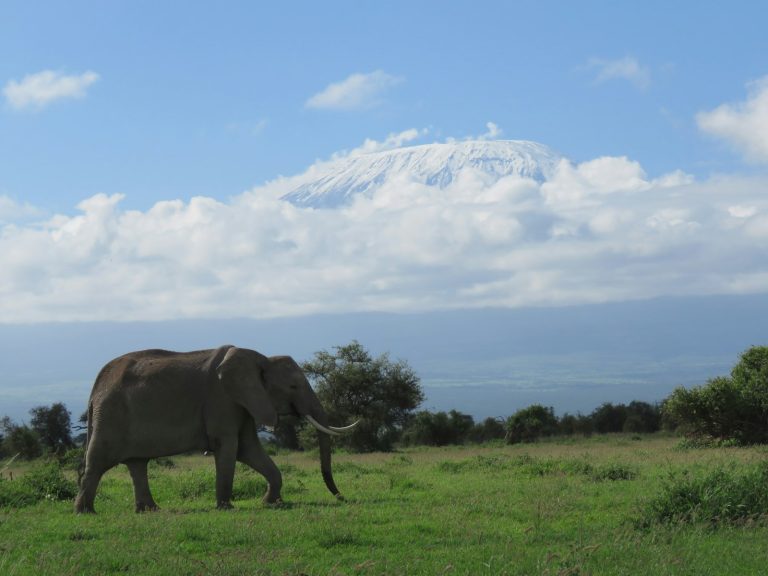
The temperature drops as you climb. One minute you are among coffee bushes outside Nyeri; the next, the road is a red tunnel through dripping forest, and your breath shows in the air. Mist rolls between giant cedars hung with old man’s beard. Your guide slows, then stops. Ahead, an elephant steps out of the bamboo, ears spread, steam rising off her back. Later, on the moorland, you stand at the edge of a gorge and listen to Karuru Falls roar into the cloud below. This is the Kenya few people expect: cold, green and wonderfully wild.
Aberdare National Park is a 767 km² Kenya Wildlife Service park on the Aberdare (Nyandarua) range in central Kenya, about 150 km north of Nairobi near Nyeri. Rising to around 4,000 metres, it protects moorland, bamboo and rainforest, Kenya’s tallest waterfalls, black rhino, elephant and rare bongo, and the famous Treetops and The Ark tree lodges.
Sense of Adventure is a Nairobi-based safari company at Mountain Mall on Thika Road, licensed by Kenya’s Tourism Regulatory Authority (TRA1/47/C01/77087). We add Aberdare National Park to safaris all year as a cool, green change of pace. This guide covers its zones, history, the people of the highlands, wildlife and honest sighting odds, the 2026 KWS fees, gates and access, the best months, rules, where to stay and a sample itinerary. For every park in the country, see our complete list of Kenya national parks and reserves.

✅ Aberdare National Park: The Quick Answer
- Where: the Aberdare range on the eastern wall of the Rift Valley, between Nyeri and Naivasha; park headquarters is 15 km from Nyeri on the Nyeri–Nyahururu road.
- Best for: floodlit waterhole nights at a tree lodge, waterfalls, moorland hikes, trout fishing and rare forest wildlife.
- Best time: the drier months of January to February and June to September.
- Entry fee: KWS lists USD 70 per non-resident adult per day (see the fees table below).
- How long to stay: one night at a tree lodge, or two to three days to add the moorland and waterfalls.
- Getting there: about three hours by road from Nairobi to Nyeri, or a light-aircraft flight to Mweiga airstrip.
🌍 Planning a Safari to Aberdare National Park?
Tell us your dates and who is travelling, and we will fit a tree-lodge night or a moorland day into your route. 💬 WhatsApp Us Now or call +254 799 160 081
What Is Aberdare National Park?
Aberdare National Park is Kenya’s great highland park: a cool, rainy volcanic range of forest, bamboo and open moorland that feels nothing like the savannah below.
Gazetted in May 1950, the park covers 767 km² of the Aberdare range, which Kenyans also call Nyandarua. The Kenya Wildlife Service describes it as a mist-cloaked range of thick forests, high peaks, deep ravines, icy streams and waterfalls. Its highest point, Ol Donyo Lesatima (Mount Satima, about 3,999 m), is Kenya’s third-highest mountain.
Kenya’s water tower
The Aberdares catch huge amounts of rain, and their streams feed the Tana, Kenya’s longest river, as well as reservoirs that supply much of Nairobi’s water. Protecting this forest is about far more than wildlife; it keeps taps running and farms growing across central Kenya.
Aberdare National Park Zones Explained
The park is really two landscapes, the forested Salient and the high moorland, joined by belts of bamboo and montane forest.
The Salient: forest and big game
The Salient is the eastern arm of the park reaching down towards Nyeri. It is lower, warmer and thickly forested, with glades and waterholes that hold the highest density of big game. Both The Ark and Treetops were built here for that reason.
The moorland plateau: waterfalls and views
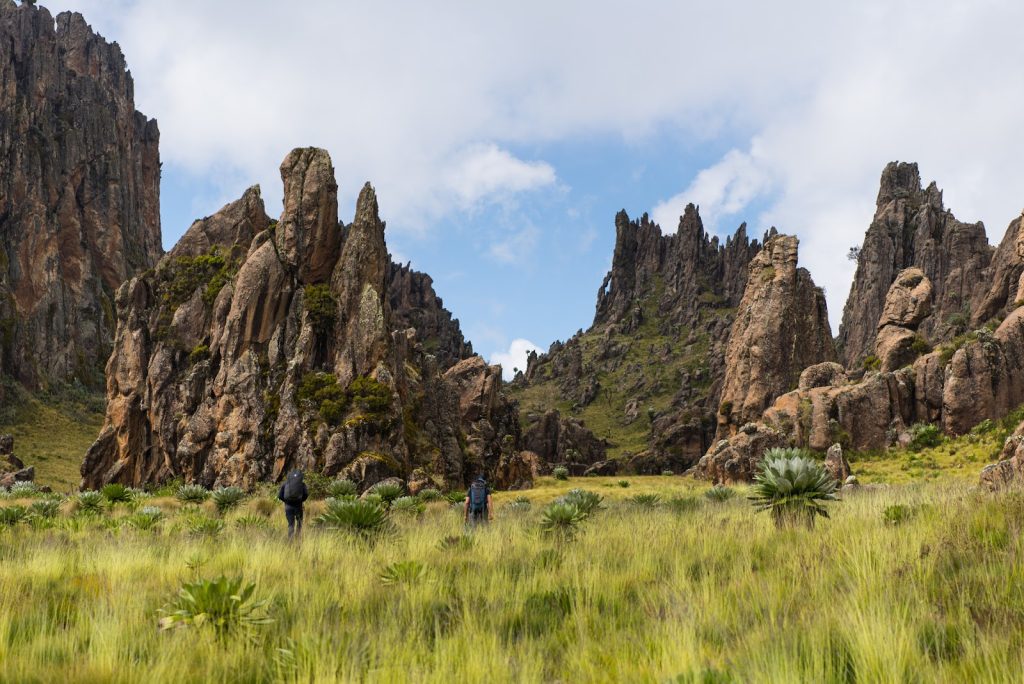
Above about 3,000 metres the forest opens into moorland of tussock grass, giant heather, lobelias and groundsels. This is where you find Karuru, Gura and Chania falls, the Dragon’s Teeth and Twin Peaks rock formations, trout streams and, on clear mornings, views to Mount Kenya.
The bamboo and forest belts
Between the two lie dense bamboo and montane forest, home to black-and-white colobus, forest birds and the elusive mountain bongo. Roads here are slow and often muddy, so drive with the windows down and listen.
History and People of Aberdare National Park
The forests of Aberdare National Park are woven into Kenya’s history, from the Mau Mau struggle to a night that changed the British monarchy.
Treetops, 1952
In February 1952, Princess Elizabeth was staying at Treetops when her father, King George VI, died. She arrived a princess and left as Queen. The lodge closed during the pandemic in 2021 and reopened in 2024 after renovation. Ask us about its current operation when you plan.
Mau Mau and the Kikuyu highlands
In the 1950s the Aberdare forests sheltered Mau Mau fighters, including the leader Dedan Kimathi, during the struggle for land and independence. KWS still points visitors to the Mau Mau Post Office, a large mugumo fig whose hollows were used to pass messages. The Kikuyu communities of Nyeri, Murang’a and Nyandarua farm the fertile slopes around the park, growing tea, coffee and vegetables right up to the forest edge.
Nobel Peace Prize winner Wangari Maathai was born in Nyeri County, and her Green Belt Movement grew from the same concern for forests and water that shapes this range. Read our guide to the Wangari Maathai Green Belt Movement.
The Rhino Ark fence and where your fees go
Nearly 400 km of electrified fence now surrounds the Aberdare Conservation Area. It was planned and funded over about two decades by the charity Rhino Ark with KWS, the Kenya Forest Service, donors and neighbouring communities, and it reduces crop raiding and protects the forest. Your conservation fee goes to KWS for rangers, roads and fence patrols.
Expert tip from our Nairobi team: on the drive up, stop at a tea or coffee farm near Nyeri. It shows you how closely farms and forest sit together, and why the fence and the people who maintain it matter so much to Aberdare National Park.
Wildlife in Aberdare National Park: What You Will See
Game viewing in Aberdare National Park is about quality rather than quantity: thick cover hides many animals, but the species list includes some found almost nowhere else in Kenya.
| Species | Chance on a 1–2 night stay | Notes |
|---|---|---|
| Elephant | High | Regular at tree-lodge waterholes and on Salient roads |
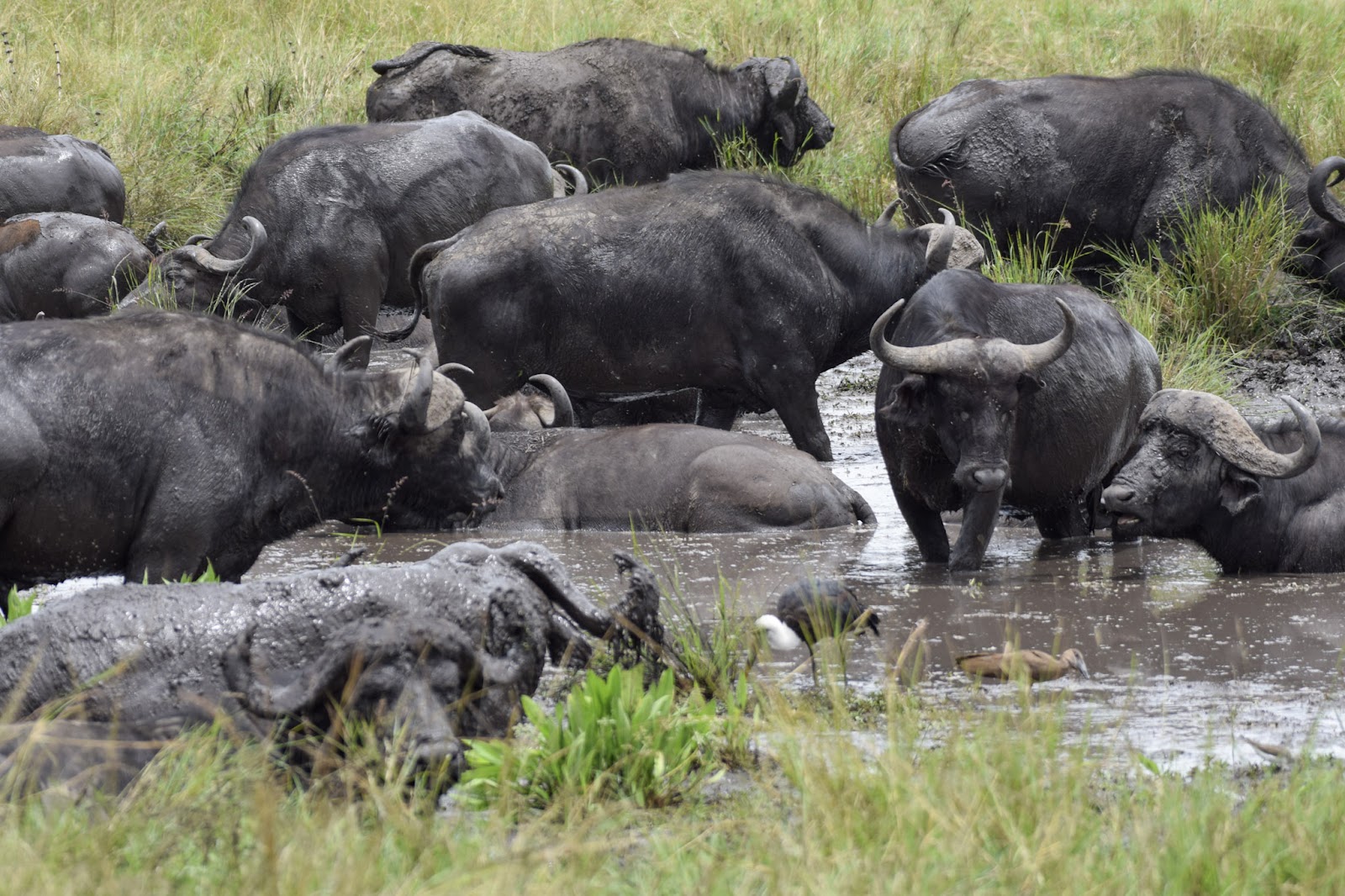
| Buffalo | High | Common at waterholes and in forest glades |
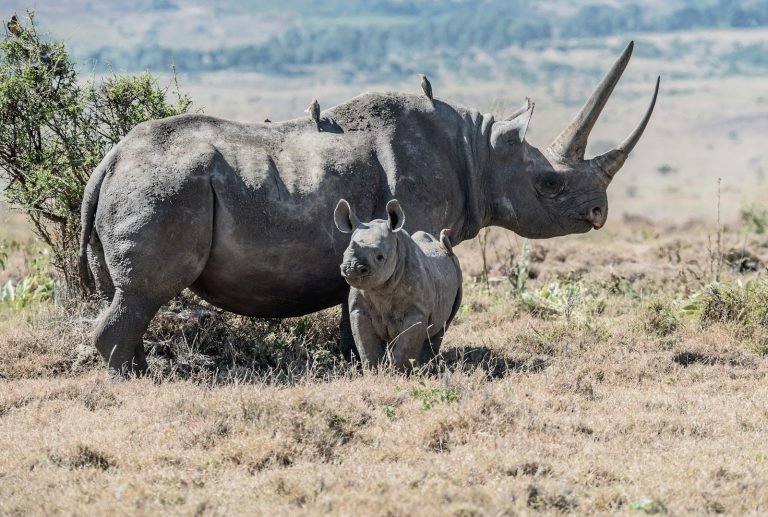
| Black rhino | Fair | Present but shy; best odds at floodlit waterholes |
| Leopard | Low | Present throughout; black (melanistic) leopards are very rare |
| Lion | Very low | Not a reliable part of the picture here |
| Giant forest hog | Fair | The world’s largest wild pig; dawn and dusk |
| Bushbuck, waterbuck, suni | Good | Forest edges and glades |
| Colobus and Sykes’ monkey | Good | Forest and bamboo belts |
| Mountain bongo | Very rare | Tracks are more likely than a sighting |
| Serval | Fair | Open moorland; melanistic servals are recorded |
If lions are a must, pair the Aberdares with the Masai Mara or Ol Pejeta. Our guide to the Aberdare Big Five tells the full lion story.
Birds of Aberdare National Park
More than 250 bird species are recorded. Specials include Jackson’s francolin, the endangered Aberdare cisticola, Hartlaub’s turaco, scarlet-tufted sunbirds on the moorland, and raptors such as the mountain buzzard and crowned eagle.
Things to Do in Aberdare National Park
Aberdare National Park offers far more variety than a single game drive: waterfalls, hikes, fishing, history and the classic tree-lodge night.
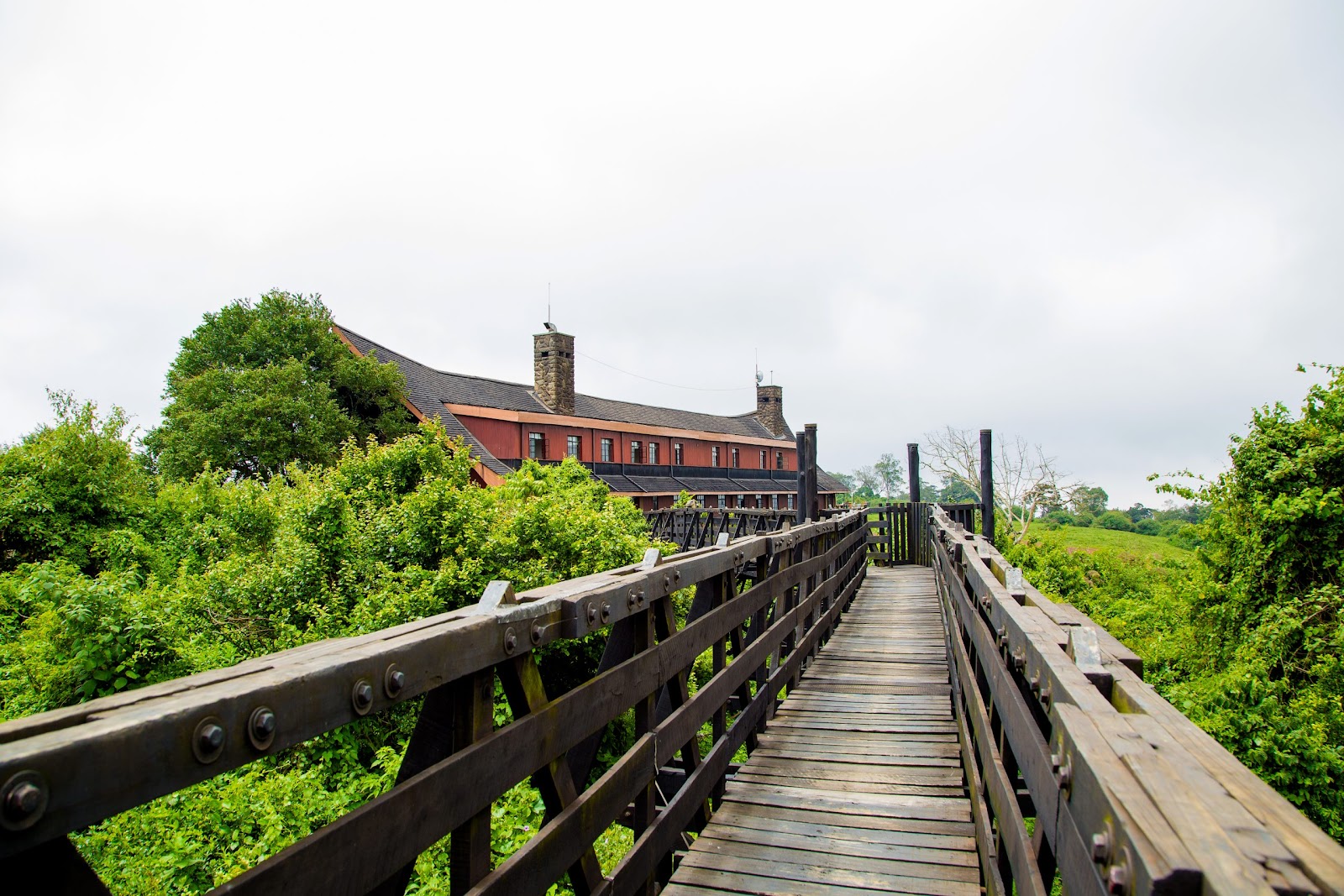
- Tree-lodge nights: watch elephants, buffalo, hyenas and, with luck, rhino at a floodlit waterhole from a viewing deck.
- Waterfalls: Karuru, often listed as Kenya’s highest at around 270 metres in three drops, plus Gura and Chania falls.
- Hiking: moorland walks and climbs of Ol Donyo Lesatima or Kinangop, always with an armed KWS ranger.
- Trout fishing: cold moorland streams hold brown and rainbow trout; a fishing permit is needed and you bring your own tackle.
- Game drives: slow forest drives through the Salient and over the moorland roads.
- History stops: Treetops, the Mau Mau Post Office tree and the Dragon’s Teeth and Twin Peaks outcrops.
For a gentler forest adventure closer to Nairobi, try the Kereita Forest zipline in the southern Aberdare forest.
How to Get to Aberdare National Park
Most travellers drive about three hours from Nairobi to Nyeri on good tarmac, then climb into the park; flying to Mweiga saves time on longer circuits.
By road
KWS puts the park about 150 km from Nairobi by tarmac road. The eastern side is reached from Nyeri and Naro Moru, and the western side from Naivasha. A road crosses the lower slopes and climbs to the moorland. A 4×4 is essential inside the park, as tracks are steep and turn to mud quickly. See our guide to a Kenya safari from Nairobi.
By air
Mweiga airstrip lies near park headquarters, opposite Sasini Estate. Flying suits fly-in itineraries linking the Aberdares with Samburu, Laikipia or the Mara. Keep to soft bags and check our guide to safari luggage weight limits.
Aberdare National Park gates and hours
Gates open at 6am and close at 6pm unless you are staying inside the park. Gates on the Nyeri side include Ruhuruini, Wandare, Treetops and Ark gates, with others on the western Kinangop side. Tree-lodge guests usually transfer in with the lodge from a base hotel outside the park.
Aberdare National Park Entry Fees in 2026
Aberdare National Park is in the KWS Wilderness Parks group, and entry is charged per person for each visit of up to 24 hours.
| Visitor | Adult (18+) | Child (5–17) |
|---|---|---|
| East African citizen | KSh 800 | KSh 500 |
| Kenya resident | KSh 1,100 | KSh 675 |
| African citizen (non-EAC) | USD 40 | USD 20 |
| Non-resident | USD 70 | USD 40 |
These rates appear on the KWS Aberdare park page and in the KWS conservation fee schedule from October 2025. Children under five enter free. The regulations behind them have faced legal challenges, so fees can change at short notice, and payment is cashless with possible processing charges. Vehicle entry is charged separately by seat count. KWS public campsites cost USD 20 per non-resident adult per night. See our guide to Kenya national parks entrance fees for 2026.
📅 Get a Free, No-Obligation Safari Quote
Send us your dates and group size and we will price Aberdare National Park with your lodge, vehicle and park fees clearly shown. ✉ Send Us Your Dates on WhatsApp
Best Time to Visit Aberdare National Park
The best time to visit is the drier spell of January to February and June to September, when roads are easier and moorland views are clearer.
| Month | Conditions | What to expect |
|---|---|---|
| January–February | Driest and clearest | Best moorland access and Mount Kenya views; cold nights |
| March | Rains may begin | Still good early in the month |
| April–May | Long rains, often heavy | Muddy roads; some high tracks may close; falls at their fullest |
| June–September | Mostly dry, cool and misty | Good waterhole viewing; fits peak Mara season |
| October | Variable | Often pleasant before the short rains |
| November–December | Short rains | Green and quiet; afternoon showers likely |
At this altitude rain can fall in any month, so pack for it. For the national picture, see our Kenya weather by month guide.
Aberdare National Park Rules and Safety
KWS rules here are simple, and following them keeps you safe in dense forest where big animals can appear at close range.
- Stay on established roads and trails; off-road driving is prohibited.
- Keep to the 40 km/h speed limit and at least 20 metres from wildlife.
- Stay in your vehicle, doors closed, except in designated areas.
- Walk only with an armed KWS ranger; elephant and buffalo are common.
- Do not feed wildlife; single-use plastic is banned and all litter must go out with you.
- No honking, keep noise low and never leave a campfire unattended.
- Drones need prior permission from KWS and the Kenya Civil Aviation Authority.
The moorland lies above 3,000 metres, so take it slowly and drink plenty of water. Check the latest UK Foreign Office travel advice for Kenya before travel.
How Many Days Do You Need, and Where to Stay?
One night at a tree lodge gives you the classic waterhole experience; two to three days add the waterfalls, moorland and a hike.
Our guide on how many days you need for a Kenya safari shows how the Aberdares fit a longer route.
Where to stay in Aberdare National Park
The Ark and Treetops are the classic tree lodges: you check in at a base hotel outside the park, transfer in for the afternoon and spend the night by the floodlit waterhole. Rooms are compact, as the decks are the point. KWS also offers Mbugani Homes self-catering houses, public campsites at Reedbuck on the moorland and Ruhuruini, and several special campsites. Our private Kenya safari team can match a stay to your budget.
What to Pack for Aberdare National Park
Pack as you would for a cold, wet mountain day, not a hot savannah drive.
- A warm fleece, an insulated jacket, a hat and gloves; nights are cold and frost forms on the moorland.
- A waterproof jacket and dry bags for cameras.
- Waterproof walking boots for muddy paths and waterfall viewpoints.
- Binoculars for forest birds and shy antelope.
- Sunscreen and sunglasses; the high-altitude sun is strong when the mist lifts.
- Your own fly-fishing tackle if you plan to fish.
See our list of what not to bring on safari to keep your bag light.
Combining Aberdare National Park With Nearby Parks
The Aberdares sit at the crossroads of Kenya’s classic circuits, between Laikipia and the north, the Rift Valley lakes and the Mara.
- Ol Pejeta Conservancy: lions, rhinos and night drives, about one to two hours north via Nyeri and Nanyuki.
- Mount Kenya: more forest and mountain scenery to the east.
- Samburu National Reserve and Meru National Park: hot, dry northern parks for contrast.
- Lake Nakuru National Park: rhinos and flamingos in the Rift Valley to the west.
Sample 2-Day Aberdare National Park Itinerary
This two-day plan gives you a tree-lodge night and a morning on the moorland of Aberdare National Park.
Day 1: Nairobi to the tree lodge
Leave Nairobi after breakfast and drive to Nyeri, stopping at a coffee or tea farm on the way. After lunch at the base hotel, transfer into the Salient and settle in at your tree lodge for an afternoon and night by the floodlit waterhole.
Day 2: Bamboo, moorland and waterfalls
After an early breakfast, drive up through the bamboo to the moorland for Karuru and Chania falls with a ranger. Continue north to Ol Pejeta or Samburu, or return to Nairobi by evening.
Prefer to explore on foot? Our Aberdare Ranges Trek (3 days) starts from USD 650 per adult and includes park entrance fees, a professional guide and transfers. Aberdare nights also slot into longer routes such as our Kenya Highlights Safari (9 days); message us for a quote.
Aberdare National Park FAQs
What is Aberdare National Park known for?
Aberdare National Park is known for its cool, misty highland forests, bamboo and moorland, Kenya’s tallest waterfalls such as Karuru, rare wildlife including black rhino, giant forest hog and mountain bongo, and the Treetops and The Ark tree lodges, where you watch animals at floodlit waterholes.
How much is the Aberdare National Park entry fee?
KWS lists USD 70 per non-resident adult and USD 40 per child for each visit of up to 24 hours. East African citizens pay KSh 800 and Kenya residents KSh 1,100 per adult. Vehicle and camping fees are extra. Fees have faced legal challenges, so confirm current rates before you go.
How far is Aberdare National Park from Nairobi?
KWS puts the park about 150 km from Nairobi by tarmac road, roughly three hours to Nyeri and the eastern gates. Park headquarters is 15 km from Nyeri on the Nyeri to Nyahururu road, and Mweiga airstrip lies nearby for light-aircraft flights from Nairobi.
Are there lions in Aberdare National Park?
Lions are not a reliable part of a visit to the Aberdares, and most visitors never see one here. Elephant, buffalo, black rhino and leopard are present. If lions are a priority, pair the Aberdares with Ol Pejeta, Lake Nakuru or the Masai Mara on the same trip.
Is Treetops still open in the Aberdares?
Treetops closed in 2021 during the pandemic and reopened in 2024 after renovation. The Ark is the other classic tree lodge inside the park. Operating dates and booking arrangements can change, so we confirm the current status of both lodges when we plan your trip.
How cold does Aberdare National Park get?
Cold by safari standards. The park rises to around 4,000 metres, KWS notes that temperatures drop rapidly at night, and frost can form on the moorland. Rain and fog are possible in any month, so pack a fleece, a warm jacket, waterproofs and warm sleepwear.
How many days do you need in Aberdare National Park?
One night at a tree lodge is enough for the floodlit waterhole experience. Two days let you add the moorland waterfalls and a forest drive, and hikers or anglers should allow three days, the length of our guided Aberdare Ranges Trek from USD 650 per adult.
🏕 Plan Your Aberdare National Park Safari With Sense of Adventure
Kenya-based experts. Real local knowledge. Transparent pricing. We build Aberdare nights into northern and highland circuits and will match you with the right lodge, route and season. 💬 WhatsApp Us — Start Planning Today
Call or WhatsApp: +254 799 160 081 · Email: reservations@senseofadventure.co.ke
Related Safari Guides
- › Aberdare Big Five Explained
- › Meru National Park Guide
- › Ol Pejeta Conservancy Guide
- › Lake Nakuru National Park Guide
- › Kereita Forest Zipline
Official travel & park resource: Kenya Wildlife Service ↗ · Conservation: Rhino Ark ↗ · Tourism: Magical Kenya ↗