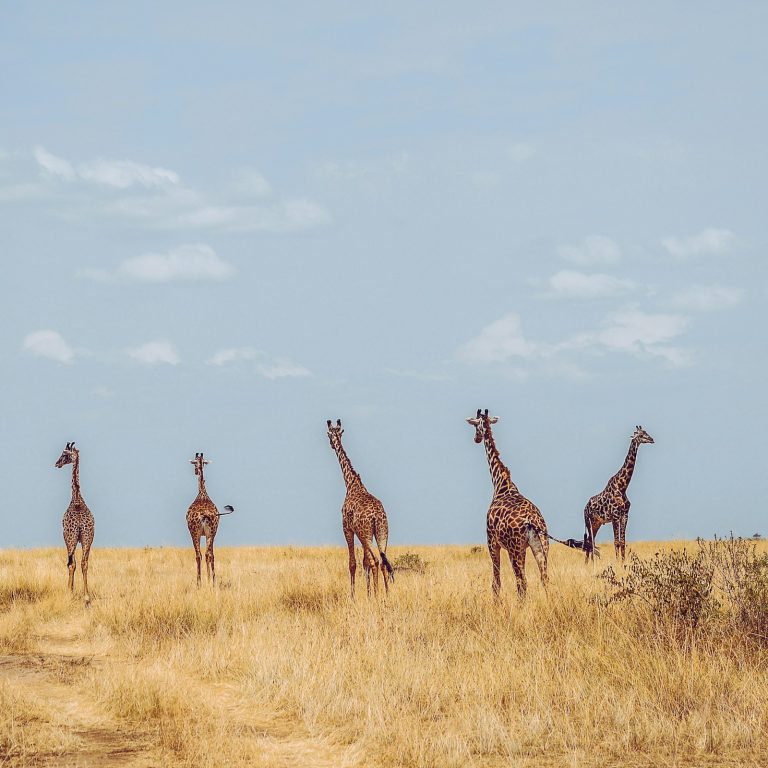
Amboseli wildlife viewing gets typecast — elephants, mountain, done. Stay a day longer and the park reveals a full supporting cast most visitors never hear about: lions padding across the dry lakebed at dawn, cheetahs using dust-devils as cover, gerenuk standing upright on hind legs to browse thorn tips, hippos honking in swamps a stone’s throw from arid flats.
Roughly 80 mammal species share this compact 392 km² stage, and the open terrain makes them unusually easy to spot. Sense of Adventure itineraries build in the time to meet them all — because Amboseli deserves more than a mountain selfie. This guide covers what lives where, the best months, a two-day plan, costs and practical tips for seeing the full range of Amboseli wildlife.
✅ Amboseli Wildlife Quick Answer
- Big Five: four of the five live here — elephant, lion, leopard and buffalo. Rhinos are absent from the park.
- Specials: gerenuk, lesser kudu and fringe-eared oryx, plus hippos in the swamps and around 400 bird species.
- Best time: the dry months of June to October and January to February, when animals gather at the swamps.
- How long: two nights lets you see far more than a day trip, including dawn predators.
- From: our Amboseli Day Safari starts at USD 250 per person, and the 2-Day Amboseli Safari at USD 520.
See the Whole Amboseli Cast
Elephants first, then everything else — lions on the lakebed, gerenuk in the scrub, hippos in the swamps. Plan a fuller Amboseli.
What Else Lives in Amboseli
Amboseli holds four of the Big Five — only rhino is absent — across a mosaic of dry lakebed, savannah, acacia scrub and swamp. Lion prides patrol the swamp edges where prey concentrates; cheetahs favour the open pans; spotted hyena clans den in the calcrete and do much of the ecosystem’s hunting.
The plains carry wildebeest, zebra and Thomson’s gazelles in their thousands, with Masai giraffes threading the acacia lines. The specialists steal the show: the gerenuk — a gazelle that browses standing vertically on its hind legs — plus lesser kudu, fringe-eared oryx in the drier fringes, and hippos improbably prospering in the middle of a semi-desert.
The 5 Amboseli Sightings Nobody Warns You About
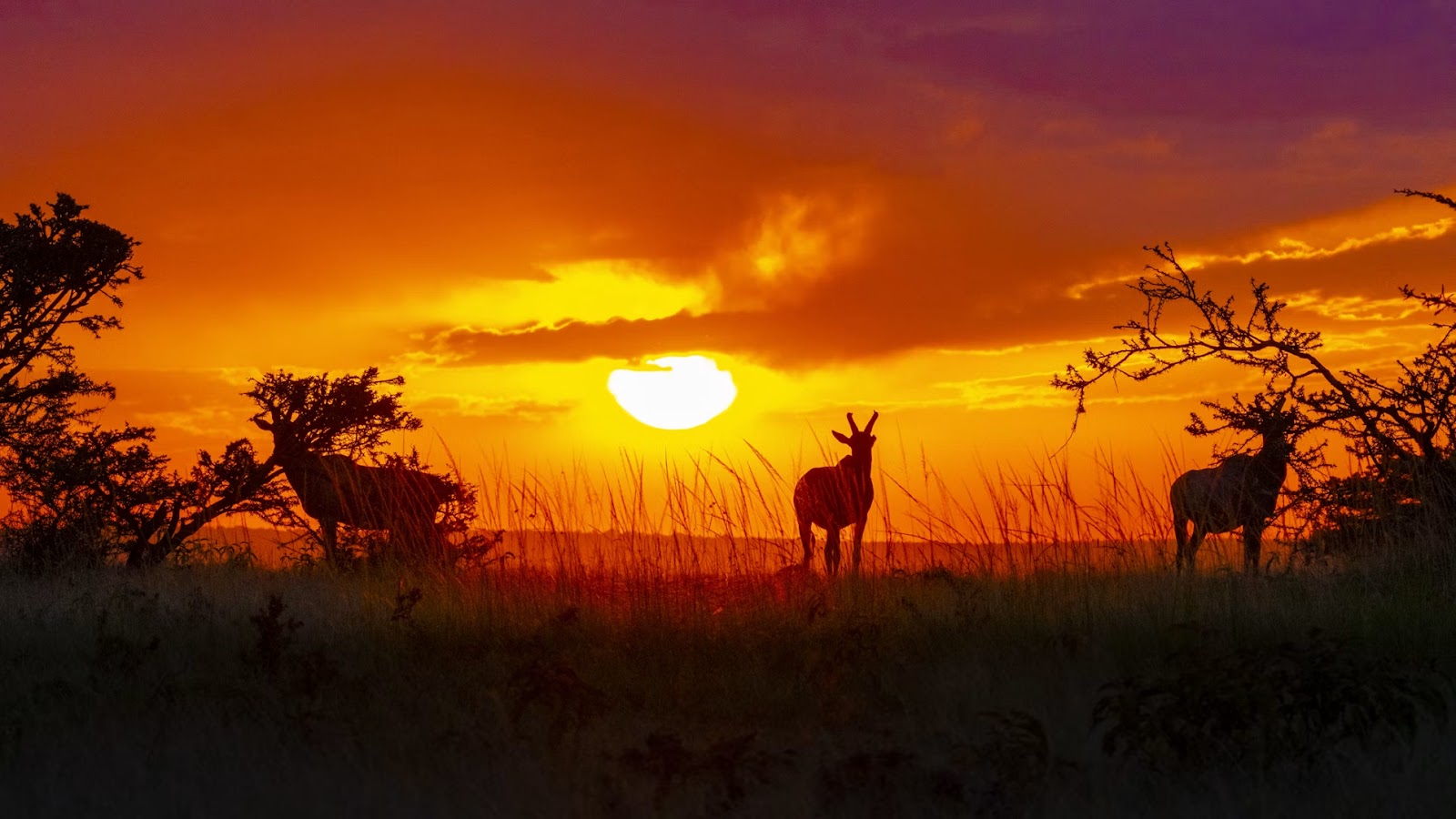
Gerenuk Standing Tall — the giraffe-necked gazelle’s party trick
Amboseli’s eastern scrub is prime country for gerenuk, the impossibly long-necked gazelle that rears vertically on hind legs to browse thorn tips two metres up. It is one of Africa’s strangest and most photogenic behaviours, and this park is among the easiest places on earth to watch it happen.
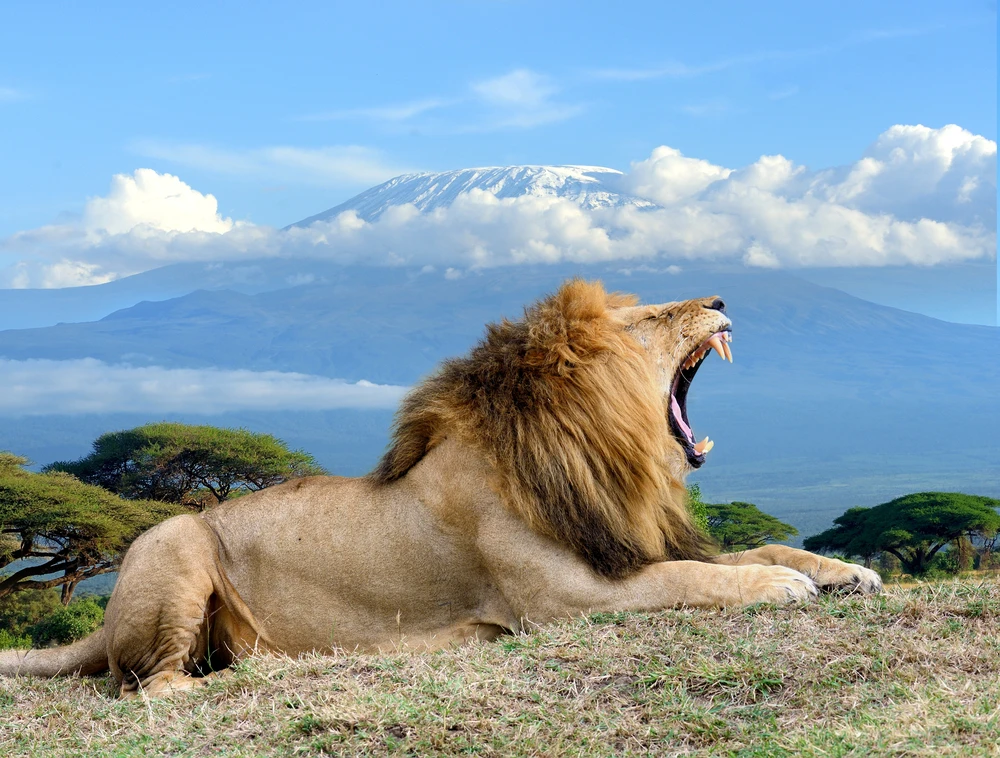
Lions of the Lakebed — big cats in an open arena
Amboseli’s lion prides recovered strongly over the past two decades and now hunt the swamp edges where wildebeest and zebra concentrate. With so little cover, sightings here are wonderfully clean — cats crossing bare pans in first light, visible a kilometre out. Morning drives along the swamp margins find them best.
Cheetahs Using the Heat — sprints across the shimmer
The park’s open flats suit cheetahs perfectly, and midday mirage becomes their ally — gazelles struggle to judge distance through the shimmer. Watching a cheetah materialise out of heat-haze is pure Amboseli. The Kimana side and the eastern plains produce the most regular sightings.
Hippos in the Desert — the ecosystem’s best joke
A dust-devil spins across a cracked lakebed while fifty metres away hippos grunt in deep green water — Amboseli’s swamps host thriving pods that graze the margins at night. Enkongo Narok’s viewing spots put you close enough to count yawning teeth, with Kilimanjaro floating behind.
The Hyena Dawn Patrol — the real top predator, clocking in
Amboseli’s spotted hyena clans are big, bold and busy — dawn drives regularly meet hunting parties trotting home past your vehicle, bellies swinging. Den sites in the calcrete banks bubble with pups. Give them twenty minutes and, as in the Mara, they will convert you.
Two Days, the Full Cast
A two-night Amboseli itinerary covers elephants, cats, gerenuk and swamp hippos without rushing. Ask for our favourite routing.

Amboseli Wildlife Facts
- Big Five count: 4 of 5 — elephant, lion, leopard and buffalo; rhinos are absent from the park.
- Mammal list: Amboseli wildlife runs to about 80 mammal species, from elephants to bat-eared foxes.
- The specialists: gerenuk, lesser kudu and fringe-eared oryx thrive in the drier fringes.
- Predators: recovering lion prides, regular cheetahs, large hyena clans and shy leopards along the wooded lines.
- Open-terrain bonus: flat, sparse country means sightings happen at range — bring binoculars and enjoy clean views.
- Swamp engine: permanent water concentrates prey — and therefore predators — around the park’s green heart.
Where to Find Amboseli Wildlife, Habitat by Habitat
Amboseli is small enough to cover in a day, but each habitat holds different animals. Knowing where each kind of Amboseli wildlife lives is the quickest way to turn a good game drive into a great one, and it is how our guides plan each route.
The swamps: Enkongo Narok, Longinye and Olokenya
The park’s swamps are fed by underground water from Kilimanjaro’s forests and stay green in the driest months. Elephants wade in up to their bellies, hippos and buffalo graze the papyrus edges, and herons, pelicans and egrets work the shallows. Predators follow the herds that come to drink, so this is the heart of Amboseli wildlife viewing.
The dry lakebed of Lake Amboseli
For most of the year the old lake is a flat, white pan that only floods after heavy rain. It looks empty, but it is a stage for long-distance views: wildebeest and zebra crossing in lines, dust-devils spinning across the flats and, at dawn, lions or hyenas walking back from a night’s hunting.
Acacia woodland and bush country
The fever-tree and acacia patches near the swamps and the drier bush on the park’s edges hold Masai giraffes, gerenuk, impala and dik-dik. This is where leopards are most likely, though they are shy and seen only occasionally. Lesser kudu and fringe-eared oryx favour the driest fringes and the land beyond the park boundary.
Observation Hill
Observation Hill is one of the few places in the park where you may leave the vehicle. A short walk to the top gives a sweeping view of the swamps, the elephant paths and the plains, with Kilimanjaro behind on clear mornings. It is the best spot to understand how the whole ecosystem, and all its Amboseli wildlife, fits together.

Best Time to See Amboseli Wildlife
Amboseli wildlife can be seen all year, but the seasons change where animals gather and how easy they are to find.
| Months | What to expect | Crowds |
|---|---|---|
| June–October | Long dry season; herds concentrate at the swamps, predators follow, dusty air | Busiest |
| November–December | Short rains; green grass, newborn animals, migrant birds arriving | Quiet, busy at Christmas |
| January–February | Short dry spell; clear Kilimanjaro mornings and good game viewing | Moderate |
| March–May | Long rains; lush scenery, excellent birding, some muddy tracks | Quietest |
If you want the widest range of Amboseli wildlife in a short stay, aim for the dry months. If you love birds, green scenery and lower prices, the rainy months can be very rewarding, and the park rarely feels crowded then.
Birds: The Other Half of Amboseli Wildlife
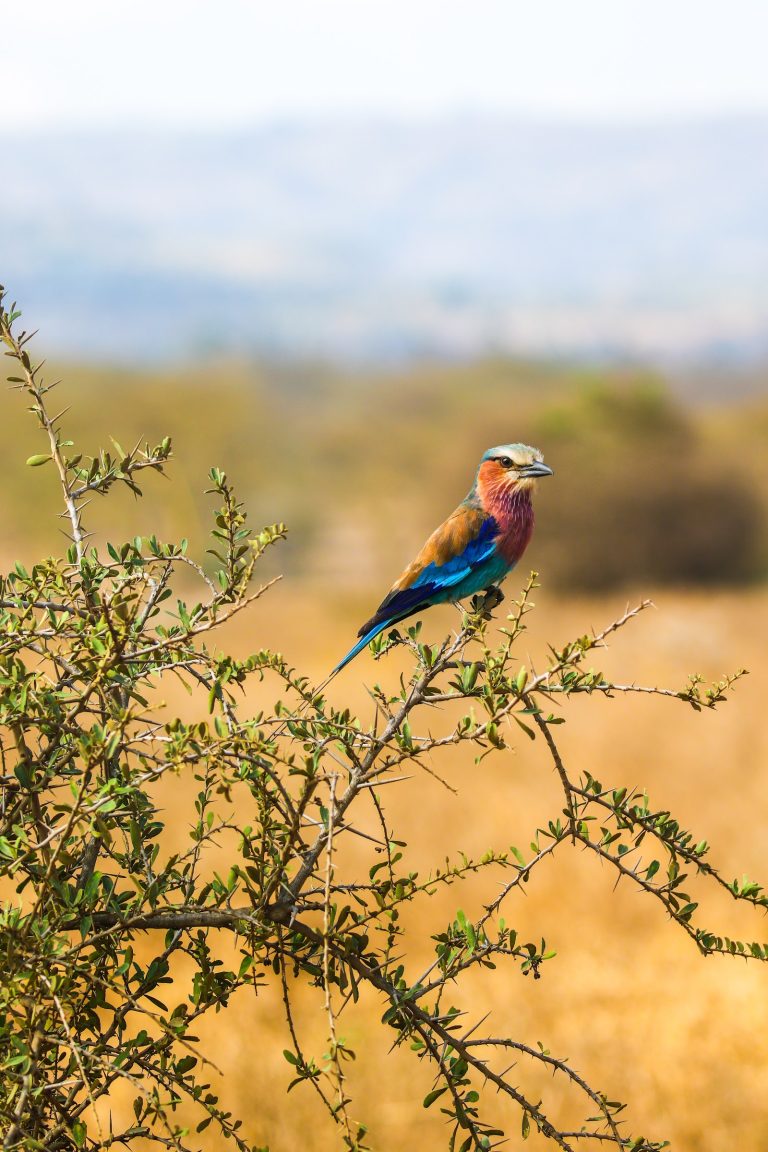
Around 400 bird species have been recorded in and around the park. The swamps attract pelicans, African spoonbills, grey crowned cranes, long-toed lapwings and several kinds of heron, while the plains hold ostriches, secretary birds, kori bustards and many larks. After rain, flamingos sometimes gather on the flooded lakebed. From November to April, migrants from Europe and Asia swell the list. Our guide to Amboseli birds and wetlands has more detail.
A Two-Day Amboseli Wildlife Itinerary
Day 1: Arrival and an afternoon on the swamps
Leave Nairobi early and reach the park by late morning. After lunch at your lodge, head out in the late afternoon to the Enkongo Narok swamp for elephants, hippos and buffalo, then drive the edge of the lakebed as the light turns golden. Plains game moves into the open at this time, and predators start to stir.
Day 2: Dawn predators, gerenuk and Observation Hill
Be at the swamp edges at first light, when lions and hyenas are most active and Kilimanjaro is usually clear. After breakfast, search the bush country for gerenuk, giraffes and dik-dik, then climb Observation Hill for the panorama. A final afternoon drive gives you another chance to add to your Amboseli wildlife list, with cheetahs on the open pans before you return.
Amboseli Wildlife Safari Costs and Packages
The cost of an Amboseli trip depends on the number of nights, your lodge, the season and whether you share a vehicle or go private. Park entry fees are set by the Kenya Wildlife Service and can change, so our quotes always use the current rates. Popular trips with their current starting prices include:
- Amboseli Day Safari — from USD 250 per person.
- 2-Day Amboseli Safari from Nairobi — from USD 520 per person.
- Amboseli Elephant Photographic Safari (4 Days) — from USD 1,800 per person.
- Kenya Luxury Big Five Safari (8 Days) — from USD 4,800 per person.
Compare more options on our Amboseli safari packages page, or ask about a private Kenya safari if you want your own vehicle and the freedom to wait at a sighting for as long as you like.
Getting to Amboseli
Amboseli lies in southern Kenya on the Tanzanian border. By road it is roughly four to five hours from Nairobi, usually via Emali, and the drive can be combined with Tsavo or the coast. Scheduled light aircraft also fly from Nairobi’s Wilson Airport to the park’s airstrip in under an hour. Our Nairobi to Amboseli guide compares both options, and our Kenya safari from Nairobi page lists short trips that start in the capital.
Photographing Amboseli Wildlife
- Lens: a 100–400 mm zoom covers most Amboseli wildlife subjects; the open ground means animals are often further away than in the Mara.
- Light: shoot in the first two hours after sunrise and the last two before sunset, when the heat haze is weakest.
- Kilimanjaro backdrops: the mountain is clearest at dawn, so plan wide shots of elephants and giraffes with the peak early in the day.
- Dust: carry a cover or bag for your camera and change lenses inside the vehicle.
- Patience: gerenuk browsing upright and hyenas at a den reward waiting quietly with the engine off.
Watching Amboseli Wildlife Responsibly
Amboseli is a national park run by the Kenya Wildlife Service. Vehicles must stay on the marked tracks, because off-road driving damages the fragile soils and disturbs animals. Stay inside the vehicle except at designated points such as Observation Hill and the picnic sites, keep your voice low and never feed animals.
Give elephants plenty of space, especially mothers with small calves, and let your guide choose the distance at predator sightings. These simple rules protect the animals and keep Amboseli wildlife relaxed around vehicles, which is why viewing here is so good.
What to Pack for an Amboseli Safari
- Binoculars for each person — the open plains make them essential.
- Neutral-coloured layers: mornings can be cool, and middays are hot and dusty.
- A hat, sunglasses and high-factor sun cream.
- A light scarf or buff to keep dust out of your face.
- Insect repellent and any malaria tablets your doctor recommends.
- Spare memory cards and a power bank for long game drives.
Plan Your Trip to Kenya
Before you travel to see Amboseli wildlife, check your entry rules: most visitors need a Kenya eTA from the official eTA Kenya portal before they fly. UK travellers should check the latest GOV.UK travel advice for Kenya, and you can find more ideas for your trip on Magical Kenya.
Building the Fuller Amboseli Trip
Start with the headline act in our Amboseli elephants guide, then plan logistics with the complete Amboseli safari guide. The park slots perfectly into a southern circuit — see the 8-day Big Five safari or compare parks in our Amboseli vs Masai Mara article. Many guests pair the two parks, so browse our Masai Mara safari packages too.
Come for the Elephants, Stay for Everything Else
Amboseli rewards the second day. Message us and we’ll show you the itinerary that proves it.
Frequently Asked Questions
What animals live in Amboseli besides elephants?
Amboseli wildlife includes lions, cheetahs, spotted hyenas, buffalo, hippos, Masai giraffes, wildebeest, zebras and around 80 mammal species in total — plus dry-country specials like gerenuk, lesser kudu and fringe-eared oryx that many Kenyan parks lack.
Are there lions in Amboseli?
Yes — Amboseli’s lion population has recovered strongly and prides hunt the swamp edges where prey concentrates. The park’s open terrain makes lion sightings unusually clean: cats are often visible crossing bare pans hundreds of metres away in the golden hours.
What is a gerenuk and can I see one in Amboseli?
The gerenuk is a long-necked gazelle that browses standing vertically on its hind legs — and Amboseli’s acacia scrub is one of the best places in Africa to watch this. Look along the drier eastern circuits, where males hold small browse territories year-round.
Does Amboseli have rhinos?
No — rhinos are the one Big Five member missing from Amboseli today. To add rhinos to your Kenyan itinerary, combine Amboseli with Lake Nakuru National Park or a Laikipia conservancy like Ol Pejeta, both straightforward pairings we arrange regularly.
Is Amboseli good for cheetah sightings?
Yes — Amboseli’s flat, open pans suit cheetahs well, particularly the eastern plains and the Kimana side. Sightings are less dense than the Masai Mara’s but wonderfully clear when they happen, often with Kilimanjaro rising behind the hunt.
When is the best time for Amboseli wildlife viewing?
The best time for Amboseli wildlife viewing is the dry season, from June to October and in January and February. Animals gather around the permanent swamps, predators follow them and the short grass makes spotting easy. The rainy months are greener and quieter, with superb birdlife and lower lodge rates.
How many days do I need to see Amboseli wildlife?
A day trip shows you the elephants and Kilimanjaro, but two nights is far better for the wider Amboseli wildlife. It gives you at least one dawn drive for lions and hyenas, time in the bush for gerenuk and giraffes, and a sunset session on the swamps without rushing.
Can you see leopards in Amboseli?
Leopards live in Amboseli, but they are shy and seen only occasionally, mostly in the wooded areas near the swamps. If a leopard is high on your list, add a few days in the Masai Mara or Samburu, where sightings are much more frequent, to your Amboseli stay.