It is 3 am at Shipton’s Camp and the cold bites through your gloves. Head torches bob up the scree ahead of you. Your guide sets a slow, steady pace: pole pole, slowly, slowly. The stars are so bright they throw shadows. Then, as you reach the rocky crest, the sky behind you turns orange, and the jagged twin peaks of Batian and Nelion catch the first light, glaciers glowing pink. Far below, the clouds spread out like a white sea. You are standing almost 5,000 metres above sea level, right on the equator.
Mount Kenya National Park protects the upper slopes of Mount Kenya, Africa’s second-highest mountain (5,199 m), about 193 km north-east of Nairobi. Set up in 1949 and part of a UNESCO World Heritage Site, it offers non-technical treks to Point Lenana (4,985 m), forest wildlife, glacial lakes and giant lobelias.
Sense of Adventure is a Nairobi-based safari company at Mountain Mall on Thika Road, licensed by Kenya’s Tourism Regulatory Authority (TRA1/47/C01/77087). We run guided treks and safaris around Mount Kenya all year. This guide covers everything you need to know about Mount Kenya National Park: its peaks and history, the communities and crews who make every climb possible, the wildlife, the main routes, 2026 park fees, the best months, rules, how many days you need, where to stay and a sample itinerary. For a day-by-day trekking plan, see our Mount Kenya trekking guide.

✅ Mount Kenya National Park: The Quick Answer
- Where: central Kenya, on the equator, about 193 km north-east of Nairobi; base towns are Nanyuki, Naro Moru and Chogoria.
- Best for: trekking to Point Lenana, technical climbs of Batian and Nelion, forest walks, Afro-alpine plants and cool mountain air.
- Best time: January to February and late June to October, the two driest windows.
- Entry fee: KWS Mountain Park rate of US$70 per non-resident adult per day; KSh 800 for East African citizens (KWS schedule from October 2025).
- How long to stay: four to five days for Point Lenana; one day for a forest or moorland walk.
- Getting there: about 3 to 4 hours by road from Nairobi to Nanyuki or Naro Moru, or a short scheduled flight to Nanyuki.
🌍 Planning a Trek in Mount Kenya National Park?
Tell us your fitness, your dates and whether you want to summit, and we will suggest the right route and pace.
💬 Plan My Lenana TrekPrefer to talk? 💬 WhatsApp Us Now or call +254 799 160 081
What Is Mount Kenya National Park?
Mount Kenya National Park is the protected high ground of Mount Kenya, an ancient, eroded volcano whose jagged summit peaks still hold small equatorial glaciers.
The national park covers about 715 km² of the upper mountain, and it is wrapped in a much larger forest reserve managed by the Kenya Forest Service. The Kenya Wildlife Service (KWS) manages Mount Kenya National Park itself. UNESCO describes the mountain as Africa’s second-highest peak, with Batian at 5,199 m and Nelion at 5,188 m, four secondary peaks and 12 remnant glaciers.
Point Lenana, at 4,985 m, is the third-highest summit in Mount Kenya National Park and the one most visitors climb, because it needs no ropes or technical skills. Below the peaks, the mountain rises through belts of forest, bamboo, giant heather and moorland, ending in rock, scree and ice.
A UNESCO World Heritage Site
UNESCO listed Mount Kenya National Park/Natural Forest as a World Heritage Site in 1997. In 2013 the site was extended to include Lewa Wildlife Conservancy and Ngare Ndare Forest Reserve to the north, joined to the mountain by a 9.8 km elephant corridor. Read the full listing on the UNESCO World Heritage Centre site.
The History of Mount Kenya National Park
Mount Kenya was sacred long before it was a park, and Mount Kenya National Park still protects a mountain that matters deeply to the people who live around it.
Geologists believe the mountain was once much higher before ice and weather wore its crater away, leaving the volcanic plugs that form Batian and Nelion today. Its glaciers have shrunk a great deal over the last century, and they are one of the clearest signs of a warming climate in East Africa.
Explorers and first ascents
Batian was first climbed in 1899 by Halford Mackinder with the Alpine guides César Ollier and Joseph Brocherel. Nelion was first climbed in 1929 by Eric Shipton and Percy Wyn-Harris. Several features on the mountain carry the names of these early climbers, including Mackinder’s Camp and Shipton’s Camp, two of the high camps you may sleep at.
From forest reserve to national park
The upper mountain was declared a national park in 1949. UNESCO also named the area a Biosphere Reserve in 1978, before it became a World Heritage Site in 1997. Today Mount Kenya National Park and the surrounding forest protect the source of rivers that supply water to millions of Kenyans.
The People of Mount Kenya National Park: Communities, Crews and Rangers
Every climb in Mount Kenya National Park depends on people: the communities who hold the mountain sacred, the guides, cooks and porters who carry you up it, and the rangers who protect it.
To the Kikuyu, the mountain is Kirinyaga, traditionally the earthly home of Ngai, the creator. UNESCO notes that it is a holy mountain for both the Kikuyu and the Meru, and the Embu also live on its slopes. Many Kikuyu homes were once built with their doors facing the mountain.
Guides, cooks and porters
Most mountain guides, cooks and porters come from towns and villages at the foot of the mountain, such as Naro Moru, Nanyuki and Chogoria. Many have climbed the routes hundreds of times. Their wages and tips are an important income for these communities, which is one more reason to trek with a properly paid, registered crew.
Wangari Maathai and the forests
Wangari Maathai, born in Nyeri in the foothills of the Aberdares and Mount Kenya, founded the Green Belt Movement in 1977 to plant trees across Kenya. She became the first African woman to win the Nobel Peace Prize in 2004. Her campaigns helped protect Kenya’s mountain forests, including those around Mount Kenya.
Where your park fees go
Your KWS conservation fees pay for rangers, trail upkeep, anti-poaching and rescue support across Mount Kenya National Park. Rangers patrol the forest and moorland, and park staff check permits at each gate.
Expert tip from our Nairobi team: budget for crew tips from the start, and hand them over at the end of the trek in person. A fair tip, given with thanks, is one of the most valued parts of the whole experience for the team.
Mount Kenya Trekking Routes: Which Way Up?
Mount Kenya National Park has three main trekking routes to Point Lenana, Sirimon, Naro Moru and Chogoria, and many trekkers go up one and down another.
| Route | Side | Days to Lenana (typical) | Character | Main camps |
|---|---|---|---|---|
| Sirimon | North-west | 4–5 | Gentle, drier, good for acclimatisation | Old Moses, Shipton’s Camp |
| Naro Moru | West | 3–4 | Fastest and steepest; boggy ‘vertical bog’ section | Met Station, Mackinder’s Camp |
| Chogoria | East | 4–5 | Most scenic: Lake Ellis, Gorges Valley, Lake Michaelson | Roadhead camps, Minto’s Hut area |
| Burguret and Kamweti | West and south | 5+ | Remote, rarely used, need special arrangement | Wild camps |
Sirimon route
Sirimon starts from the drier north-west, with a short forest belt and early views. The walk up the Mackinder Valley to Shipton’s Camp, beneath the main peaks, is gradual and suits first-time high-altitude trekkers.
Naro Moru route
Naro Moru is the most direct route from the west. It is the quickest to the top, but the steep, boggy section above the Met Station and the fast height gain make it tough. Many trekkers prefer it for the descent.
Chogoria route
Chogoria, from the east, is widely seen as the most beautiful route, passing the Gorges Valley and the blue waters of Lake Michaelson below sheer cliffs. It is longer and more remote, so it works best as part of a traverse, usually up Sirimon and down Chogoria.
🧭 Not Sure Which Route Suits You?
Tell us how much time you have and how you cope at altitude, and we will recommend the safest, most rewarding route.
💬 Help Me Choose a RouteWildlife and Plants in Mount Kenya National Park
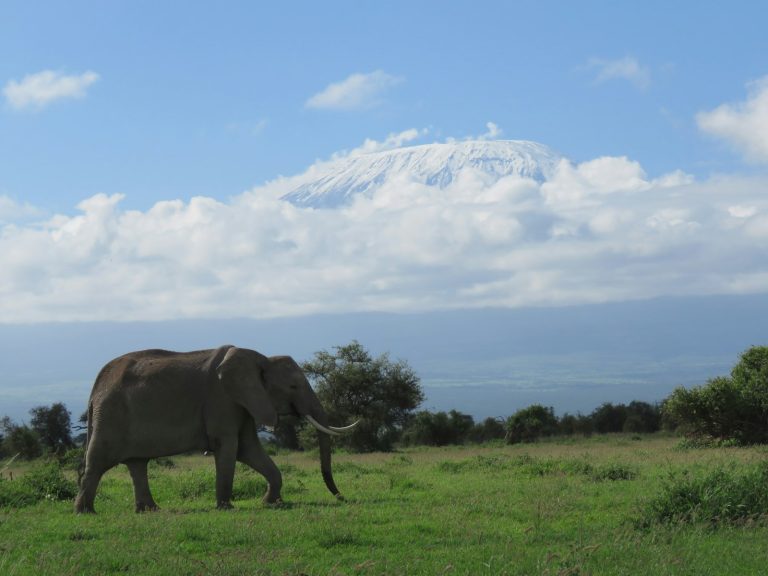
Mount Kenya National Park is not a big-game park, but its forests and moorland hold elephants, buffalo, colobus monkeys and plants found almost nowhere else on earth.
Vegetation in Mount Kenya National Park changes with height. Below about 2,500 m, the forest is dominated by trees such as African juniper and podocarpus, according to UNESCO. Then comes a belt of bamboo, then open woodland and giant heather, and above about 3,200 m the moorland, where giant lobelias and giant groundsels grow taller than a person.
Honest sighting odds
| Animal or plant | Chance on a 4–5 day trek | Where to look |
|---|---|---|
| Rock hyrax | Very high | Around the high camps and boulders |
| Giant lobelias and groundsels | Certain | Moorland and alpine zone, above about 3,200 m |
| Black-and-white colobus | High | Forest belt near the gates |
| Buffalo | Moderate | Forest and bamboo; signs are common |
| Elephant | Low to moderate | Forest and bamboo; dung and tracks are often seen |
| Giant forest hog | Low | Forest edges at dawn and dusk |
| Leopard | Low | Present, rarely seen |
| Mountain bongo | Very low | Extremely rare and shy |
Birds of the mountain
Birders look for the scarlet-tufted sunbird feeding on giant lobelias, Jackson’s francolin on the moorland, Hartlaub’s turaco in the forest, and raptors such as augur buzzards along the cliffs. Our Mount Kenya wildlife guide goes deeper into the forest species.
Things to Do in Mount Kenya National Park
Most people come to Mount Kenya National Park to trek, but there is more to do than the summit push.
- Trek to Point Lenana: the classic four- to five-day trek, with a pre-dawn summit for sunrise.
- Technical climbing: Batian and Nelion are multi-pitch rock climbs for experienced climbers with a specialist guide.
- Day hikes: walk the forest belt for colobus and birds, or drive up to the moorland edge for the giant lobelias.
- Glacial lakes: Lake Michaelson and the Hall Tarns on the Chogoria side, and Lake Ellis lower down.
- Camping: sleep in the forest or moorland at designated campsites.
- Photography: sunrise on the peaks, alpine plants and cloud seas below the summit.
For a full day-by-day account of the summit trek, read our Point Lenana trek guide.
How to Get to Mount Kenya National Park
Most visitors reach Mount Kenya National Park by road from Nairobi in three to four hours, or fly to Nanyuki.
By road
The Sirimon and Naro Moru gates are reached via Nanyuki and Naro Moru, on good tarmac through Thika, Karatina and Nyeri. Chogoria, on the eastern side, is reached via Embu and Chuka, and the final stretch to the gate is slower. We include transfers to and from each Mount Kenya National Park trailhead. Our Kenya safari from Nairobi guide explains road travel.
By air
Scheduled light aircraft fly from Wilson Airport to Nanyuki, which is handy if you are combining the mountain with Laikipia. Small planes have strict baggage limits, so read our safari luggage weight limits guide.
Mount Kenya National Park Fees in 2026
Mount Kenya National Park charges a daily conservation fee per person under KWS’s Mountain Park category, paid electronically; camping, huts and other services are extra.
| Visitor category | Adult (per day) | Child or student (per day) |
|---|---|---|
| East African citizen | KSh 800 | KSh 400 |
| Kenya resident | KSh 1,100 | KSh 550 |
| Non-resident | US$70 | US$35 |
| African citizen | US$30 | US$15 |
Figures are from the Kenya Wildlife Service conservation fee schedule published in October 2025. KWS defines a child as aged five to under 18. Fees change from time to time, so we confirm the current rate in your quote. KWS also lists a helicopter landing fee of US$300 at Mount Kenya. Our Kenya national park entrance fees for 2026 compare every park.
What a trek costs beyond park fees
Because fees are charged per day, a longer trek costs more in park fees. On top of that you pay for camping or hut nights, guide, cook and porter wages, food, transport and rescue cover. A registered crew and a sensible pace are worth paying for. We give you one clear, itemised price.
📅 Get a Free, No-Obligation Safari Quote
January, February and the August holidays are the busiest times at the high camps. Send us your dates and we will hold crew and camp space.
💬 Request My Trek Quote✉ Send Us Your Dates on WhatsApp
Best Time to Visit Mount Kenya National Park
The best time to visit Mount Kenya National Park is January to February and late June to October, when the weather is driest and the views clearest.
| Month | Conditions | Trekking verdict |
|---|---|---|
| January–February | Driest and clearest; cold nights | Best |
| March | Warming; rains may begin late in the month | Good, with some risk |
| April–May | Long rains; mist, mud and snow higher up | Hardest; fewest trekkers |
| June | Drying out; cool | Good |
| July–October | Dry, cool, some cloud on the peaks | Very good; busy in August |
| November | Short rains | Challenging |
| December | Drying; busy over Christmas | Good |
Whatever the month, mornings are usually clearest and cloud often builds by midday. See our Kenya weather by month guide for the wider picture.
Mount Kenya National Park Rules and Safety
The key rules in Mount Kenya National Park are to trek with a registered guide, stay on marked trails, camp only at designated sites and respect the altitude.
- Go with a registered guide and a properly equipped crew.
- Camp only at designated campsites and huts.
- Carry all rubbish off the mountain.
- Do not feed hyrax or other animals at the camps.
- Drones need permission; Kenya regulates drone use, so ask us before you pack one.
- Respect sacred sites and the mountain’s meaning to local communities.
Altitude sickness in Mount Kenya National Park
Altitude sickness is the main reason trekkers in Mount Kenya National Park turn back. Ascend slowly, drink plenty of water and tell your guide early if you feel unwell. Severe headache, vomiting, confusion or breathlessness at rest mean you must descend. Take travel insurance with emergency evacuation cover, and check the UK Foreign Office advice for Kenya before you travel.
Expert tip from our Nairobi team: add one extra night on the mountain before summit day. That single day of acclimatisation does more for your chances of reaching Point Lenana than any amount of training at sea level.
How Many Days Do You Need, and Where to Stay?
Plan four to five days in Mount Kenya National Park for a Point Lenana trek, and add a night in Nanyuki or Naro Moru before you start.
Three days is possible on Naro Moru but leaves little time to acclimatise. Five days on a Sirimon–Chogoria traverse is our favourite. Our guide to how many days you need for a Kenya safari helps you add wildlife either side.
Where to stay near Mount Kenya National Park
Inside Mount Kenya National Park you sleep in simple huts, bunkhouses or tents: Old Moses and Shipton’s Camp on Sirimon, the Met Station and Mackinder’s Camp on Naro Moru, and camps in the upper valleys on Chogoria. Facilities are basic, so a warm sleeping bag matters. Before and after the trek, Nanyuki and Naro Moru have lodges and guesthouses at every level, and the Laikipia conservancies below the mountain have some of Kenya’s finest lodges.
🏔 Want a Comfortable Base After the Summit?
Tell us your budget and we will pair your trek with the right lodge in Nanyuki or a Laikipia conservancy.
💬 Find My Post-Trek LodgeWhat to Pack for Mount Kenya
For Mount Kenya National Park, pack for every season in one trip: warm sun by day and freezing nights at the high camps.
- Waterproof, broken-in hiking boots and gaiters.
- Thermal base layers, a fleece, a down jacket and a fully waterproof jacket and trousers.
- Warm hat, sun hat, liner gloves and insulated gloves.
- A sleeping bag rated to about minus 10°C.
- Head torch, spare batteries, trekking poles and a 25–35 litre daypack.
- Sunglasses, high-factor sunscreen, lip balm and water purification tablets.
Porters carry your main bag, so you only carry water, snacks and layers. See also our list of what not to bring on safari.
Combining Mount Kenya With Nearby Parks
Mount Kenya National Park sits at the heart of Kenya’s northern safari circuit, so it pairs easily with rhino conservancies, the Aberdares and Samburu.
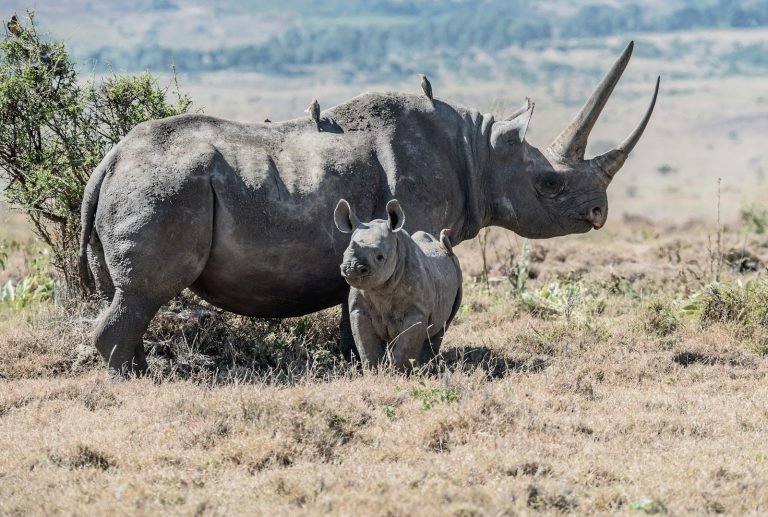
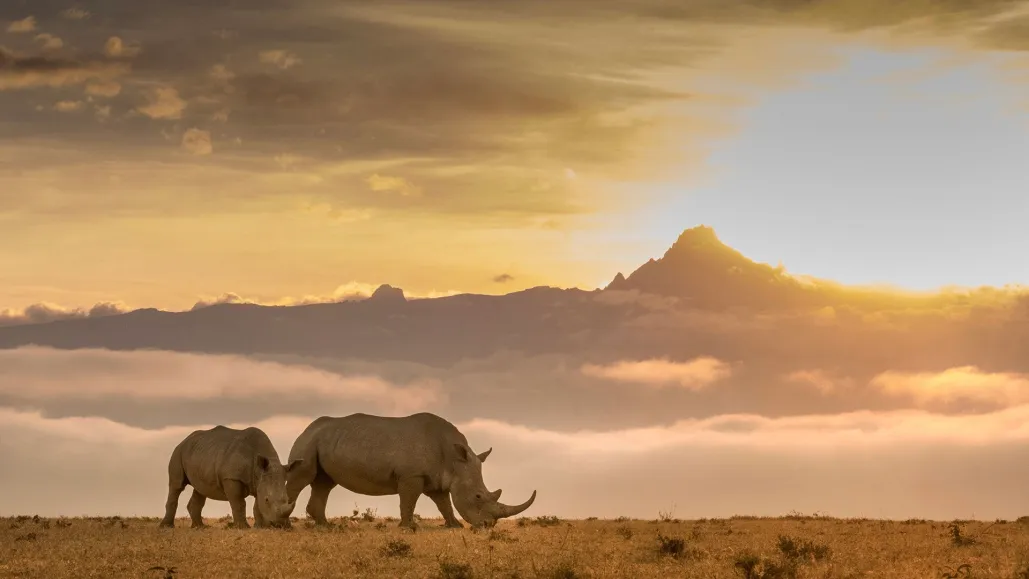
- Ol Pejeta Conservancy: rhinos, chimpanzees and the last northern white rhinos, close to Nanyuki.
- Lewa Wildlife Conservancy: part of the same World Heritage Site, with rhinos and Grevy’s zebra.
- Aberdare National Park: misty moorland, waterfalls and tree lodges to the west.
- Samburu National Reserve: hot, dry country and the Special Five to the north.
- Laikipia Plateau: private conservancies, walking and riding.
Sample 5-Day Mount Kenya Itinerary
This Sirimon–Chogoria traverse gives you a gentle climb, a sunrise summit and the most beautiful descent on the mountain.
Day 1: Nairobi to Old Moses
Drive to Nanyuki and on to the Sirimon gate. Walk through the forest to Old Moses (about 3,300 m) and spend the evening acclimatising.
Day 2: Up the Mackinder Valley
Climb onto the moorland among giant lobelias and walk up the Mackinder Valley towards the peaks. Overnight at Shipton’s Camp or an intermediate camp, depending on your pace.
Day 3: Acclimatisation day
Take a short walk higher and return to sleep low. Rest, eat well and prepare for an early start.
Day 4: Point Lenana and down to Chogoria
Leave around 3 am for Point Lenana (4,985 m) at sunrise, then descend the east side past Lake Michaelson and the Gorges Valley to camp.
Day 5: Down through the forest
Walk down through bamboo and forest to the Chogoria roadhead and drive back to Nairobi, or on to Laikipia for a safari.
Book this route as our Mount Kenya Trek – Sirimon-Chogoria Traverse (5 Days), or take it slower with the 7 Days Mt Kenya Hiking Adventure. Add rhinos after with our Ol Pejeta Day Safari. Message us for a quote, or ask for a tailor-made private Kenya safari.
Mount Kenya National Park FAQs
How high is Mount Kenya?
Mount Kenya’s highest peak, Batian, rises to 5,199 m, with Nelion close behind at 5,188 m, according to UNESCO. That makes it Africa’s second-highest mountain after Kilimanjaro. Point Lenana, the third-highest summit at 4,985 m, is the peak most trekkers reach because it needs no technical climbing.
How much is the entry fee for Mount Kenya National Park?
Under the KWS fee schedule published in October 2025, Mount Kenya is a Mountain Park. The daily fee is US$70 for non-resident adults and US$35 for children, KSh 1,100 for Kenya residents and KSh 800 for East African citizens. Camping and hut fees are extra.
How many days do you need to climb Mount Kenya?
Most Point Lenana treks take four to five days. Three days is possible on the Naro Moru route, but it leaves little time to acclimatise. A five-day Sirimon to Chogoria traverse gives a gentler climb, better scenery and a better chance of a sunrise summit.
Do you need climbing experience for Mount Kenya?
No, not for Point Lenana, which is a non-technical trek for fit walkers who acclimatise well. Batian and Nelion, the two highest peaks, are multi-pitch rock climbs that need real climbing experience, technical equipment and a specialist guide. Most visitors aim for Point Lenana.
What is the best month to climb Mount Kenya?
January and February usually offer the clearest skies, and late June to October is the other main dry window. Avoid the long rains of April and May if you can, when mist, mud and snow make the trek harder. Mornings are usually the clearest time of day.
What animals live in Mount Kenya National Park?
The forest and bamboo zones hold elephants, buffalo, black-and-white colobus, giant forest hog, leopard and the very rare mountain bongo. Rock hyrax are common around the high camps. Wildlife is shy in thick forest, so pair your trek with Ol Pejeta or Lewa for big game.
Is Mount Kenya harder than Kilimanjaro?
Point Lenana is lower than Kilimanjaro’s summit, so the altitude is a little less extreme. But Mount Kenya’s trails can be steeper, wetter and rougher, and some routes gain height quickly. Many trekkers use Mount Kenya as preparation for Kilimanjaro. Both suit fit walkers who acclimatise sensibly.
Is Mount Kenya a World Heritage Site?
Yes. UNESCO listed Mount Kenya National Park and Natural Forest as a World Heritage Site in 1997. In 2013 the site was extended to include Lewa Wildlife Conservancy and Ngare Ndare Forest Reserve, linked to the mountain by an elephant corridor of almost 10 km.
🏕 Plan Your Mount Kenya National Park Trek With Sense of Adventure
Kenya-based experts. Real local knowledge. Transparent pricing.
We have planned Mount Kenya treks for first-timers and experienced climbers alike. Tell us your dates and goals, and we will build your trek, crew and post-summit safari.
💬 Start My Mount Kenya Trek✉ Email Our TeamCall or WhatsApp: +254 799 160 081 · Email: reservations@senseofadventure.co.ke
💬 WhatsApp Us — Start Planning Today
Related Safari Guides
- › Mount Kenya Trekking Guide
- › Mount Kenya Point Lenana Trek
- › Aberdare National Park Guide
- › Ol Pejeta Conservancy Guide
- › Lewa Wildlife Conservancy Guide
Official travel & park resource: Kenya Wildlife Service ↗ · World Heritage: UNESCO Mount Kenya ↗ · Tourism: Magical Kenya ↗